


Satin vs Silk Sheets: Which One Actually Sleeps Better?
Buy polyester satin sheets if you sleep cool and want the glossy look on a budget. Buy silk satin sheets if you sleep hot, you can pay the luxury price, and you will wash them gently. Buy neither full set if hair is your only reason, because a satin pillowcase gives you most of that benefit for far less money.
Why do most satin vs silk sheets guides sound like ads?
Most of them sound like ads because most of them are ads in disguise. The top results for satin vs silk sheets are often written by shops that sell silk sheets, so the verdict is fixed before the first paragraph ends. Silk wins, polyester satin loses, and a buy button waits at the bottom.
That setup hides the real question. Satin is a weave. Silk is a fiber. A sheet can be both, and the sheets sold under each name are rarely the same kind of product. A guide that sells silk has no reason to tell you that a cheap polyester satin pillowcase does most of the same work for your hair, or that silk satin, the overlap of the two words, even exists.
We sell no sheets here, so this guide can be blunt in both directions. Polyester satin sleeps warm, slides off the bed, and can feel plasticky. Silk satin costs a serious amount, needs gentle care, and spots with water. Both can be the right buy. Match the sheet to the sleeper, not to the seller. If a guide never names a downside for its winner, close it. It is a sales page.
What does satin actually mean on a sheet label?
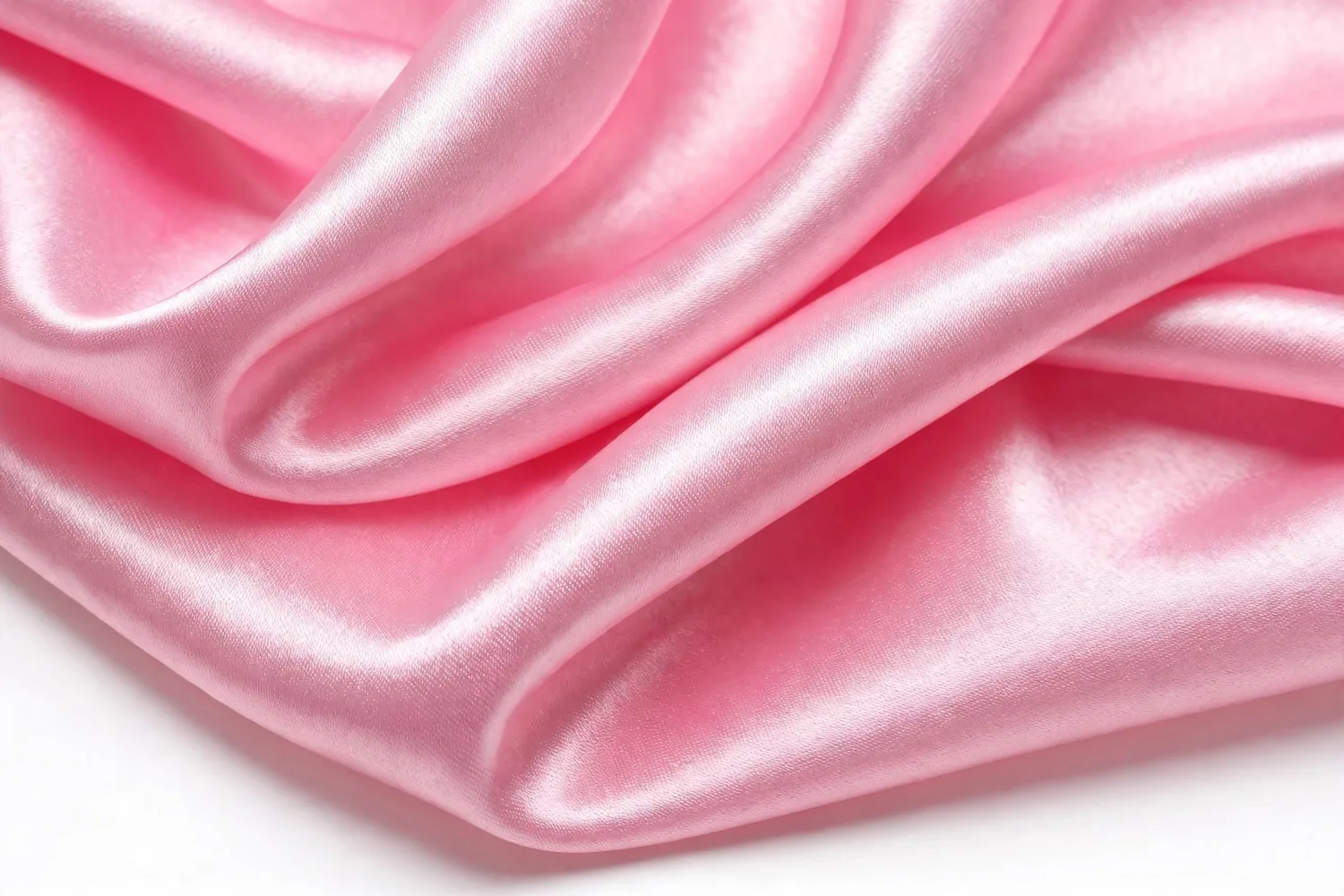
Satin on a label names a weave, not a fiber. In a satin weave, long yarns float over several crossing yarns before they anchor, which leaves a smooth, glossy face and a duller back. The fiber underneath can be polyester, silk, nylon, or something else, and that fiber decides how the sheet sleeps.
The Museum of Fine Arts, Boston, describes the satin weave in plain terms: it is a basic weave pattern that produces a shiny luster on the front and a dull face on the back, and the floating threads reflect light to create the characteristic satin sheen. That is also why satin sheets slide, because long floats have little grip. If this is your question, see our guide to satin duvet covers.
Read our satin sheets buying guide for the full label decoder, but the short version is this: if a listing says only “satin” and never names a fiber, assume polyester. Silence about fiber is itself information, and it almost always points to the cheapest option. Check the seam tag, not the product page headline.

What is silk satin, and why does it change the whole comparison?
Silk satin is silk fiber woven in a satin weave, and it is the third option that most two way comparisons quietly leave out. It gives you the breathability of silk with the liquid shine of satin, and it costs far more than either of the two usual contenders.
History backs the point. The Victoria and Albert Museum holds patterned silk satins woven in Europe in the first half of the 18th century, and its record describes one example as chiné silk satin from 1750 to 1800. Silk satin is not a new marketing invention. It is the original satin, from the centuries when satin meant silk by default, before cheap synthetics took the name over for the mass market.
Our silk satin guide goes deeper on how to spot the real thing, but for sheets the point is simple. Most “silk sheets” you see are silk satin or silk charmeuse, a lightweight satin weave. So the sheet comparison is really three products: polyester satin, silk satin, and cotton sateen, which is cotton in a satin weave. Guides that compare only two of the three are selling you a cropped picture.
How do satin sheets and silk sheets actually sleep?
Polyester satin sleeps warm and slippery, silk satin sleeps cooler and smoother, and the difference comes from fiber, not weave. Both share the same glossy satin face, so both glide. Only silk lets moisture move through the fabric in a way that keeps a hot sleeper comfortable through the night.
Polyester satin feels cool for about a minute when you first lie down. The smooth face pulls heat off your skin fast on contact, and your nerves read that as cool. Then the feeling fades. Polyester barely absorbs moisture, so sweat has nowhere to go, and the dense satin surface limits airflow. By the small hours, a hot sleeper in polyester satin is often kicking the covers off. Cold sleepers report the opposite: the same heat trapping feels cozy in a drafty room.
Silk satin feels different from the first touch and stays different. The surface is smoother in a softer way, less mirror flash and more deep glow, and it drapes close to the body without clinging. Hot sleepers tend to love it.
| Polyester satin sheets | Silk satin sheets | Cotton sateen sheets | |
|---|---|---|---|
| What it is | Polyester fiber, satin weave | Silk fiber, satin weave | Cotton fiber, satin weave |
| Sleep feel | Slippery, warm | Smooth, cooler | Smooth, breathable |
| Care | Machine wash, easy | Gentle wash, fussy | Machine wash, easy |
| Durability | Tough, snags | Delicate, wears faster | Good, softens with washing |
| Best for | Budget shine, guest rooms | Hot sleepers, luxury | Everyday smooth sleep |
Sliding deserves its own warning, because it ruins more satin sheet purchases than warmth does. The fitted sheet creeps off corners, the flat sheet pools at the foot of the bed, and pillows shoot out of pillowcases. Deep pocket fitted sheets with elastic all the way around help a lot. Sheet grippers that clip under the mattress help more. Nothing removes the sliding completely, because sliding is the weave doing exactly what it was built to do.

Which one wins for hair and skin?
For hair and skin, both win, and the gap between them is far smaller than silk sellers admit. The benefit comes from the smooth satin face, which both sheets share, so hair glides instead of dragging and skin meets less friction through the night. Silk adds breathability on top, but the core mechanism is the weave.
That is why the pillowcase comparison matters more than the full sheet comparison. Your face and hair spend the night on the pillowcase, not on the flat sheet at your knees. A polyester satin pillowcase gives you nearly all the friction benefit of a silk one for a fraction of the price. Our satin vs silk pillowcase comparison works through that math in detail, and it lands on polyester for most buyers.
Skin claims need a colder look. No sheet treats acne, eczema, or wrinkles, and any guide that promises otherwise is selling, not informing. What a smooth sheet can do is reduce tugging and morning sleep lines compared with rough cotton, and silk can feel pleasanter on irritated skin because it breathes. Those are comfort gains, not treatments.
How long do they last, and what kills them first?
Polyester satin lasts longer under rough treatment, silk satin lasts well only under gentle treatment, and each fails in its own way. Polyester snags and builds static. Silk weakens with washing, sunlight, and rough handling. Durability is not one score; it is a trade between toughness and care.
Polyester satin is the workhorse. It survives machine washing, resists wrinkles, and holds color well. Its enemies are sharp: rough heels, calluses, pet claws, and jewelry catch the long floats and pull threads. One pulled thread can run, and a snagged sheet looks shabby fast even though the fabric itself is still strong. Static in dry winter air is the other complaint.
Silk satin fails more quietly. Repeated washing, hot water, and sun weaken the fiber over time, and the shine fades with rough treatment. Water spots mark it. A silk sheet treated like a polyester sheet will not last, and that is a buyer error, not a product defect. Treated gently, in a mesh bag on a delicate cycle or by hand, with air drying away from sun, silk satin can give years of good sleep.
How do you wash each one without ruining it?
Wash polyester satin on a gentle machine cycle with mild detergent and low heat, and wash silk satin by hand or on a delicate cycle in a mesh bag, then air dry. The fiber sets the rules in both cases, and the satin weave adds one shared rule: wash with like fabrics, because zippers and hooks snag the long floats.
Polyester satin is forgiving, but not invincible. Turn pillowcases inside out, fasten zippers, skip the hot dryer, and do not iron it hot. Heat set creases in polyester can stay put, and a hot iron can glaze the surface. Fabric softener adds little and can coat the fibers, so skip it.
Silk satin wants a slower routine. Hand wash cold with a gentle detergent made for delicates, or use a delicate machine cycle in a mesh bag. Never wring it; press water out in a towel instead. Dry flat or hang it away from direct sun, because sun weakens silk over time. Iron on the reverse side on a cool setting with a press cloth if you iron at all.
What should the label say, and what is a warning sign?
The label should name the fiber in plain words with a percentage, and any listing that hides the fiber behind the word satin is a warning sign. Trust the fiber content line, not the product title, because titles are marketing while fiber lines are regulated.
United States law supports that rule. The Textile Fiber Products Identification Act rules, published as 16 CFR Part 303, require the generic names of fibers present in the amount of 5 percent or more of total fiber weight to be used when naming fibers in required information. The same rules define beddings as sheets, covers, blankets, comforters, pillows, pillowcases, quilts, bedspreads, pads, and other textile products used on or about a bed. In plain terms, the fiber line on your sheet set is not a courtesy. It is required information.
Watch for these warning signs in listings. “Vegan silk” means polyester or plant fiber finished to feel silky, not silk. “Silk feel” and “silky satin” are adjectives doing legal dodge work. A silk set priced like polyester is polyester, because real silk costs real money to produce and no factory has found a shortcut around that. A listing that brags about thread count on a silk sheet instead of naming its silk weight measure is a seller that does not know its own product.

Why do polyester satin sheets rarely carry a thread count?
Polyester satin sheets rarely carry a thread count because thread count was built for cotton, and polyester filament yarns do not map onto that counting system in an honest way. A thread count number on a polyester satin set is usually marketing, not measurement, and a missing number is often the more honest listing.
Thread count counts threads in a square inch of fabric, and it made sense for cotton percale, where more threads per inch meant denser, smoother cloth up to a point. Cotton yarns are spun from short fibers, and counting them gives a rough picture of density. Polyester satin uses long continuous filaments instead, woven in a satin weave with long floats. Counting those filaments the cotton way produces a number that sounds precise and means little about how the sheet will sleep.
Sellers exploit that gap. A huge thread count on a cheap polyester set sounds like luxury, and shoppers have been trained to treat the number as a quality score. It is not. For polyester satin, the fiber content, the weave density you can feel with your hands, and the construction of the fitted sheet tell you far more than any count printed on the package.
Our satin vs cotton sheets guide shows where thread count does useful work, which is in cotton, and where it stops helping even there. The short version for this guide: ignore thread count on polyester satin entirely, ignore it on silk satin too, and use it only as a rough hint on cotton sheets, never as the deciding number.
What does momme tell you, and what does it not tell you?
Momme is a silk weight measure, and it tells you how heavy and dense a silk fabric is, not how soft it will feel on its own. Heavier silk satin tends to drape better and last longer than very light silk, but momme alone cannot tell you whether a sheet was woven well or finished well.
Think of momme as the silk equivalent of a weight class, not a quality grade. A denser silk sheet has more silk in it, so it usually feels more substantial and survives more nights of use. Sellers who refuse to state momme at all are hiding the grade, and that silence should bother you more than any specific number would.
What momme does not tell you matters too. It says nothing about the silk grade, the weave quality, the dye, or the finishing. Two sheets with the same momme can feel quite different if one was woven tightly and finished carefully and the other was not. Use momme to compare silk sheets with each other, and to spot sellers who will not disclose it. Do not use it to compare silk with polyester, because polyester has no momme.
Which sheets should you buy for your sleep style?
Buy silk satin if you sleep hot and can pay for it, buy polyester satin if you sleep cool and want shine on a budget, and buy cotton sateen if you want smooth sheets you can wash without thinking. Match the sheet to your body first, your budget second, and the bedroom look last.
- Hot sleeper with a big budget: silk satin sheets, plus a light blanket for cool nights.
- Hot sleeper on a normal budget: cotton sateen sheets, with satin pillowcases for the hair benefit.
- Cold sleeper who loves the glide: polyester satin sheets, with deep pocket fitted sheets and grippers.
- Guest room or first try: polyester satin, because the look is glossy and the cost is low.
- Hair or skin as the only reason: satin pillowcases only, and keep your current sheets.
- Household with pets that knead the bed: skip full satin sheets, because claws and long floats do not mix.
Our satin bedding guide covers the wider bedding picture, including duvet covers and fitted sheet construction, if you are buying a whole set rather than just sheets. The construction point matters more than shoppers expect. A satin fitted sheet with corner only elastic will walk off the mattress no matter how good the fabric is, so check for deep pockets and elastic all the way around before you buy.
For a broader fiber comparison, read our satin vs silk guide, which compares the weave and the fiber across clothing, bedding, and hair care, not just sheets.

Frequently asked questions
These are the questions shoppers actually ask after reading the comparison, answered without sales language. If your question is not here, the rule from the guide still applies: check the fiber line first, then match the sheet to how you sleep.
Are satin sheets the same as silk sheets?
No. Satin names a weave and silk names a fiber. Most satin sheets are polyester satin, while silk sheets are silk fiber, usually woven in a satin weave. Silk satin is the overlap: silk fiber in a satin weave. Compare fiber to fiber, not word to word.
Do satin sheets keep you cool?
Silk satin sheets sleep cooler than polyester satin sheets, because silk lets moisture move through the fabric. Polyester satin feels cool for a minute on first touch, then traps heat, so hot sleepers should avoid it. Cotton sateen is the cooler budget choice if silk is out of reach.
Why do my satin sheets slide off the bed?
They slide because the satin weave is built from long, smooth floats with little grip. Deep pocket fitted sheets with elastic all the way around help, and sheet grippers that clip under the mattress help more. The sliding never fully disappears, because it is the same property that makes satin feel smooth.
Can you machine wash silk satin sheets?
Hand washing is safest, but a delicate machine cycle in a mesh bag with gentle detergent also works for many silk satin sheets. Never wring them, never use hot water or bleach, and air dry away from direct sun. Check the care label on your exact set, because finishing varies.
What is momme on a silk sheet listing?
Momme is a silk weight measure that tells you how heavy and dense the silk fabric is. Heavier silk tends to drape better and last longer, but momme alone does not prove good weaving or finishing. A seller that will not state momme is hiding the grade, so ask before you pay.
Is an expensive polyester satin set worth it?
Usually not. The fiber caps the quality, so an expensive polyester satin set sleeps much like a cheap one, with the same warmth and sliding. Spend the extra money on better construction, like deep pockets and full elastic, or save it toward silk satin or cotton sateen instead.
Should I buy satin sheets or just satin pillowcases?
Buy just the pillowcases if hair or skin is your reason, because your face and hair spend the night on the pillowcase, not on the flat sheet. Buy full sheets only if you want the glossy bed look or the full body glide, and you accept the warmth, sliding, and care that come with it.
Sources: Museum of Fine Arts, Boston, CAMEO, Satin weave; Victoria and Albert Museum, Woven Silk; eCFR, 16 CFR Part 303, Rules and Regulations Under the Textile Fiber Products Identification Act.


