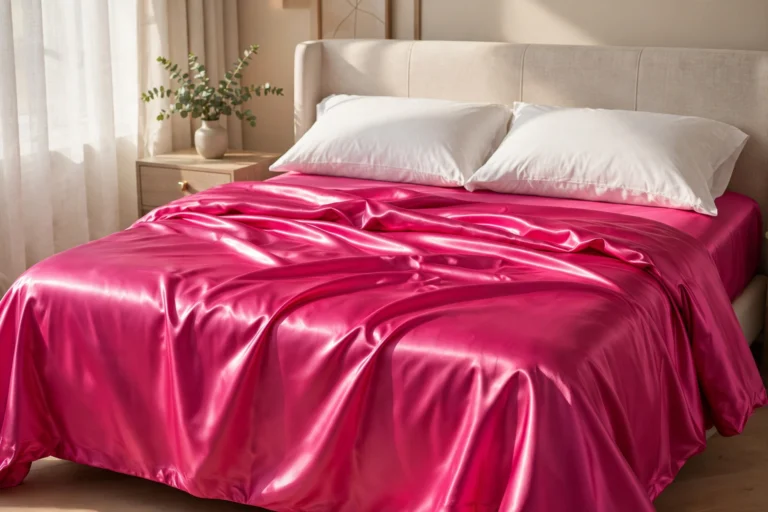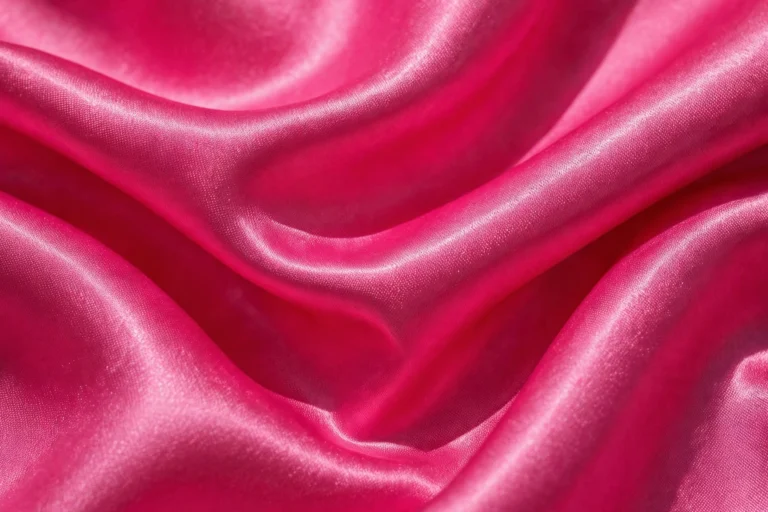
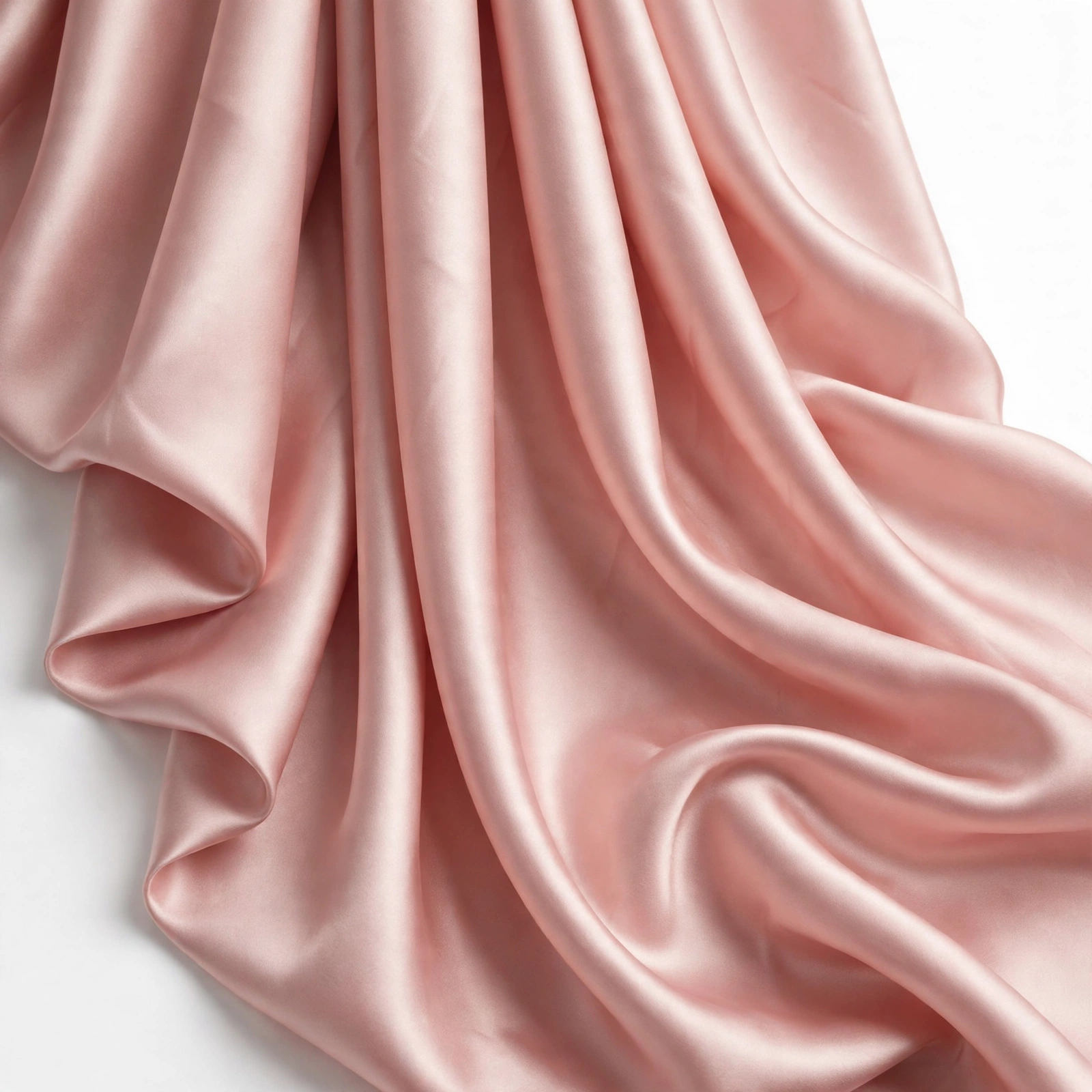
Silk Satin: What It Really Is (vs Polyester Satin)
Silk Satin: What It Really Is (vs Polyester Satin)
Walk into any fabric store and ask for satin, and you’ll get a wall of shiny fabric at wildly different prices. One bolt says “silk satin” and costs more than dinner. The bolt next to it just says “satin” and costs less than lunch.
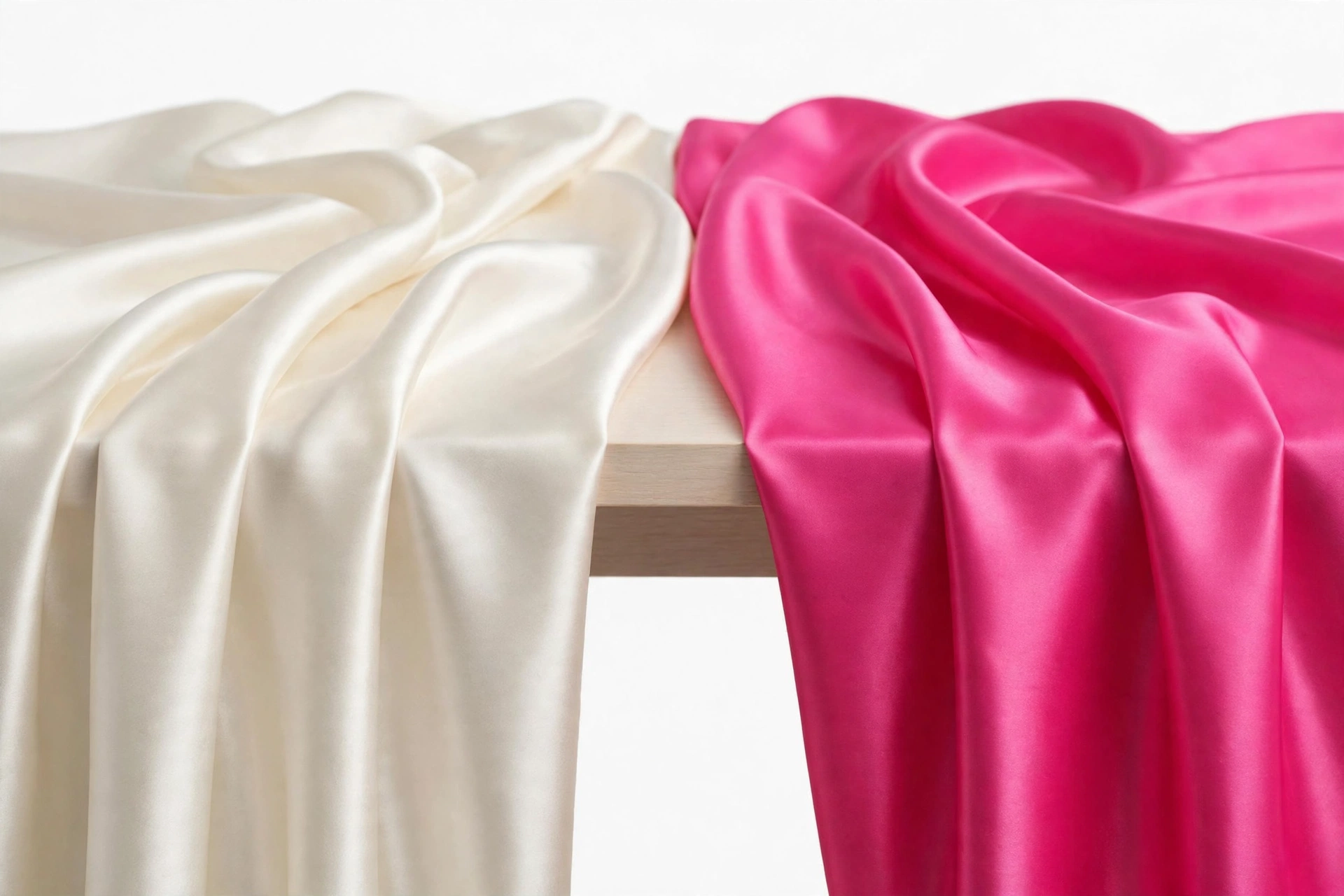
Here’s the one fact that clears up the whole mess: silk satin is silk fiber woven in a satin weave. That’s it. Satin is not a fiber. It’s a way of weaving. “Silk satin” names both the fiber (silk) and the weave (satin) in two words. Polyester satin is the same weave with a synthetic fiber, which is why it looks like silk’s twin but behaves like its opposite.
Most of the “silk satin” you see online at suspiciously low prices is polyester wearing a silk costume. This guide shows you what’s actually what, how to tell them apart in seconds, and when each one is honestly the right buy.
The 30-Second Verdict
Silk satin is real silk fiber in a satin weave: breathable, cool to the touch, with a soft liquid glow, and it costs real money. Polyester satin is plastic fiber in the same weave: cheaper, tougher, wrinkle-resistant, but warm to wear and never breathes. Buy silk satin when the garment lives on your skin for hours; buy polyester satin when it has to survive real life. Now the details, starting with why the weave and the fiber are two different things.
Silk Satin vs Polyester Satin: Side by Side
| Silk Satin | Polyester Satin | |
|---|---|---|
| What it is | Natural silk filaments woven in a satin weave | Synthetic polyester filaments woven in a satin weave |
| Fiber | Protein fiber from silkworm cocoons; continuous long filaments | Petroleum-based plastic filament, extruded round and uniform |
| Hand feel | Cool, dry, buttery; drapes like liquid and softens with age | Slick and slippery; can feel warm, plasticky, or “sweaty” |
| Shine character | Soft, deep glow with movement; light sinks in and rolls | Sharper, flatter flash; can look mirror-bright or cheap depending on quality |
| Breathability | Excellent; silk absorbs moisture without feeling wet | Poor; polyester repels water, so sweat sits on skin |
| Durability | Strong when dry, weaker when wet; degrades in sunlight over time | Very strong, abrasion-resistant; holds up to years of hard use |
| Care | Hand wash cold or dry clean; cool iron on reverse with press cloth | Machine wash gentle; low-heat iron with a press cloth; colorfast and forgiving |
| Price | Tens of dollars per yard; garments start well above $100 | A few dollars per yard; full garments under $40 are common |
| Best for | Wedding dresses, evening wear, luxury bedding, anything worn for hours against skin | Costumes, kids’ clothes, travel, linings, anything washed often or on a budget |
What Exactly Is Silk Satin?
Silk satin is silk fiber woven in a satin weave. The weave creates the shine; the silk creates the feel. True silk satin uses long, continuous silk filaments floated across the fabric face, which is why it drapes like liquid and costs far more than anything labeled “satin” alone.
The satin weave works by floating threads. In plain English, the weaver skips most of the cross-threads on the face side so long, unbroken strands of fiber lie flat and catch light. If you want the full mechanics of why those floats make satin shiny and snag-prone, read our guide to how the satin weave works.
Silk is the original satin fiber. Before synthetics existed, satin meant silk satin by default. The fiber itself is a protein, chemically closer to your hair than to cotton, and a single cocoon yields one continuous filament hundreds of meters long. That length is why silk satin has almost no fuzz on its surface, so light reflects cleanly instead of scattering.
Not all silk satins are the same weight. Silk charmeuse is the lightweight, clingy one used for blouses and slips. Duchess satin is the heavy, structured one built for bridal gowns. Both are silk satin; the difference is weight and thread density, which we map out in our guide to the types of satin. The fiber is the same. The architecture changes.
One honest caveat: silk satin water-spots. A splash of water on silk satin can leave a visible ring after drying, because minerals in the water sit on the protein fiber and disrupt how light reflects. It’s the fabric’s most annoying trait, and no seller puts it on the tag.
How Does Polyester Satin Differ at the Fiber Level?
Polyester satin uses the same weave with synthetic fiber, so the shine is there but the behavior changes completely. Polyester repels water instead of absorbing it, melts instead of burning, resists wrinkles but holds heat-set creases forever, and costs a fraction of silk.
Everything about the difference traces back to the fiber. Silk is hydrophilic (it likes water). It can absorb a good share of its weight in moisture without feeling damp, which is why a silk dress stays comfortable at a summer wedding. Polyester is hydrophobic (it hates water). Sweat has nowhere to go, so it pools between fabric and skin. That single property decides which fabric you want pressed against you for six hours.
The filaments differ too. Silk filaments are naturally slightly irregular, with a roughly triangular cross-section that gives silk its soft, deep luster. Polyester filaments are extruded perfectly round and uniform, which is why polyester satin can flash like a mirror. Uniformity sounds like an upgrade. On fabric, it reads as artificial.
Then there’s heat. Polyester is thermoplastic: it softens and reshapes with heat. That’s why polyester satin barely wrinkles in a suitcase, and also why a crease pressed in with too hot an iron is there forever. Silk scorches instead of melting, so an iron mistake on silk is damage, not a style choice.
The honest summary: polyester satin wins on price, toughness, and washability. Silk satin wins on comfort, breathability, drape, and how it ages. Neither wins on everything, which is exactly why you need the decision framework later in this article.
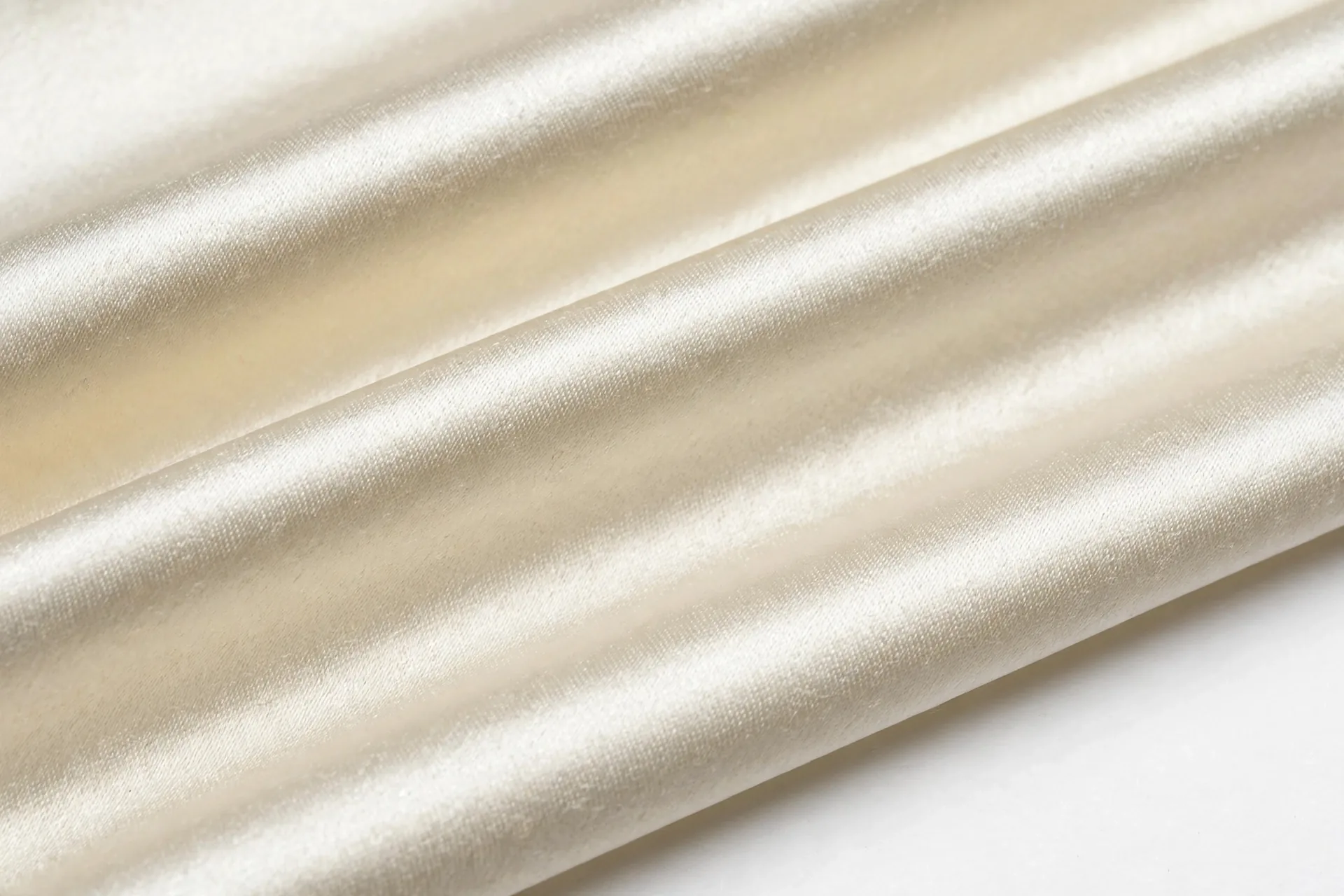
How Can You Tell Which One You’re Holding?
Four checks separate them: the burn test on a clipped thread, the hand-feel test, the price test, and the label test. Silk smolders and smells like burnt hair; polyester melts into a hard bead. If a “silk satin” blouse is priced like fast fashion, the label is almost certainly lying.
The burn test
Only do this if you have spare fabric and can work safely: snip a few threads from a hidden spot, like a seam allowance or the fabric edge inside a hem. Never cut the visible fabric. Hold the threads with tweezers over a non-flammable dish, away from anything flammable, and touch them with a flame, then watch what happens. If you are unsure about fire safety, skip this test entirely and rely on the label, price, and hand-feel checks instead.
Silk burns slowly, shrinks away from the flame, and is self-extinguishing. It smells distinctly like burnt hair (remember, it’s protein, like your hair). The residue is a dark, crushable bead that crumbles to powder between your fingers. That crushable ash is the giveaway.
Polyester melts. It shrinks from the flame, drips, and leaves a hard black bead that will not crush. The smell is chemical and sweet, nothing like hair. If it drips, it’s synthetic. Full stop.
The hand-feel test
Press the fabric against the inside of your wrist and hold it there for ten seconds. Silk satin feels cool and stays cool. Polyester satin warms up against your skin and starts to feel clammy. Then scrunch a corner in your fist and release it. Silk satin wrinkles softly and the wrinkles relax over minutes. Polyester satin springs back nearly flat, as if nothing happened.
The price test
Silk is expensive to produce. Period. Cocoons, reeling, degumming: none of it is cheap, and no factory has found a shortcut. A “100% silk satin” garment at fast-fashion prices is lying to you. As a rough anchor, real silk satin fabric runs tens of dollars per yard retail, while polyester satin runs a few dollars. If the price looks like polyester, it is polyester.
The label decoder
Read the fiber content, not the marketing words. In countries with textile labeling rules (including the US, UK, and EU), the fiber content line is regulated while the product name is marketing. Here’s how to decode what sellers actually write:
- “Silk satin” or “100% silk” on the fiber line: real silk satin. This is the one you want.
- “Satin” alone with no fiber named: polyester, almost every time.
- “Silky satin,” “silk-feel,” “satin sheen”: polyester. “Silky” is an adjective doing legal dodge work.
- “Vegan silk”: polyester, marketed to your conscience.
- “Charmeuse” with no fiber named: usually polyester charmeuse. Real silk charmeuse always brags about being silk.
Check the end of the bolt in a fabric store, or the care tag on a garment. The truth is always in the small print.
When Should You Buy Silk Satin, and When Polyester?
Buy silk satin for garments that touch skin for hours in heat: wedding dresses, evening wear, anything you want to age gracefully. Buy polyester satin for everything that takes abuse: costumes, kids’ clothes, travel pieces, and anything that must survive a washing machine.
Buy silk satin when:
- Once-in-a-decade garments: a wedding dress, a milestone birthday gown. Cost-per-wear math favors silk here because you’ll remember the dress, not the savings.
- Garments that sit on skin for hours in warmth: evening wear, summer events, dancing. Breathability isn’t a luxury feature in July; it’s the difference between glowing and melting.
- Pieces you want to age well: silk softens and develops character. Polyester pills and looks tired. A silk robe at year five looks better than a polyester robe at year one.
- Designs where the drape is the design: bias-cut dresses and flowing skirts rely on silk’s weight and fluidity. Polyester can mimic the look standing still, but it moves like a different material entirely.
Buy polyester satin when:
- Kids or pets involved: flower girl dresses, costumes, anything that will meet chocolate, grass, or claws. You’ll wash it ten times and it won’t care.
- Travel pieces: polyester satin comes out of a suitcase looking presentable. Silk satin comes out looking like a topographical map.
- Real budgets: a $35 polyester satin skirt you wear weekly beats a $300 silk one you can’t afford. No shame in that math.
- Linings and hidden layers: nobody’s skin touches a jacket lining for long, and nobody sees it. Save the silk money for the visible fabric.
The uncomfortable middle
What about a “silk satin” pillowcase at a mid-range price? That’s where the classic satin-vs-silk debate lives, and we’ve written the full honest version at Satin vs Silk: The Honest Guide. Short version: for pillowcases, the fiber decision matters less than sellers claim, because you’re buying smoothness, and both fibers deliver that. Spend the silk money where skin contact is longest and most intimate, meaning garments, not pillowcases you’ll replace in two years anyway.
How Does Care Differ Between the Two?
Silk satin demands hand washing or dry cleaning, cool ironing on the reverse, and immediate attention to water spots. Polyester satin shrugs off the washing machine and a low-heat iron. Treat them the same and the silk dies first.
Silk satin care: hand wash cold with a gentle detergent made for delicates, or dry clean. Never wring it; press water out in a towel. Dry flat away from direct sun, because UV weakens silk over time. Iron on the reverse side, cool setting, with a press cloth between iron and fabric. If water spots appear, don’t panic and don’t scrub; often a full, even hand-wash evens out the spotting because the whole surface gets the same treatment.
Polyester satin care: machine wash gentle, cool or warm. Tumble dry low or hang dry. Iron on medium if needed; it tolerates heat that would scorch silk. It’s colorfast, so reds stay red. Grease stains are its weakness, since polyester loves oil the way silk loves water, so treat cooking splashes fast with dish soap before washing.
For the complete per-fiber routines, including what to do when things go wrong, see how to wash satin. And if you’re starting from zero on what satin even is, our complete guide to satin covers the fundamentals.

FAQs
Is silk satin real silk? Yes, if the label says so on the fiber content line. “Silk satin” means the fiber is silk and the weave is satin. But many products use “silk satin” loosely in the product name while the fiber line says polyester. Trust the fiber line, not the title.
Why is polyester satin so much cheaper? Polyester is extruded from petroleum in continuous filaments at industrial scale, with no farming, no cocoons, and no reeling. Silk requires raising silkworms, harvesting cocoons, and unwinding each filament by hand or machine. The labor gap is enormous, and the price reflects it.
Can polyester satin look as good as silk satin? In a photo, often yes. In person and in motion, no. Polyester satin can match the shine, but it can’t match silk’s drape, the way it moves, or the soft depth of its luster. Up close, polyester’s perfectly uniform filaments give it a flatter, more artificial flash.
Does silk satin wrinkle more than polyester satin? Yes, noticeably. Silk absorbs moisture from the air and your body, which relaxes its fibers and lets creases set. Polyester’s thermoplastic nature means it springs back instead. The trade-off: silk’s wrinkles steam out easily, while a heat-set crease in polyester is permanent.
Is “vegan silk” the same as silk satin? No. “Vegan silk” is a marketing term for polyester (sometimes with a softer finish). It contains zero silk. If avoiding animal products is your goal, it’s a legitimate choice, but don’t pay silk prices for it.
Which is better for a wedding dress? Silk satin, if the budget allows. A wedding dress is worn for many hours, photographed constantly, and kept for decades. Silk’s breathability, drape, and aging behavior all matter here more than anywhere else. Polyester is the rational pick for bridesmaids’ dresses that get worn once.
Which is better for a pillowcase? Honestly, either works. A pillowcase’s job is smoothness against hair and skin for a few years, and polyester satin does that job at a fraction of the price. Silk wins on breathability if you sleep hot, but the price gap rarely justifies itself for something you replace regularly.
Can you wash silk satin in a washing machine? You can, on delicate in a mesh bag, but you’re gambling. Agitation weakens wet silk fibers, and an unbalanced load can stretch the weave permanently. Hand washing takes ten minutes and removes the risk. For anything expensive, dry cleaning is the safest option.