Black Satin Dress: The Complete Guide
Why does every wardrobe need a black satin dress?
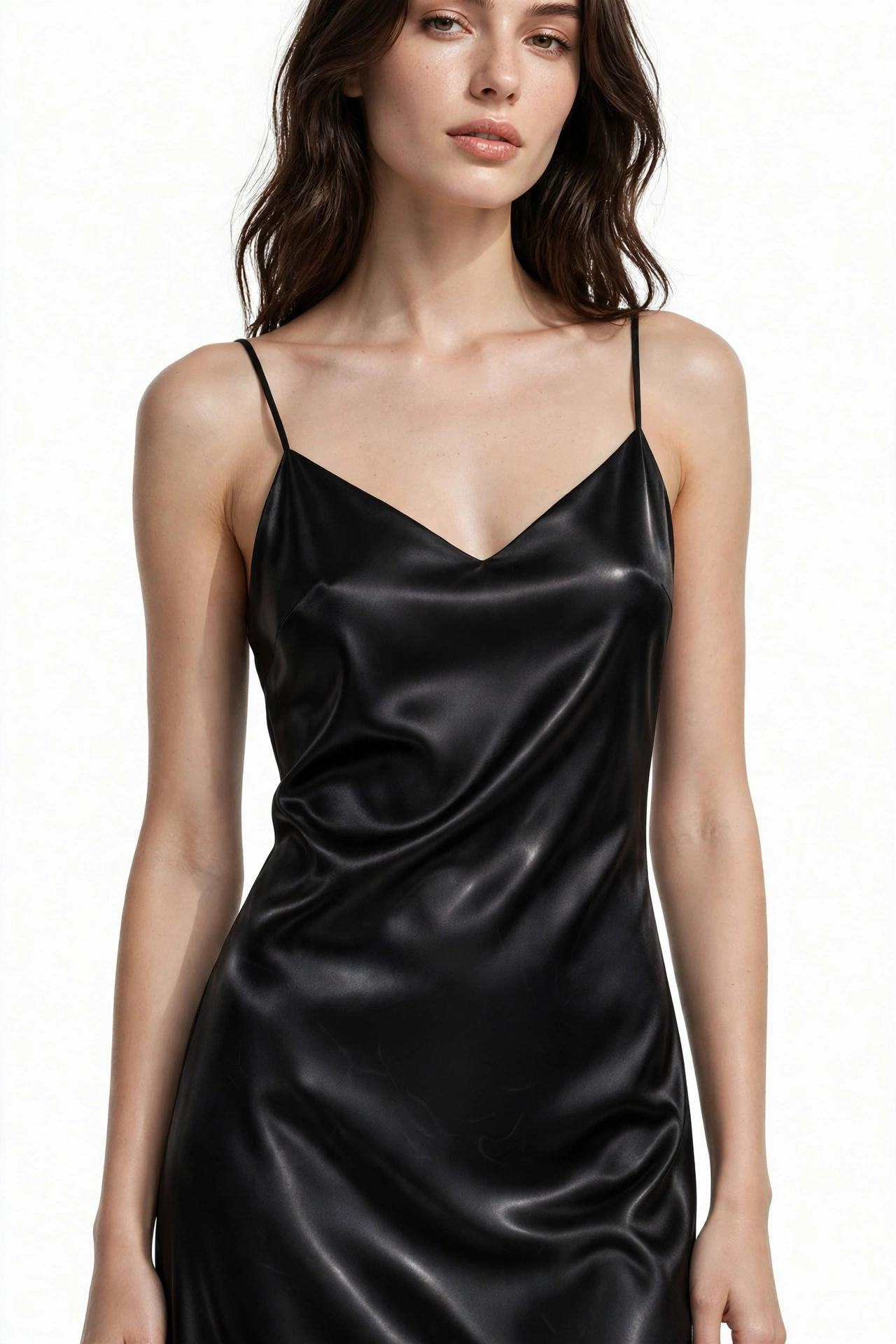
A black satin dress is the most forgiving dress you can own and the most dramatic one. That’s not a contradiction. The forgiving part comes from the color. Black absorbs light, so the wrinkles, seam lines, and small bumps that show on lighter fabrics never get the contrast they need to register on the eye. The drama comes from the weave. Satin’s long surface floats catch light in broad, continuous bands, and on black those highlights look like ink flowing over the body. You get polish without the pressure. Nobody writes think pieces about the navy crepe dress, but the black satin dress keeps showing up on every red carpet, decade after decade.
The 30-second verdict
Buy a black satin dress when you want maximum impact with minimum fuss. It hides wrinkles, photographs beautifully, and reads as expensive at any price. Choose charmeuse (soft, fluid, clinging) for slip dresses and nights out; choose duchess satin (thick, structured) for weddings and shaped silhouettes. Wash it inside out in cool water, skip the dryer, and keep a lint roller handy, because black polyester satin is a static magnet. Get those five things right and this is a ten-year dress.
Which satin is my dress actually made of?
Most black satin dresses on the market are polyester. That’s not a quality verdict on its own. Polyester takes disperse dyes better than any common fiber, so the black on a polyester satin dress can run deeper and more even than the black on silk. Silk black fades faster and costs far more, though it breathes better and drapes more softly. The honest read: polyester satin is the practical pick for a black dress, silk satin is the luxury pick. Watch out for labels that say “silk satin” on a $40 dress. That dress is polyester with a romantic label. The weave is what makes it satin, not the marketing copy.
the full encyclopedia of satin types
Why does black look richer on satin than on other fabrics?
Black dye richness is a light problem, not a dye problem. On a matte fabric like cotton twill, every yarn breaks the surface light, so the black reads as flat gray-black. On satin, the weave carries threads across the surface in long floats, five or more warps per float in a standard satin weave, so light hits a nearly continuous sheet of dyed yarn. The black looks deeper because there’s simply more dyed surface per inch.
The gloss does the rest. Satin’s shine is specular reflection, light bouncing off in organized sheets. On black, that reflection turns into highlights that glide as you move. Designers call it liquid. It’s physics: unbroken floats, unbroken reflection, unbroken color. This is also why a black satin dress looks pricier than its tag. The eye reads deep, even color plus controlled shine as luxury, and you can’t fake either with a cheap print.
One caution comes with the dye. Dark disperse dyes can sit partly on the yarn surface, which is why a new black satin dress sometimes crocks, rubbing a faint gray onto a pale handbag or a white chair. Wash the dress before you wear it, and wash it alone the first time.
Charmeuse or duchess: which black satin dress should you buy?
This is the single most useful decision in this guide, and stores never explain it. Charmeuse and duchess are both satin weaves, but they behave like different fabrics on the body. The silhouette, the occasion, the alterations, everything flows from this choice.
| Charmeuse | Duchess satin | |
|---|---|---|
| Structure | Lightweight, very fluid, clings to the body | Heavy, stiff, holds a sculpted shape |
| Shine | High gloss, liquid look | Medium gloss, more controlled |
| Forgiveness | Medium: skims, but every line underneath shows | High: the weight smooths over shapewear and lumps |
| Wrinkles | Creases show, especially when packed | Resists creasing well |
| Snags | Long floats catch on jewelry and rough nails | Tighter, heavier yarns snag less |
| Best black satin dress style | Slip dress, cowl neck, bias cut | Ball gown, A-line, structured cocktail |
| Best occasion | Dinner, parties, red carpet | Weddings, galas, formal events |
| Alterations | Hard to hem invisibly, seams shift | Holds tailoring well |
| Price range | Usually lower | Usually higher |
My take: buy the charmeuse if you want the classic 90s slip dress look, because that liquid drape is what the silhouette needs. A duchess slip dress looks wrong, stiff where it should flow. Buy the duchess if you want structure, a dress that stands away from the body and holds its shape all night without shapewear doing the work. Don’t buy charmeuse expecting it to hide a tummy. It won’t. It shows what it shows. Duchess is the forgiving one. Match the fabric to the job and you’ll never be disappointed.
our complete satin dress guide
How do you style a black satin dress?
Black satin is the rare dress that lets accessories do all the talking. The dress is a black mirror, so everything you add reads ten times louder. A few principles from watching this done well and badly:
Gold jewelry is the classic pairing. Warm metal against the cool gloss of black satin creates the kind of contrast that photographs well. Silver works too, but gold reads richer. That’s the honest answer to why you see it so often.
Shoes can carry the color. A black satin dress with red or metallic shoes is a whole outfit. With black shoes it’s a column. Neither is wrong; they’re different moods, and most women default to black shoes when a contrast pair would’ve made the outfit.
Outerwear is where people slip up. Satin is thin and the dress is doing the work, so a heavy coat kills the effect. A tailored blazer, a cropped leather jacket, or a fine shawl keeps the proportion. A chunky knit over a slip dress is a TikTok trend that works in photos and wrinkles the fabric in real life.
A satin scarf in a contrasting color, ivory or champagne, knotted at the neck or tied on the bag, breaks the black mirror enough to stop the dress reading as funeral wear. Small move, outsized effect.
Will black satin hide my body or highlight it?
Honest answer: both, in different places. Black hides wrinkles, seam lines, and minor fit flaws because nothing on the surface casts a visible shadow. That’s the forgiving part, and it’s real. What black doesn’t hide is shape. Charmeuse follows the body exactly, so it shows curves, bumps, and the waistband of whatever you’re wearing underneath. Duchess holds its own shape, so it smooths the body under a structured shell. The rule is simple. The dress hides surface problems everywhere, and body problems nowhere in charmeuse. But duchess hides both. Pick the fabric for the honesty level you want.
How do you keep a black satin dress looking new?
Black satin fails in three predictable ways, and each has a mechanism you can fight.
Lint. Polyester satin has a moisture regain near zero, so it can’t bleed off static the way cotton or silk can. Rubbing builds a charge, and the charge grabs every fiber in the room. Lint rollers aren’t optional with a black satin dress; they’re part of the garment. Anti-static spray before you go out buys you an evening. Store the dress in a garment bag away from towels and fleece.
Fading. Black fades from two attacks: sunlight and heat. UV breaks down dye molecules, and hot water opens polyester fibers and coaxes dye out. Wash inside out in cool water with a mild detergent, never hot. Skip the dryer entirely; hang or lay flat. Line-dry in shade, not direct sun. A black satin dress washed cold inside out keeps its depth for years. The same dress in a hot dryer loses its black fast.
Wrinkles and shine loss. Press only on the wrong side with a press cloth, low heat. Direct iron contact on satin’s face can crush the floats and leave a shiny flattened patch that never recovers. Silk dresses are the steam candidates; polyester prefers a cool iron with cloth. And the care rule most people break: never spot-clean a water mark by dabbing it. Wet the whole area evenly or leave it alone, because partial wetting leaves a ring.
Should you sew your own black satin dress?
If you sew, black satin is a demanding teacher and a rewarding one. Charmeuse is the hardest satin to handle. It shifts under a standard presser foot because the long floats have nothing to grip, so a walking foot is the difference between seams that behave and seams that pucker. Cut single layer, use a rotary cutter with pattern weights, and mark on the wrong side with chalk, never water-based markers that bleed through a dark fabric. Duchess is friendlier to cut but famously stubborn to hem. Its thickness resists a narrow invisible hem, so plan for a faced hem or hand-stitching from the start.
One honest note for sewers. Black satin shows every pressing mistake as a shiny patch and every snag as a pulled thread catching light. Work slowly, press with a cloth every time, and keep your fingernails smooth. The dress will forgive your body. It won’t forgive your iron.
how to sew satin without tears
What occasions is a black satin dress right for?
Almost all of them, with two caveats. A black satin slip dress works for dinners, parties, date nights, cocktail events, and anywhere the dress code says “dress up” without saying “gown.” Duchess versions carry weddings and galas. Think twice in two places: some conservative workplaces read the shine as evening wear, and some daytime weddings prefer softer colors. Everywhere else, from the holiday party to the gallery opening, the black satin dress is the safe bold choice. Dressy enough to be right, plain enough to accessorize into anything.
What should you check before buying?
Run this checklist in the fitting room or against the product page and you’ll avoid the usual regrets.
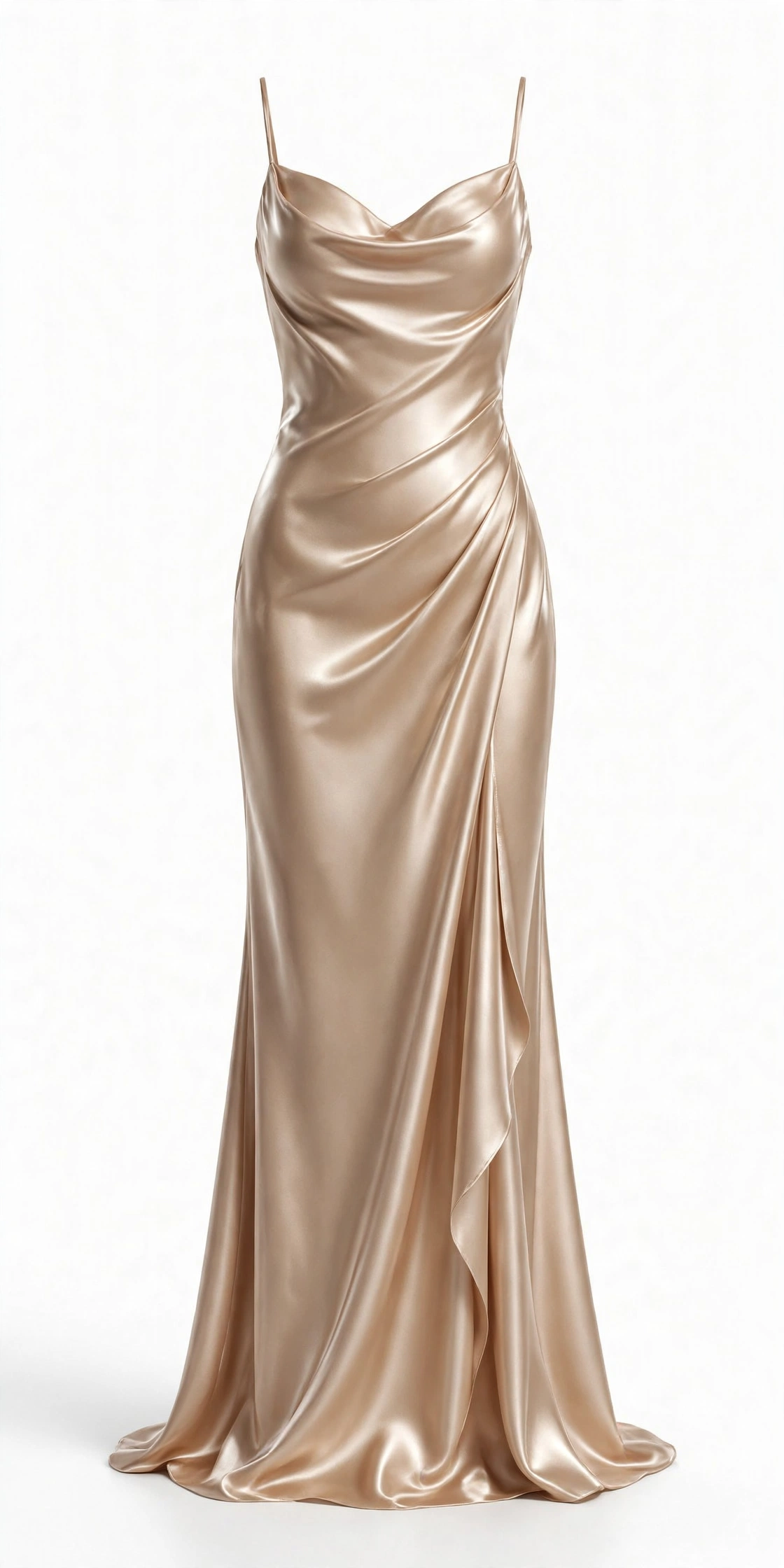
First, check the fiber on the label: polyester for practicality, silk for luxury, blends in between. Second, hold it to the light. If you can see through a black dress, the weave is too thin and it’ll cling to every seam of your underwear. Third, stretch a small area and watch for the sheen flipping tone. Cheap satins sometimes dye unevenly, and it shows as patchy gloss. Fourth, check the seam finishes. French seams or bound edges on charmeuse mean the maker understood the fabric. Raw overlocked edges on a slip dress mean corners were cut. Fifth, figure out which fabric you’re holding: charmeuse that flows, or duchess that stands. Hold it up and drop it. Charmeuse falls in one fluid column; duchess falls in structured folds. Buy for the silhouette you actually want to wear.
FAQs
Does a black satin dress hide belly fat? It depends on the satin type, not the color. Duchess satin is thick and structured, so it smooths the midsection well. Charmeuse clings and shows whatever sits underneath. If the tummy matters to you, pick a structured duchess silhouette or wear smoothing shapewear under charmeuse. Black helps with shadows, not shape.
Does black satin show sweat? Polyester satin doesn’t absorb sweat, so moisture sits on the surface and can show as dark patches under the arms and across the back. Silk satin breathes better and shows less. If you run hot, silk is the better pick, or choose a looser duchess cut in polyester over a clinging charmeuse slip.
Is a black satin dress slimming? Black is slimming because it removes the shadow detail your eye uses to read volume, and satin adds a vertical line of highlight your eye follows down the body. A column silhouette in black charmeuse is one of the most elongating things you can wear. A duchess A-line widens the lower half visually, but that’s the cut doing it, not the fabric.
Does satin wrinkle easily? Charmeuse wrinkles if you look at it wrong. It creases in the suitcase, the car, and the chair you sat in for ten minutes. Duchess resists wrinkles far better because heavy yarns push creases out. For travel, roll the dress in a dry-cleaning bag; the plastic lets the fabric slide against itself instead of creasing. Steam or press before the event, never after you’re dressed.
Can you wear a black satin dress to a wedding? Yes, with taste. Black satin is fine at most modern weddings as long as it doesn’t read as a nightclub outfit. A duchess midi or structured cocktail cut is the safest choice. Skip anything so short or clinging that it competes with the bride, and add color in your accessories so the look says celebration, not mourning.
How do you get lint off a black satin dress? A standard lint roller is the fastest fix. The deeper problem is static: polyester satin holds almost no moisture, so it builds charge fast. Anti-static spray before wearing helps, and a splash of white vinegar in the rinse cuts cling in the wash. Never use a sticky roller on damp fabric; wait until it’s fully dry.
Is black satin dressy or casual? Dressy by default. The shine reads as evening no matter how simple the cut, which is why a plain black satin slip can carry a gala with the right shoes and jewelry. You can dress it down with a blazer and boots for daytime, but the fabric always leans formal. If you want truly casual, satin is the wrong weave.
The trust note
Most satin buying advice online is written by stores that sell satin, and it reads that way. We sell nothing. Every claim here comes from textile mechanics, real fitting-room behavior, and per-fiber care science, not from a product page. The charmeuse-versus-duchess distinction alone is something retailers almost never explain, because explaining it might talk you out of the dress in front of you. We’d rather you buy the right one once. If you spot an error or a fabric fact that’s changed, tell us and we’ll correct it. That’s the deal.