Black Satin Skirt: The Complete Guide
Why does a black satin skirt always look dressed up?
Physics, not fashion magic. Satin is a weave, not a fiber: long threads float across the surface in an unbroken sheet, catching light in organized bands. That is why satin shines. Put that shine on black and the color kills the shadow detail your eye uses to read volume, while the weave adds gloss it reads as luxury. A black satin skirt is the rare garment that gets dressed down by its pairing, not its fabric.
What is actually behind the shine?
In a satin weave, one set of yarns floats over four or more crossing yarns before interlacing (the classic five-harness satin), so the fabric face is nearly a continuous sheet of yarn. The shine is specular reflection: light bouncing off in an organized sheet instead of scattering. On satin, the long floats put more yarn surface on the face, so black reads deeper on satin than on a matte weave of the same fiber. That depth plus the gliding highlights is what people mean by “liquid.” It’s the same mechanism that makes a satin weave look expensive on any fiber, except black doubles down on it by killing the noise.
One honesty note. Most black satin skirts on the market are polyester, not silk. Polyester is dyed with disperse dyes driven into the fiber with heat, which gives a deep, even black, so a well-made polyester skirt often has a richer black than a silk one at several times the price. Silk breathes better and drapes softer. But if your priority is depth of black, polyester isn’t the cheap compromise. It’s the correct fiber for the job.
Charmeuse, duchess, or crepe-back: which satin makes the best skirt?
This is the decision that determines everything: how the skirt moves, where you can wear it, and whether it flatters you. Charmeuse, duchess satin, and crepe-back satin are all satin weaves, but they behave like different fabrics on the body.
| Charmeuse | Duchess satin | Crepe-back satin | |
|---|---|---|---|
| Shine | High gloss, liquid | Medium gloss, controlled | Low gloss face, matte crepe reverse |
| Weight | Light, very fluid | Heavy, structured | Medium, substantial |
| Drape | Clings, follows every line | Holds its own shape | Soft structured folds |
| Forgiveness | Low: shows what’s underneath | High: smooths over shapewear | Medium-high |
| Wrinkles | Creases easily | Resists creasing well | Better than charmeuse |
| Best skirt style | Bias-cut slip skirt, flowing mini | A-line, pencil, structured midi | Reversible or tailored midi |
| Best use | Night out, dates, parties | Office, events, formal | Daytime professional, versatile |
My take: buy charmeuse for the slinky slip-skirt look, the one that catches light as you walk. Buy duchess for structure, a skirt that holds its silhouette all day without you thinking about it. Buy crepe-back satin if you want the office-friendly option: face the matte crepe side out for daytime, flip to satin for evening. Two skirts in one. The full breakdown lives in the complete guide to satin types.
Mini, midi, or maxi: which length should you buy?
Length changes what the skirt does more than any other single choice, because it changes how much light-catching fabric the eye has to work with and how the shine sits in proportion to your body. The three lengths aren’t interchangeable; each pairs with specific occasions and satin types.
| Length | Best occasions | Best satin type | Why it works |
|---|---|---|---|
| Mini | Nights out, parties, concerts, dates | Charmeuse | Maximum shine and movement; the fluid drape is the whole look |
| Midi | Office, dinners, weddings | Duchess or crepe-back satin | Controlled gloss reads professional; structure keeps the silhouette sharp |
| Maxi | Formal events, galas, vacations, evening | Duchess for structure, charmeuse for flow | A full column of black gloss is the most dramatic thing in this guide |
A mini in duchess looks stiff where it should move, and a maxi in thin charmeuse clings to the legs and reads like a slip. Match the weight to the length or the proportions fight you. For maximum wear, the midi in crepe-back satin is the workhorse: right for the office, right for dinner, the only length nobody questions anywhere. The broader family gets its own treatment in our complete satin skirt guide.
Bias cut or straight: what construction details actually matter?
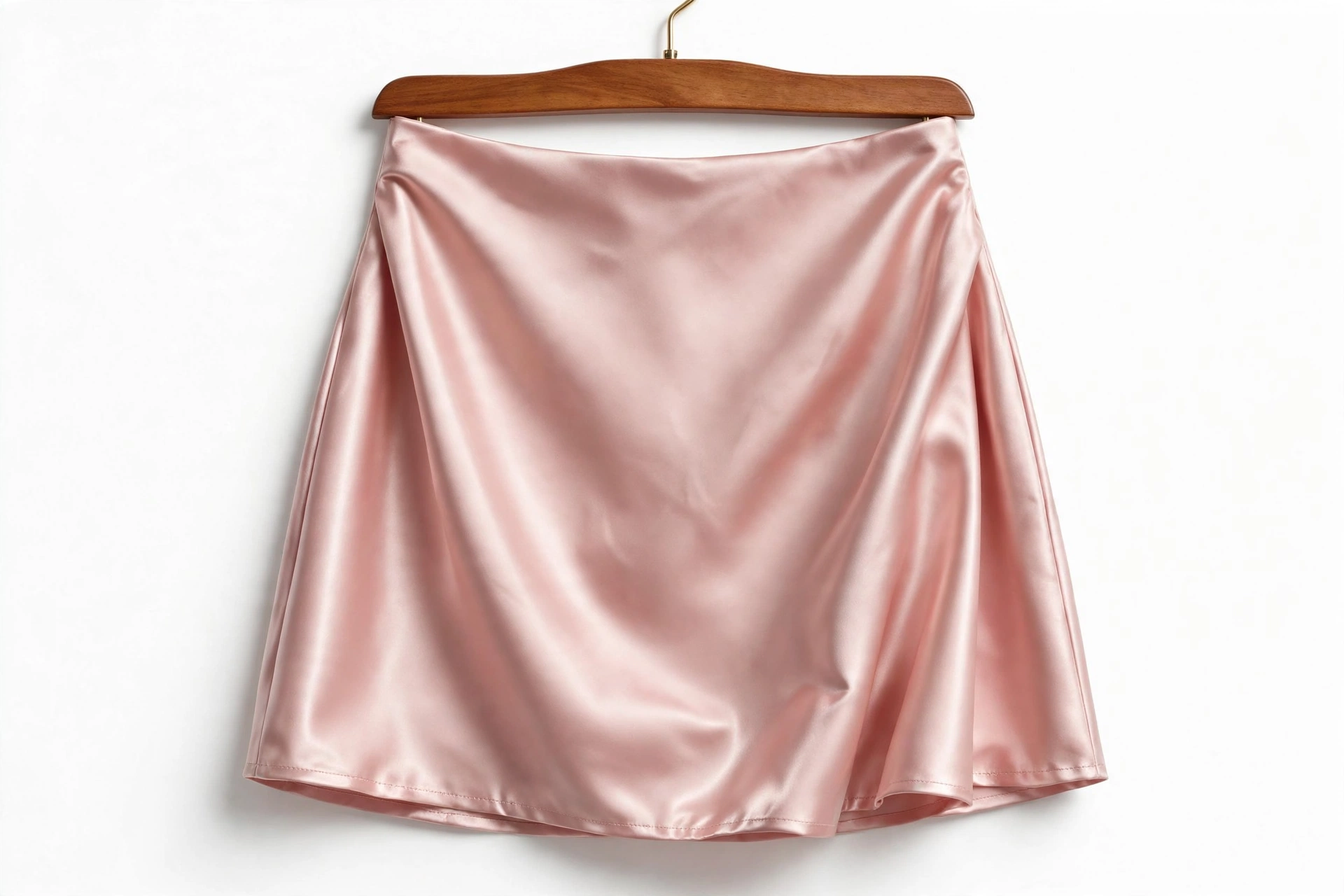
A black satin skirt lives or dies on construction, because the fabric shows every shortcut. Bias cut means the fabric is cut at 45 degrees to the weave. On charmeuse this is the money move: the diagonal stretch lets the skirt cling in a way that looks molded rather than tight, and light ripples across the folds in that old-Hollywood way. Straight cut hangs flat and static. For a slinky skirt, bias is the whole point.
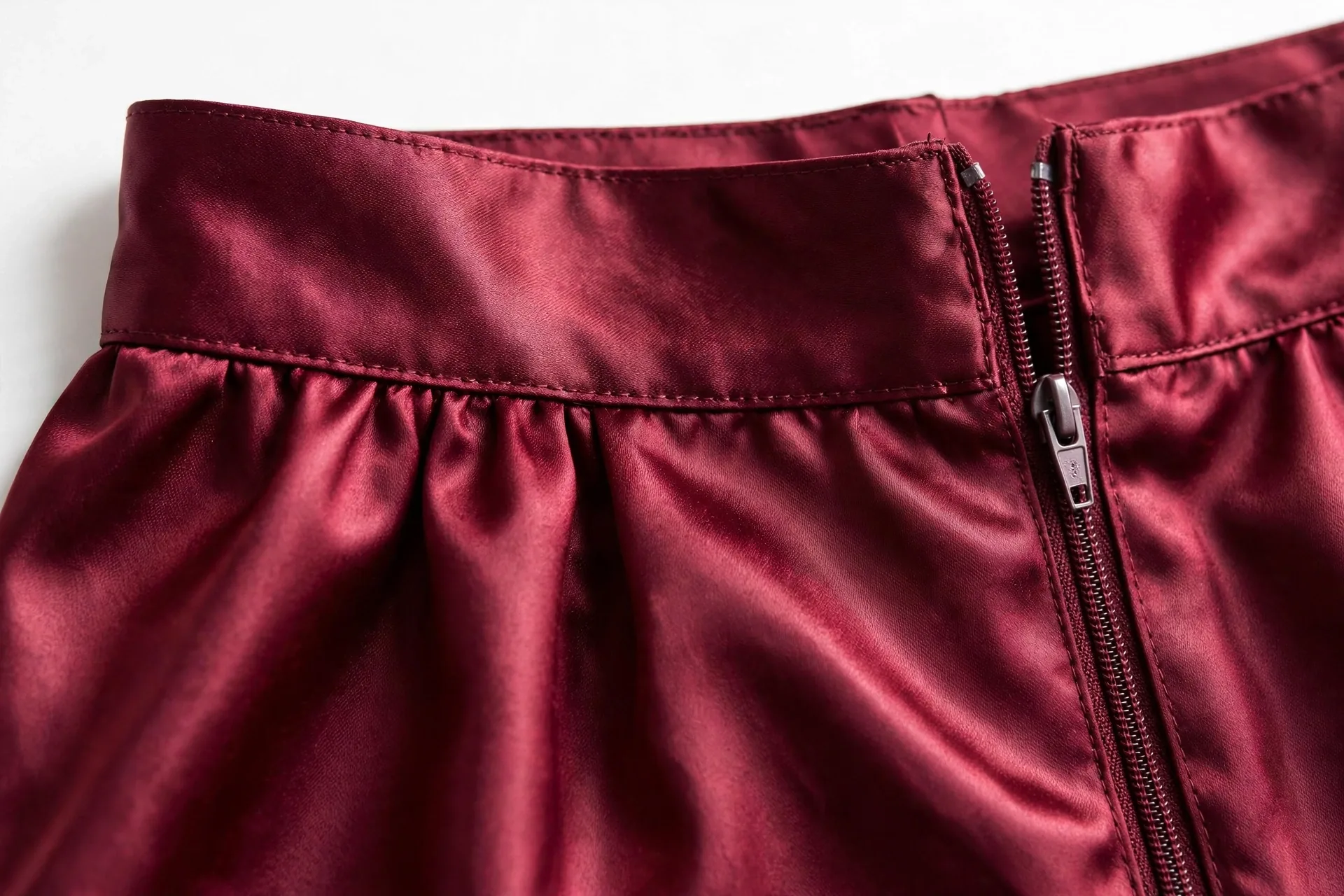
The waistband is where cheap skirts announce themselves. Elastic gathers the fabric into tiny pleats, and on gloss fabric those pleats catch light unevenly. A faced waistband with a zip or hook sits flat and reads tailored. For pencil skirts in duchess, a waist stay or interfacing keeps the skirt from rolling at the waist when you sit.
Three fitting-room checks that save you from regret. Sit down: bias charmeuse rides up, straight cut bags at the knee; neither is a defect, but know which you’re buying. Check the hem in bright light: a wavy, puckered hem means the maker fought the fabric and lost. Pull the waistband gently: stitching showing through on the face means wrong thread tension, and the seam will glare in photos.
How do you style a black satin skirt for daytime?
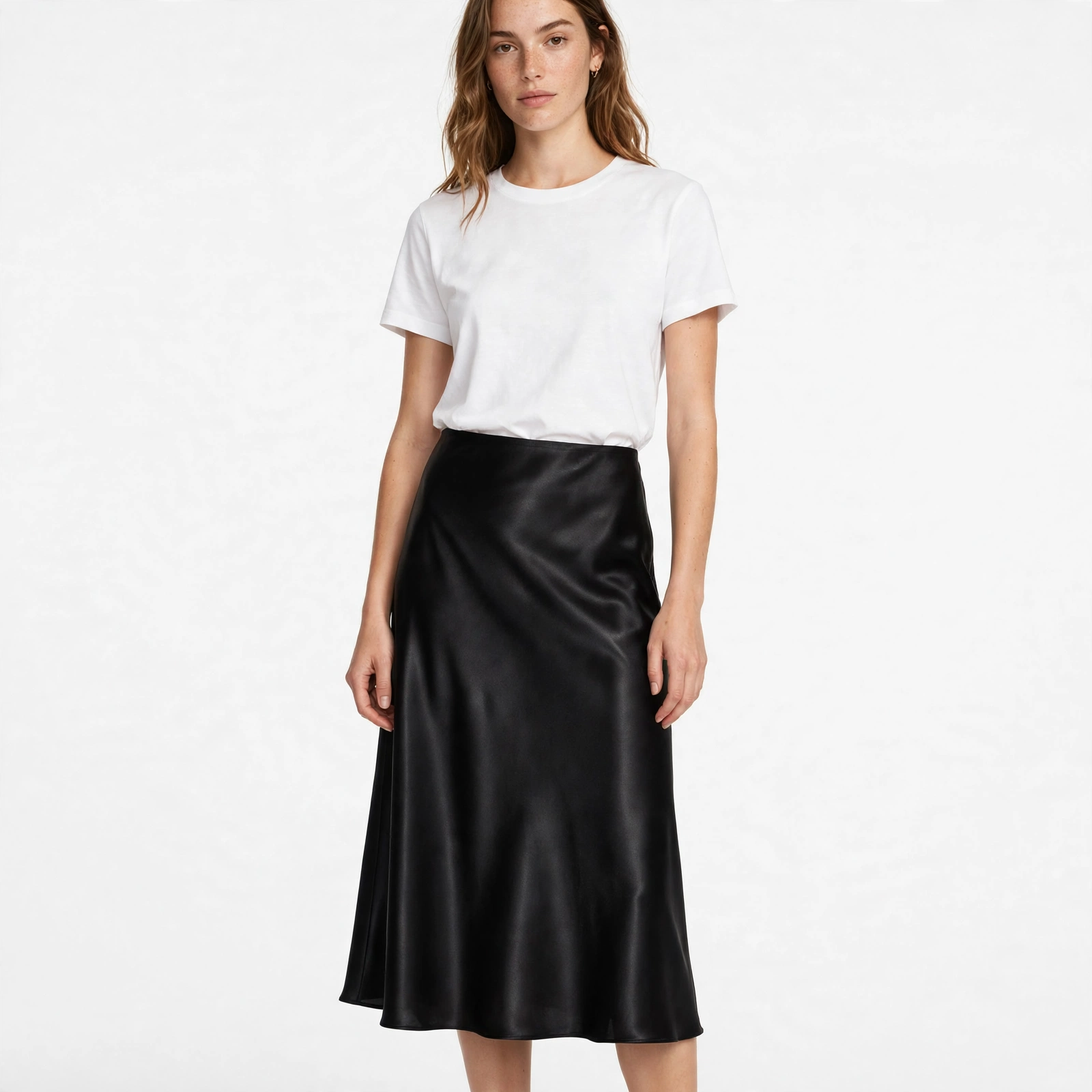
Let the skirt be the only shiny thing. A white or cream cotton tee tucked into a black satin midi is the uniform: the matte cotton eats light while the skirt reflects it, and that contrast is the entire look. Knits work the same way. Sneakers or flat boots keep it grounded; the moment you add heels, the outfit tips toward evening.
In cooler months, opaque tights solve the one real daytime problem with satin minis: shine plus bare legs reading as after-dark. Tights mute the legs and let the skirt keep its gloss.

How do you style a black satin skirt for night?
At night the skirt does the work and everything else plays support. A fitted black top, bodysuit or fine-knit turtleneck, makes a column of black gloss that’s the most elongating thing you can wear. Or go contrast: an ivory or champagne camisole against the black skirt breaks the black mirror just enough to photograph beautifully. Gold jewelry is the classic pairing; warm metal on cool gloss reads richer than silver.
Shoes can carry the color: red or metallic heels against a black satin skirt are a complete outfit. Keep the bag small, a clutch or mini bag, never a large tote. The full evening playbook is in our black satin dress guide, and the same accessory logic applies one piece over.

Where can you actually wear a black satin skirt?
Almost everywhere, once you separate the length from the fabric. A duchess or crepe-back midi with a blouse is fine in most offices; the concern is never the satin, it’s whether the skirt is too short or too tight for the room. Dinner, parties, date nights, cocktail events, gallery openings, holiday gatherings: all yes.
Two places to think twice. Some very conservative workplaces still read any shine as evening wear. And some daytime weddings prefer softer colors, where a full black maxi can read funereal. Everywhere else, the black satin skirt is the safe bold choice.
What myths about black satin skirts need to die?
Myth: black satin skirts always look cheap. Cheap satin skirts look cheap. The giveaway is never the color; it’s uneven dye that shows as patchy gloss, and a harsh plasticky shine from low-grade filament yarns. A deep, even black with controlled gloss reads expensive at any price. Hold the skirt to the light: if you can see through it, the weave is too thin, and no price tag fixes that.
Myth: satin skirts are evening-only. Evening-only is a styling choice, not a fabric law. A satin midi with a cotton tee and sneakers is a daytime outfit in every fashion capital. The people who say satin is night-only are pairing it with heels and a silk camisole, then blaming the fabric for what the shoes did.
Myth: polyester satin is always the budget option. For a black skirt, polyester is often the smarter buy, not the cheaper one. Disperse dyes penetrate polyester fiber well and hold wash after wash, which is why polyester keeps a true black longer through laundering. Buy silk for hand feel and breathability. Buy polyester for blackness that survives the laundry.
Myth: you can’t wear satin in summer. Polyester satin doesn’t absorb sweat, so it can feel clammy against skin in heat. But a loose maxi in charmeuse barely touches the body, and airflow does the rest. The sweaty version is a tight polyester mini. The fix is the cut, not the calendar.
How do you wash black satin without fading it?
Black satin fails in three predictable ways, and each has a mechanism you can fight. The per-fiber version lives in how to wash satin per fiber.
Fading. Black fades from sunlight and heat, not from wearing. UV breaks down dye molecules, and hot water opens fibers and coaxes dye out. Wash inside out in cool water with a mild detergent, never hot. Skip the dryer entirely; heat is the fastest way to kill a black. Hang or lay flat, and line-dry in shade, never direct sun. A skirt washed cold inside out keeps its depth for years.
Lint and static. Polyester satin has almost no moisture regain, so it can’t bleed off static the way cotton or silk can. Rubbing builds a charge, and the charge grabs every fiber in the room. A lint roller is part of the garment with a black satin skirt, not an accessory. Anti-static spray before you go out buys you an evening. Store it in a garment bag away from towels and fleece, which are lint factories.
Wrinkles and shine damage. Press only on the wrong side with a press cloth, on low heat. Direct iron contact on the satin face crushes the floats and leaves a shiny flattened patch that never recovers. Never spot-clean a water mark by dabbing; partial wetting leaves a ring. Wet the whole area evenly or leave it alone.
What should you check before buying?
Run this checklist in the fitting room. Read the fiber: polyester for the deepest black and easiest care, silk for breathability and hand feel. Hold it to the light: if you can see through a black skirt, it’s too thin and will cling to every seam of your underwear. Stretch a small area and watch the sheen: uneven gloss means a cheap dye job, and it shows first in the stretch. Inspect the waistband and seams: a faced waistband with a zip reads tailored, elastic gathers read casual, and French seams or bound edges on charmeuse mean the maker understood the fabric. Finally, know your satin type before you fall in love with the silhouette. Hold it up and drop it: charmeuse falls in one fluid column, duchess in structured folds.
Frequently asked questions
Does a black satin skirt make you look slimmer? Black removes the shadow detail your eye uses to read volume, and satin adds a vertical line of highlight the eye follows down the body. A column silhouette in black satin is one of the most elongating things you can wear. A structured A-line widens the lower half visually, but that’s the cut doing it, not the fabric.
Can you wear a black satin skirt to the office? Yes, if the length and cut are right. A knee-length or midi skirt in duchess or crepe-back satin with a blouse reads professional in most workplaces. The mini is what raises eyebrows, not the satin. In very conservative offices, face the matte crepe side of a crepe-back skirt outward.
Does black satin show sweat? Polyester satin doesn’t absorb moisture, so sweat can sit on the surface as dark patches under the waistband and across the back. Silk breathes better and shows less. If you run hot, pick silk, or a looser cut in polyester over a tight charmeuse mini.
How do you stop a satin skirt from clinging with static? Static comes from polyester’s near-zero moisture regain: rubbing builds a charge the fabric can’t bleed off. Anti-static spray before wearing, or a light mist of water on the inside of the skirt, both help. Lining the skirt in cotton or a silk blend fixes it permanently.
Can you iron a black satin skirt? Only on the wrong side, with a press cloth, on low heat. Direct iron contact on the satin face crushes the floats and leaves a shiny flattened patch that never recovers. For polyester, a cool iron with a cloth is safest; for silk, steam from the wrong side works well.
What shoes go with a black satin skirt? For day: sneakers, flat boots, or loafers keep the look grounded. For night: strappy heels or pointed pumps extend the leg line the skirt starts. Shoes can carry the outfit’s color: red or metallic heels against a black satin skirt are a complete look.
Is a black satin skirt flattering on curvy figures? Yes, with the right satin type. Duchess satin holds its own shape and smooths the body underneath, which flatters curves without clinging. Charmeuse follows the body exactly, so it shows every line. Curvy figures get the best result from structured duchess or crepe-back cuts, or charmeuse worn with smoothing undergarments.