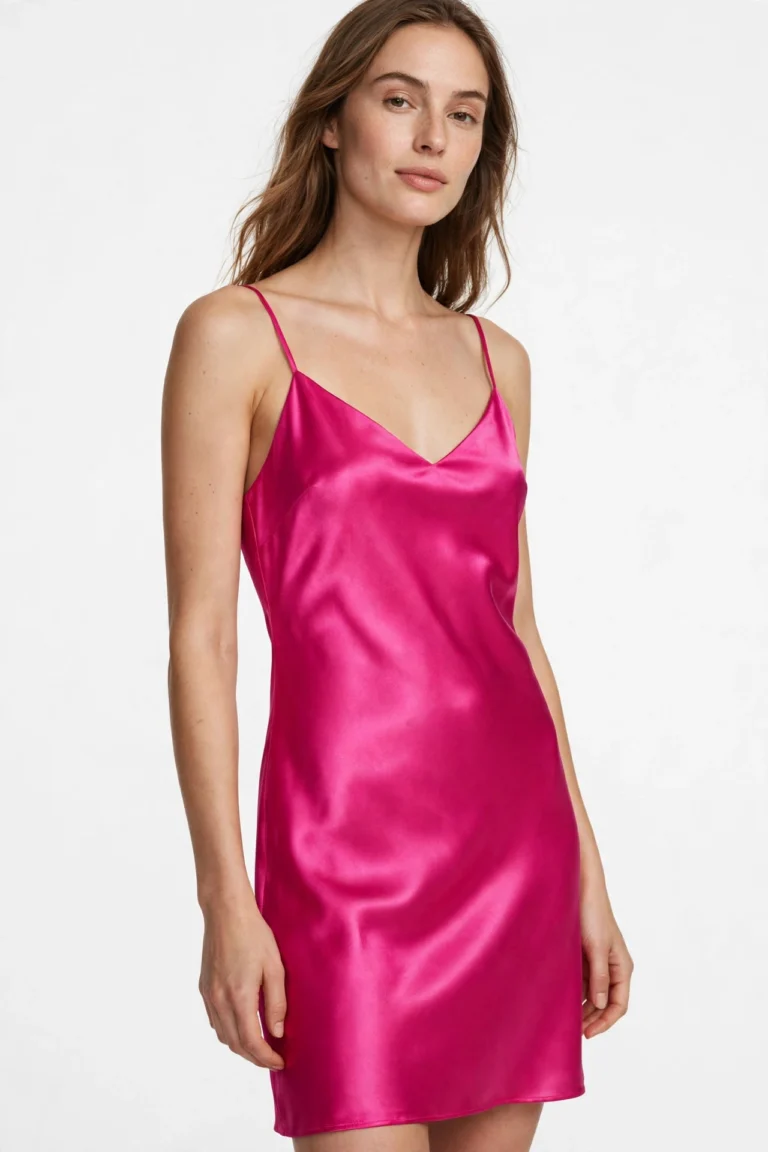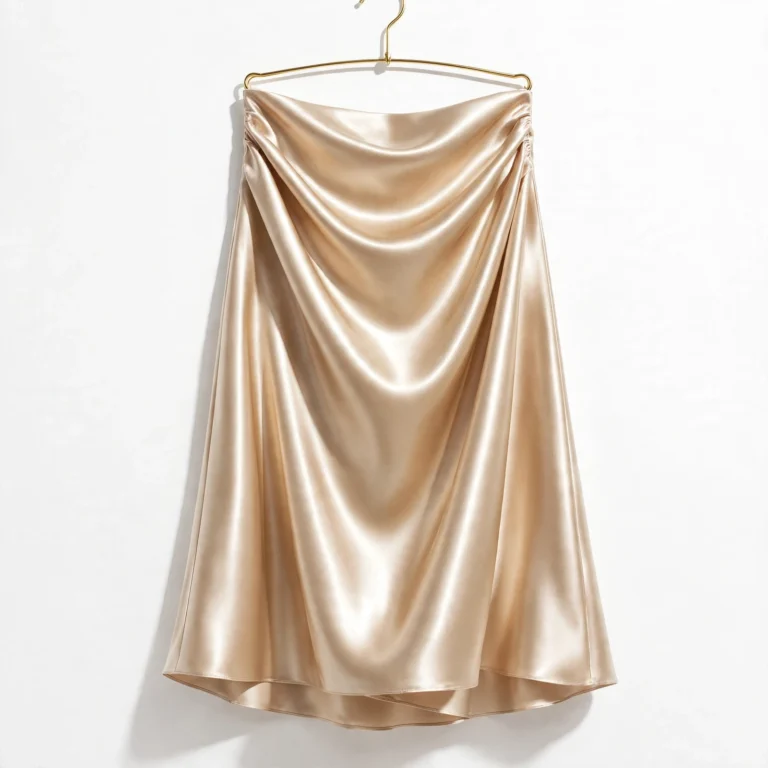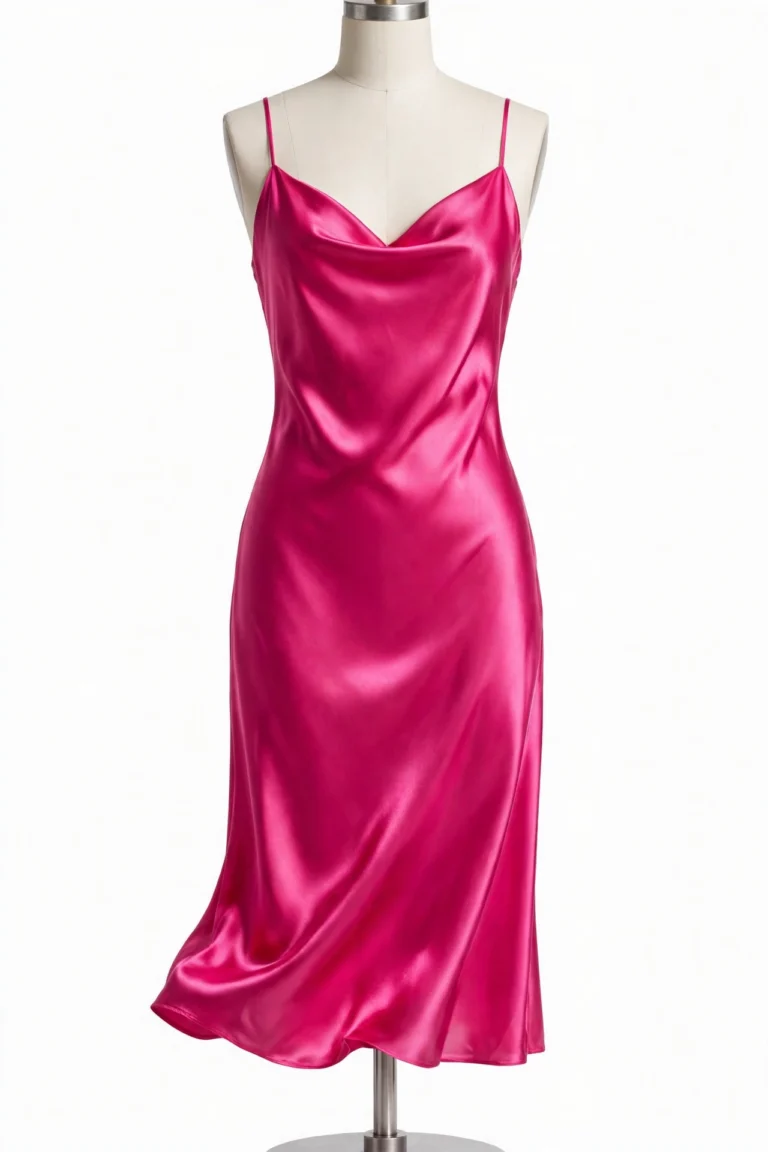
Champagne Satin Dress: The Complete Guide
Why does champagne satin read more expensive than most colors?
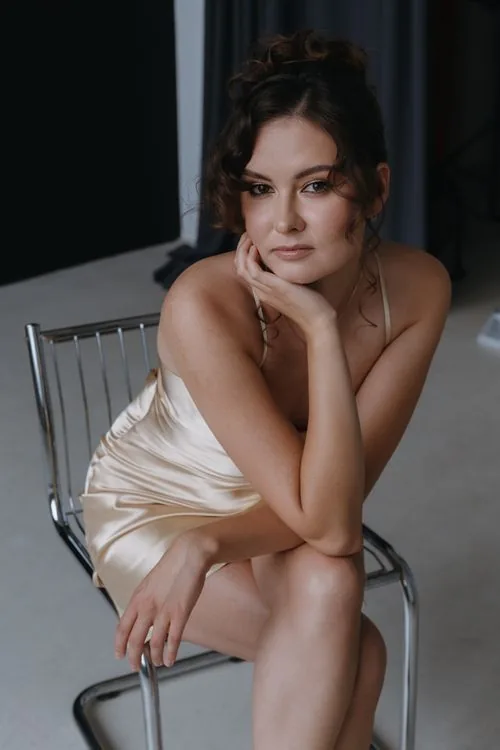
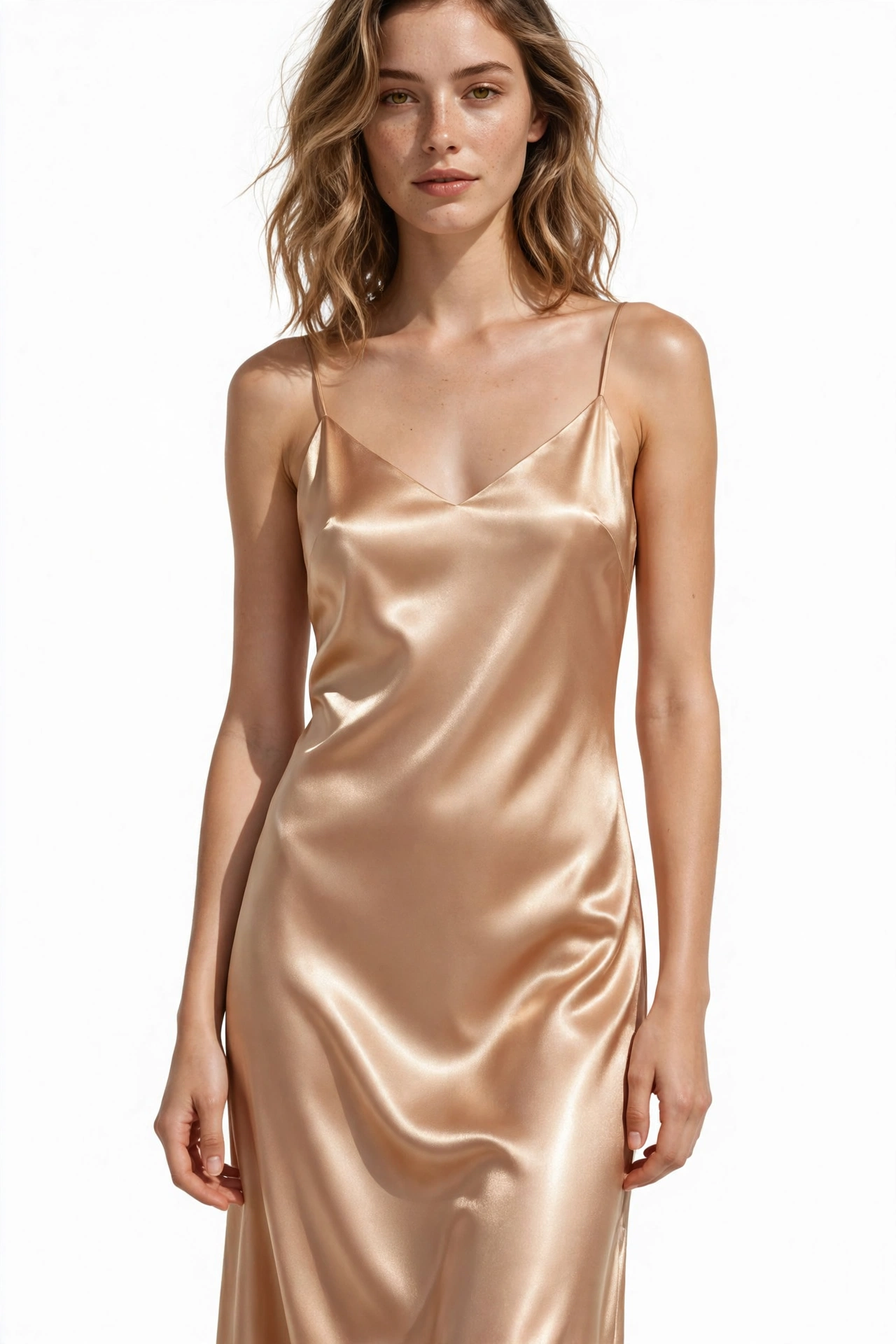
Champagne is a warm mid-tone sitting between gold and beige, and on a satin weave it does something few colors manage: the long yarn floats reflect light in organized bands while the warm undertone softens the reflection. The result is glow rather than glare. That warm glow is what cameras and human eyes alike read as luxury, which is why champagne satin photographs well and rarely looks flat.
What is champagne satin, technically?
Satin is a weave, not a fiber, and champagne is a dye color, not a fabric type. Any champagne satin dress is really three decisions stacked: a fiber (silk, polyester, or a blend), a satin weave with long floats that put yarn surface on the face, and a warm beige-gold dye job. The shine mechanism is the same one that makes every satin look glossy, specular reflection off the floating yarns, but the warm champagne tone tints the reflection itself. Where black satin reflects cool sharp highlights and white satin reflects everything blindingly, champagne reflects a golden light that flatters skin. That’s the mechanism behind its reputation as a flattering neutral.
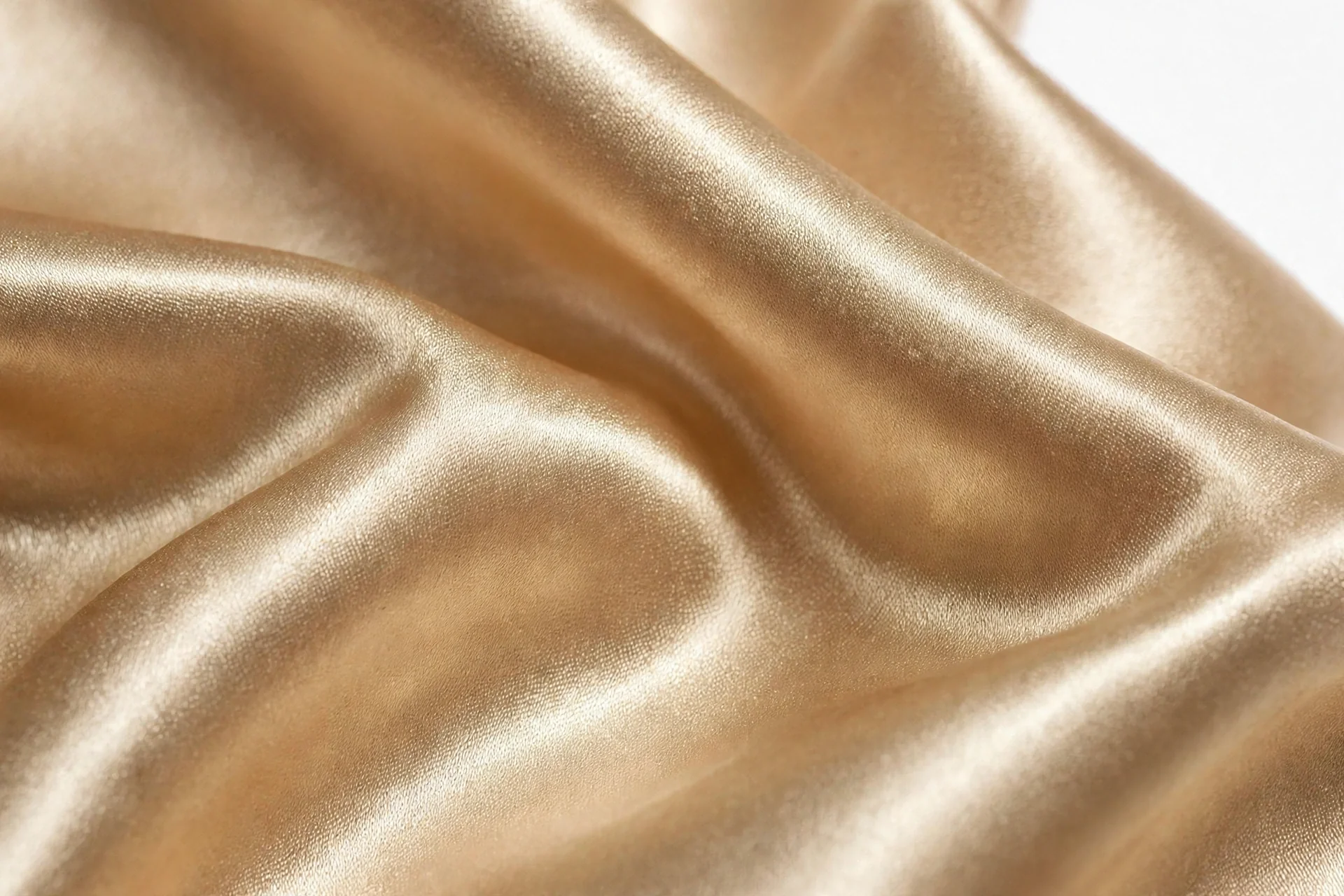
The dye is where cheap versions fail. Champagne is a hard color to dye evenly because the eye catches uneven warm tones faster than uneven cool tones. On gloss fabric, patchy dye shows up as blotchy shine: brighter warm patches next to duller grayish ones. Hold any champagne satin dress under store lighting before buying and move it slowly. The color should shift smoothly from light to shadow. If it flickers between gold and gray, the dye job is uneven and photos will find it.
One more honesty note: most champagne satin dresses on the market are polyester, not silk. Polyester takes disperse dyes well and the color stays stable through washing, which matters for a warm tone that can go muddy if the dye bleeds. Silk gives a softer drape and a more complex shine, but it costs several times more and demands dry cleaning or delicate hand washing. For a warm neutral you plan to wear often, polyester is frequently the practical choice, not the compromised one. The fiber question is covered in depth in our satin vs silk comparison.
Champagne rose, champagne gold, or beige-champagne: which shade should you buy?
“Champagne” on a label covers at least three different colors, and they don’t behave the same on the body or in photos. Champagne rose leans pink, champagne gold leans warm yellow-metallic, and beige-champagne sits between them as the most neutral. Buy the wrong one and the dress fights your coloring; buy the right one and it looks like it was made for you.
| Shade | Best occasions | Best styling | Why it works |
|---|---|---|---|
| Champagne rose | Weddings (as guest, with caution), date nights, spring events | Silver jewelry, blush or nude clutch, pearl studs | The pink undertone brightens fair and cool skin; photographs soft, not bridal |
| Champagne gold | Evening parties, holiday events, New Year’s Eve | Gold jewelry, dark clutch for contrast, strappy metallic heels | The golden cast glows under artificial light; the most dramatic of the three |
| Beige-champagne | Daytime events, offices, dinners, bridesmaid-adjacent roles | Nude slingbacks, gold or rose-gold jewelry, tan or taupe bag | Most neutral and most versatile; reads as expensive fabric rather than a color |
My take: beige-champagne is the workhorse and the safest first buy. Champagne gold is the statement choice for evenings. Champagne rose is the one to try on in person, because its pink undertone turns some skin tones luminous and others sallow, and no product photo will tell you which camp you’re in.
Skin tone matters more here than with most colors. Warm champagne shades tend to flatter warm and olive skin because the dress’s undertones match the skin’s. On very fair cool skin, champagne gold can make the face look washed out, while champagne rose usually saves the day. If you’re between shades, the beige-champagne middle ground flatters the widest range of complexions.
Duchess, charmeuse, or crepe-back: which satin for which silhouette?
Champagne magnifies whatever the satin type does, good or bad. The warm glow draws the eye, so a fabric that drapes well looks even better and a fabric that wrinkles looks even worse. Matching the satin type to the silhouette is the single most consequential buying decision.
| Duchess satin | Charmeuse | Crepe-back satin | |
|---|---|---|---|
| Shine | Medium, controlled glow | High gloss, liquid | Low gloss face, matte crepe reverse |
| Weight | Heavy, structured | Light, very fluid | Medium, substantial |
| Drape | Holds its own shape | Clings, follows the body | Soft structured folds |
| Wrinkle behavior | Resists creasing well | Creases easily, shows sitting marks | Better than charmeuse |
| Best dress style | Structured gown, A-line, corseted bodice | Slip dress, bias-cut, cowl neckline | Tailored midi, wrap dress |
| Best use | Formal events, weddings, galas | Date nights, parties, evening | Daytime events, office, versatile |
Buy duchess for a gown that needs to stand on its own. The density of the weave keeps a full skirt in place and a bodice crisp, and the controlled gloss photographs beautifully under event lighting. Buy charmeuse for the slip dress, the bias-cut column that catches light as you move. Crepe-back is the daywear answer: the matte face reads as silk clothing rather than evening wear, and you still have the satin side for after dark. The full type breakdown is in our guide to satin types.
Here’s the mistake I see most: a charmeuse gown with a full skirt. Lightweight charmeuse can’t support a voluminous skirt, so it collapses and clings where it should float. The reverse mistake is just as common, a heavy duchess slip dress that hangs stiff where it should pour over the body. Weight and silhouette have to agree, or the proportions fight you all night.
Can you wear a champagne satin dress to a wedding?
This is the question behind half the searches for this keyword, and it deserves an honest answer. Many etiquette guides list champagne alongside white, ivory, and cream as colors guests should avoid, because all of them can read bridal in photos. In practice, the risk isn’t equal across the board: a pale champagne slip dress that photographs near-white is genuinely risky, while a clearly golden champagne gold gown that looks nothing like a bridal gown in person is usually fine.
The honest rule is about photographic distance from white. Ivory reads white on camera almost every time, which is why it causes the most incidents. Champagne has visible warmth and color, so it usually photographs as itself rather than as the bride. But “usually” is doing work in that sentence. Flash photography, overexposure, and bright outdoor light can wash a pale champagne toward white.
My advice: if the dress could be mistaken for the bride’s in a photo, pick something else. Darker champagne gold is safer than pale champagne. And when in doubt, ask. A quick message to the couple costs you nothing and eliminates the one scenario where a beautiful dress becomes a story.
Two more venue notes. For outdoor weddings, satin’s shine can photograph harshly in direct sun, so a matte-sided crepe-back dress or a slightly darker champagne is more forgiving. And block heels are the practical answer for grass: stilettos sink, and a champagne satin dress with grass stains on the hem is a short evening.
How do you style a champagne satin dress?
Champagne is a warm neutral, so it behaves like a canvas: the accessories do the talking. The metal you choose sets the temperature of the whole outfit, and the bag and shoes decide whether it reads formal or relaxed.
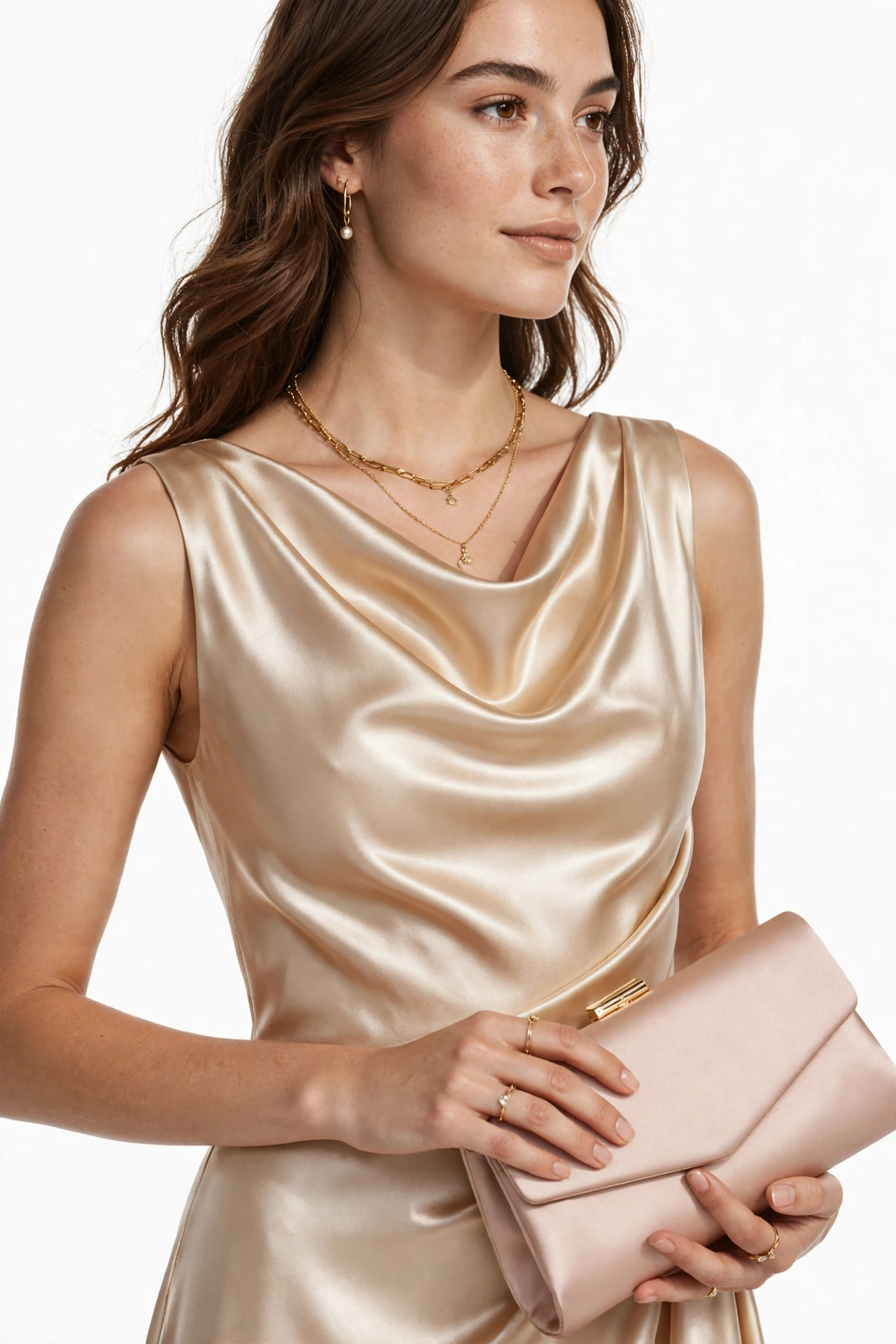
Evening: Gold jewelry is the natural partner, warm metal on warm fabric, and it reads richer than silver against champagne. A pearl choker or strand of pearls is the classic neckline choice for strapless and cowl-neck styles, the matte pearls calming the fabric’s gloss. Pair with strappy heels, metallic or nude, and a small clutch in blush, nude, or deep burgundy for contrast.
Daytime: Pull the formality down with texture. A champagne satin midi with a cropped cardigan or a denim jacket (as counterintuitive as that sounds) works for daytime events, because matte layers eat the shine. Nude slingbacks keep the leg line long without competing. Keep jewelry minimal, a thin gold bracelet and studs.
What not to do: Don’t pair champagne satin with white accessories. White shoes or a white bag next to the dress makes it read as an attempted bridal look, which is exactly the association you’re avoiding at weddings. Don’t add a second shiny fabric, either: satin plus sequins plus metallic shoes is shine competing with shine, and the dress loses. One glossy element per outfit is the rule.
What silhouettes flatter which body types?
Champagne satin is less forgiving than darker colors because light tones show every pull and crease, and gloss highlights volume. But the right silhouette turns that into an advantage, because the eye follows highlights down the body.
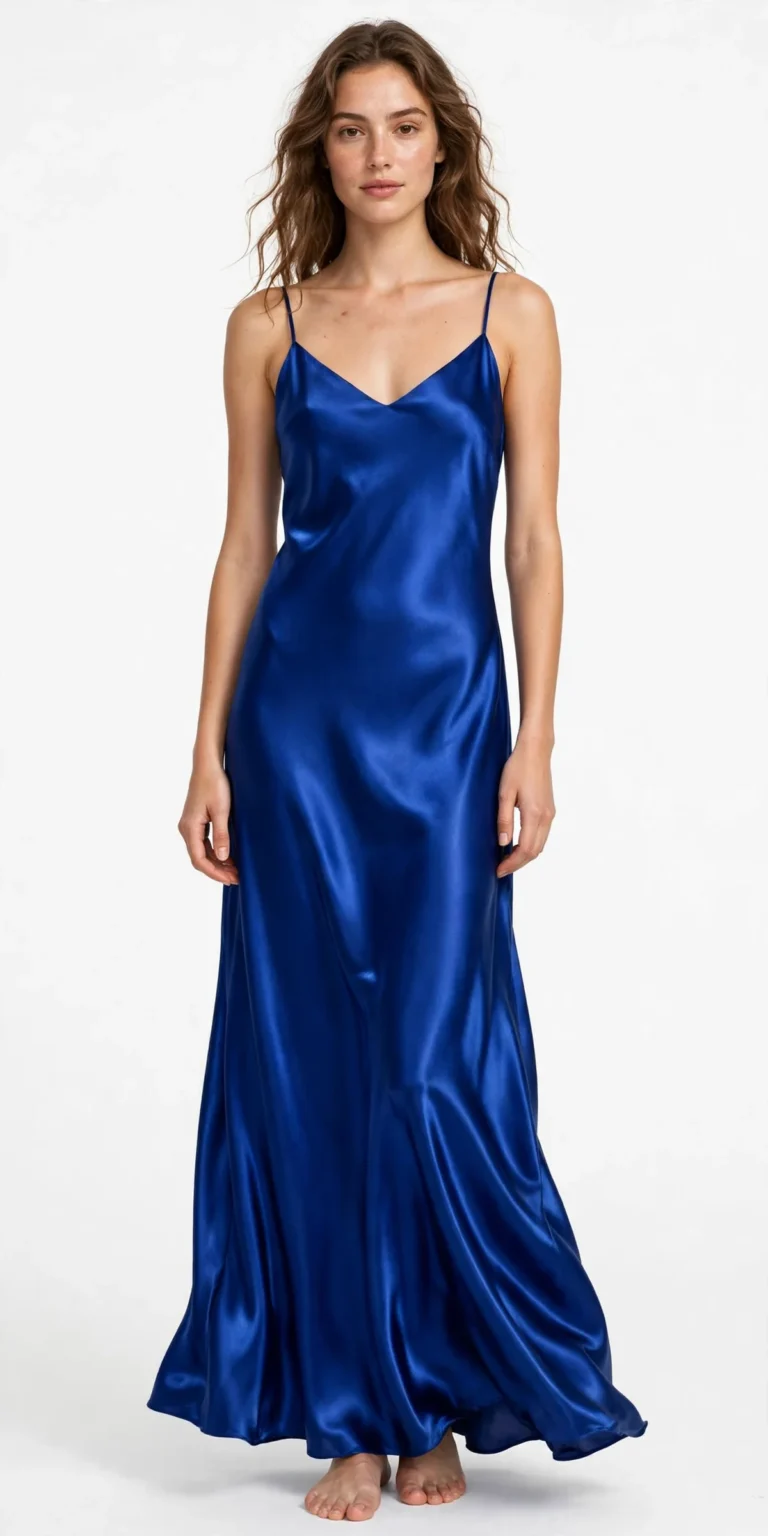
Slip dress (bias-cut charmeuse): The classic champagne look. Works best on straight or hourglass frames where the fabric can skim. On curvy figures it can cling at the hips; smoothing undergarments or a slightly heavier charmeuse fix this.
A-line and fit-and-flare (duchess): The most universally flattering cut in champagne. The fitted bodice defines the waist, the structured skirt holds its own shape, and the gloss highlights the skirt’s movement rather than the body’s. This is the silhouette to recommend to someone who asks “will this suit me?” without more detail.
Wrap dress (crepe-back or midweight satin): The adjustable waist is genuinely useful, and the diagonal line across the torso breaks up the gloss. A strong choice for apple and pear shapes.
Column/gown (duchess or peau de soie): Formal and dramatic. Tall frames carry it best; on petite frames, a full-length column in champagne can overwhelm, so a midi length keeps the proportions right.
The through-line: structure flatters more body types than fluidity in this color. If you’re unsure, buy the structured version. A duchess A-line forgives what a charmeuse slip exposes.
How do you care for a champagne satin dress?
Warm light colors fail in specific ways, and each has a mechanism you can fight. The per-fiber instructions live in how to wash satin.
Water marks. This is the champagne-specific problem. Water dries with a faint ring on light satin because minerals deposit at the edge of the wet patch, and the ring shows against the warm tone. Never spot-dab a spill; partial wetting is what leaves rings. Either wet the whole area evenly and let it dry, or take it to a cleaner and let them handle it.
Deodorant and makeup stains. White deodorant marks and foundation smudges show brutally on champagne. Apply deodorant and let it dry fully before the dress goes on, and put the dress on after makeup, not before. A silk or satin-safe stain remover used promptly handles most fresh marks; old ones set in the fiber and won’t budge.
Wrinkles. Charmeuse creases where you sit, and champagne’s gloss makes every crease visible. Hang the dress on a padded hanger as soon as you take it off. Steam from the wrong side relaxes most wrinkles. Press only on the wrong side with a press cloth on low heat; direct iron contact on the satin face crushes the floats and leaves a flattened patch.
Storage. Champagne yellows with prolonged light exposure, so don’t store it in a sunlit closet. A breathable garment bag keeps dust off without trapping moisture. Never store in plastic long-term; trapped humidity can spot light satin.
What should you check before buying?
Run this checklist in the store or on arrival. First, the dye test: move the dress slowly under bright light and watch the color shift. Smooth gold-to-shadow transitions mean even dye; flickering between gold and gray means a cheap dye job that photos will find. Second, hold it to the light. Light champagne satin shows what’s underneath, so check whether it needs a slip or lining, especially in charmeuse.
Third, read the fiber and the satin type together. Polyester in a structured duchess is a workhorse that survives events and washing. Silk charmeuse is the luxury experience but demands care and budget. Fourth, sit down in it. Charmeuse will crease and ride; duchess will hold. Decide whether the movement or the structure is what you’re buying, and don’t expect one to behave like the other. Finally, check the zipper and seams in a mirror. Cheap zippers ripple satin, and the ripple shows on gloss fabric. A well-set invisible zip disappears; a wavy one announces itself.
One sizing note worth knowing: satin has almost no give, so between sizes, size up. A tailor can take in a champagne dress cleanly; no one can add fabric that isn’t there. This matters more in duchess, which won’t stretch over a too-tight bodice.
Where does champagne satin sit in the satin dress family?
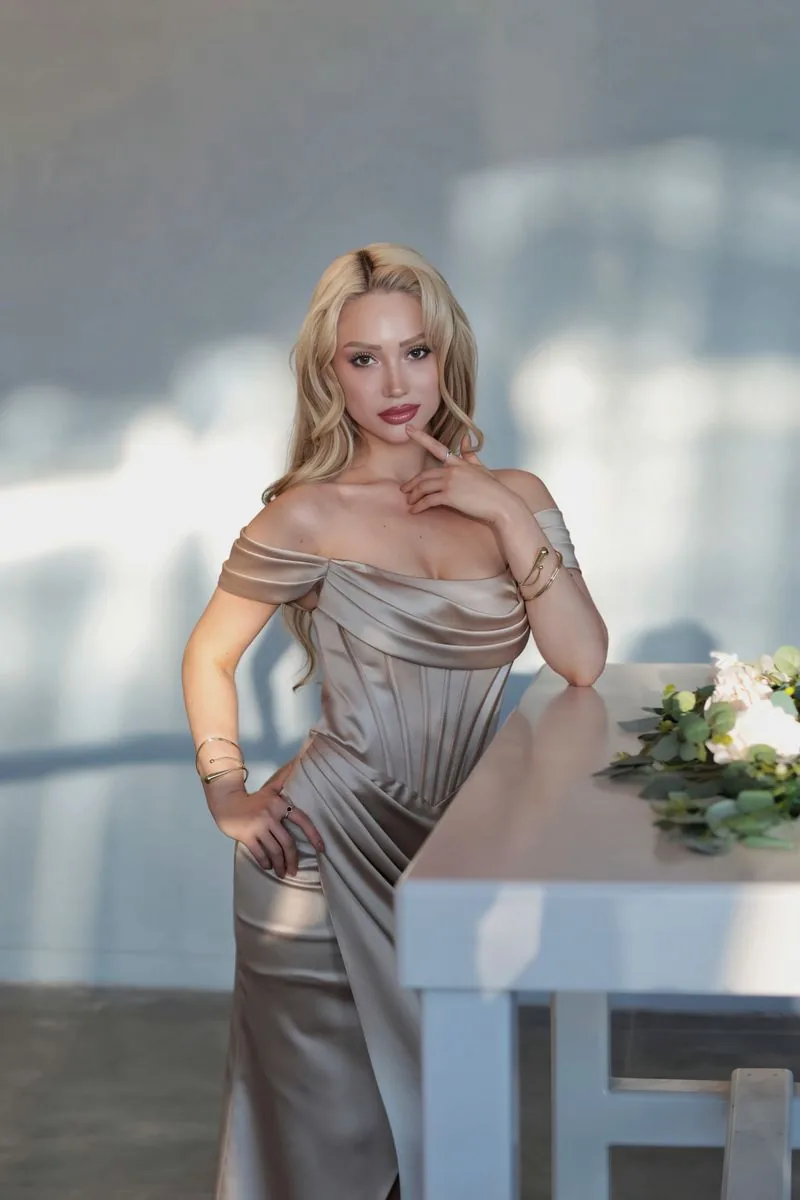
The champagne satin dress is one branch of a much bigger family, and knowing the neighbors helps you buy smarter. Champagne is the warm neutral of the color guides: black is the safe bold choice, red is the statement, and champagne is the one that reads expensive without demanding attention. The general satin dress guide covers the mechanics that apply to every color, and the what is satin piece explains the weave itself. If you are choosing between champagne and a stronger color, try both on under the same light: champagne flatters by harmony, color flatters by contrast, and your mirror will tell you which game your coloring plays.
Frequently asked questions
Can you wear a champagne satin dress to a wedding as a guest? It depends on the shade and the wedding. Pale champagne that photographs near-white is risky, since many etiquette guides group champagne with white and ivory as colors to avoid. Darker champagne gold with visible warmth usually reads as itself, not as bridal. When in doubt, ask the couple.
Is champagne satin the same as gold satin? No. Champagne is a muted beige-gold neutral; gold satin is brighter and more metallic. Champagne reads as a soft warm neutral suitable for daytime, while gold satin is a statement fabric that belongs to evenings and holidays. They use similar warm dyes, but at very different intensities.
Does champagne satin look good on dark skin? Yes, often beautifully. The warm golden undertones of champagne harmonize with warm and deep skin tones, and the gloss highlights skin in a way that flatters. Champagne gold is usually the best variant for deeper complexions, since its golden cast echoes the skin’s warmth.
What jewelry goes with a champagne satin dress? Gold jewelry is the natural match, warm metal on warm fabric. A pearl choker or pearl studs calm the fabric’s gloss for formal looks. Silver works best with champagne rose, the pink undertone, where cool metal balances the warmth. Keep it to one statement piece; the dress is already doing plenty.
What shoes go with a champagne satin dress? Nude slingbacks or strappy nude heels extend the leg line and never compete. Metallic gold or champagne heels work for evening. For outdoor venues, block heels or wedges keep you out of the grass. Avoid white shoes, which push the look toward bridal.
Can you wear a champagne satin dress in daytime? Yes, with the right satin type. A crepe-back or midweight champagne midi with matte layers reads as daywear, not evening wear. Charmeuse slip dresses and full duchess gowns belong to evenings. The fabric weight and the styling decide, not the color.
How do you remove a water stain from champagne satin? Don’t spot-dab it; partial wetting leaves a ring on light satin. Either wet the whole area evenly so it dries uniformly, or take it to a professional cleaner. For silk champagne, go straight to the cleaner; water can permanently mark some silk satins.