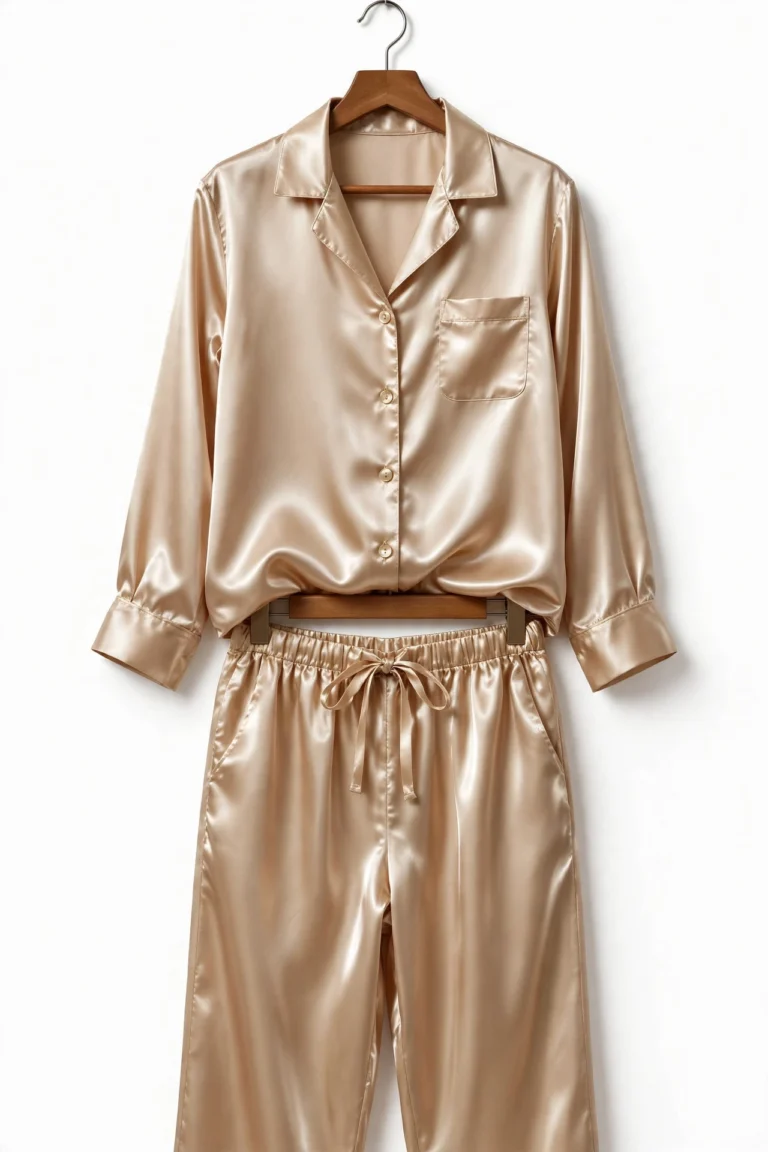
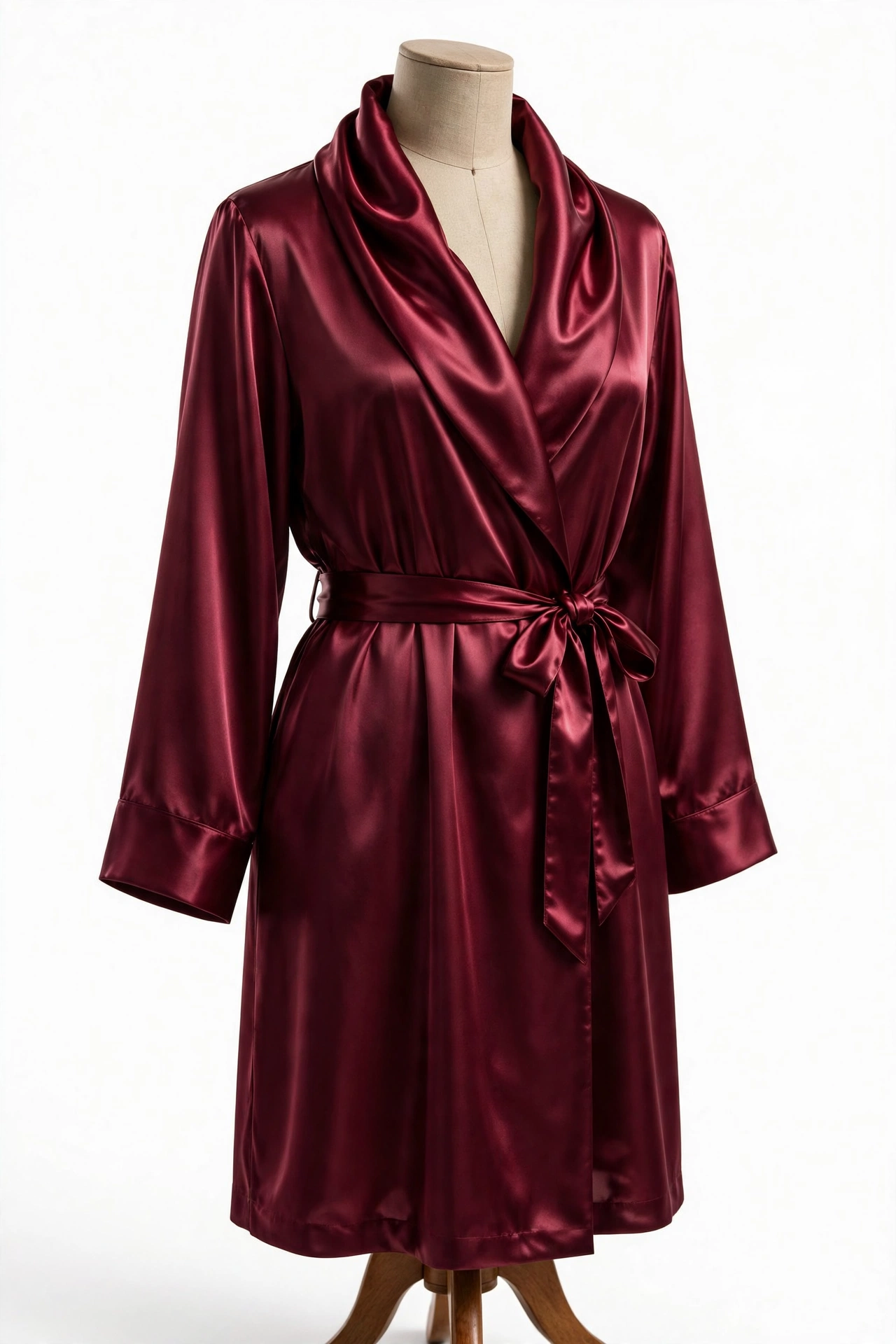
Satin Robe: The Complete Buying Guide
Most satin robes fail for one reason, and it is not the fabric. It is the fit decision nobody warns you about: the belt. Satin has almost no friction, so a knotted satin belt loosens with every step you take. Buyers assume the robe is defective and return it, when the fix is understanding the mechanism and buying a robe with an inner tie. The rest of the buying decision is simpler than sellers make it: collar shape, length, and fiber. That is the thirty-second version. The detail is below.
The 30-second verdict
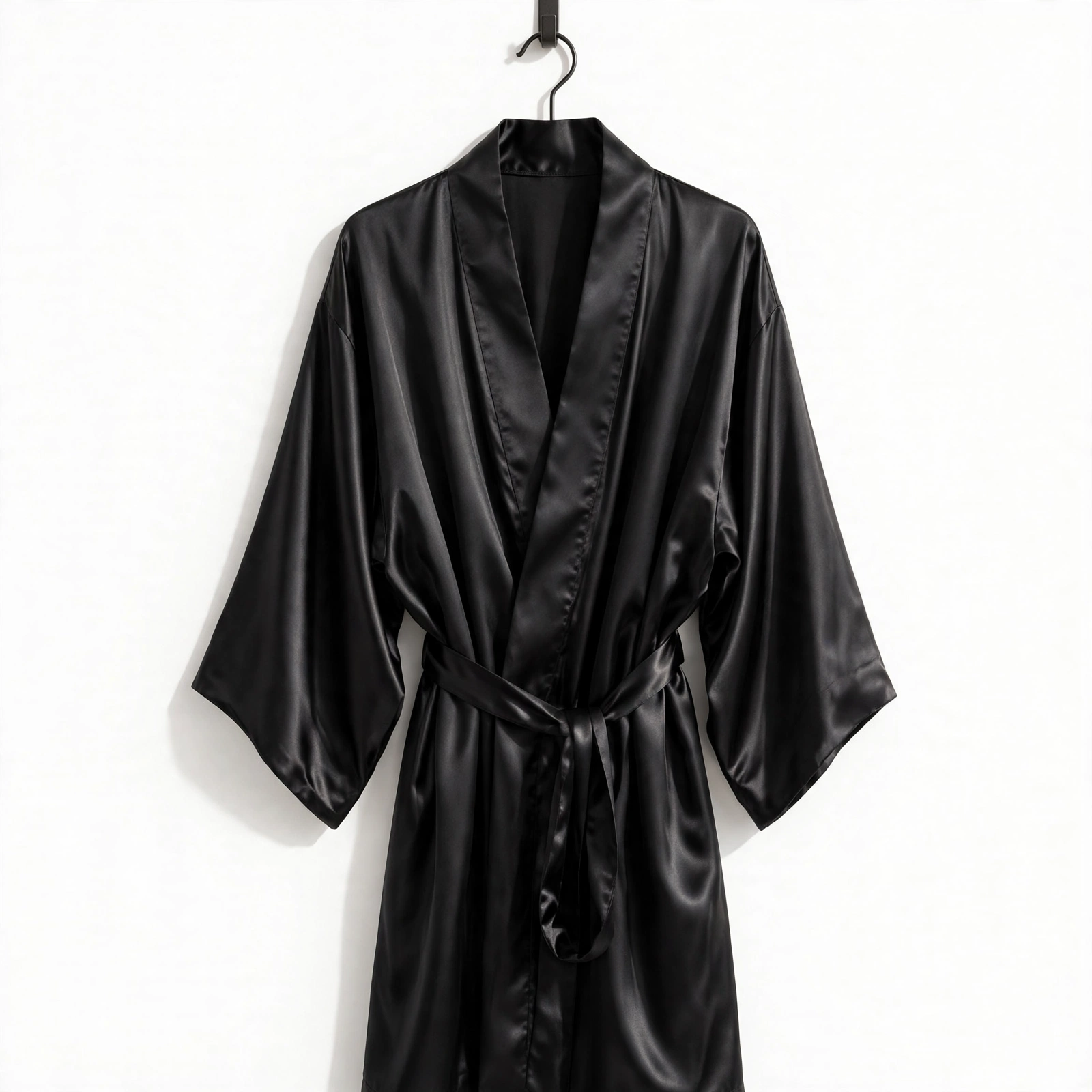
Buy a robe with an inner waist tie: that string inside the robe is the real closure, and the belt is decoration. Choose a mid-weight charmeuse in a dark color for a robe that drapes without clinging. Kimono collars relax, shawl collars polish, and knee length suits almost everyone. Polyester satin is the rational buy for everyday robes; silk is the luxury upgrade, never a machine-washable one. Check the belt loops before the mirror: if they sit above or below your natural waist, the belt will never sit right.
Why does the belt always come undone?
A knot holds because of friction. That is the entire answer, and everything about a satin robe works against it.
A satin belt is a ribbon of fabric with a smooth face wrapping around your body. Satin’s long floats make both faces glassy smooth, which means the knot has almost nothing to grip. Every step you take shifts the fabric, the loop opens a little more, and by the time you reach the kitchen the belt hangs open. The satin weave guide explains the float structure behind this behavior.
Here is the honest correction: the belt is not supposed to be the closure. A properly made robe has an inner tie string, one on each side at the waist inside the robe. You tie those first, and they hold the robe closed because they take a static load with no movement working them loose. The outer belt then just keeps the front flat and looking neat. If your robe opens when the belt slips, the robe is missing its real closure, not your body is wrong for the robe. This single fact eliminates most robe frustration.
Ranked fixes, best to least.
Buy a robe with an inner tie. Check before purchase by reaching inside. Two strings at the waistline, or a string and a hidden button on the opposite side, means the robe stays closed whatever the belt does. This matters more than any other buying criterion.
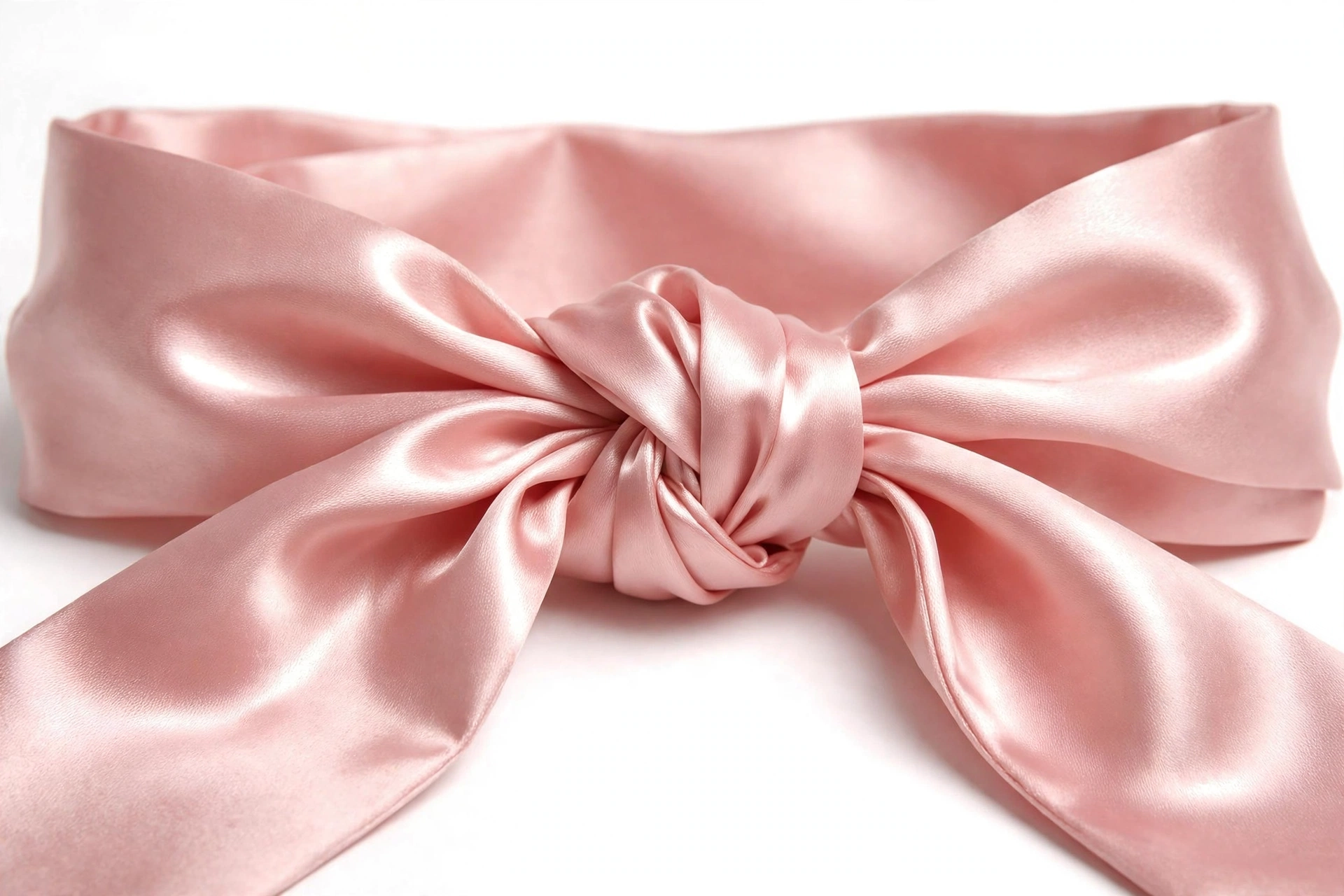
Widen the knot’s grip. A wider belt holds better than a skinny one because more contact area means more friction. If your robe came with a thin belt, swap it for a wider sash: even a folded satin scarf works, and it looks deliberate rather than makeshift.
Tie a surgeon’s knot, not a bow. A bow knot is a slip knot; it is designed to come undone. Put one extra half-hitch into the knot before the bow. It takes two seconds and it multiplies the knot’s resistance to working loose. Double-knot purists are right about the physics.
Seat the belt at your natural waist, not your hips. Belts slide on satin because gravity pulls them to the narrowest gripping point. At your natural waist the belt has a body curve to rest on. On the hips it has nowhere to sit and migrates downward, loosening as it goes.
Add belt loops or have a tailor add them. Belt loops pin the belt in place at the waist so it cannot migrate. A tailor adds three loops in ten minutes for a small fee. It is the cheapest permanent fix for a beltless robe.
Which collar should you choose: kimono, shawl, or smoking jacket?
Three collars cover nearly every satin robe sold. The collar changes the robe’s posture more than anything else.
| Collar | What it looks like | Best for | Watch out for |
|---|---|---|---|
| Kimono | Wide flat band, open V neckline, relaxed wide sleeves | Lounging, warm rooms, the classic “getting ready” robe | The open neck gapes when you move; no structure over the shoulders |
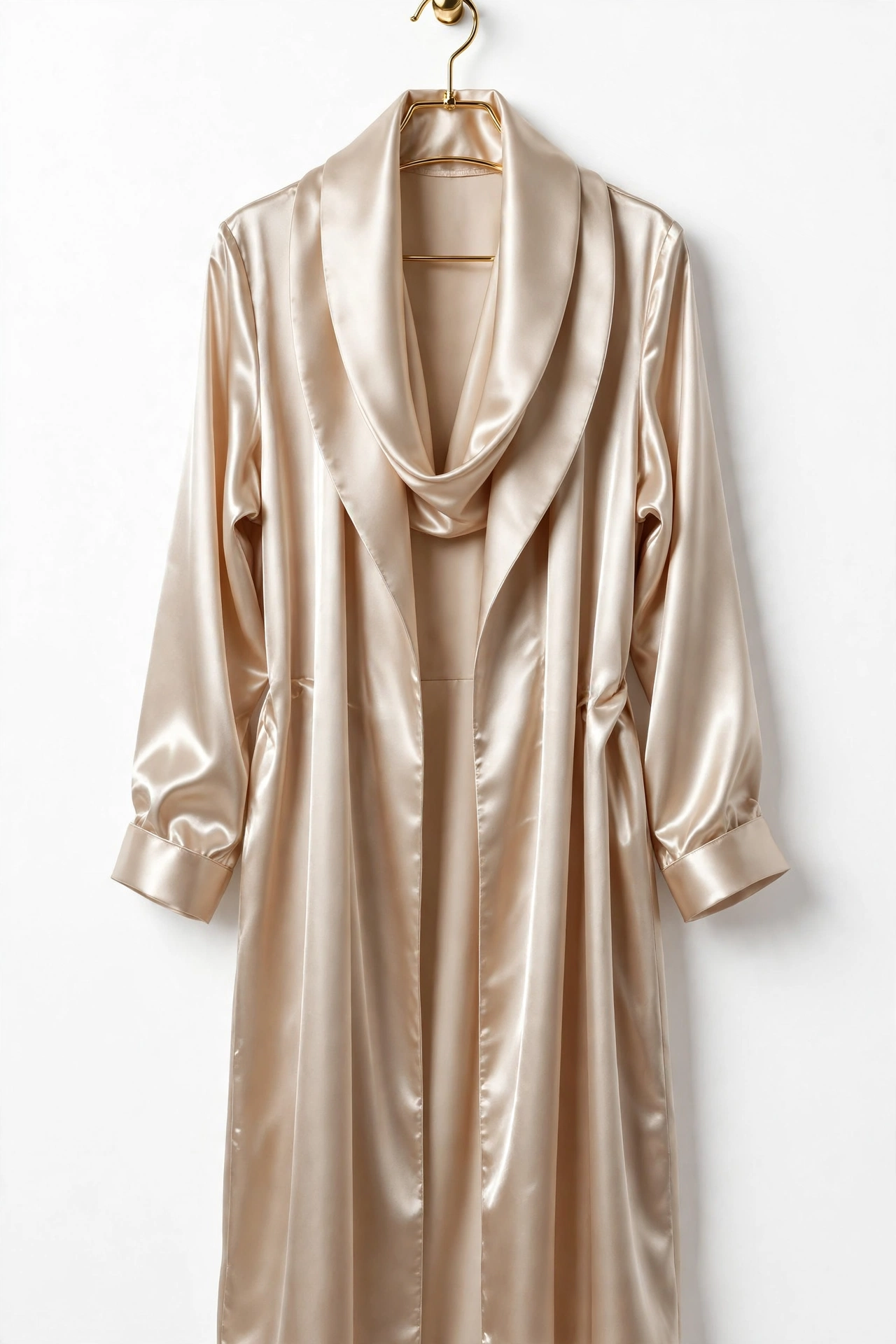
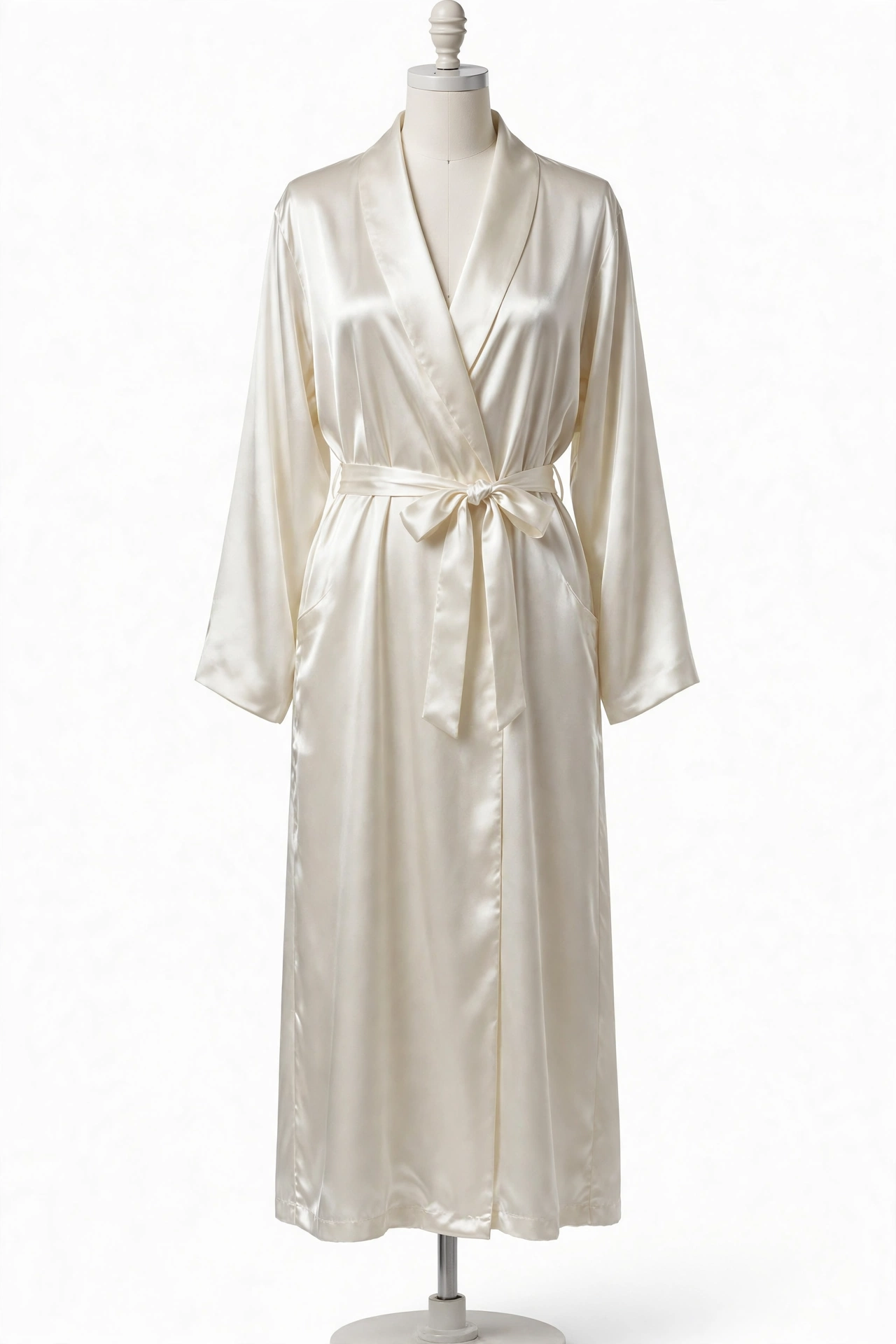
| Shawl | Turned-down roll collar like a lapel | Hotel-luxe look, evening, wearing it in front of people | Needs an inner tie; without one the whole front shifts |
| Smoking jacket | Shawl or notch collar with toggle, frog, or sash closure | Dressing up, an intentional look, gifts | The fussiest of the three; toggles need checking at purchase |
The kimono is the honest robe: nothing to fasten, nothing to adjust, and it accepts that you are lounging. The shawl collar is the photogenic one, and it is the reason so many robes frustrate buyers, because it promises structure that satin cannot hold without an inner closure. The smoking jacket is the most deliberate garment of the three and the least forgiving of cheap construction: check that toggles and frogs are sewn through a reinforced patch, because satin tears under concentrated stress.
One construction note: wide kimono sleeves shed water and steam well, which is why getting-ready robes use them. If you cook or reach for things in your robe, narrower shawl-collar sleeves stay out of the way.
What length should your robe be?
Length decides what the robe is for. Measure on your own body, because “knee length” lands differently at different heights.
Above the knee (short). The fun, flirty length, and the practical one for warm climates. It shows off your satin pajamas or sleep set underneath, which is the point of the getting-ready photos. The trade is coverage: it rides up when you sit.
Knee length (classic). The safest buy. Covers you when you answer the door, short enough to never catch on anything, and the belt sits exactly where it should. If you buy one robe and wear it for everything, buy this length.
Mid-calf. The elegant length. It looks expensive and moves well, and it keeps your legs warm without sweeping the floor. The honest caveat: it shows every stain at the hem, because that is where the robe brushes against counters and spills happen.
Floor length. Bridal and luxury territory. It photographs beautifully and it is a liability on stairs. Buy it for an occasion, not for daily wear, and hem it so it clears the floor by an inch.
The length also changes the fabric’s job. A short robe in lightweight charmeuse floats and feels relaxed; the same charmeuse at floor length clings and tangles around the legs. Longer robes want more weight. If the long robe you love is feather-light, it will misbehave.
Do you need pockets?
You want them. Most robes refuse to give them, and the reason is structural.
Satin has almost no body. A patch pocket sewn onto satin bags open and gapes, because the pocket fabric has nothing to hold it flat against the body. A side-seam pocket is worse on lightweight charmeuse: the opening distorts and the pocket pulls the side seam out of shape, since satin’s low friction lets the pocket swing freely and drag the seam with it.
When pockets work, they are worth having: patch pockets in a mid-weight satin, or reinforced side-seam pockets on robes made from heavier duchess-style satin. In the shop, test them. Put your phone in the pocket and move around. If the robe lists to one side, the pocket is a design flaw, not a feature. Some buyers add patch pockets to robes at home with a tailor; it costs little and works best in darker colors where the stitching hides.
Robes without pockets assume you carry nothing. If you read, scroll, or carry a lip balm around the house, pockets matter enough to be a buying criterion rather than a bonus.
Which satin is your robe actually made from?
Robes are sold in three materials, and the label is not always honest.
Polyester satin (most robes). Shiny, machine washable, cheap, and the reason robes cost little. The trade: it builds static, sleeps warm, and dyes flat. A mid-weight polyester charmeuse (think a fabric with real substance in hand) is the best everyday robe material. Tissue-thin poly robes cling to everything and snag on the first jewelry they meet.
Silk satin. The luxury option: breathable, takes color richly, drapes with more life than polyester. It costs several times more and demands hand washing. Buy it if you want the robe to feel special. Do not buy it if you want a machine-washable workhorse. “Silk satin” on a cheap price tag is polyester with a fancy name; check the fiber line.
Blends and stretch satin. Polyester with spandex, or poly-silk blends. A few percent elastane changes the robe’s behavior: the fabric recovers instead of creasing, and the drape stays cleaner. Stretch satin robes hold their shape better through a wash, which matters because robes get washed hard and often.
The opacity test matters for robes more than for most garments. Hold your hand behind the fabric under the shop lights. Pale satins go sheer, and a sheer robe without a lining or an underlayer is a different garment than the one you imagined. Dark colors and mid-weights hide everything. Our types of satin guide maps every named satin with per-fiber notes so you can match the material to the robe style you want.
How do you care for a satin robe?
Fiber sets the rules, and robes take more abuse than most satin garments: body oils at the collar, spills at the hem, and a belt that drags through everything.
Wash polyester robes cold on gentle, mild detergent, in a mesh bag if you can. Hang to dry. Silk robes: hand wash or delicate cycle in a mesh bag with pH-neutral detergent, never wring, dry away from sun. The belt needs care too: its edges fray from knot friction, and a fraying belt looks tired fast. If the belt’s cut edges are unsealed, a line of clear nail polish or fray-check along the edge buys months. Never iron polyester satin hot; it glazes permanently well below its melting point. Steam from a distance for wrinkles, keeping the steamer moving.
The water-spot rule matters for robes because spills happen at the hem. Never spot-clean a mark. Wet the whole panel evenly and let it dry uniformly, because partial wetting is what makes the spot visible. If the robe’s label demands dry cleaning and you bought a silk robe, obey it; silk satin robes are the garments most worth the cleaner’s fee because home mistakes show on the shine. The full per-fiber routines are in the satin washing guide.
FAQs
Why does my satin robe belt keep coming undone? A knot holds through friction, and satin’s smooth faces give it almost nothing to grip. Every step shifts the fabric and loosens the loop. The real fix is an inner waist tie: most well-made robes have one, and it holds the robe closed whatever the belt does. A wider belt and a surgeon’s knot help too.
What is an inner tie on a robe, and does mine have one? An inner tie is a string (or two) sewn inside the robe at the waist. You tie the strings together before wrapping the outer belt, and they are the robe’s true closure. Reach inside at the waistline and check: if you find strings or a string plus a hidden button, the robe is properly made. If there is nothing, the belt is doing a job it was never built for.
Should I buy a kimono or shawl collar satin robe? Kimono collars are relaxed, gap less under movement, and suit lounging and getting ready. Shawl collars look polished and hotel-luxe but need an inner tie, because satin cannot hold a structured front on its own. Choose kimono for comfort, shawl for looks.
What length satin robe should I buy? Knee length is the safest all-round buy: enough coverage for the door, short enough to never catch. Above the knee suits warm climates and getting-ready photos. Mid-calf looks elegant but shows hem stains. Floor length is for occasions and needs hemming to clear the floor.
Are satin robes hot to sleep in? Polyester satin robes run warm: the fabric does not breathe, and many buyers report overheating. If you sleep hot, choose silk satin or wear the robe only for lounging and switch to breathable sleepwear for the night. In winter the warmth is a feature, not a bug.
Can you machine wash a satin robe? Polyester satin robes, yes: cold, gentle cycle, mild detergent, hang to dry. Silk satin robes: hand wash or a delicate cycle in a mesh bag, never wring, dry away from sun. Always check the label first, and never spot-clean a water mark; wet the whole panel evenly instead.
How do I keep a satin robe belt from fraying? Belts fray at the cut edges from knot friction. Seal raw edges with fray-check or clear nail polish, and wash the belt in a mesh bag so it does not rub against the drum. A belt that is already badly frayed can be trimmed and resealed once, but after that it is a replacement job.
The trust note
No robe brand paid for a word here. Most satin robe pages are affiliate listicles or retailer descriptions, so the friction mechanism and the inner-tie rule are the kind of detail they skip. The weave explanations come from textile science and the fixes from what actually keeps robes closed in real houses. Spot an error and it gets fixed with a dated correction.