Charmeuse Satin: The Complete Guide
What exactly is charmeuse satin?
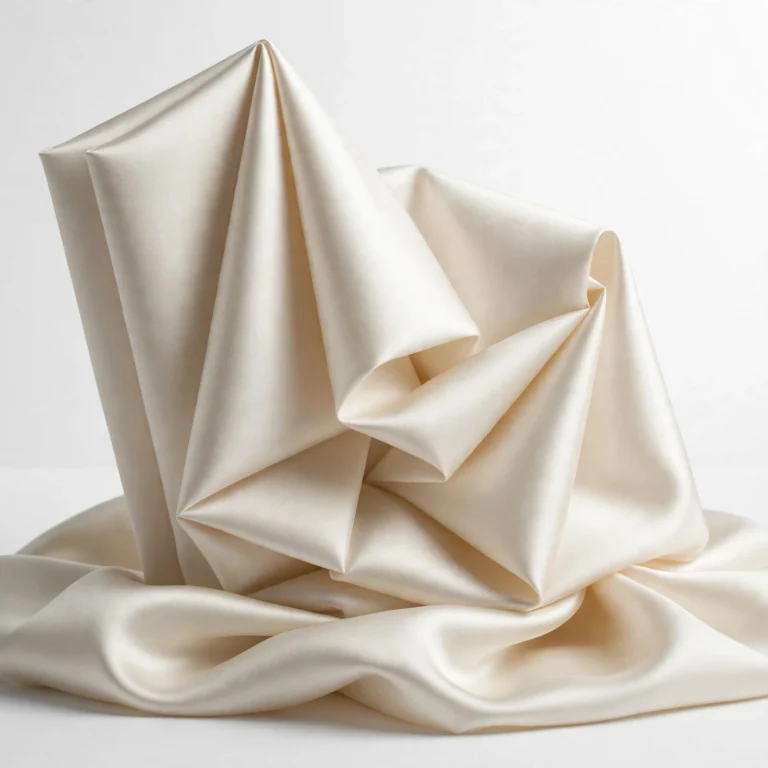
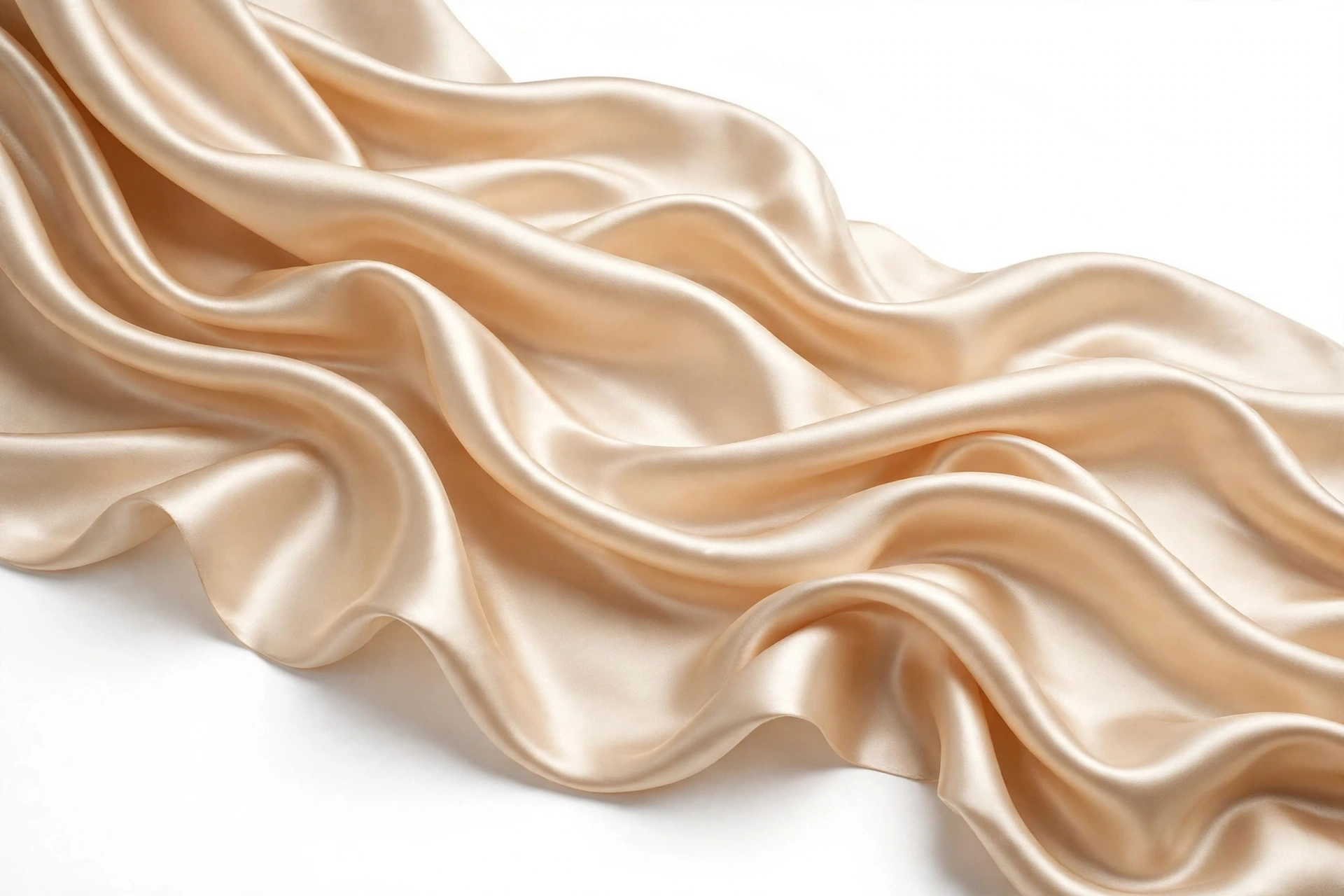
Charmeuse is the lightest, most fluid member of the satin family. It is a lightweight fabric woven in a satin weave, with a high-gloss face and a dull, matte back. All charmeuse is satin, because it uses the satin weave. But not all satin is charmeuse. Duchess satin, crepe-back satin, and other satins are heavier and more structured, so they behave like different fabrics on the body.
The name comes from the French word charmeuse, meaning a female charmer, chosen because the fabric’s shimmer and soft hand read as alluring. Today “charmeuse” always signals the light, fluid end of the satin spectrum.
One point confuses nearly every buyer. “Charmeuse” describes the type of satin, not the fiber. Charmeuse can be woven from silk, polyester, or blends, and the fiber changes almost everything about how the fabric behaves. Always read the fiber content separately from the word charmeuse. The word tells you the weave and the weight class. The fiber tells you the hand, the breathability, and the care.
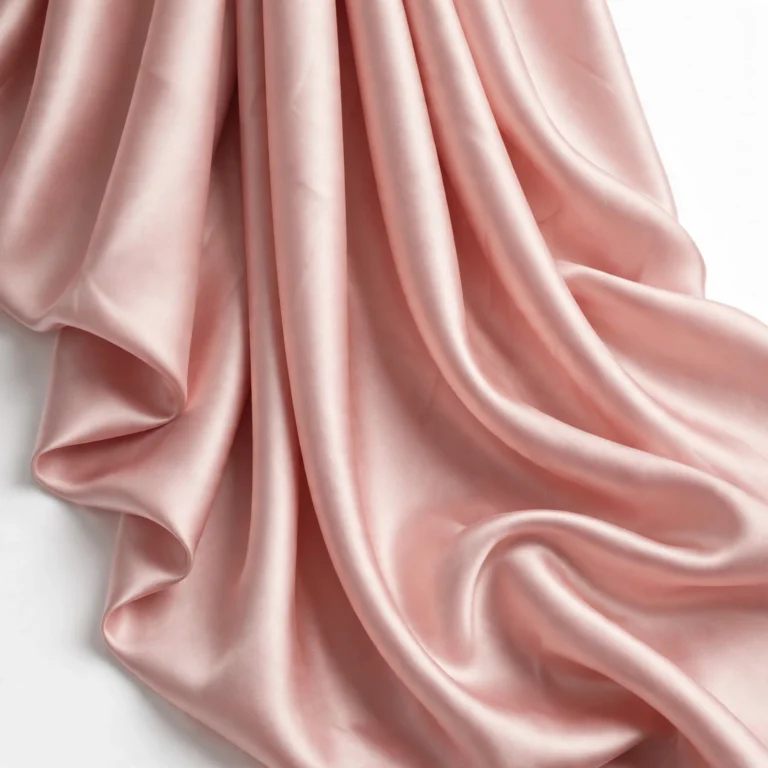
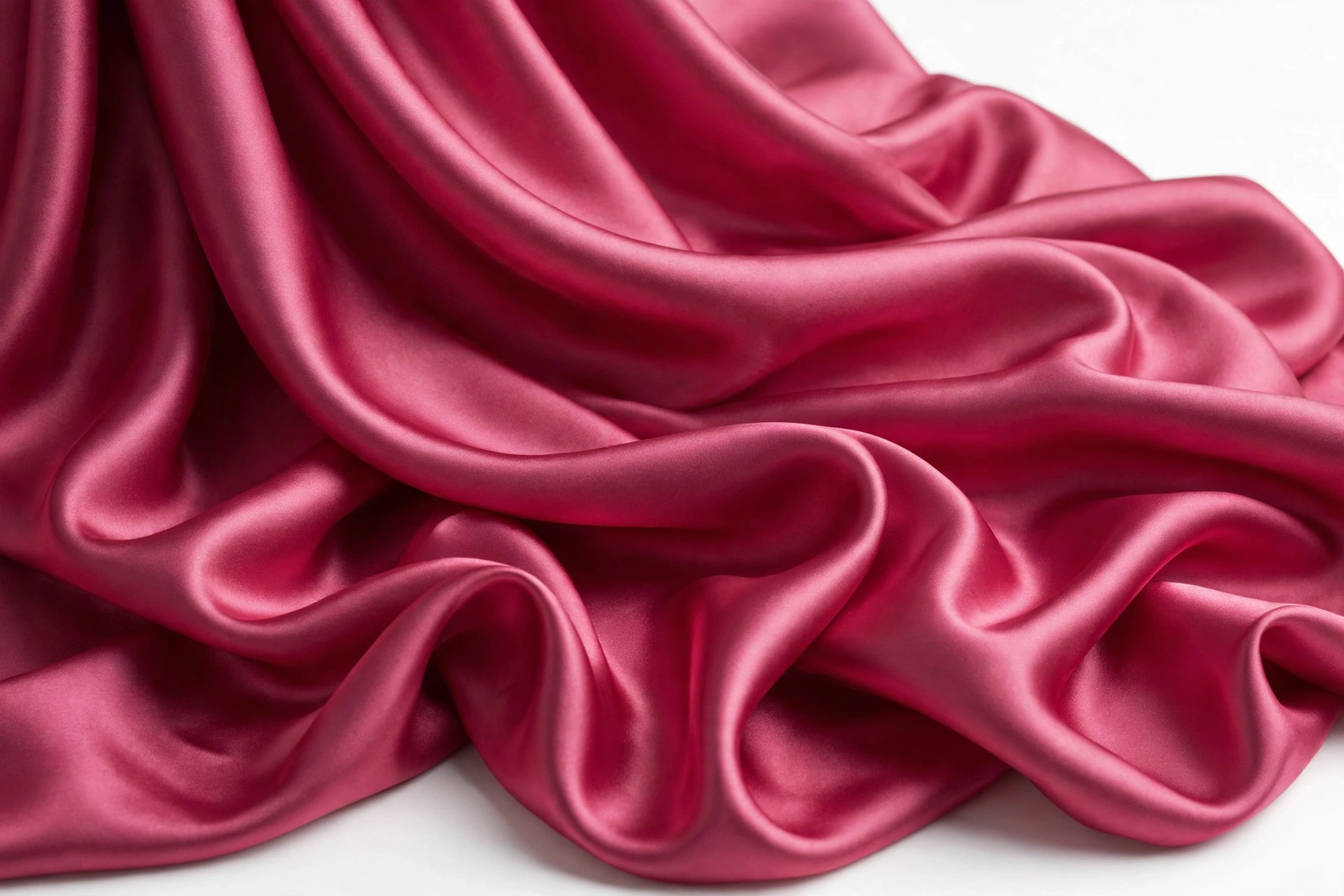
Why does charmeuse drape like liquid?
Three things combine: fine yarns, long floats, and very low weight. A satin weave puts most of the yarn surface on the fabric face, with warp threads floating over four or more weft threads before interlacing. Those long floats make the face glassy smooth, and a glassy surface has low friction, so the fabric slides over itself and the body instead of holding a crease. On top of that, charmeuse is woven from fine yarns at a light weight, so gravity pulls every fold down and the fabric cannot prop itself up.
That refusal to hold a shape is exactly what makes a bias-cut slip dress work: light ripples across the body as you move, catching highlights in a way no structured fabric can imitate.
The flip side is wrinkles. The same low-friction smoothness that creates the liquid drape means charmeuse creases from sitting, and the creases show on the gloss face. Silk charmeuse recovers better than polyester charmeuse because the protein fiber has more give, but neither one resists creasing. If you want a fabric that looks pressed all day, charmeuse is the wrong answer.
Silk charmeuse vs polyester charmeuse: which should you buy?
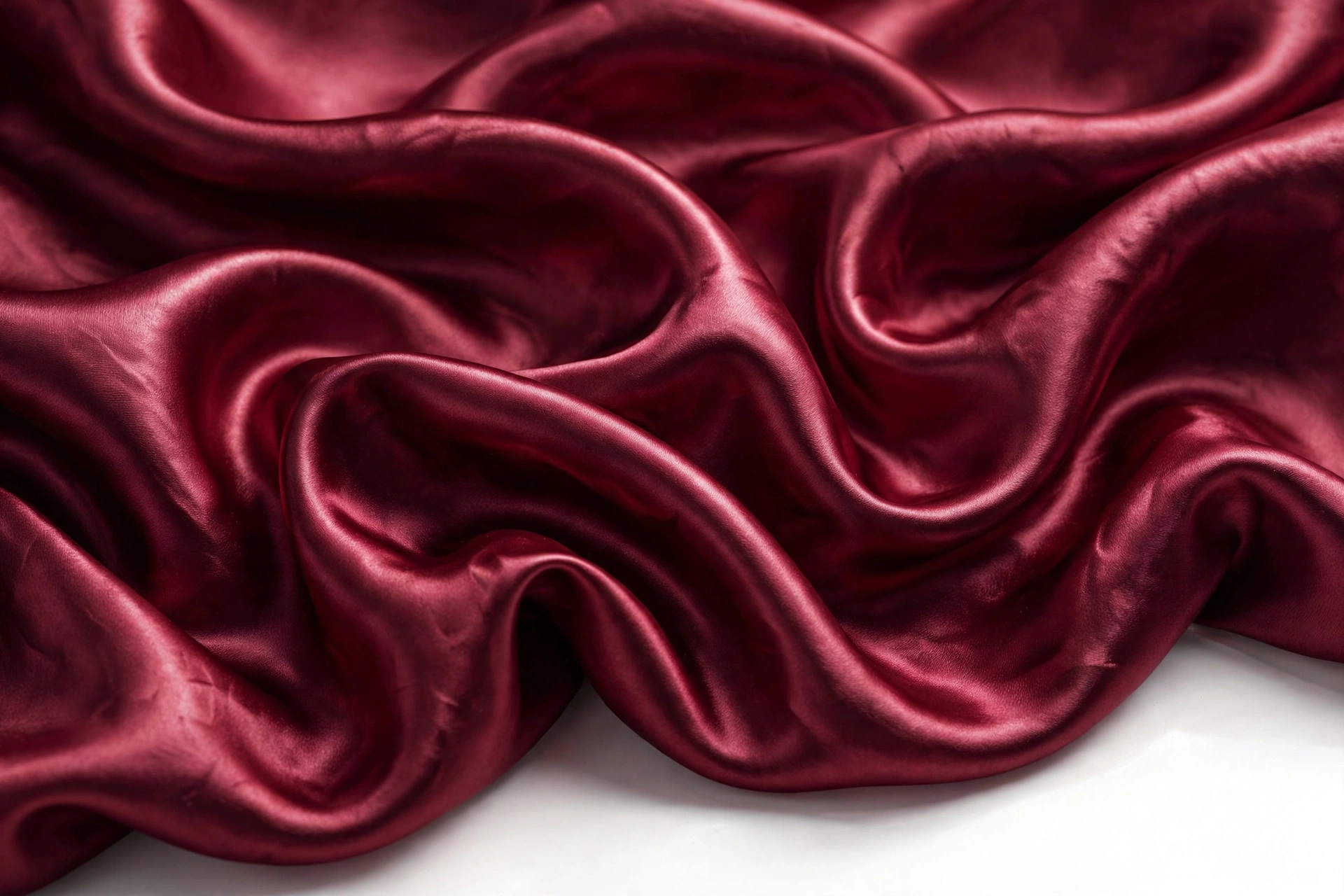
This is the real buying decision, and it matters more than the brand or the color. The weave is the same. The fiber rewrites the performance. The deeper fiber comparison is in our silk satin guide.
| Silk charmeuse | Polyester charmeuse | |
|---|---|---|
| Hand feel | Cool, soft, breathes with the skin | Smooth but can feel plasticky or warm |
| Breathability | High: thermoregulates, comfortable in heat and cold | Low: traps heat, can feel clammy |
| Shrinkage | Reports cite 5-10% on first wash if not pre-shrunk | Negligible |
| Wrinkle recovery | Better: fiber give helps creases fall out | Worse: creases set and persist |
| Durability | Strong fiber, but lighter weights snag and abrade | Abrasion resistant, holds up to hard use |
| Care | Hand wash or gentle cycle, often dry clean | Machine washable, easy |
| Price | Substantially more | Budget friendly |
| Dye quality | Rich, deep color with natural luster | Even color, but gloss can look artificial |
My take: buy silk charmeuse when the fabric touches skin for hours, lingerie, nightgowns, blouses, pillowcases. Breathability and hand feel are where silk earns its price, and you will notice the difference by the second hour of wear. Buy polyester charmeuse when the job is visual impact at low cost and easy care: linings, event decor, garments that get washed constantly. A well-made polyester charmeuse can look very close to silk in a photo. The difference shows up in the wearing, not the photographing.
Low-grade filament yarns reflect light harshly, which reads as plastic rather than liquid. The fix is a finer yarn and a denser weave, which you judge by eye rather than by price. Hold the fabric up: if the gloss looks hard and mirror-like, walk away.
What do momme numbers mean on silk charmeuse?
Momme, pronounced “mummy,” is the traditional weight unit for silk. One momme is the weight in pounds of a piece of fabric measuring 45 inches by 100 yards, which works out to about 4.34 grams per square meter. Higher momme means a denser, heavier silk. For charmeuse, the usual band runs from 12 to 30 momme, and where a fabric sits in that band decides what it is good for.
Lightweight charmeuse at 12 to 16 momme suits scarves, linings, and delicate overlays. It is beautiful and fluid, but it can be slightly sheer, so it often gets layered or lined. The middle band, 16 to 19 momme, covers garments: blouses, dresses, lingerie, the classic charmeuse applications. The sweet spot for most clothing and for bedding sits at 19 to 22 momme, where the fabric has enough body to be opaque and durable while keeping the liquid drape. Above 22 momme, charmeuse gets heavy and very durable, good for bedding that gets washed often, though it can feel too substantial for flowing garments. The family context is in the complete guide to satin types.
Two practical notes. First, momme only applies to silk; polyester charmeuse lists GSM, and the numbers are not interchangeable. Second, heavier is not automatically better. A 25 momme sleep set wears warm and heavy at night, while a 19 momme one feels right but gives up some durability. Match the weight to the job, not to the prestige of the number.

What is charmeuse best used for, and where does it fail?
Charmeuse wins wherever fluidity and shine against the skin are the point. The classic applications all lean on the same two properties: it pours over the body, and the gloss face looks expensive in motion.
Blouses and shirts. Charmeuse is the traditional blouse satin. It skims instead of clinging when the cut has ease, and the shine reads polished in offices that accept it. A relaxed charmeuse blouse tucked into tailored trousers is one of the most reliable elegant outfits in existence.
Slip dresses and lingerie. The bias-cut slip dress is charmeuse’s signature garment. Cut on the bias, the fabric gains diagonal stretch and molds to the body while light ripples across the folds.
Linings. Charmeuse is the luxury lining fabric. The slippery gloss face lets outer garments slide over the body, so jackets and coats go on without catching.
Pillowcases and bedding. The smooth face creates low friction against skin and hair, which is why silk charmeuse pillowcases are a whole product category. Pick 19 to 22 momme for bedding that survives regular washing.
Scarves and accessories. Lightweight charmeuse at 12 to 16 momme makes scarves that tie with soft folds and catch light beautifully.
Where it fails: anything that needs to hold a shape. Structured bodices, tailored jackets, ball gowns, crisp pleats, all fight the fabric’s nature. Charmeuse is too slippery for heavy gathering, and it will not support pleating without a stiffer interlining doing the real work. For structured wedding gowns, most designers switch to duchess satin and save charmeuse for the lining or the flowing skirt. Choose the fabric for what it wants to do, not for what you wish it did.
Why is charmeuse the hardest satin to sew?
Because everything that makes it beautiful fights the sewing machine. It is slippery, so layers shift under the presser foot. It is lightweight, so it gets sucked into the needle plate. It shows every pinhole and every stitch, so there is nowhere to hide a mistake. Sewers consistently rank it the most difficult satin to handle, and the techniques below exist because ordinary methods fail.
Cut single layer, never folded. Charmeuse shifts when folded, so the two layers creep and your pieces come out mismatched. Cut one layer at a time, with the fabric laid on a surface it cannot slide off. Pattern weights beat pins for holding the pattern; pins distort the fabric and leave marks.
Pin only in the seam allowances. Standard pins leave visible holes in charmeuse. Keep every pin inside the seam allowance, parallel to the raw edge, and use fine silk pins. Even better, hand baste critical seams: it takes longer, but it holds the layers exactly where machine sewing alone will not.
Tame it with tissue paper. Place tissue paper between the fabric and the machine bed, or under the seam as you sew. It gives the feed dogs something to grip and stops the fabric from being dragged down into the needle plate. The needle perforates the paper as you sew, so it tears away cleanly afterward. For washable garments, a light spray starch on the seam allowances gives a similar firmness without a stabilizer to remove.
Use the finest sharp needle. A Microtex sharp in size 60/8 or 70/10 makes the smallest possible hole in the fine weave. Universal needles, even small ones, punch visibly larger holes that show when you hold the seam to the light. Match with a fine thread; machine embroidery thread works well because it is finer than standard all-purpose thread.
Finish seams the couture way. French seams are the classic charmeuse finish: they enclose the raw edges inside a second seam, so nothing frays and the inside looks as clean as the outside. They eat seam allowance, so cut accordingly. For hems, rolled hems suit the fabric’s lightness; a narrow machine rolled hem or a serged narrow hem both work, though the fabric can creep away from the stitching point on a serger, so test on scraps first. Curved edges like armholes take a narrow bias binding in self fabric.
Press from the wrong side, with a cloth. Press only the dull back, on a cool iron, with a press cloth between iron and fabric. Direct heat on the gloss face crushes the floats and leaves a flattened patch that never recovers. Use steam from the wrong side for silk charmeuse. A walking foot or Teflon foot helps the machine feed both layers evenly instead of pushing the top layer ahead of the bottom.
The honest summary: sew charmeuse slowly, test every technique on scraps first, and never skip the tissue paper. The per-technique sewing manual is in how to sew satin.
How do you wash and care for charmeuse?
Care follows the fiber, not the weave. The satin weave does not change how you wash; the silk or polyester does.
Silk charmeuse. Hand wash in cool water with a mild detergent, or use a gentle machine cycle in a mesh bag if the label allows it. Never wring it; roll it in a towel to press out water. Expect a reported 5 to 10 percent shrinkage on the first wash if the fabric was not pre-shrunk, so buy pre-shrunk fabric or cut generously. Dry away from direct sun, which weakens silk. Many silk charmeuse garments are labeled dry clean, and for structured or lined pieces that advice is worth following.
Polyester charmeuse. Machine wash cold with like colors, tumble dry low or hang dry. It will not shrink meaningfully, and it tolerates more handling. The risk with polyester is heat: a hot dryer can set wrinkles permanently into the thermoplastic fiber, and high heat dulls the face over time. Cool settings keep it looking new for years.
Both fibers. Wash inside out to protect the gloss face from abrasion. Never spot-clean a water mark by dabbing; partial wetting leaves a ring on charmeuse, so wet the whole area evenly or leave it alone. Store charmeuse garments on padded hangers or rolled rather than folded, since hard folds set into the light fabric. The full per-fiber care manual is in how to wash satin.
How do you read a charmeuse label like a professional?
Labels for charmeuse carry three separate pieces of information, and most confusion comes from mixing them up.
Fiber first. The label must state the fiber: 100% silk, 100% polyester, or a blend. This decides the hand, the breathability, the shrinkage, and the care. If a product says “charmeuse” with no fiber listed, assume polyester and judge the price accordingly. Real silk charmeuse at a polyester price is not a bargain; it is a mislabeled listing.
Weight second. Silk charmeuse should list momme; polyester lists GSM. A silk charmeuse with no momme listed is hiding its weight class, usually because it is a light 12 to 14 momme sold at a heavier fabric’s price. Ask the seller. For bedding, hold out for a stated 19 momme or above.
Naming traps to watch. Generic “satin” on a label usually means polyester satin of unspecified type, often a heavier, stiffer weave than charmeuse. If you want the fluid drape this guide describes, the word charmeuse must appear. “Satin charmeuse” and “charmeuse satin” are the same fabric. And if a listing says “charmeuse” but the price and care instructions scream polyester, trust the care instructions. They are harder to fake than the headline.
The five-second label test: fiber stated, weight stated, word charmeuse present, care instructions consistent with the fiber. A label that passes all four is worth your money. One that fails two is worth your suspicion.

Where does charmeuse sit among the other satins?
A quick placement so you never mix them up again. Charmeuse is the lightest and most fluid. Duchess satin is the heavyweight: more body, controlled gloss, holds structure, the choice for tailored gowns. Crepe-back satin sits in the middle with a matte crepe reverse you can wear face-out for a quieter look.
The rule is simple. When the design needs flow, pick charmeuse. When it needs architecture, pick duchess. If this is your first deep dive into the family, our satin camisole guide shows charmeuse doing what it does best in a real garment.
Frequently asked questions
Is charmeuse satin the same as satin? Charmeuse is one specific type of satin, the lightest and most fluid one. “Satin” alone is a weave category that covers many fabrics, from heavy duchess to mid-weight bridal satin. All charmeuse uses the satin weave, but not every satin is charmeuse.
Is charmeuse always silk? No. The word charmeuse describes the weave and weight, not the fiber. It is traditionally silk, but most charmeuse sold today is polyester. Check the fiber content on the label; the price, the hand feel, and the care instructions all follow the fiber, not the word charmeuse.
What is the difference between charmeuse and duchess satin? Weight and structure. Charmeuse is light, fluid, high-gloss, and follows the body. Duchess satin is heavy, structured, medium-gloss, and holds its own shape. Pick charmeuse for drape and movement, duchess for tailored or architectural garments.
Does charmeuse wrinkle easily? Yes, it creases from sitting and the creases show on the gloss face. Silk charmeuse recovers better than polyester because the fiber has more give, but neither resists wrinkling. It is a poor choice for travel or long days in a chair.
Can you iron charmeuse? Only on the wrong side, with a press cloth, on a cool iron. Direct heat on the gloss face crushes the weave’s floats and leaves a flattened shiny patch that never recovers. For silk charmeuse, steam from the wrong side works well.
How much does silk charmeuse shrink? Reports cite 5 to 10 percent on the first wash for silk charmeuse that has not been pre-shrunk. Buy pre-shrunk fabric, or cut your pattern generously and pre-wash before cutting. Polyester charmeuse barely shrinks at all.
Is charmeuse good for summer? Silk charmeuse is excellent for summer: it breathes, thermoregulates, and feels cool against the skin. Polyester charmeuse is a different story; it traps heat and can feel clammy in hot weather. The fiber decides, not the weave.
Does charmeuse fray? Yes, readily. The light weave and smooth yarns mean raw edges unravel fast, which is why French seams and bound edges are the standard finishes. Never leave a charmeuse edge raw and expect it to survive wearing and washing.