Blue Satin Dress: The Complete Guide
Why does a blue satin dress pull the eye across a room?
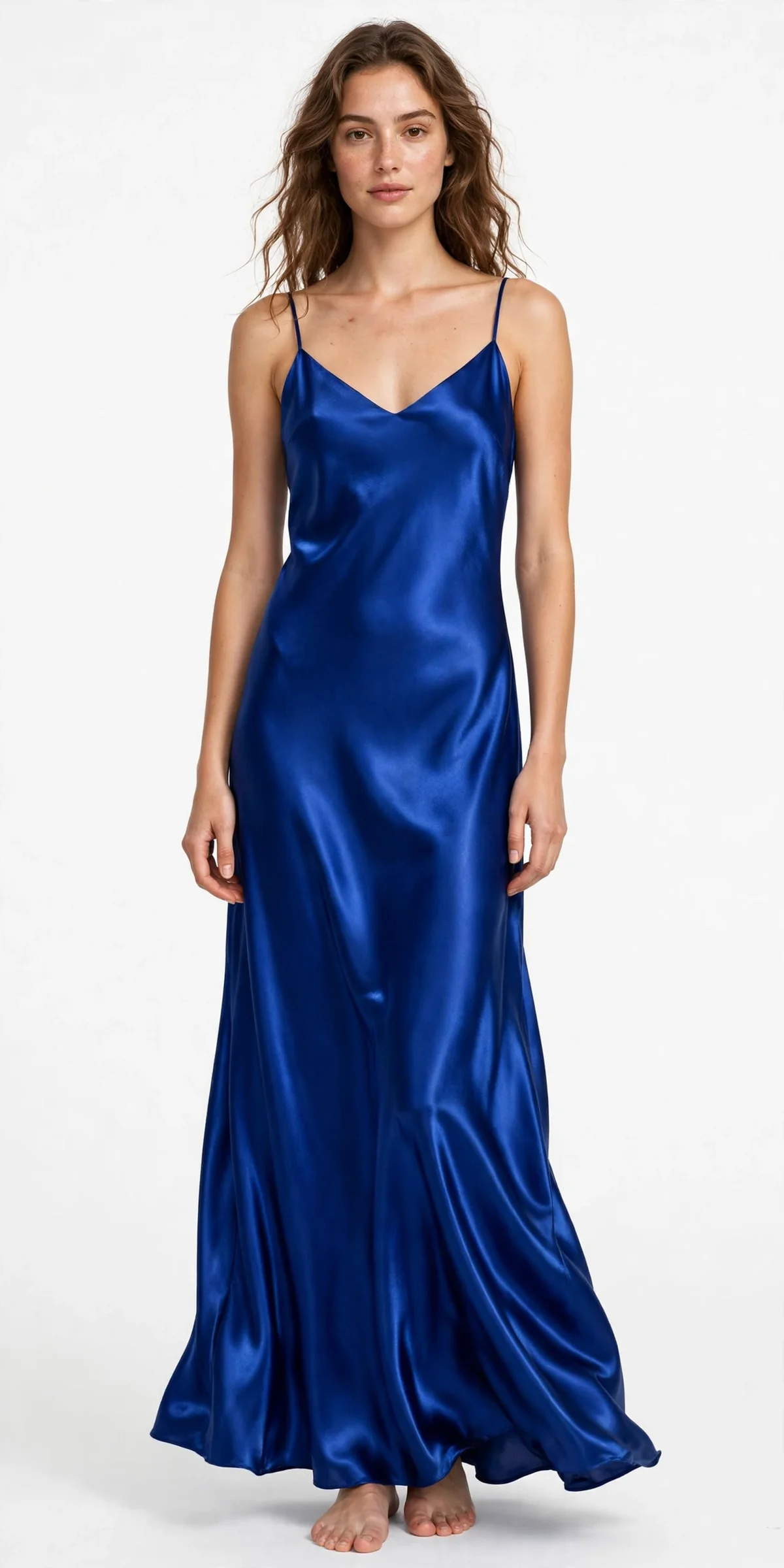
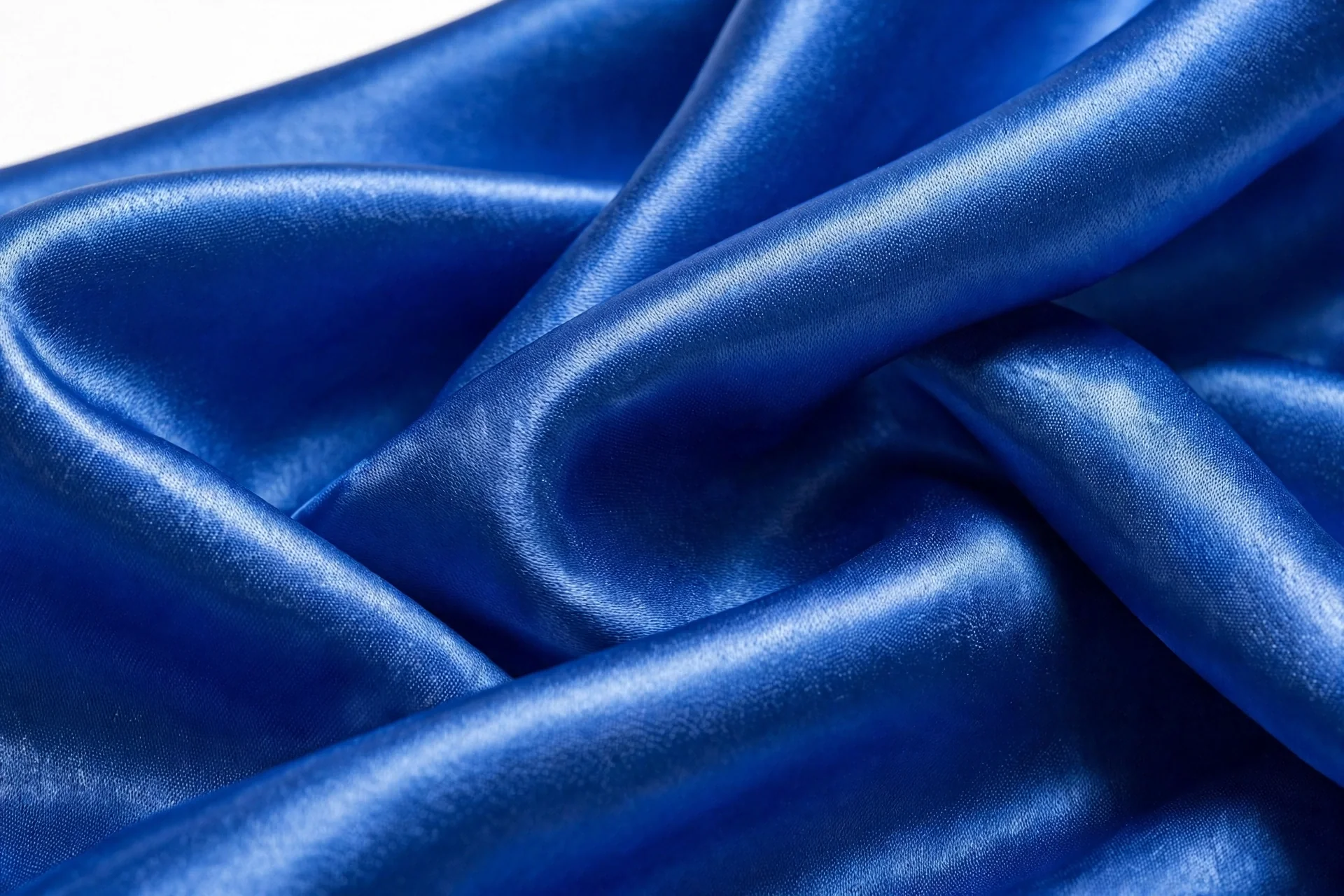
Blue sits in a rare spot in human color perception: calm enough to read as classic, distinct enough to hold attention. Put it on satin and the weave multiplies the effect. Satin’s long yarn floats bounce light in organized bands, so a blue satin dress carries a moving stripe of highlight across a field of deep color. The darker the blue, the harder the contrast between that highlight and the base, which is why navy or cobalt satin reads so much more dramatic than the same shade in a matte weave. It’s the same satin weave mechanism that makes every color look richer, except blue gives it the strongest contrast to work with.
That contrast is also why blue is the hardest satin color to buy well. On black, a slightly uneven dye job hides in the dark. On powder blue, every patch shows. On cobalt, a harsh plasticky shine screams cheap in a way the same fabric never would in burgundy. So the shade you choose and the satin you choose are one decision, not two.
Powder, cobalt, royal, navy, electric: which blue should you wear?
The shade decides the formality, the season, and the styling that works around it. Get the shade right and the rest of the outfit nearly builds itself. Get it wrong and no accessory saves it. Powder, cobalt, royal, navy, and electric blue each read as a different garment entirely.
| Shade | Reads as | Best occasions | Pair it with |
|---|---|---|---|
| Powder blue | Soft, fresh, romantic | Daytime weddings, brunches, spring parties | Cream, white, silver jewelry |
| Cobalt | Bold, confident, modern | Cocktail parties, gallery nights, nights out | Black, nude, metallic silver |
| Royal blue | Regal, formal, classic | Evening weddings, formal dinners, galas | Gold, champagne, ivory |
| Navy | Understated, polished, authoritative | Office events, dinners, conservative weddings | Pearls, camel, burgundy |
| Electric blue | Youthful, energetic, fun | Summer parties, vacations, dance floors | White, black, nude heels |
Powder blue is the daytime specialist. It reflects the most light of any blue, so the satin sheen reads gentle rather than dramatic. It loves natural daylight and hates harsh evening lighting, where it can wash out. Silver and pearls sit beautifully on it; gold can overpower the softness.
Cobalt is the modern statement blue. It’s the most saturated blue in the lineup, and on satin the saturation plus the gloss is a lot of visual energy. Keep everything else quiet: black or nude shoes, one metal, clean hair. Cobalt with cobalt jewelry is too much blue. Let the dress be the color.
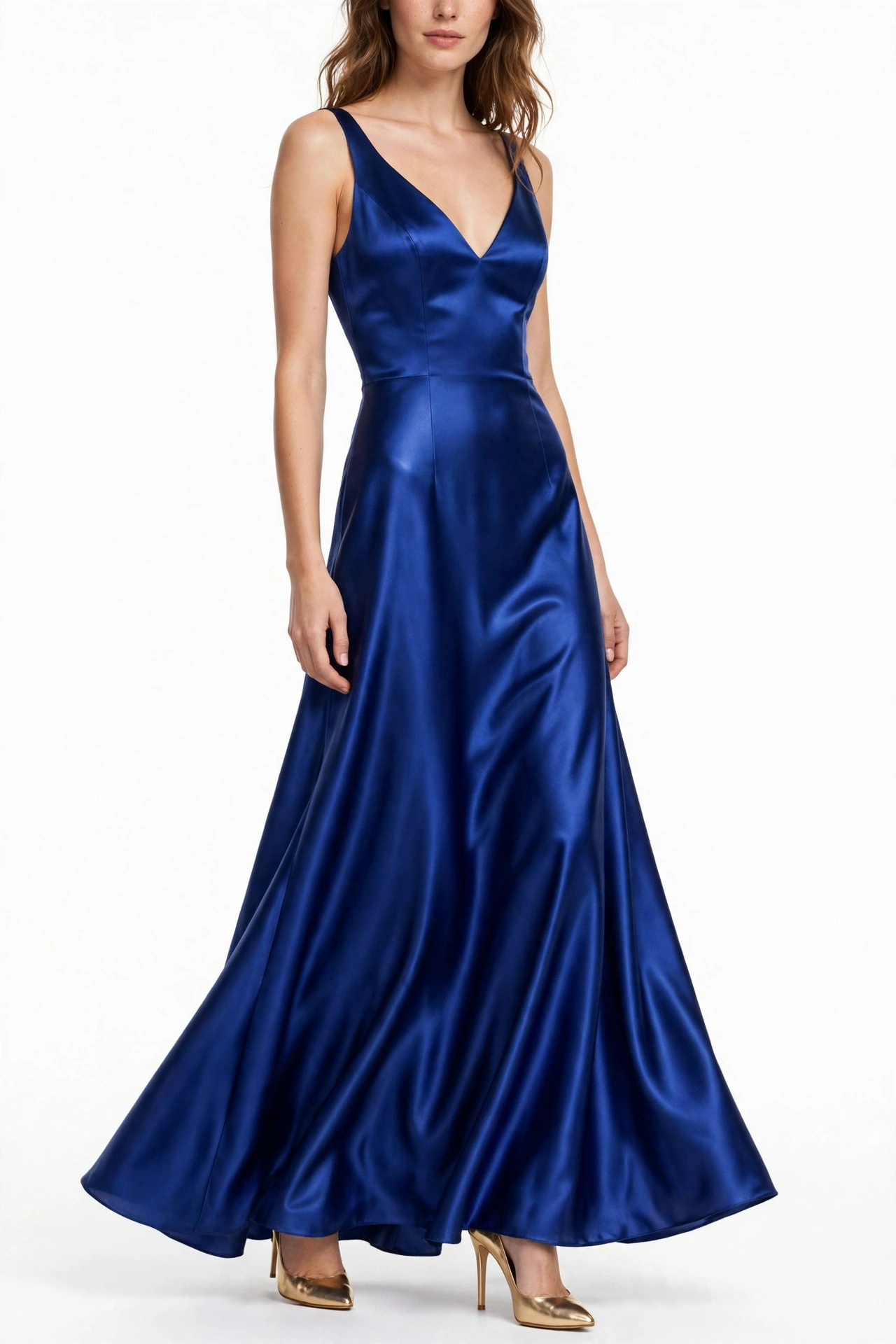
Royal blue is the formal one, deeper and slightly more purple than cobalt. It’s the shade people reach for when they want maximum occasion energy without black. Gold jewelry belongs here: warm metal on deep blue is the classic evening pairing, and royal is the blue that carries it best.
Navy is the quiet power blue. It reads almost black in dim light, which makes it the most versatile and the most conservative choice. A navy satin dress with a blazer works in rooms where cobalt would get you stared at. It also ages the best in your wardrobe, because navy never reads trendy.
Electric blue skews young and fun. If you want it to read adult rather than party-girl, keep the cut simple: a clean slip or a straight sheath, no ruffles, no extra shine from embellishments. On deeper skin tones, electric blue is genuinely stunning; the contrast does all the work.
Which satin makes the best blue dress?
Charmeuse, duchess satin, and crepe-back satin are all satin weaves, but on a blue dress they behave like different garments. The weave changes the gloss level, the weight changes the silhouette, and the shade changes how much each of those matter.
| Charmeuse | Duchess satin | Crepe-back satin | |
|---|---|---|---|
| Shine | High gloss, liquid | Medium gloss, controlled | Low gloss face, matte reverse |
| Weight | Light, very fluid | Heavy, structured | Medium, substantial |
| Drape | Clings, follows the body | Holds its own shape | Soft structured folds |
| Forgiveness | Low: shows lines underneath | High: smooths shapewear | Medium-high |
| Wrinkles | Creases easily, shows on light blues | Resists well | Better than charmeuse |
| Best blue dress | Bias-cut slip, flowing midi | Structured gown, A-line, sheath | Tailored midi, wrap dress |
| Best use | Dates, parties, evenings out | Weddings, galas, formal events | Office, daytime events |
My take: match the weight to the shade’s job. Charmeuse is the slip-dress satin, and it loves cobalt and electric blue, the shades that want movement. Duchess is the structured satin, and it’s the right call for royal blue and navy gowns that need to hold their shape all night. Crepe-back satin is the day-shift option: face the matte crepe side out for the office, flip to satin for dinner. Two dresses in one. The full fiber and finish breakdown is in the complete guide to satin types.
One blue-specific wrinkle note. Light blues show creases more than dark ones, because the shadow inside a crease reads darker against a light base. A powder blue charmeuse dress will look slept-in by afternoon if you sit in it. If you’re buying powder blue, duchess or crepe-back forgives a lot more.
What construction details separate a good blue satin dress?
A blue satin dress shows shortcuts faster than most garments, because the gloss and the color both punish bad construction. Satin has no texture to hide behind, so every seam, zip, and lining choice shows in the finished dress. These are the details worth checking before you pay.
The lining color matters more here than on any other dress. A navy dress lined in white will flash white at every slit, vent, and neckline, and it photographs terribly. Check that the lining is dyed to match or at least tone with the shell. This is the single most common corner cut on mid-priced blue satin dresses.
Seams on bias charmeuse need to be French or bound. A plain overlocked seam on thin blue charmeuse shows through as a shadow line on the face, and on light blues it shows from across the room. Run your fingers along the inside seams: if they’re raw or scratchy, the maker didn’t understand the fabric.
Strapless and one-shoulder styles need boning or a firm inner corset. Satin has no grip, so a strapless blue satin dress without structure migrates all night. If you can pull the top away from your body easily in the fitting room, it will not stay put at the event.
Check the zip and the hem in bright light. A wavy zip tape means the maker fought the fabric’s bias stretch and lost; it will pucker worse after one wear. A puckered hem on blue satin catches light unevenly and reads cheap from a distance.
How do you style a blue satin dress for daytime?
Let the blue be the only loud thing. A powder blue satin midi with a white cotton tee layered over it, or a cream cardigan thrown on top, is the formula: the matte cotton eats light while the satin reflects it, and that contrast is the entire outfit. Flat sandals, white sneakers, or simple loafers keep it grounded.
For navy in daylight, the playbook is sharper. A navy satin slip dress with a structured blazer and pointed flats reads polished without trying, and it works for lunches, daytime events, and creative offices. This is the shade where blue satin stops being a party fabric and becomes a wardrobe color.
What doesn’t work in daylight: full-glam hair and heavy makeup with a light blue satin dress. The dress is already doing the pretty work. Keep hair simple and makeup dewy, and let the daylight be the lighting designer. The broader family gets its own treatment in our complete satin dress guide.

How do you style a blue satin dress for evening?
At night, the dress does the work and everything else plays support. A cobalt slip dress with strappy metallic heels and one piece of jewelry is a complete outfit. A royal blue gown wants the classic treatment: gold jewelry, an updo or polished waves, a small clutch.
The jewelry question has a real answer, not a vibes-based one. Silver and platinum read cool and modern on blue; they sharpen the color and suit cobalt, navy, and electric blue. Gold reads warm and opulent; it softens blue and suits royal blue and powder blue best. Both metals work with every shade, so pick by the mood you want: silver for crisp, gold for rich.
Shoes carry more weight with a blue dress than with a black one, because black shoes disappear against black fabric while everything shows against blue. Nude heels extend the leg line and let the blue be the whole story. Black heels ground cobalt and electric blue. Metallic heels, silver or gold to match your jewelry, are the dress-up move. Keep the bag small. A large tote next to a blue satin gown ruins the proportions.
The evening logic here overlaps with the darker end of the color family, and our black satin dress guide covers the night-out accessory playbook that transfers straight across.
Where can you actually wear a blue satin dress?
Almost everywhere, once you match the shade to the room. Navy and royal blue cover the formal end: weddings, galas, formal dinners, holiday parties. Cobalt owns the middle: cocktail events, gallery openings, nice restaurants, date nights. Powder blue owns the day: brunches, daytime weddings, garden parties, spring events. Electric blue owns the fun end: summer parties, vacations, concerts.
Three judgment calls worth making. As a wedding guest, powder blue is safe and navy is safe; just don’t wear anything that could read bridal-adjacent, and if the dress code says black tie, go royal or navy rather than electric. In conservative offices, navy in a structured cut works, cobalt doesn’t. And for funerals, navy is acceptable in most places, but skip the glossiest charmeuse and any shade lighter than royal.
What myths about blue satin dresses need to die?
Four pieces of advice that sound wise and cost people good outfits. Blue gets more bad rules than most colors, mostly inherited from a time when dye lots were muddier and wardrobes were smaller. Each one sounds plausible until you watch it fail in real outfits.
Myth: blue and black can’t be worn together. Navy and black used to be the forbidden pairing, and it was never about the colors; it was about muddy navy next to faded black looking like a laundry accident. A true deep navy satin dress with black heels and a black clutch is a sharp evening combination. The rule to keep is about values, not colors: if the navy is so dark it reads black anyway, treat it like black.
Myth: gold and blue clash. This one survives from cheap color-wheel advice. Warm gold against deep blue is one of the oldest luxury pairings in fashion, and on satin the contrast between the warm metal and the cool gloss is exactly what makes royal blue evening dressing work. Silver is the safer default, gold is the richer choice.
Myth: blue is only a winter color. Navy and royal lean winter, sure. But powder blue is a spring color, electric blue is a summer color, and cobalt works year-round. The seasonal read comes from the shade’s depth and the styling around it, not from blue as a category.
Myth: satin dresses are evening-only. Evening-only is a styling habit, not a fabric law. A navy satin midi with a blazer and flats is a daytime outfit, and a powder blue satin dress with sneakers is a weekend outfit. The people who say satin is night-only are pairing it with heels and a clutch, then blaming the fabric for what the shoes did.
How do you keep blue satin from fading?
Blue fails in four predictable ways, and each has a mechanism you can fight. Sunlight breaks down the dye, heat opens fibers and coaxes color out, and partial wetting leaves rings the eye reads instantly on mid-tone blues. Beat all four and a blue satin dress holds its depth for years. The per-fiber version is in how to wash satin per fiber.
Sun fading. UV breaks down dye molecules, and blue shows the loss faster than black because the eye reads blue in finer gradations. A navy dress left in direct sun develops a dusty, purple-ish cast at the shoulders and folds. Line-dry in shade, never in direct sun, and store the dress away from windows.
Heat fading. Hot water opens fibers and coaxes dye out, and it also dulls the satin face over time. Wash inside out in cool water with a mild detergent, never hot. Skip the dryer entirely; the tumbling plus heat is the fastest way to age a blue satin dress. Hang or lay flat to dry.
Water marks. Satin shows partial wetting as rings, and on mid-tone blues like cobalt the rings are obvious. Never dab a spot with water; wet the whole area evenly or leave it alone and take it to a cleaner.
Pressing. Press only on the wrong side with a press cloth, on low heat. Direct iron contact on the satin face crushes the floats and leaves a flattened patch that catches light differently forever. For polyester, a cool iron with a cloth is safest; for silk, steam from the wrong side.
What should you check before buying?
Check the fiber, the dye evenness, the lining color, and the satin weight against the silhouette. Blue forgives less than black on all four: thin fabric shows through, patchy dye shows in photos, white lining flashes at slits, and the wrong weight fights the design. Five minutes in the fitting room catches every one.
Run this checklist in the fitting room. Read the fiber: silk for breathability and hand feel, polyester for the deepest, most even blue and easiest care. Hold it to the light: a blue dress you can see through will cling to every seam of your underwear, and light blues are less forgiving here than dark ones. Stretch a small area and watch the sheen: uneven gloss means a patchy dye job, and on blue it shows in every photo. Check the lining color against the shell, especially at slits and the neckline. Inspect the zip and hem in bright light for puckering. Finally, match the satin weight to the silhouette before you fall in love with it: drop the skirt and watch it fall. Charmeuse falls in one fluid column, duchess in structured folds. The right one for the dress is the one that moves the way the design wants it to.
Frequently asked questions
What jewelry goes best with a blue satin dress? Silver and platinum give a cool, modern finish that suits cobalt, navy, and electric blue. Gold adds warmth and suits royal blue and powder blue best. Pearls sit beautifully on navy and powder blue for daytime or conservative events. Keep it to one metal and let the dress carry the color.
Can you wear a blue satin dress to a wedding as a guest? Yes. Navy and royal blue are wedding-guest staples, formal enough for the occasion without upstaging anyone. Powder blue works for daytime and outdoor weddings. Skip electric blue for black-tie dress codes, and check the couple’s colors so you don’t accidentally match the bridal party.
Is a navy blue dress formal enough for a gala? Yes, in the right cut. A navy satin gown in duchess satin with a structured silhouette reads fully formal; in dim light navy reads almost black, which is exactly the register galas want. Style it up with metallic heels and real jewelry, not casual accessories, and nobody questions the formality.
Does light blue satin show wrinkles more than dark blue? Yes, noticeably. The shadow inside a crease reads darker against a light base, so powder blue shows every sit-crease while navy hides most of them. If you’re buying powder blue, choose duchess or crepe-back satin over charmeuse, and expect to steam it before wearing.
What shoes go with a blue satin dress? Nude heels extend the leg line and let the blue be the whole story. Black heels ground cobalt and electric blue. Metallic heels, matched to your jewelry, are the dress-up move. For daytime, white sneakers, flat sandals, or loafers keep it casual. Avoid shoes in a competing bright color; they fight the dress.
Which blue shade suits my skin tone? Cool undertones tend to sit well with navy, powder, and icy blues. Warm undertones often look stronger in cobalt and royal blue, which have more warmth in them. Deep skin tones carry electric and cobalt blue beautifully, and the contrast does the work. Fair skin gets the most drama from dark navy. These are tendencies, not rules; the fitting-room mirror beats any chart.
Can you wear blue satin in summer? Yes, with the right shade and cut. Powder blue and electric blue are natural summer colors, and a loose charmeuse midi barely touches the body, so airflow does the cooling. The sweaty version is a tight polyester dress in dark navy. If you run hot, pick a looser cut and a lighter shade.
How do you stop a blue satin dress fading in the wash? Wash inside out in cool water with a mild detergent, never hot water. Skip the dryer completely; heat is the fastest way to kill both the color and the sheen. Line-dry in shade, since UV fades blue faster than the eye forgives. Press only on the wrong side with a press cloth.