Crepe Satin Guide: The Fabric With Two Faces
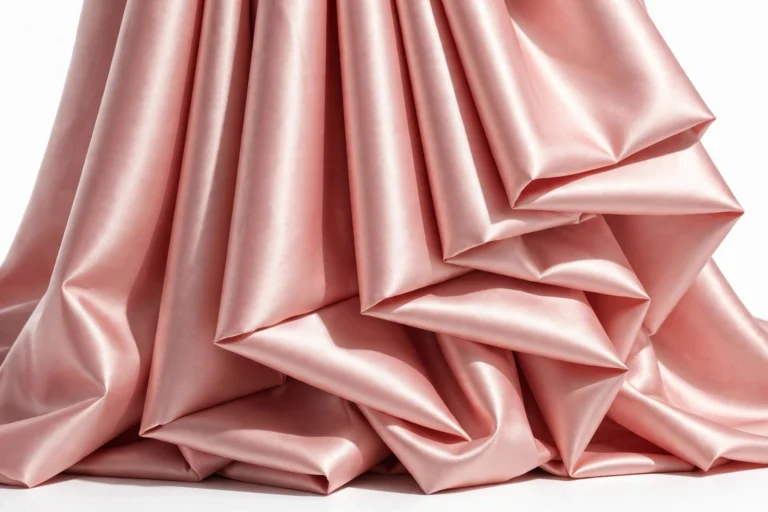
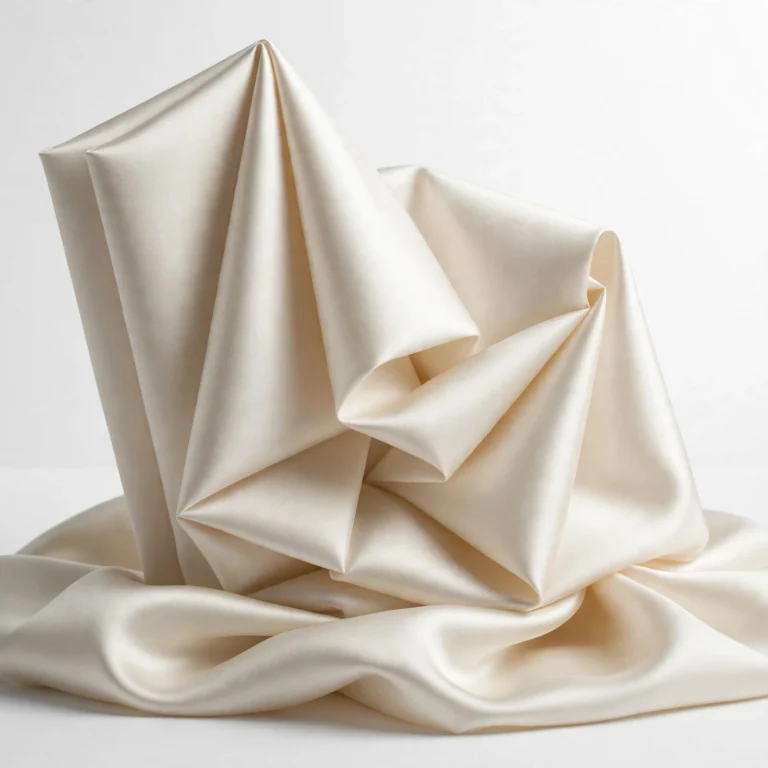
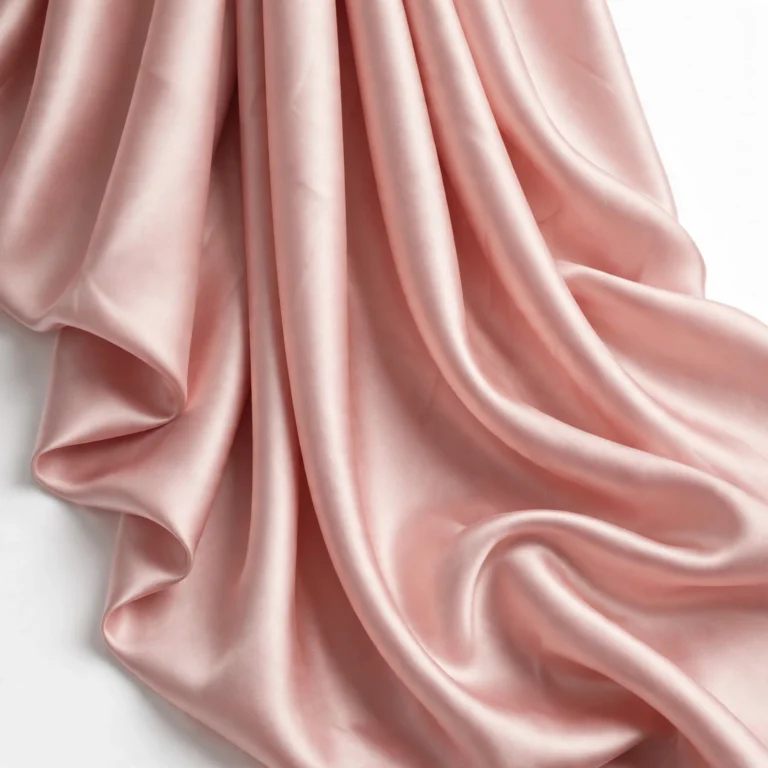
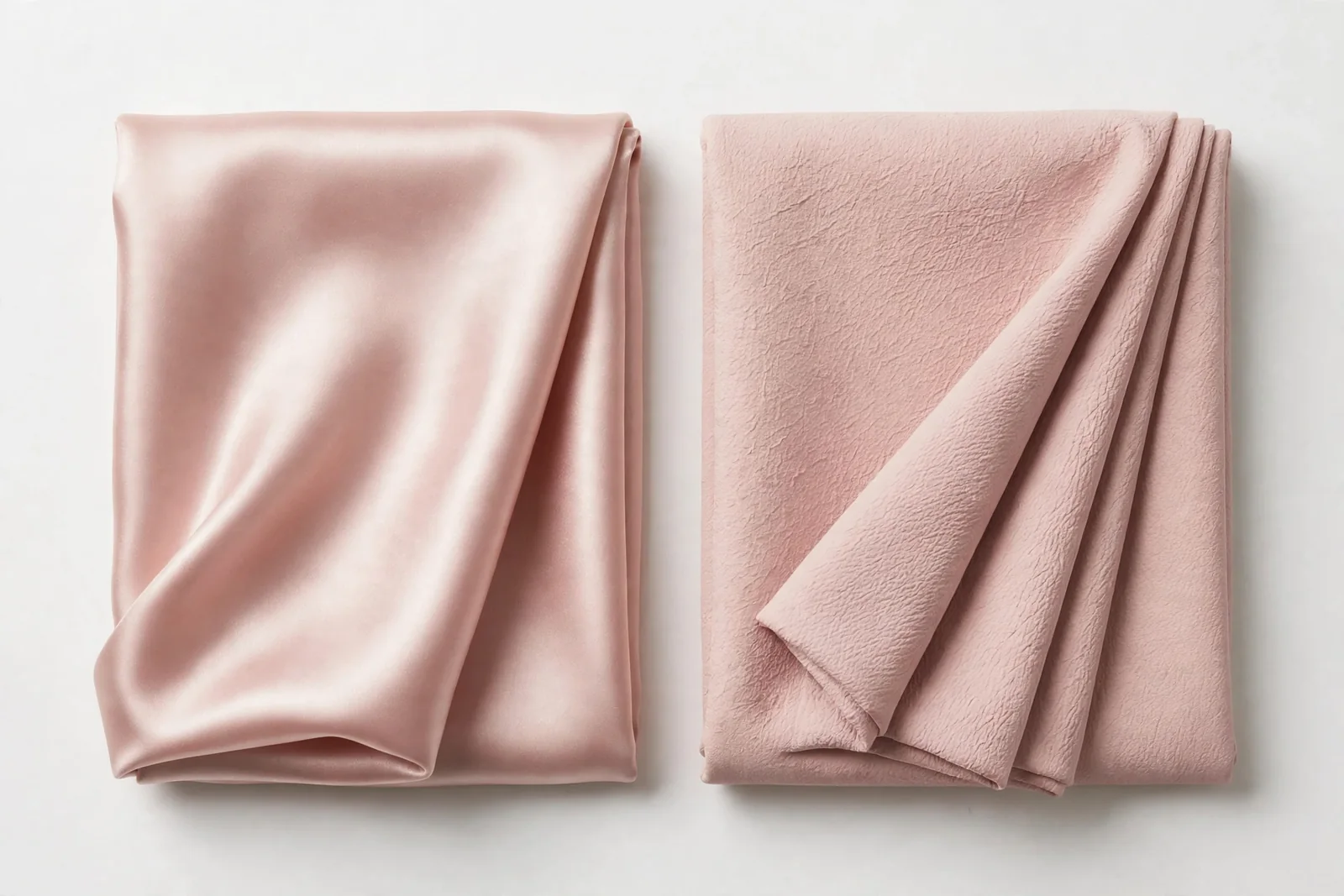
Crepe satin is a reversible satin-weave fabric with a split personality. One side is smooth, glossy satin. The other is matte, lightly pebbled crepe. The satin face comes from long, low-twist warp floats, the standard satin construction. The crepe back comes from high-twist yarns in the weft, which crinkle as the fabric is finished. Both sides are presentable, and designers use both, sometimes in the same garment. But the name causes more confusion than almost any other term in the satin family. Crepe satin, crepe-back satin, and satin-back crepe are sold as three names for one fabric, while textile textbooks insist that two of those names describe opposite fabrics. This guide sorts it out: how the fabric is constructed, which fibers it comes in, how to identify it by touch, and how to sew and care for it.
How Is Crepe Satin Made?
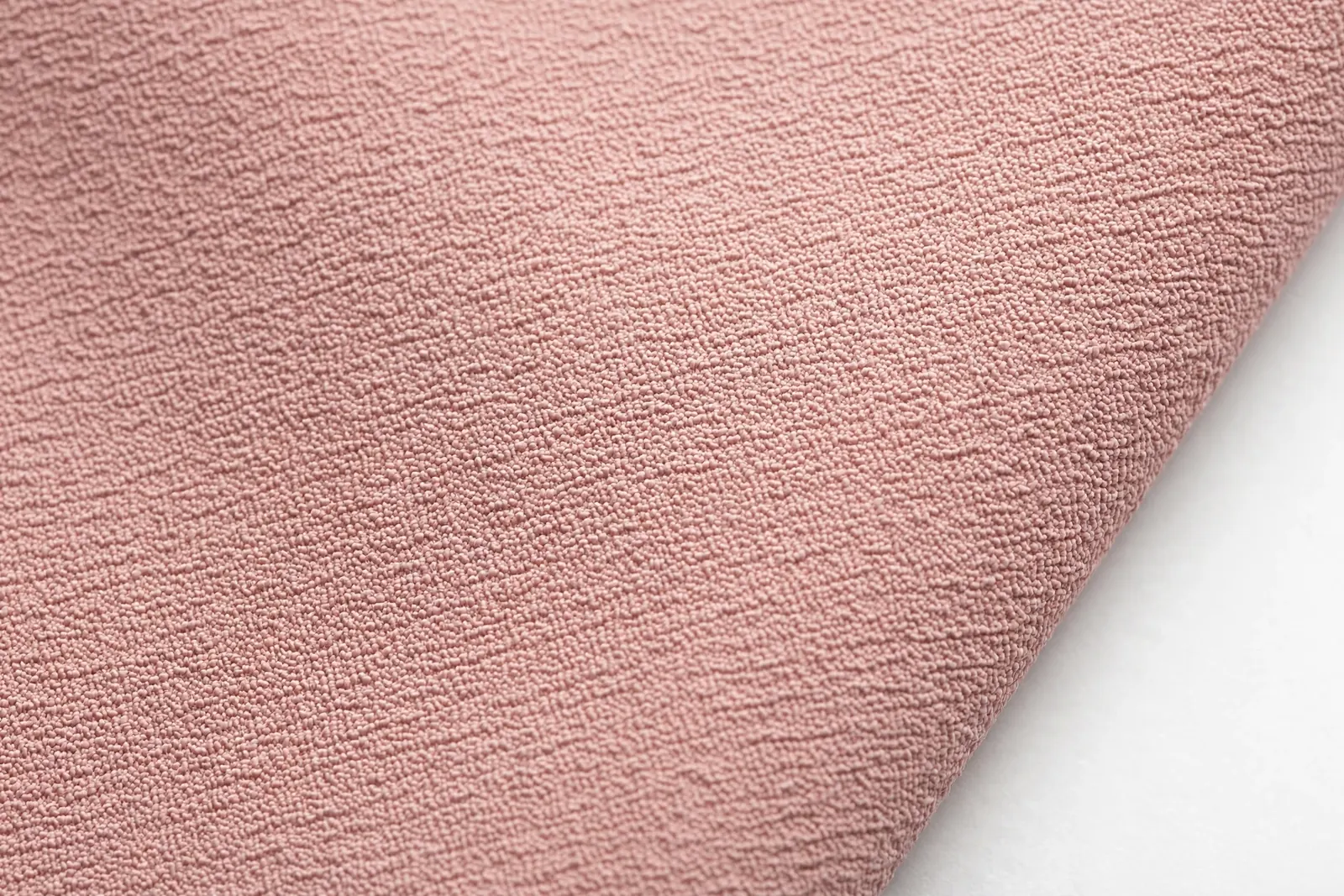
Crepe satin is a satin weave that uses high-twist crepe yarns in the weft (filling) while the warp floats stay low-twist. The low-twist warp floats form the smooth, glossy face. The high-twist weft yarns crinkle during finishing and form the pebbled matte back. One weave, two textures.
The trick is in the yarns, not the weave pattern. A satin weave already floats warp yarns over the weft to create its shine; in crepe satin, those warp floats are deliberately low-twist so they lie flat and catch light cleanly. The weft yarns underneath are the opposite: twisted far beyond normal, sometimes with S-twist and Z-twist yarns alternating, so the yarn is lively and wants to move. When the woven fabric goes through finishing, those high-twist weft yarns shrink and crinkle. The face, dominated by smooth warp floats, stays glossy. The back, where the weft shows, goes pebbled. If the plain satin construction is new to you, our guide to the satin weave explains the float structure in detail.
That crinkle is the crepe effect, and it is the same physics behind every crepe fabric. Excessive twist stores energy in the yarn, and finishing releases it as texture. In most crepes the twist yarns sit on the face. In crepe satin they work from behind, which is why the shine survives on the front while the back goes grainy.
One technical glossary adds a construction detail: roughly two or three times as many warp ends as weft picks per inch. That figure is single-sourced, so treat it as approximate, but the direction is right. Satin weaves are warp-heavy, and that is what keeps the weft's crinkle from breaking through to the face.
There is one disagreement in the sources worth stating plainly. Most references say the pebble comes from the yarn twist built into the weave. One glossary contributor says the back's texture is added after weaving, by heat, steam, or chemicals that shrink the back fibers. The yarn-twist construction is better supported across multiple sources, so this guide treats it as the real one. If you ever meet a "crepe satin" whose texture washes out, you may have found the finished version.
Is Crepe Satin the Same as Crepe-Back Satin?
In textbook usage, crepe satin and crepe-back satin are the same fabric: satin face, crepe back. Satin-back crepe is the disputed one. Textile glossaries define it as the opposite fabric, crepe face with satin back. The Fairchild dictionary defines it as satin face with crepe back, the same as the others.
Position A, the textile textbook tradition: the names encode which side is the right side. Crepe-back satin is satin-faced; satin-back crepe is crepe-faced. Position B, the Fairchild Dictionary via Wikipedia: "satin-back crepe" is "a reversible fabric with a satin face and a crepe reverse," identical to crepe-back satin. Position C, the retail trade: all three names label one reversible fabric. KikiTextiles writes "crepe-back satin, also known as satin-back crepe." Fashion-n-fabrics sells "satin backed crepe" and describes sheen on one side, crepe on the other, usable on either side. Calico Laine's "satin back crepe" is "reversible: one side shiny satin, the other crepe finish."
So the textbooks disagree with the dictionary, and both are ignored by the shops. My advice: check the fabric, not the label. Look at which side is which, decide which side you want as the face, and buy accordingly. A fabric label is a rumor; your fingertip is the fact.
A textile analysis of a Tom Ford dress sold as "Crepe Satin" (73% acetate, 27% viscose) shows the dress worn with the matte crepe side as the face and the satin side as the reverse. Designers flip this fabric on purpose. When you buy it, you are buying two fabrics. Use them that way.
Crepe Satin vs Its Lookalikes: What's the Difference?
The fabric most often confused with crepe satin is crepe de chine, but the two are built differently. Crepe satin is a satin weave with a glossy face and a crepe back. Crepe de chine is a plain weave with crepe-twist yarns, matte on both sides and lighter in weight. The table below lines up the whole family.
| Fabric | Weave | The face | The back | How to tell it apart from crepe satin |
|---|---|---|---|---|
| Crepe satin (crepe-back satin) | Satin | Smooth, glossy | Matte, pebbled crepe | The reference fabric |
| Crepe de chine | Plain (one over, one under) | Matte, fine grain | Matte, fine grain | No shiny side at all; lighter and finer |
| Generic crepe | Varies, often plain | Pebbled or crinkled | Pebbled or crinkled | Texture on both sides; crepe is a family, not one fabric |
| Crepe charmeuse | Satin (silk, grenadine warp) | Glossy | Crepe reverse | The silk-only cousin; lighter than most crepe satins |
| Charmeuse | Satin | High-shine, mirror-like | Dull | Much shinier face; flat back with no pebble |
| Duchess satin | Satin | High-shine, crisp | Dull | Heavier and stiffer; built for structure, not drape |
Charmeuse is the comparison that matters most when you are shopping. Crepe satin's luster is subdued next to charmeuse's mirror shine, and its back has a fine pebble grain you can see under raking light. Charmeuse's back is flat and dull. If both sides look matte and identical, you are holding crepe de chine, not crepe satin. If the fabric is heavy and crisp with a hard shine, it is probably duchess. Our charmeuse guide covers that sibling fabric in full.
What Are the Types of Crepe Satin by Fiber?
Crepe satin is defined by its construction, not its fiber, so it comes in silk, polyester, viscose and acetate, and occasionally wool. The fiber decides the price, the care, and the hand. Silk is the luxury tier; polyester is the mass-market workhorse; the rest sit between.
Silk crepe-back satin is the premium tier. Beckford Silk, a UK silk specialist, sells medium weights for "summer tops, evening wear and luxurious lingerie" and heavy weights for "the most luxurious bridal wear and evening wear." Their heavy silk crepe-backed satin was listed at £58.21 per meter at the time of this research; treat that as a snapshot, not a permanent price. Silk versions drape beautifully, take dye with depth, and demand hand washing.
Polyester crepe-back satin is the mass-market tier and the one you will meet most often in fabric shops. A typical listing runs about 150 GSM and 0.25 mm thick. Retailers describe it as mimicking silk satin's elegance "with better durability, easier maintenance, and a fraction of the price." One UK listing works out to roughly £8.90 per meter. It machine washes, resists wrinkles, and costs little enough to practice on. My honest take: for a one-wear prom dress, polyester is the smarter buy. For a wedding gown, silk is worth the difference. Our polyester satin guide covers that fiber in detail.
Viscose and acetate versions sit in the middle ground. The New Craft House lists a stretch viscose-acetate crepe-backed satin at £22 per meter, and the Tom Ford crepe satin dress mentioned earlier is 73% acetate and 27% viscose. These blends drape like silk with a softer hand than polyester, but they are a thinner slice of the market and harder to find.
Wool crepe satin is the rare one, and the evidence is mostly historical. A 1960s tailored wool jacket was listed with a "black crepe-backed satin lining," and a sewing blog describes crepe-backed satin for facings and jacket linings. A B2B guide lists wool crepe at 180 to 280 GSM for tailored suiting, mid-premium tier, but that covers wool crepe generally, not crepe-back satin specifically. Treat wool crepe-back satin as historically real and uncommon today.
One B2B crepe guide offers a rough weight and price ladder: the silk crepe family around 50 to 120 GSM at the premium tier, polyester crepe around 80 to 150 GSM at the budget tier, wool crepe 180 to 280 GSM at the mid-premium tier. Those are one guide's figures, not lab measurements, but the ordering holds everywhere. Silk costs multiples of polyester.
What Is Crepe Satin Used For?
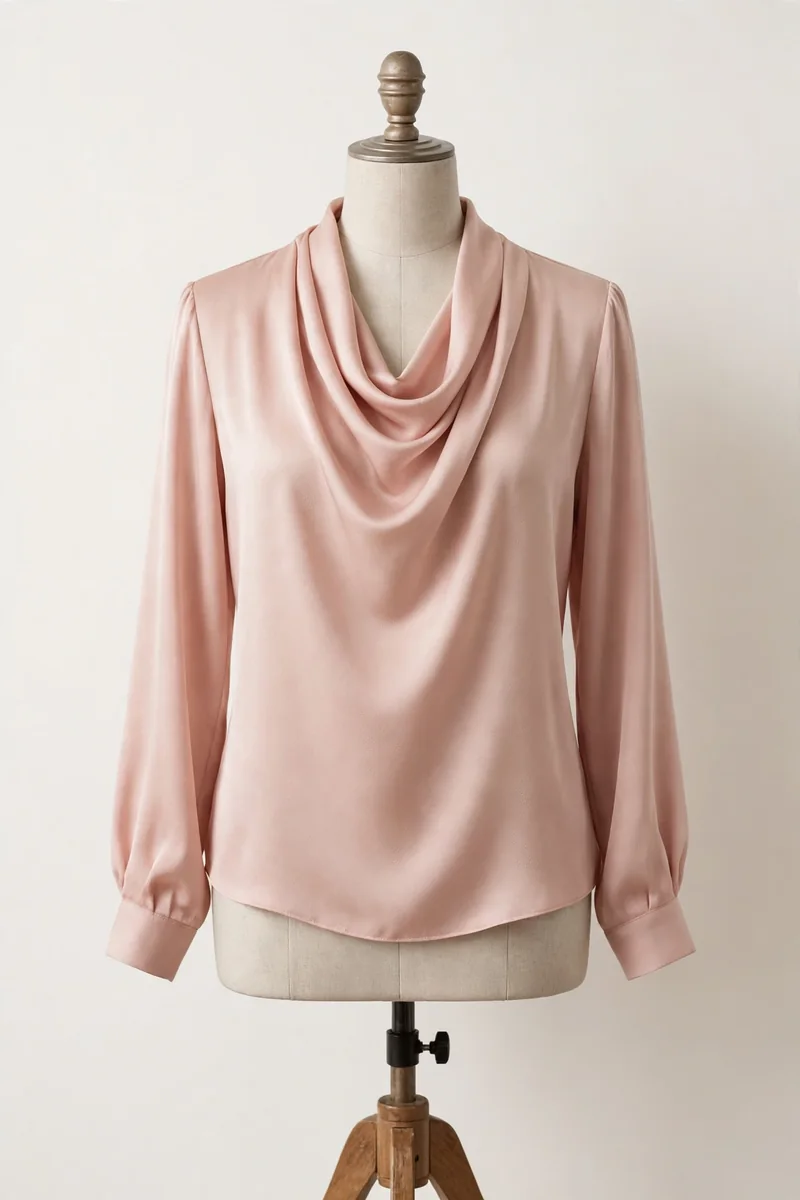
Bridal and eveningwear dominate: gowns, prom dresses, cocktail dresses. The reversibility is the design draw; designers contrast the two faces in one garment, matte outside with satin trim, or flip the whole piece crepe-side-out. Beyond evening, it shows up in blouses, lingerie, loungewear, and tailored linings.
Why do designers pick it over charmeuse? Subdued luster plus options. Charmeuse gives you one look: shine. Crepe satin gives you two finishes and the choice of which one the world sees. One retailer calls the shiny-one-side, matte-the-other combination a "designer favourite," and it is easy to see why. The matte crepe face photographs without hot spots; the satin face catches light at a neckline or in a bow. Calico Laine calls it "a very floaty fabric which hangs beautifully."
In practice that means bridal gowns and evening dresses first; then blouses, summer tops, lingerie, nightwear, and loungewear; then the quieter uses: jacket and coat linings, facings, scarves, sashes, scrunchies, drapery, tablecloths, and pillow covers. A 1960s tailored wool jacket with a crepe-backed satin lining and a John Galliano violet crepe-backed satin evening dress from Spring 2000 show how long this fabric has been doing both jobs, the seen and the unseen. For wedding-specific fabric choices, see our bridal satin guide.
One caution from a silk fabric selection guide: it warns that crepe-back satin suits soft designs with some ease and should avoid overly loose designs because, in that author's view, the fabric "does not drape well." That conflicts with retailers who call it floaty. The likely truth is that drape varies by fiber and weight: silk drapes, stiff polyester does not, and you should judge the bolt in front of you.
How Do You Identify Crepe Satin Before Buying?
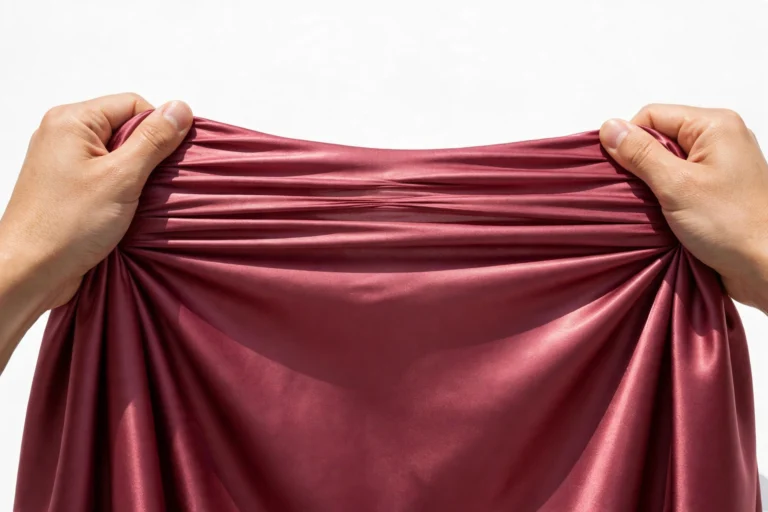
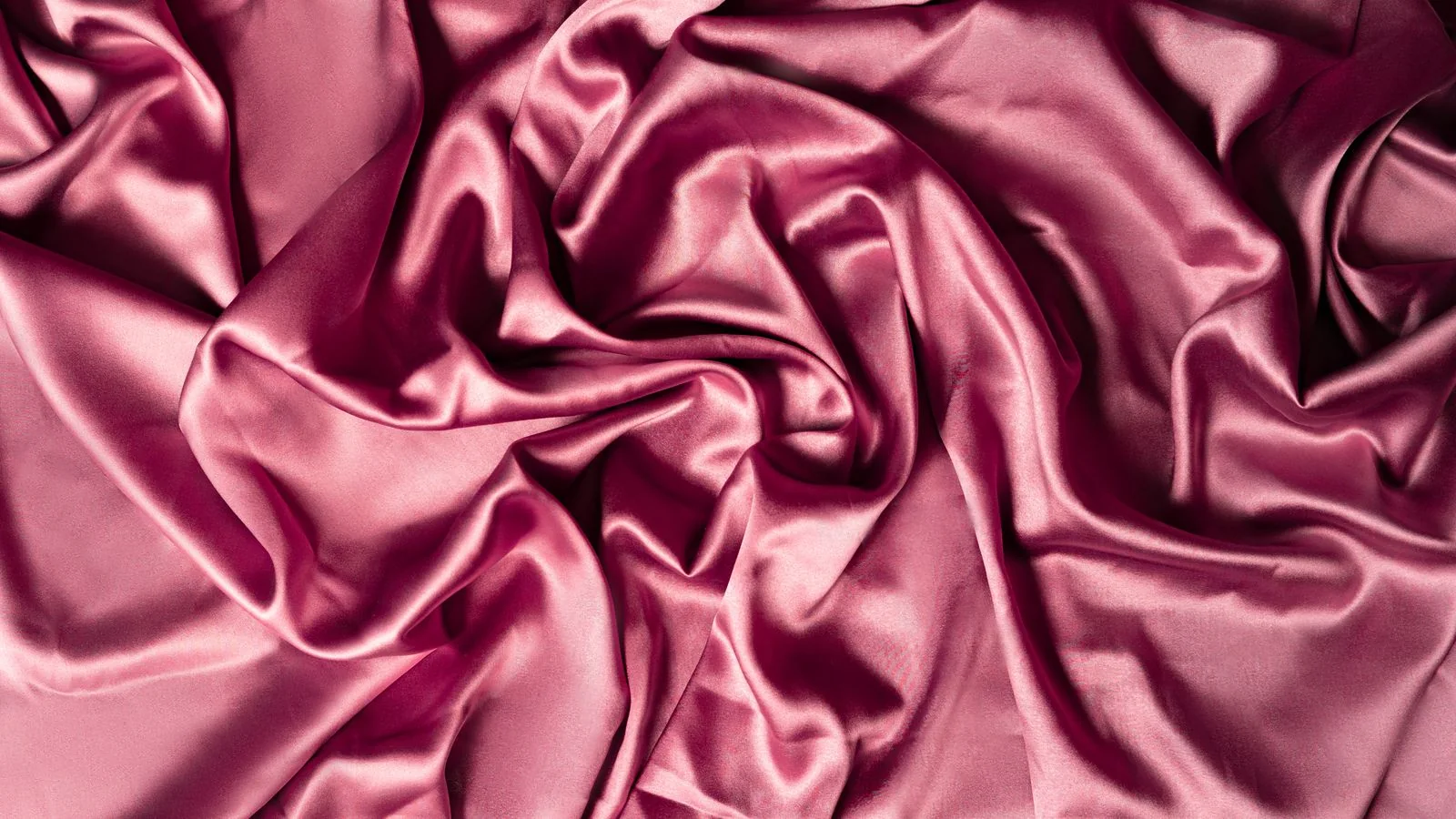
Use your hands. One face is smooth, cool, and slippery with a soft light reflection; flip it over and the reverse is matte with a fine pebbly grain that grips your fingertip slightly. That two-face feel is the whole test. No lab method exists for this fabric, so these are practical heuristics, not a protocol.
Run the touch test first. The satin face should feel cool and slick, the way satin always does. The back should feel matte and faintly grainy, like very fine sandpaper made of cloth. If the back is perfectly smooth, it is not crepe satin.
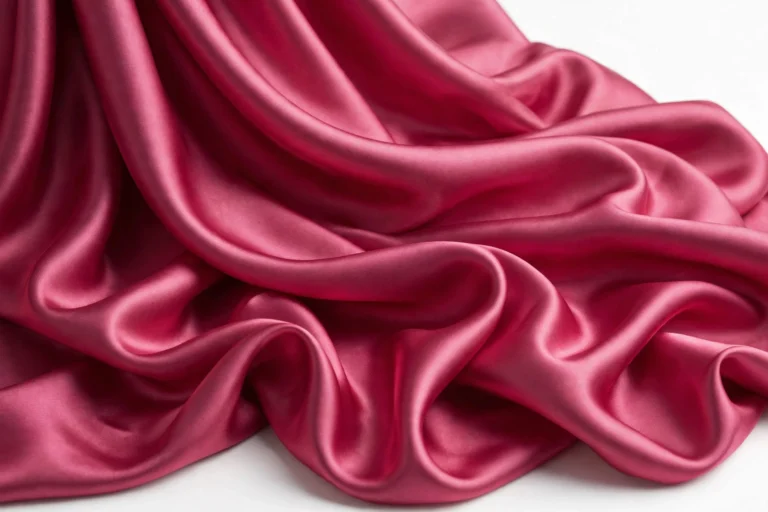
Then check the drape. Crepe-back satin falls fluidly but with more body than charmeuse; the crepe underside gives it a subtle weight and stability, so it drapes gracefully without being overly slippery. If it slides off your arm like water, you are probably holding charmeuse. One experienced sewist notes that plain crepe's dimples "set into each other and prevent the fabric from being slippery," while crepe-back satin is crepe on one side and "shiny slippery flat on the other," so how hard it is to cut depends on which side faces up.
Visually, the sheen is softer than mirror-shine charmeuse, and the back shows a fine pebble grain under raking light.
The burn test can only tell you the fiber, not the fabric: silk curls from the flame and smells like burning hair; polyester melts into a hard black bead; rayon burns fast and keeps going. Those are generic fiber tests. No source documents a burn test specific to crepe-back satin. Use them to confirm what the bolt claims to be, nothing more.
And the honest shopping rule: read the fiber content on the bolt end, not the poetry on the label. If the price is under £10 a meter, you are buying polyester, whatever the tag promises.
How Do You Sew Crepe Satin?
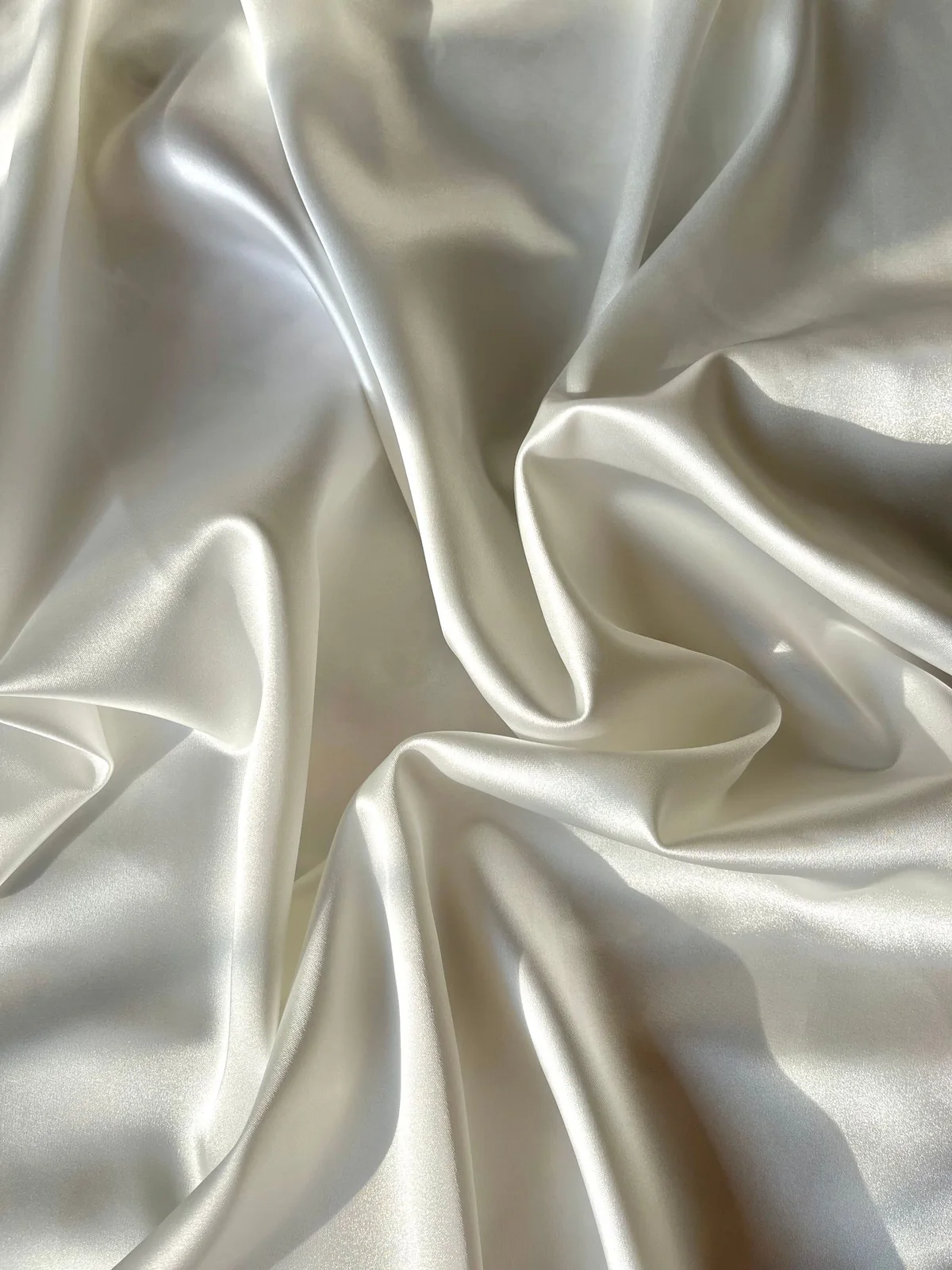
Sew it like satin with extra respect for the crepe side. Use a new Microtex or Sharp needle, 70/10 or 80/12, and change it often. Cut single layer on tissue paper with pattern weights instead of pins, mark the right side as you cut, and sew with a walking foot. Test everything on scraps first.
The needle choice is specific to this fabric. A general satin guide suggests a Sharp or jeans needle in 80/12 to 90/14, but the crepe-backed-satin-specific guide narrows it to 70/10 or 80/12, new and fine.
Cutting is where projects are won or lost. The fabric shifts, so lay tissue paper under it on the cutting table, cut a single layer, and use pattern weights instead of pins; satin shows pin and needle marks. Cut with sharp shears and staystitch curved edges like necklines and armholes immediately after cutting, because the crepe's spongy quality lets it stretch under machine stitching.
Mark the right side of each piece as you cut it, unless you are deliberately using both sides for contrast. Transfer any markings to the wrong side with tailor's chalk, a dressmaker's pencil, or a fabric marker. Our general guide to sewing satin covers these shared techniques in more depth.
For feeding, use a walking (even-feed) foot, reduce presser-foot pressure if your machine allows it, and stabilize seams with tissue paper or wash-away stabilizer. Test tension and stitch length on scraps, on both faces if you plan to use both. For seam finishes, French seams, Hong Kong (bias-bound) finishes, or a 3-thread serger overlock all work; a narrow zigzag is acceptable for simple projects.
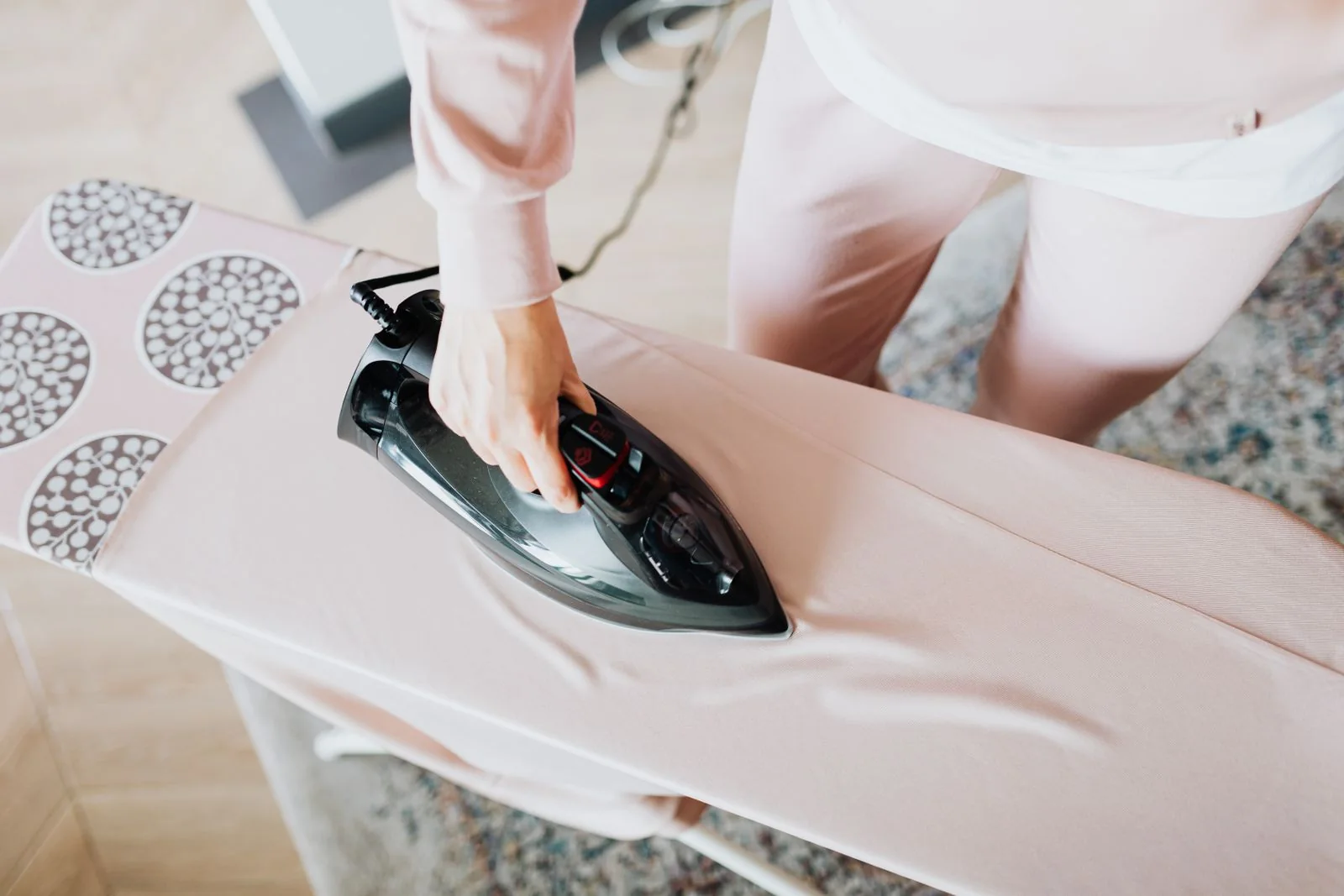
Press lightly and always through a press cloth to prevent shine marks. Choose sew-in interfacing over fusible; one satin guide warns that fusible interfacing's high heat can damage satin. One experienced sewist steams silk crepe through a press cloth and tests for water spots first. Now the honest caution: no source has directly tested whether the pebbly crepe texture flattens permanently under a hot iron. The standing advice, low heat plus press cloth, never a bare iron on the face, is consistent everywhere, and Beckford advises ironing damp on the reverse. Treat the flattening risk as real but unproven, and keep the heat down.
One last fit note: crepe garments tend to stretch with wear and on the hanger. Fit fairly snugly, and let hems hang overnight before you mark them.
How Do You Care for Crepe Satin?
Care follows the fiber, not the weave. Silk crepe-back satin gets hand washed in cold water with mild detergent, gently squeezed (never wrung), and dried flat. Polyester versions machine wash cold and tumble dry low. When the care label and the fiber content disagree, trust the fiber.
Silk first. Beckford Silk repeats the same routine across its products: hand wash in tepid or cold water with mild detergent, do not wring (gently squeeze, then roll in a towel), lay flat or between towels to dry, and avoid hanging, which stretches and distorts the fabric. Iron damp on the reverse with a fairly hot iron. KikiTextiles adds low heat, a press cloth, and no bleach.
Polyester is easier. Machine wash cold with similar colors, do not bleach, tumble dry on cool, and use a warm iron only if necessary, testing a small piece first. The fabric is sold as wrinkle-resistant, and it mostly lives up to that.
One conflict to flag: a retailer's generic satin care page says satin products should be dry-cleaned only. That advice is not crepe-back-satin-specific and clashes with silk sellers' hand-wash guidance. Follow the fiber-specific routine above. Across all fibers, use mild detergent, skip harsh chemicals and bleach (color fade risk), and air-dry flat where you can. See our per-fiber guide to washing satin for the full routines.
Frequently Asked Questions
Is crepe satin the same as crepe-back satin?
In shops, yes. Retailers use crepe satin, crepe-back satin, and satin-back crepe as three names for the same reversible fabric. In textile textbooks, satin-back crepe means the opposite fabric: crepe face with satin back. Judge the cloth in your hands, not the name on the tag.
What's the difference between crepe satin and satin?
"Satin" names a weave family: warp floats, glossy face. Crepe satin is one member of that family, distinguished by high-twist crepe yarns in the weft that give the back its pebbled texture. All crepe satin is satin; not all satin is crepe satin. Charmeuse, duchess, and slipper satin are its siblings.
Is crepe satin stretchy?
Not by construction. The crepe texture adds a little give on the bias, but the fabric has no built-in stretch. Some retail versions blend in elastane, like a stretch viscose-acetate crepe-backed satin sold by one UK shop, so check the fiber content if you need stretch. If the label says 100% silk or 100% polyester with no elastane, assume none.
Is crepe satin good for wedding dresses?
It is one of the best choices for them. The satin face photographs with a soft glow instead of harsh shine, the fabric has enough body to hold a silhouette, and the matte back can become a design feature. Silk crepe-back satin is the traditional bridal tier; polyester works for budget gowns and bridesmaid dresses.
Does crepe satin wrinkle?
It depends on the fiber. Polyester crepe-back satin is sold as wrinkle-resistant and bounces back well. Silk versions wrinkle moderately and need a press after storage. The crepe texture hides small creases better than flat charmeuse does, which is one of its quiet advantages.
Can you iron crepe satin?
Yes, with restraint. Use low to medium heat with a press cloth, and iron silk versions damp on the reverse. Never press a bare hot iron on the satin face. No source has tested whether the crepe pebble flattens permanently under high heat, so treat that as a real risk, not a myth.
Which side is the right side?
Whichever side you want. The fabric is finished on both faces, and designers use both. Convention puts the satin side out, but the Tom Ford dress worn crepe-side-out proves the matte face is a legitimate right side. Mark your chosen face on the pattern pieces as you cut, so you don't mix them up mid-project.
Is crepe satin polyester or silk?
Both exist, plus viscose, acetate, and blends. The name describes the construction, not the fiber. Silk is the premium tier, polyester the mass-market one. Always read the fiber content on the bolt end or the garment label; the word "satin" tells you nothing about fiber.
The Bottom Line
Crepe satin rewards the shopper who touches before buying. It is the one satin that gives you two finished faces, a shine that stays polite, and a back with enough grip to sew without tears. Learn the hand, ignore the label poetry, and you have a fabric that does double duty in almost any evening or bridal project.