Red Satin Dress: The Complete Guide
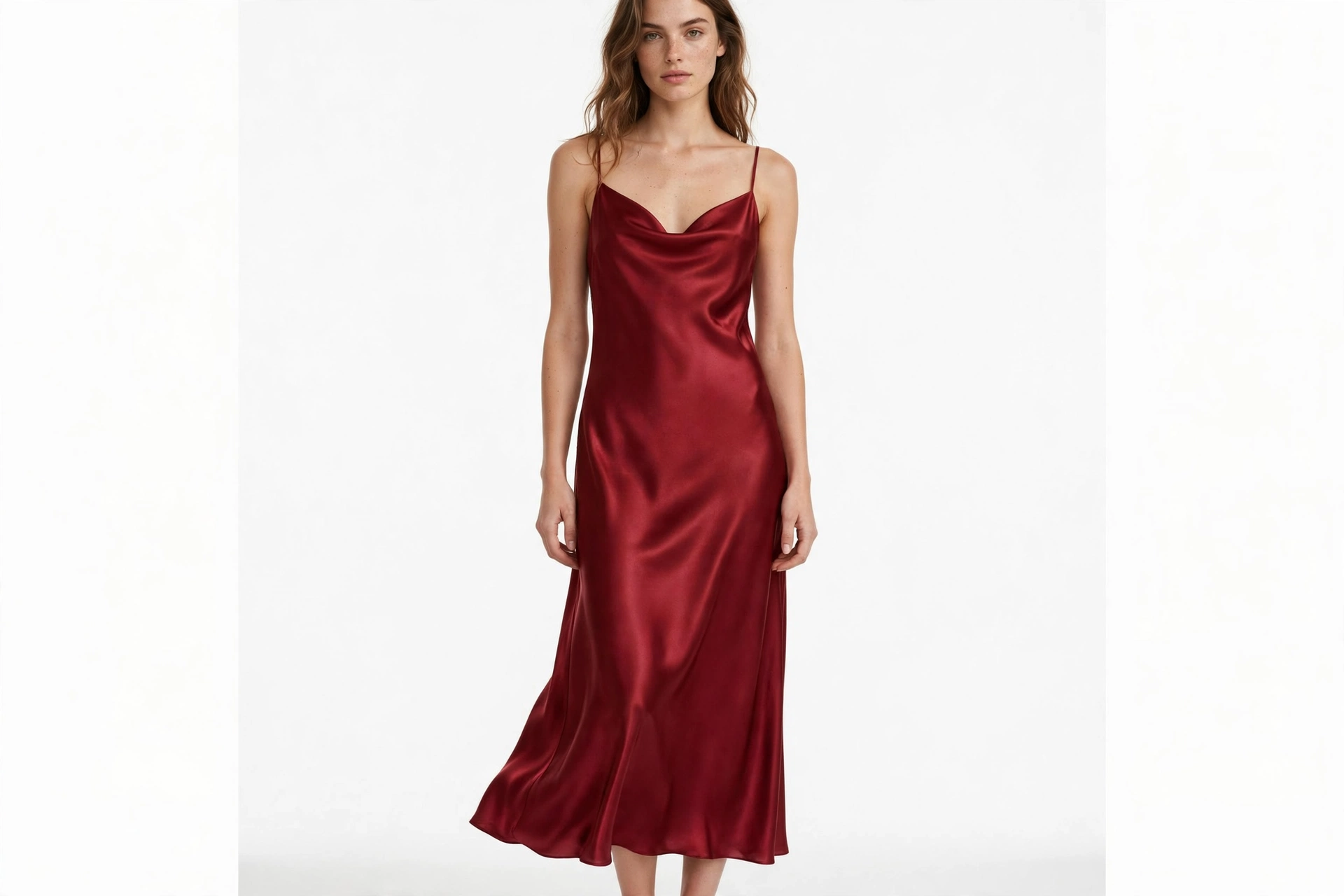
Yes, a red satin dress works on nearly everyone. The real decision is not the color. It’s the shade of red and the weight of the satin. Red is the one color that satin’s weave actually amplifies: the long surface floats reflect light in broad, continuous bands, and on red that reflection reads as glowing, living color instead of flat dye. That’s why a red satin dress photographs like an event. It’s also why thin, limp red satin looks terrible. This guide picks the right shade for your skin, the right satin for the shape, and the care routine that keeps red dye where it belongs.
Why does a red satin dress look so different from other red dresses?
Red satin looks luminous because satin adds reflected light on top of the dye color. Satin is a weave, not a fiber: warp threads float across the surface, five or more yarns per float, forming a nearly continuous sheet of dyed thread. Light bounces off that sheet in organized waves, and the eye reads those waves as shine. On red, a color the eye already registers as intense, the added shine pushes the color toward glow. A matte red dress in the same dye lot would read flat next to it. The satin version looks lit from within.
This is also why cheap red satin looks plastic. When the fabric is thin, the floats have no weight behind them. The dress wrinkles as you move, every fold breaks the reflection into hard little highlights, and the eye reads that as vinyl. Give the same dye a heavyweight satin and the folds roll instead of crease, the reflection stays broad, and the red looks expensive. Weight is the difference between liquid and laminate.
Which shade of red should you choose?
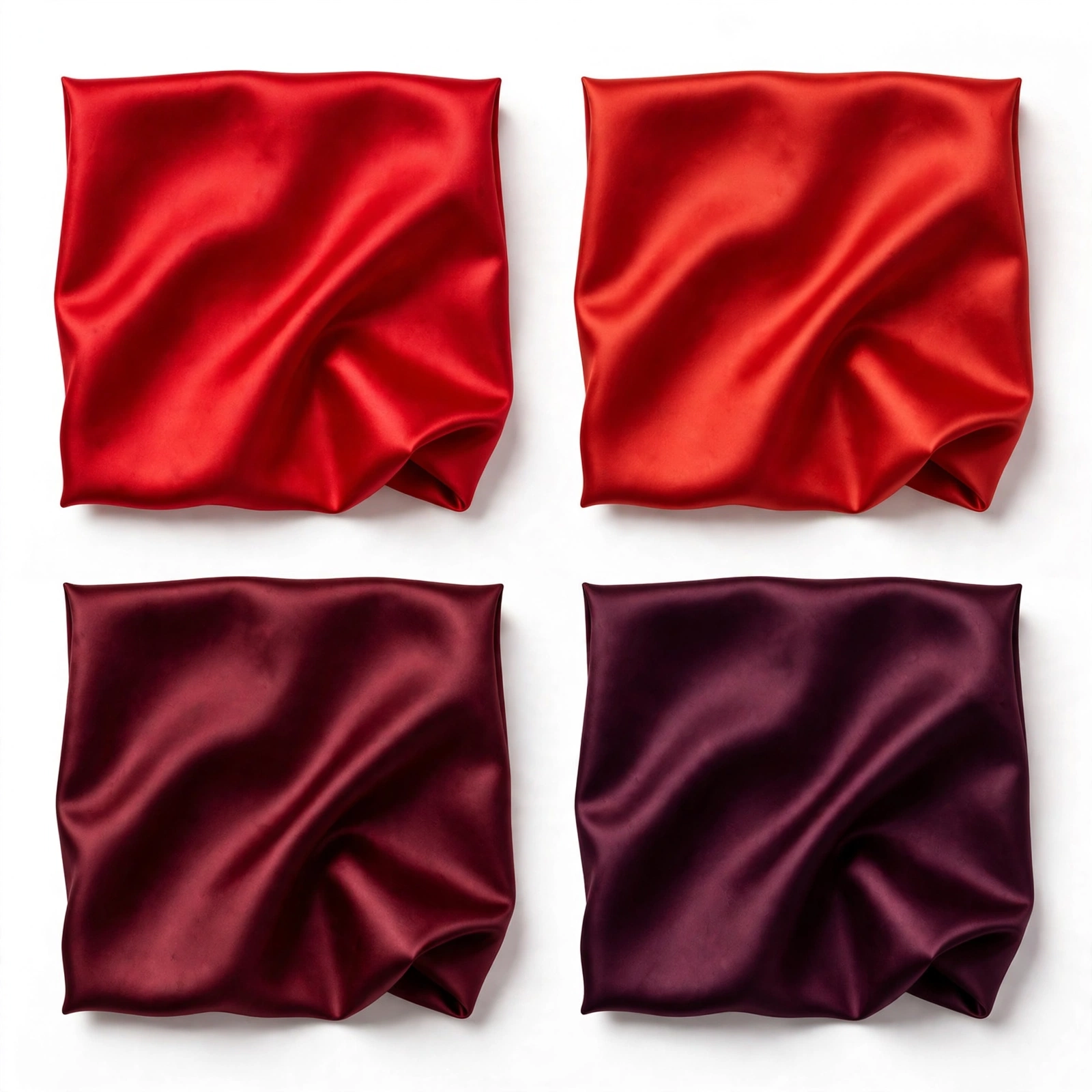
True red suits most people because it sits neutral between warm and cool. If your skin runs warm (yellow or olive undertones, veins that look green), orange-based scarlet usually flatters. If your skin runs cool (pink undertones, veins that look blue), blue-based reds like wine and berry are safer. Darker reds also read more formal than bright ones, so shade choice doubles as occasion choice.
| Shade | Undertone | Suits | Best occasions | Mood |
|---|---|---|---|---|
| True red | Neutral | Most skin tones | Parties, date nights, evening events | Confident, classic |
| Scarlet | Warm, orange-based | Warm undertones | Festive days, daytime events | Energetic, bold |
| Burgundy | Cool, darkened | Cool undertones, deeper skin tones | Weddings as a guest, formal dinners | Refined, understated |
| Wine | Blue-based, dark | Cool undertones | Black-tie, late evening | Dramatic, romantic |
My take: if you buy one red satin dress, buy true red. It’s the shade that survives trends and works across seasons. If you want red without the spotlight, buy burgundy. It’s the shade that reads as elegance instead of announcement, and it’s far more forgiving of wrinkles and shine.
Charmeuse, duchess, or crepe-back: which satin should your dress be made of?
Charmeuse gives you flow, duchess gives you structure, and crepe-back gives you a quieter middle ground. Charmeuse is lightweight and fluid, which is what a slip dress needs, but it shows every line under it. Duchess is heavy and holds a sculpted shape, which is what a cocktail or gown silhouette needs. Crepe-back has a satin face with a matte crepe back, so it shines less and drapes with more body than charmeuse. For red specifically, all three take dye well, so choose by silhouette, not by color payoff.
| Charmeuse | Duchess satin | Crepe-back satin | |
|---|---|---|---|
| Weight and drape | Light, fluid, clings | Heavy, structured, stands away from body | Medium, drapes with body |
| Shine level | High gloss, liquid | Medium gloss, controlled | Soft sheen, the least flashy |
| Forgiveness | Low: shows lines, needs smooth undergarments | High: weight smooths shapewear and lumps | Medium: gentler than charmeuse |
| Wrinkles | Creases show fast | Resists creasing | Creases less than charmeuse |
| Snags | Catches on jewelry easily | Snags least | Snags less than charmeuse |
| Best red satin dress style | Slip dress, cowl neck, bias cut | Ball gown, A-line, structured cocktail | Wrap dress, drape-front styles |
| Price | Usually lowest | Usually highest | Mid-range |
For the honest deep dive on each type, see the full encyclopedia of satin types. My take: buy charmeuse in true red for nights out, when you want the classic liquid look. Buy duchess in burgundy or wine for weddings and formal events, when you want structure that holds all night. Buy crepe-back if you love red but find satin shine too loud. It gives you the color without the mirror finish.
Which silhouette flatters your shape?
The wrap dress flatters the widest range of bodies because the tie adjusts to your actual waist and the V-neckline lengthens the torso. The slip dress is the icon, but it’s honest to a fault: bias-cut charmeuse skims the body, which means it also shows every seam line, panty line, and bump. It demands smooth, line-free undergarments and a confident relationship with your midsection. The fit-and-flare cinches the waist and skirts away from the hips, and in duchess satin it holds that shape without a petticoat doing the work.
Two rules cover most bodies. If the dress clings, the undergarments are half the outfit: smoothing, line-free, and never a contrasting color that shows through thin red charmeuse. If the dress is structured, get it tailored: duchess satin holds alterations well, and a $20 hem turns a rack dress into a dress that looks made for you. The full breakdown of cuts and fits lives in our complete satin dress guide.

How do you style a red satin dress?
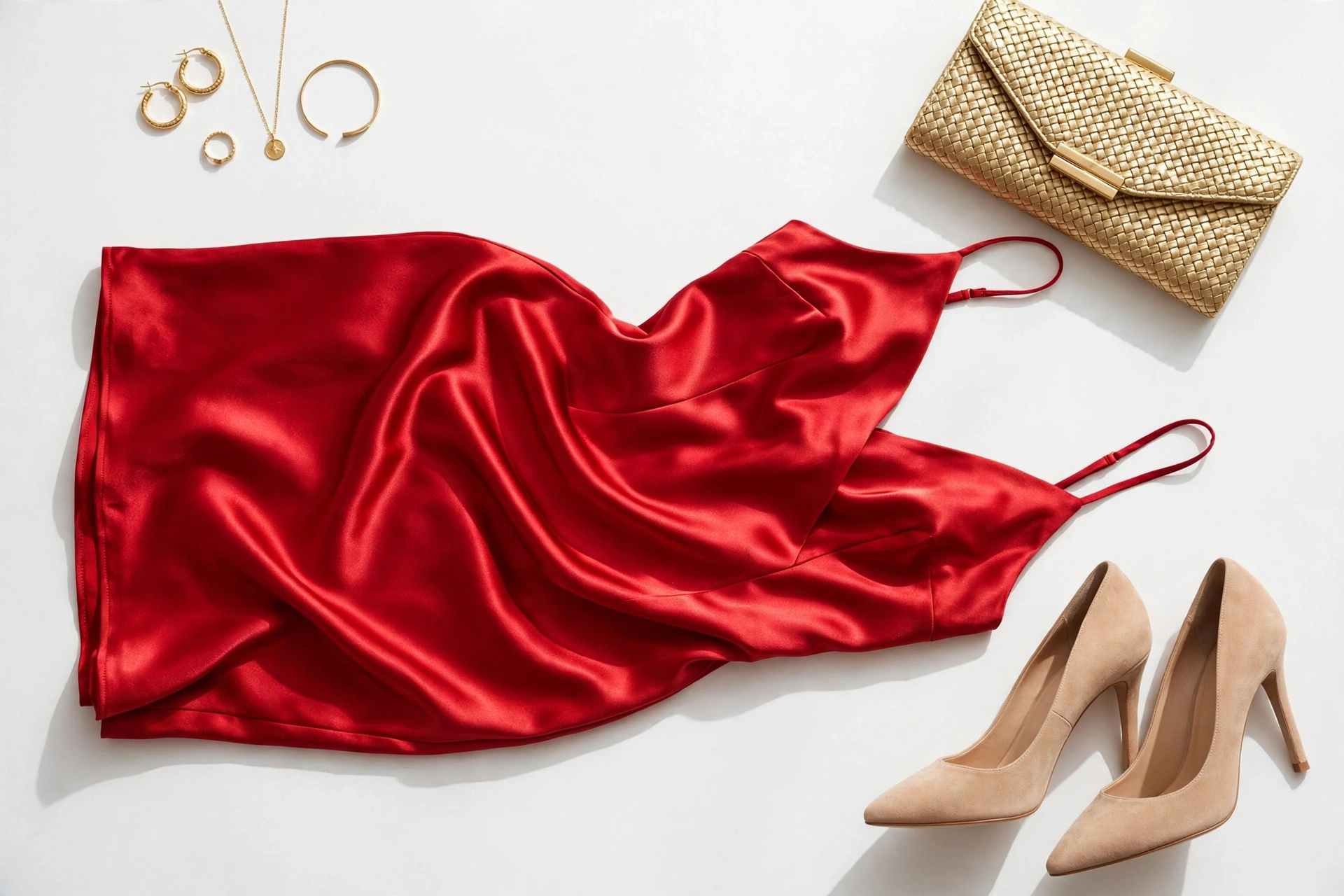
Red satin is already the loudest thing in the room, so the styling rule is subtraction. Nude shoes elongate the leg because they don’t interrupt the line of the dress. Black shoes ground the outfit and pull it toward evening. Metallics work if you commit: gold heels and a gold clutch read deliberate, while one random metallic piece reads accidental. Jewelry should stay in one metal family. Gold warms red and photographs richly; silver cools it and leans modern. The bag should be simple: a small clutch, nothing slouchy, nothing printed.
What not to pair: red shoes in a different shade than the dress. Two reds that almost match look like a mistake, and they never actually match, so don’t try. Busy prints fight the dress and lose. A chunky matte knit thrown over a slip dress wrinkles the satin and kills the shine that made the dress worth wearing. And sneakers: fashion editorials love them, but satin reflects light and sneakers absorb it, so the eye lands on the wrong thing. (Our black satin dress guide takes the opposite approach, accessories do all the talking there, but red needs restraint.)
When is a red satin dress appropriate?
A red satin dress belongs at evening events, festive occasions, date nights, and holiday parties. Valentine’s Day and Lunar New Year are its home turf. For weddings as a guest, red is acceptable in most Western settings now, but check the culture first. In Chinese, Indian, and Pakistani wedding traditions, red is the bridal color, and wearing it as a guest reads as upstaging the bride. When in doubt, pick burgundy over bright red for a wedding: it photographs beautifully and keeps you out of the bridal color lane.
Skip it for the office, unless your office is a fashion house and even then keep it to burgundy. Never wear it to a funeral. And know that red satin in daylight reads very differently than red satin at night: sunlight turns the gloss up, so a daytime red satin dress should be crepe-back or a darker shade, not high-gloss scarlet.
Why does red dye bleed, and how do you stop it?
Red has a reputation for bleeding, and it is partly earned. Most red satin dresses are polyester, dyed with disperse dyes that bond to the fiber with heat. Not all the dye molecules make it inside the fiber. A share of them sits on the yarn surface as loose residue. Warm water, agitation, and detergent strip that surface dye into the wash water, where it floats around and settles onto whatever pale fabric shares the load. The dress itself loses depth too, since every wash carries away dye that was contributing to the color.
So the prevention is mechanical, not chemical. Wash the dress alone the first time, always. Use cold water, 30C or below, since heat loosens dye bonds. Turn it inside out so friction hits the dull side. Use a mild detergent, skip fabric softener, and never soak the dress or leave it sitting damp. Damp red satin pressed against itself transfers dye between folds, which is how pink patches appear on an otherwise fine dress. Dry it flat or hang it immediately.
Now the myth: soaking in vinegar does not stop red satin from bleeding. Vinegar works as a mild acid rinse for protein fibers like wool and silk dyed with acid dyes, where pH actually matters. Polyester’s disperse dyes bond through heat penetration, and pH does nothing to them. A vinegar rinse is harmless, but it gives you false confidence. Cold water, separate washes, and fast drying are what keep red dye in the dress. The per-fiber wash rules are in how to wash satin.

Does red satin really look cheap?
No. Cheapness is never the color. It’s three things: fabric too thin to drape, a cut that bags where it should skim, and shine with no weight behind it. A heavyweight wine-red duchess gown with a proper hem looks formal and expensive. A flimsy scarlet slip from a fast-fashion rack looks costumey. Same color family, opposite results.
There’s a simple test before you buy. Scrunch a handful of the fabric and let go. If the wrinkles fall out on their own, the satin has the weight and recovery to look good on a body. If the wrinkles stay, that dress will look tired an hour into the event, no matter how good the color is. Judge the fabric, not the hue.
FAQs
Does a red satin dress suit everyone? Nearly everyone can wear red satin if the shade and weight match. True red flatters most skin tones. The failures are almost always shade mismatch (orange-based scarlet on very cool skin) or fabric that’s too thin and shiny for the occasion. Fix those two and the dress works.
What shade of red satin is best for pale skin? Blue-based reds like wine, berry, and burgundy usually flatter pale cool-toned skin, since they echo the skin’s undertones instead of fighting them. Very pale warm-toned skin can carry scarlet. Avoid neon-bright reds if your skin burns easily: the contrast can make skin look washed out.
What shoes go with a red satin dress? Nude heels are the safest pick: they elongate the leg and let the dress lead. Black heels pull the outfit toward evening. Gold or champagne metallics work when matched with a metallic clutch. Avoid shoes in a different shade of red; two near-matching reds look like a mistake.
Can I wear a red satin dress to a wedding? In most Western weddings, yes, especially in burgundy or wine rather than bright scarlet. In Chinese, Indian, or Pakistani wedding traditions, red is the bridal color, so guests should avoid it. When unsure, ask the couple or choose another dress.
Why does my red satin dress lose color when I wash it? Loose surface dye washes out with each cycle. Polyester satin is dyed with disperse dyes bonded by heat, and dye that never fully penetrated the fiber rinses away in warm water and detergent. Washing cold, inside out, and separately slows the loss, but some fading over years is normal.
Does a red satin dress show wrinkles? Charmeuse shows creases quickly because its thin, fluid structure holds fold lines. Duchess resists creasing thanks to its weight. Crepe-back sits in between. Hang the dress instead of folding it, steam rather than iron, and never pack charmeuse tight in a suitcase.
Is a red satin dress hard to keep clean? Red satin hides most food stains well but shows water spots and dust. Blot spills immediately with a damp cloth; never rub, since rubbing pushes liquid into the weave and dulls the finish. Keep a lint roller handy for dark shades. Polyester satin is easier to maintain than silk satin.
Silk or polyester for a red satin dress? Polyester is the practical pick: it holds disperse dyes deeply, resists wrinkles better, costs far less, and washes easily. Silk satin drapes more softly and breathes better, but it costs much more, fades faster in sun, and needs delicate care. For a dress you’ll wear and wash often, polyester wins. For a once-in-a-lifetime gown, silk earns its price.