What Is Satin? The Complete Guide
Satin is a weave structure, not a fiber. That single sentence clears up almost every confusion people have about satin, because most of what you read online treats “satin” like a material you can buy by the name alone. You cannot. Satin describes how threads are woven together. The fiber those threads are made from can be silk, polyester, nylon, acetate, or rayon, and the fiber changes everything about how the fabric behaves, feels, costs, and lasts.
This guide explains what satin actually is, what it is not, which fibers it comes in, how to read a label without getting fooled, and how to buy the right satin for whatever you are making or wearing.
What is satin, in one plain answer?
Satin is a weaving pattern in which warp threads float over four or more weft threads before dipping under one, which puts most of the yarn on the fabric’s face and creates its signature smooth, glossy surface. Because satin is a structure and not a material, the word alone tells you nothing about what a fabric is made of, which is why two fabrics both called “satin” can feel and behave like completely different materials.
That is the whole foundation. Everything else in this guide is built on it.
Why is everyone confused about what satin is?
The confusion exists because the textile industry and retailers use “satin” as a selling word rather than a technical one. A product labeled “satin pillowcase” might be polyester, silk, or a blend, and the word satin tells you which of those it is in exactly zero cases. Shoppers then compare a $12 polyester satin pillowcase with a $90 silk satin one, conclude the reviews contradict each other, and blame the fabric instead of the label.
The honest fix is to always read satin as two words: the weave (satin) plus the fiber (silk, polyester, and so on). Once you do that, the contradictions disappear. Polyester satin is slippery, durable, and cheap. Silk satin is breathable, temperature-regulating, and expensive. Same weave, different universe. Our full comparison of the two most confused fibers is in the satin vs silk guide.
How does the satin weave actually work?
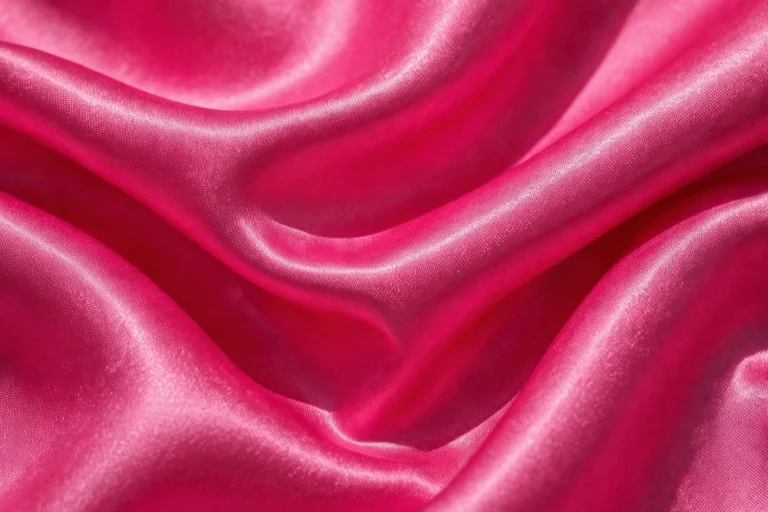
In a plain weave, each thread goes over one, under one, like a checkerboard. In a satin weave, each warp thread floats over four or more weft threads before going under a single one, and each row staggers that interlacing point so no visible pattern forms. Those long, uninterrupted floats are the entire secret: light reflects off the smooth, unbroken yarn surfaces instead of scattering, which is why satin shines.
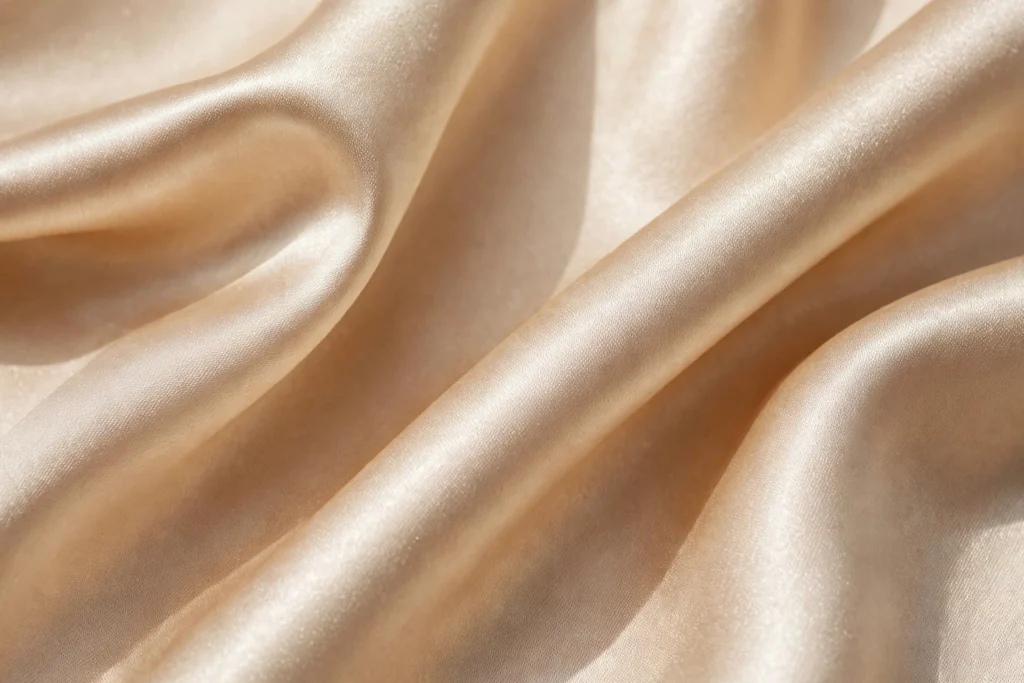
The same long floats explain satin’s famous weaknesses. A thread that floats over four yarns is exposed, so it snags more easily than a plain weave, and the glossy face shows water spots and fingerprints that a matte fabric would hide. Shine and fragility are the same mechanism, not two separate traits.
If you want the full science, floats, harness counts, and warp-face versus weft-face, read the complete satin weave guide. What matters here is the takeaway: the weave creates the look, the fiber creates the performance.
Which fibers does satin come in?
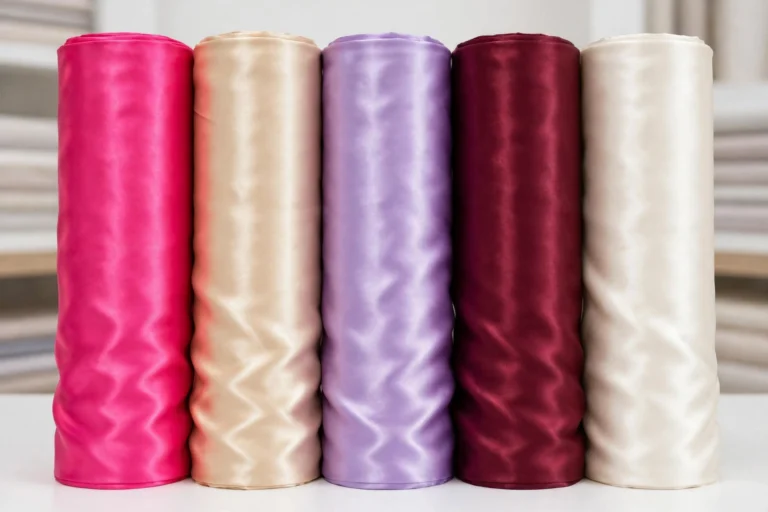
Any fiber that can be spun into a smooth, continuous yarn can be woven in a satin structure. In practice, five fibers cover nearly everything sold as satin.
Silk satin. The original and the most expensive. Made from silk filament, it is breathable, drapes beautifully, and has a soft, deep luster rather than a plasticky glare. It water-spots easily and needs gentle care. When people say “real satin,” this is usually what they mean, though the phrase has no technical meaning.
Polyester satin. The most common satin in the world. Cheap, colorfast, wrinkle-resistant, and durable, with a high, bright shine. It does not breathe, can feel warm or clammy, and is prone to static. Most “satin” clothing, linings, and budget bedding are polyester.
Nylon satin. Strong and abrasion-resistant with good elasticity. Common in lingerie and linings. It yellows with age and heat, and it absorbs very little moisture.
Acetate satin. A semi-synthetic with a beautiful drape and rich luster, often used for linings and formal wear. It is weaker when wet and less durable than polyester, which is why it has largely lost ground to synthetics.
Rayon (viscose) satin. Soft, breathable, and drapey with a lovely sheen, but it wrinkles readily and usually needs dry cleaning or very gentle washing.
The same weave in different fibers produces fabrics with different names in the trade. Charmeuse, for example, is a lightweight satin, traditionally silk, with a matte back. Duchess satin is a heavy, stiff satin used in bridal gowns. All fourteen named types are decoded in the complete types of satin guide, organized by fiber, weight, and use so you can match the exact type to your project.
What is satin NOT? (the naming traps)
Three naming traps cause most bad purchases.
Trap 1: Sateen is not satin. Sateen uses the same interlacing idea but weft-faced instead of warp-faced, and it is almost always cotton. It has a soft sheen rather than a high gloss, and it breathes like cotton. Retailers sometimes blur the two, but they are different fabrics. The full breakdown is in the satin vs sateen guide.
Trap 2: Surah and faille are not satin. Both are sometimes described with satin-like language, but surah is a twill weave and faille is a ribbed plain weave. Neither uses the satin interlacing structure, so neither is satin no matter what the product copy claims.
Trap 3: “Satin” on a label is not a fiber content. A label that says only “satin” is telling you the weave and hiding the fiber. Honest labels say “100% polyester satin” or “silk satin.” If the fiber is missing, assume the cheapest option and price it accordingly.
How do you read a satin label without getting fooled?
Read every satin label as a two-part code: fiber first, weave second.
- Find the fiber content. This is the legally required line (“100% polyester,” “92% silk, 8% elastane”). If you cannot find it, walk away or assume polyester.
- Find the weave or type name. “Satin,” “charmeuse,” “duchess satin,” “crepe-back satin.” This tells you the structure and weight family.
- Check the weight if given. Heavier satins (duchess, peau de soie) suit structured garments; lightweight satins (charmeuse) suit drapey ones. Silk satin is sometimes sold by momme weight instead.
- Be suspicious of “silk satin” with no silk in the fiber line. The phrase is widely used as marketing. The fiber content line is the truth; everything else is advertising.
- Touch it if you can. Real silk satin warms to your hand and has a soft, deep glow. Polyester satin stays cool and throws a brighter, sharper shine. Your fingers are a decent lab.
What does satin feel like, and what is it best for?
Good satin feels cool, smooth, and liquid in the hand, with a surface your fingers glide across. It drapes in soft folds rather than holding crisp shapes, unless it is a heavyweight type like duchess, which is specifically woven to hold structure for bridal gowns.
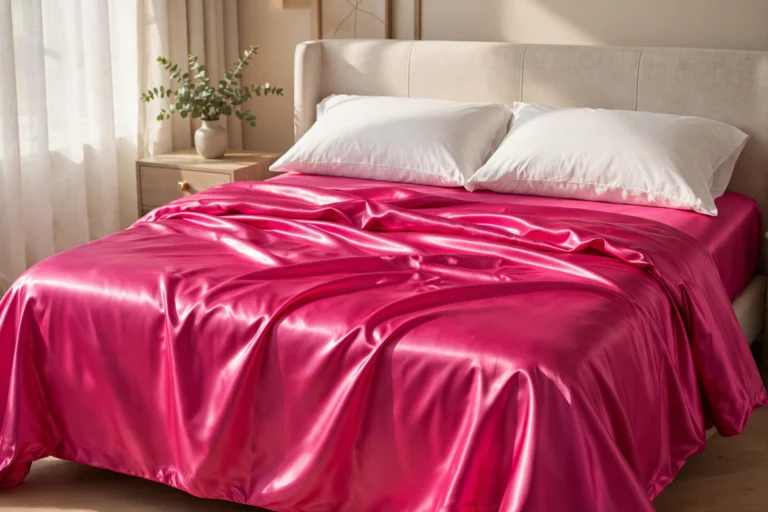
Satin is at its best wherever smoothness, sheen, or drape is the point: evening wear, lingerie, linings, drapery, and bedding where low friction matters. It is at its worst wherever grip, matte texture, or hard wear is needed: upholstery that gets daily abrasion, workwear, or anything that must not show water spots.
Because the fiber matters more than the weave for performance, match the fiber to the job: silk or rayon satin for breathable garments, polyester satin for budget and durability, nylon or acetate satin for linings.
A short history: why is it called satin?
The word satin traveled the old maritime trade routes. It descends from the name of Quanzhou, the great Chinese port city, which Arab traders called Zayton or Zaitun. The Arabic form became medieval Latin terms in the 12th and 13th centuries, entered Old French as satin in the 1400s, and reached English soon after. So the fabric’s name is, at root, the name of the port it shipped from, a small reminder that satin has been a global luxury good for the better part of a thousand years.
How do you care for satin?
Care depends on the fiber, not the weave. Silk satin wants gentle hand washing or dry cleaning. Polyester satin tolerates machine washing. Acetate and rayon satins wrinkle if you look at them wrong and usually prefer dry cleaning. Iron all satins on low heat from the reverse side, or use a press cloth, because the glossy face marks easily.
The complete per-fiber routine, including stain removal and wrinkle fixes, is in the how to wash satin guide. If you sew, the companion tutorial covers needles, feet, and cutting in the how to sew satin guide.
Frequently asked questions
Is satin silk? Not necessarily. Satin is a weave and silk is a fiber. Silk can be woven into satin (silk satin), but most satin sold today is polyester. The two words describe different things, which is why “satin vs silk” is a confused question until you separate them.
Is satin a natural fabric? Only when the fiber is natural. Silk satin is natural. Polyester and nylon satin are synthetic. The weave itself is neither natural nor synthetic; the fiber decides.
Why is satin shiny? Because the satin weave leaves long, unbroken yarn floats on the fabric face, and light reflects off those smooth floats instead of scattering. The longer the floats, the higher the shine.
Is satin good quality? “Satin” alone tells you nothing about quality. A well-woven silk satin is a luxury fabric; a thin polyester satin is a budget one. Judge by fiber, weight, and weave density, not by the word satin.
What is the difference between satin and silk? Satin is how it is woven; silk is what it is made from. Silk can be woven as satin, but it can also be woven as chiffon, crepe, or organza. Satin can be woven from silk, but usually it is polyester.
Does satin wrinkle? Lightweight satins wrinkle easily, especially silk, rayon, and acetate. Polyester satin resists wrinkles well. Heavyweight duchess satin holds its shape and wrinkles less than charmeuse.
Can you wash satin? Yes, but the method depends on the fiber. Polyester satin is machine washable; silk satin prefers hand washing or dry cleaning. Always check the fiber content line on the label first.
Is satin breathable? Silk, rayon, and cotton-sateen satins breathe reasonably well. Polyester and nylon satins barely breathe at all, which is why cheap satin bedding can feel clammy. Breathability comes from the fiber, not the weave.