Satin vs Sateen: What’s the Real Difference?
Every bedding guide on the internet gives you the same lazy answer: satin is shiny, sateen is less shiny. Then it tells you to buy whichever one the store sells.
That answer is useless because it skips the mechanism and hides the fiber question. Most satin-vs-sateen pages are written by bedding sellers, and bedding sellers have a favorite. This guide has no favorite. It starts from the weave structure, explains why each fabric behaves the way it does, and tells you when the comparison itself is rigged.
So what’s the real difference?
Satin and sateen are mirror-image weaves. In satin, the warp yarns (running lengthwise) float over the weft and dominate the face. In sateen, the weft yarns (running crosswise) float and dominate the face. That one structural flip decides the shine, the hand-feel, and how each fabric fails. The twist: sateen is almost always cotton, while satin can be silk, polyester, nylon, acetate, or rayon. So most “satin vs sateen” comparisons are secretly comparing fibers, not weaves.
The 30-second verdict
how the satin weave structure works
They are not two versions of one thing. Satin is a weave family that takes many fibers. Sateen is one specific member of that family, woven weft-faced, in cotton. When someone asks “satin or sateen,” the honest reframe is: which fiber-weave combination fits your use? For sheets, cotton sateen wins for most sleepers. For a slick pillowcase or a fluid dress, satin in the right fiber wins. For luxury with no compromises, silk satin sits above both.
The mechanism: warp-faced vs weft-faced
Forget shine for a minute. Look at the cloth like a weaver does.
A woven fabric has two yarn systems: warp (lengthwise, held taut on the loom) and weft (crosswise, carried back and forth). In a satin weave, one system floats over the other for long stretches before interlacing, and the interlacing points are scattered so they never line up into a diagonal. Long floats plus scattered tie-downs: that is the whole recipe.
The two fabrics choose opposite systems to show:
Satin shows the warp. The warp yarns float over four or more weft yarns at a time and cover the face almost completely. You look at warp. You touch warp.
Sateen shows the weft. Same recipe, flipped. The weft yarns float over the warp and cover the face. You look at weft. You touch weft.
Everything else follows from that flip, plus one more fact: warp yarns in satin are usually smooth filament (silk, polyester, nylon), while the weft in sateen is almost always spun cotton. Filament is one long continuous strand, glassy smooth. Spun cotton is short fibers twisted together, softly fuzzy. A mirror versus a candle glow.
| Satin | Sateen | |
|---|---|---|
| Structure | Warp-faced satin weave | Weft-faced satin weave |
| Yarns on the face | Warp yarns float over the weft | Weft yarns float over the warp |
| Typical fibers | Silk, polyester, nylon, acetate, rayon, blends | Cotton, sometimes cotton-rayon blends |
| Shine character | Mirror-like, directional flash | Soft luster, glows from every angle |
| Hand-feel | Cool, slick, slides under the hand | Warm, soft, slight grip |
| Why it looks that way | Long smooth filament floats reflect light in one direction | Fuzzy spun-cotton floats scatter light |
| How it fails | Long floats snag on jewelry, zippers, pet claws | Spun floats pill; surface can thin with abrasion |
| Breathability | Depends on fiber; poly satin sleeps warm | Cotton breathes; the easy summer sheet |
| Best uses | Dresses, linings, pillowcases, ribbons, bridal | Sheets, shirts, casual dresses, bedding |
What satin actually is
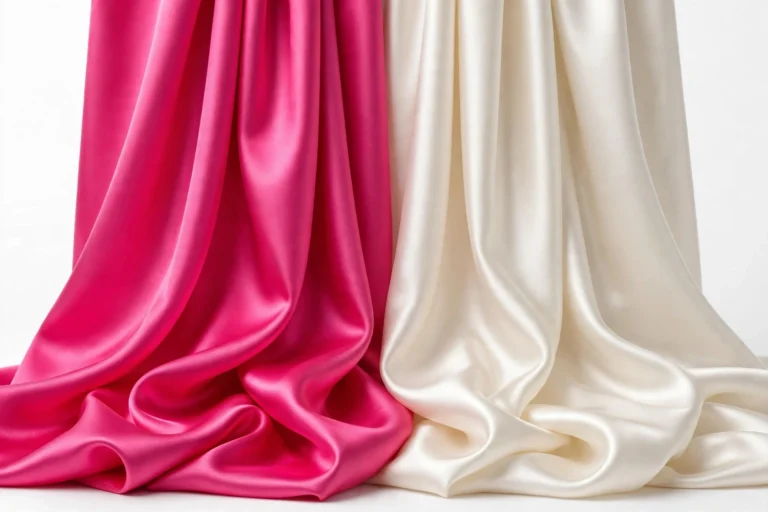
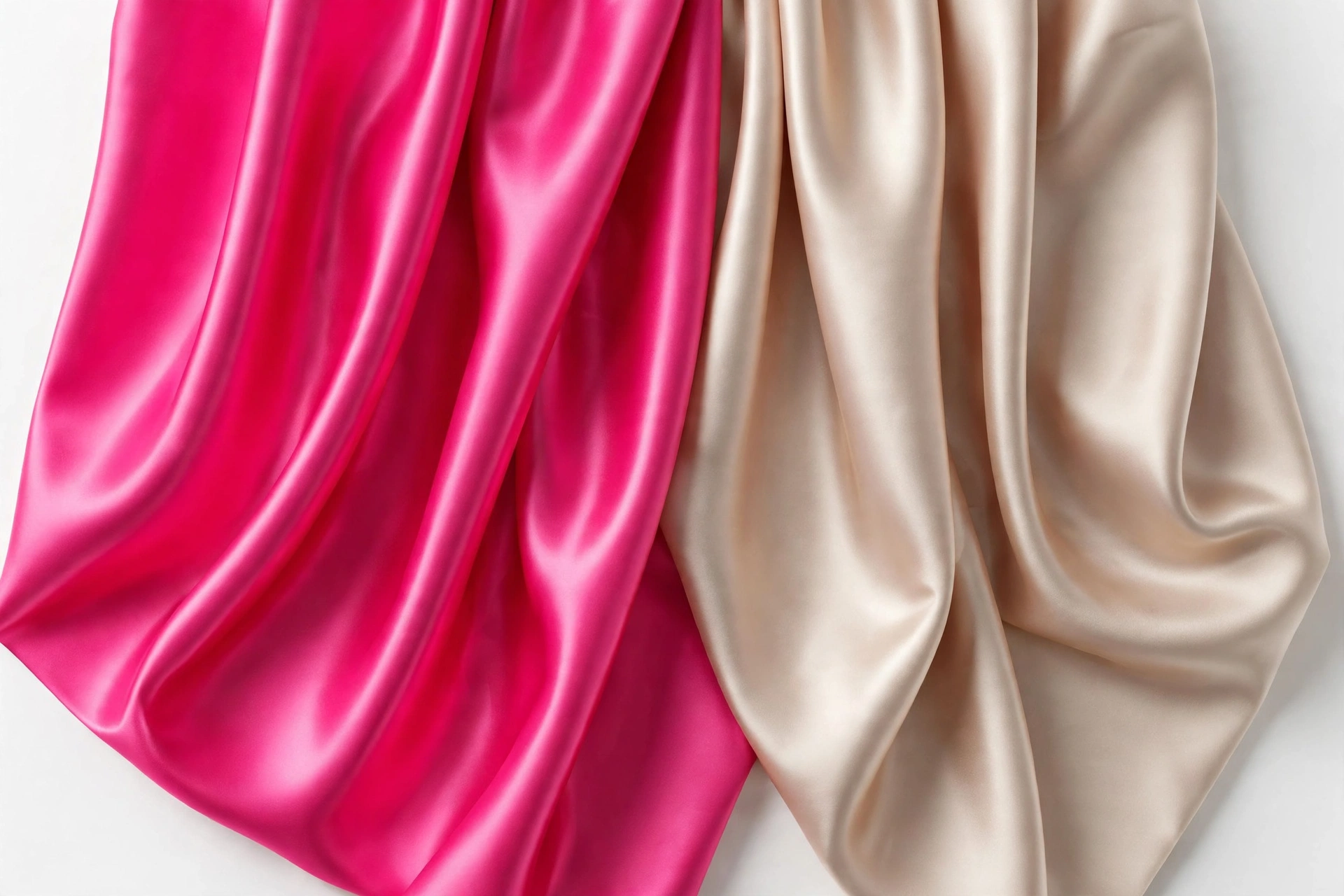
Satin is the warp-faced branch of the satin weave family. Because the warp dominates, and the warp is usually filament, you get the famous liquid shine: light hits long unbroken floats and bounces back in a single sheet. Tilt it and the shine rolls across the cloth like water.
That same structure sets the price of admission. Long floats are exposed yarns with few anchor points, so anything sharp catches them. This is why satin snags, and why no finish or fiber choice fully fixes it. Shorter floats would snag less and shine less. The tradeoff is built into the weave.
Satin takes many fibers, and the fiber rewrites the personality. Silk satin is the luxury original: fluid, breathable, expensive. Polyester satin is the common one: bright, sometimes mirror-like, cheap, and warm to sleep in. Nylon and acetate versions each have their own quirks. When a label says “satin,” the fiber content line tells you which satin you are actually holding.
What sateen actually is
Sateen is the weft-faced branch, woven almost always from cotton. The weft floats lie across the face in long smooth rows, but because they are spun cotton rather than filament, the surface is microscopically fuzzy. Light scatters instead of reflecting cleanly. The result is a soft, buttery luster rather than a mirror.
That cotton face explains everything people love about sateen sheets. It feels warm and soft from the first touch, it breathes like cotton because it is cotton, and it gets softer with washing. It also explains the complaints: spun yarns pill under friction, and years of abrasion thin the floating wefts. Sateen doesn’t snag like satin. It wears down instead.
One naming note worth pocketing: in the trade, “sateen” means this specific weft-faced cotton cloth. If you ever meet “cotton satin” on a label, it usually means sateen wearing a fancier name. Read the fiber content and move on.
The fiber trap most comparisons hide
Here is the honest angle no bedding seller will give you.
When a store page compares a “satin pillowcase” with “sateen sheets,” it is usually comparing polyester against cotton and calling it a weave comparison. Polyester satin versus cotton sateen is a fiber comparison wearing a weave costume. Of course the cotton breathes better. Of course the polyester shines more. The weave is only half the story.
Compare honestly, fiber to fiber:
| Matchup | First fabric wins on | Second fabric wins on |
|---|---|---|
| Polyester satin vs cotton sateen (the classic store matchup) | Shine, price | Breathability, washability, feel over eight hours |
| Silk satin vs cotton sateen (the luxury matchup) | Fluidity, prestige | Easy care, price |
| Cotton sateen vs cotton percale (the comparison sateen shoppers should actually read) | Luster, drape | Crispness, matte finish |
Whenever you read a satin-vs-sateen verdict, ask which fibers were in the ring. If the article doesn’t say, the verdict is marketing.
The hidden third option: silk satin
There is a fabric that ends the debate by refusing to take sides: silk woven in a satin weave. Silk satin (charmeuse is the famous member) has the filament-smooth face of satin and the natural fiber of something far nicer than polyester. It drapes like liquid, breathes unlike poly satin, and costs accordingly.
It also has a counterfeit problem. Most “silk satin” at suspicious prices is polyester satin with a poetic listing. The fiber content line is the lie detector: silk is a protein fiber and the label must say so. No silk on the label, no silk in the cloth.
Head-to-head by use case
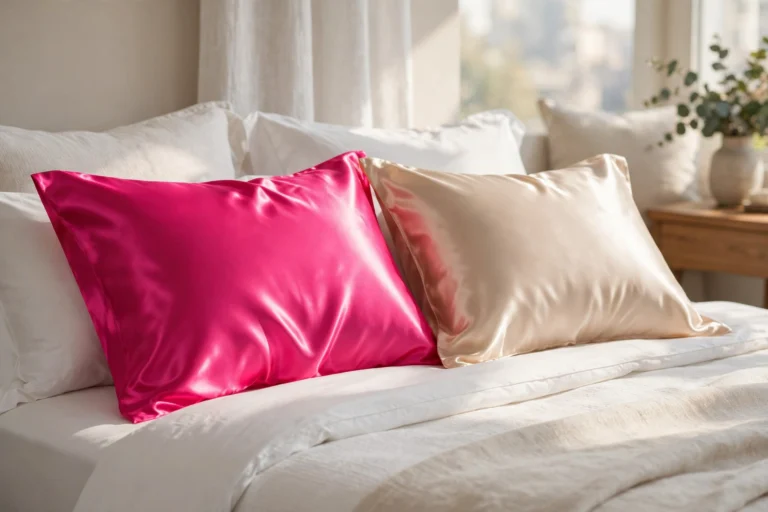
Pillowcases. This is the famous battleground. A satin pillowcase feels slick and cool; hair and skin glide across it. A sateen pillowcase feels soft and warm like a good sheet. You’ll read big claims about satin preventing wrinkles and frizz. Treat those as marketing until independent testing exists: the honest difference is friction feel and temperature, not miracles. Silk satin is the luxury pick, polyester satin the budget pick, sateen the pick for people who want their pillowcase to feel like bedding.
Sheets. Sateen wins for most sleepers, and it’s not close. Cotton breathes, washes easily, and softens with age. Satin sheets are usually polyester, which sleeps warm and feels clammy to hot sleepers. Silk satin sheets exist and feel extraordinary, at extraordinary prices and with delicate care.
Clothing. Satin owns eveningwear, linings, and anything meant to flow or flash. Sateen owns the cotton side of the closet: sateen shirts, casual dresses, and structured pieces with a quiet sheen. Different jobs, no real contest.
Price. Polyester satin is the cheapest of the three; cotton sateen sits in the middle; silk satin costs several times more. When “satin” seems suspiciously cheap, it’s polyester. Every time.
How care compares
Satin care depends entirely on fiber, which is why generic “how to wash satin” advice fails. Silk satin wants hand washing or dry cleaning and cool ironing. Polyester satin tolerates the machine on cool and dries fast. Acetate satin hates water and heat. The weave is the same; the fiber sets the rules.
Sateen is the easy one. It’s cotton, so wash it like good cotton sheets: machine wash warm, tumble dry low or line dry, warm iron if you like crispness. It wrinkles more than polyester satin and less than linen. It softens with every wash, which is part of why people stay loyal to it.
How to tell them apart: label decoder and the 60-second field test
Read the label first. Fiber content beats every other clue. “Sateen” on a label means cotton-family, weft-faced, soft luster. “Satin” means check the fiber: silk, polyester, nylon, acetate, or rayon. “Satin finish” or “sateen finish” is a warning flag: that’s usually calendering, a shine pressed in with hot rollers that washes out unless it was resin-set. A finish is a rental; a weave is permanent.
Then run the field test. You can do this in a store aisle in under a minute:
- The tilt test. Hold the fabric under a light and tilt it. Satin flashes bright in one direction as the shine rolls across. Sateen glows softly and looks nearly the same from every angle.
- The hand test. Lay your palm flat and slide. Satin feels cool and slick, almost slippery. Sateen feels warm and soft, with a slight grip.
- The direction test. Look closely at the face and find the long smooth yarn lines. Lines running lengthwise (with the fabric’s length): satin showing its warp. Lines running crosswise: sateen showing its weft.
- The drape test. Let a corner hang off your hand. Satin pours and slides; sateen has more body and holds a soft fold.
If a “satin” sheet fails the tilt test and feels like a T-shirt, you’re holding calendered cotton, not a satin weave. Return it or keep it, but don’t pay satin prices for it.
Which should you buy?
- Sateen sheets if you want the classic luxury-sheet experience: breathable, soft, easy to wash, kinder to hot sleepers.
- A satin pillowcase if you want the slick, cool glide: polyester for budget, silk for luxury.
- Silk satin if you want the real thing for apparel or special bedding and the budget allows it.
- Polyester satin for event decor, crafts, linings, and costumes: cheap, bright, washable.
- Sateen apparel (shirts, casual dresses) when you want cotton comfort with a dressier face than plain cotton.
- Skip satin sheets if you sleep hot, unless they’re silk and you accept the care routine.
the honest satin vs silk comparison
Frequently asked questions
Is sateen just cotton satin?
Almost. Sateen is the weft-faced version of the satin weave, made from cotton. “Cotton satin” on a label usually means sateen with a fancier name. True warp-faced cotton satin exists but is rare in retail.
Which is better for hair and skin, a satin or sateen pillowcase?
They feel different: satin is slick and cool, sateen is soft and warm. Big anti-frizz and anti-wrinkle claims are mostly marketing with thin independent evidence. Choose by feel, fiber, and budget, not by miracle promises.
Is sateen shinier than satin?
No. Satin has the mirror-like directional shine; sateen has a soft all-over luster. If your “sateen” outshines your “satin,” check the labels: you may be comparing polyester against cotton.
Can sateen be made from polyester?
Traditionally sateen is cotton, sometimes a cotton-rayon blend. A “polyester sateen” label is unusual; read the fiber content line, because the name alone won’t tell you what’s in the cloth.
Why did my satin sheets lose their shine after washing?
The shine was probably a calendered finish, not the weave: heat-pressed gloss that rinses out over a few washes unless resin-set. A true satin weave keeps its luster because the shine comes from the structure itself.
Which lasts longer, satin or sateen?
They fail differently, so neither wins outright. Satin’s long floats snag on sharp things; sateen’s cotton floats pill and thin with abrasion. Polyester satin outlasts silk satin; well-made cotton sateen outlasts cheap satin of any fiber.
Why trust this guide? No bedding was sold in the making of this page. It starts from weave structure, names the fiber trap most comparisons hide, and flags where evidence is thin instead of inventing it. Corrections welcome: they make the guide better for everyone.