Satin Camisole: The Complete Guide
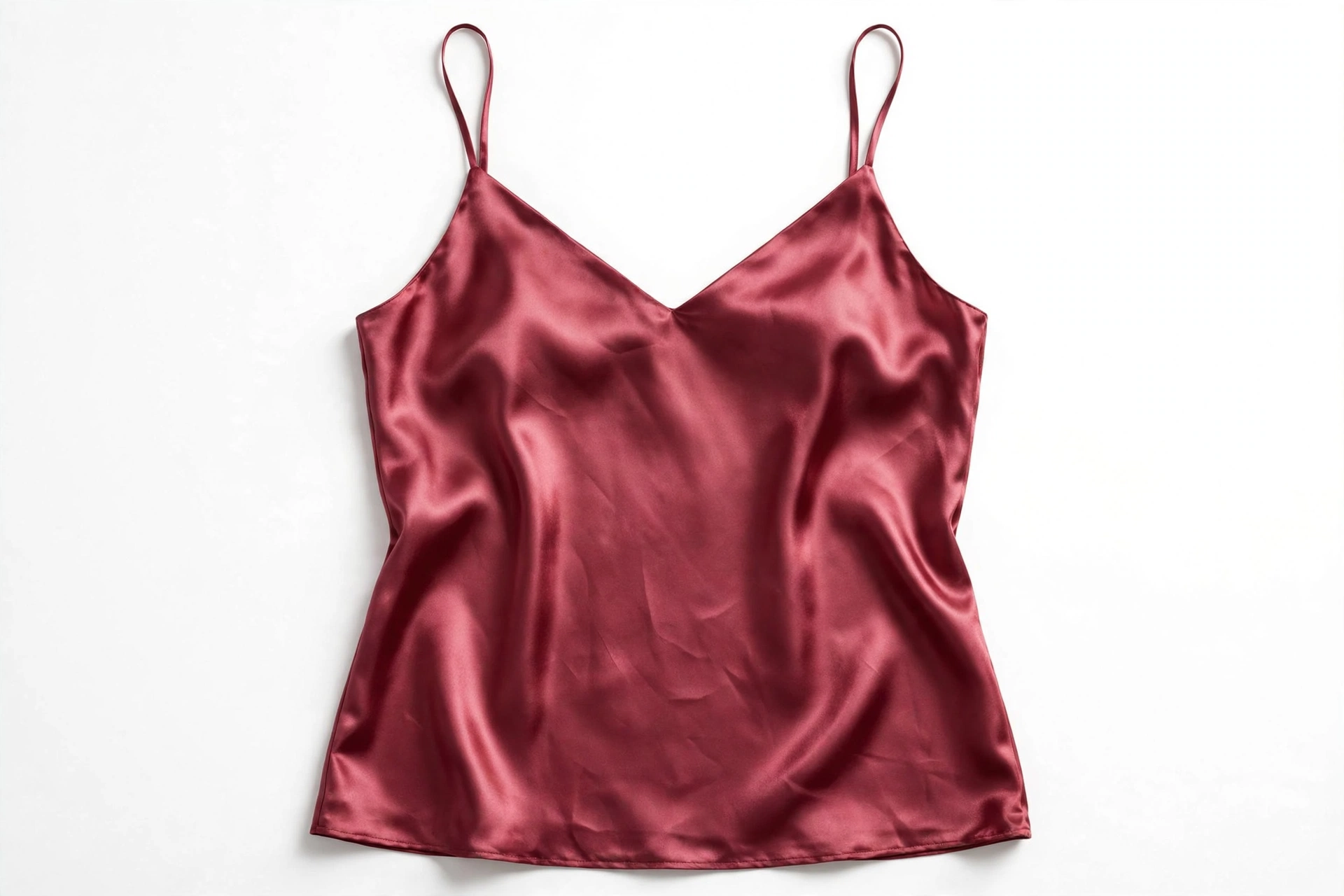
A satin camisole is a sleeveless, thin-strapped top cut close to the body. You can sleep in it, layer it under a blazer, or wear it out as an evening top. Here is the honest part most guides skip: “satin” is a weave, not a fiber. Two camisoles that look identical on the rack can behave completely differently, because the fiber (polyester vs silk), the weight, and the color decide whether it drapes like water or goes sheer under office lights. Get those three right and everything else is easy.
What is a satin camisole, and how is it different from a tank top or a bustier?
A camisole is a sleeveless top with thin spaghetti straps, a fitted bust, and a straight or gently flared body. It has no boning, no elastic band, and no structure beyond the cut. A tank top has wider straps and a sportier shape. A bustier is boned and cinches the waist. The fashion “cami top” is simply the camisole renamed for daylight wear.
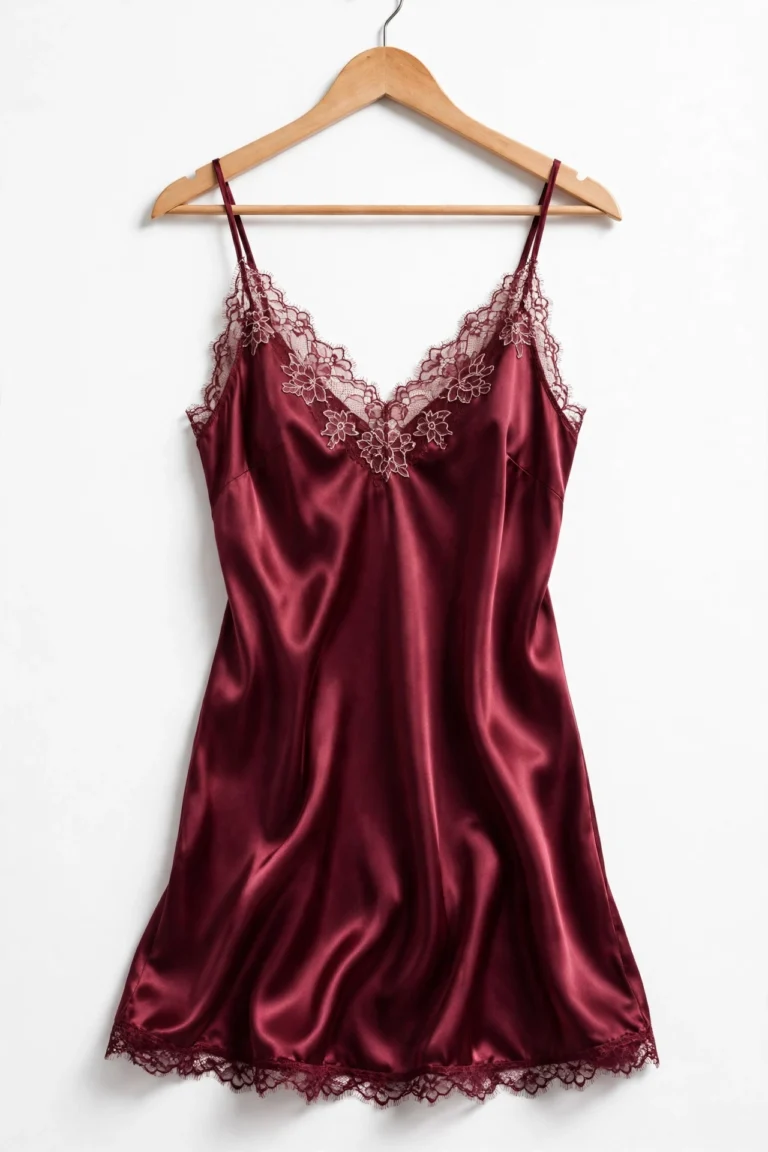
The word comes from the camisole’s origin as an undergarment, a short under-bodice worn beneath dresses. That history explains the design: finished edges, soft seams, nothing that digs. When 1990s fashion pulled lingerie into evening wear, the camisole walked out of the bedroom and never went back. Retailers now sell the same garment under two names. “Camisole” signals sleepwear. “Cami top” signals the going-out section. Check the construction, not the label.
| Camisole | Cami top | Bustier | Tank top | |
|---|---|---|---|---|
| Purpose | Sleepwear, layering, evening | Evening and daytime outfits | Statement outerwear, shaping | Casual and athletic wear |
| Straps | Thin spaghetti straps | Thin spaghetti straps | Straps optional or strapless | Wide straps, often racerback |
| Structure | None, relies on drape | None, relies on drape | Boning, cinches the waist | Elastic band or fitted ribbing |
| Bust support | None to light shelf bra | None to light shelf bra | Real support from boning | Light, from elastic |
| Typical fabric | Satin, silk, lace trim | Satin, silk, sometimes cotton | Satin, brocade, leather | Cotton, jersey, rib knit |
| Worn as | Under or over clothing | Visible top | Visible top | Visible top |
Satin is a weave, not a fiber, so a “satin camisole” can be polyester, silk, or rayon, and the fiber decides how it behaves. A polyester satin camisole costs little, survives the washing machine, and builds static. A silk one breathes, drapes better, and demands hand washing. Same weave, different garment in practice.

Which satin should a camisole be made from?
Buy polyester charmeuse for everyday wear and silk charmeuse for camisoles people will actually see. Charmeuse is the satin weave built for this job: light, fluid, with a matte crepe-like reverse that feels soft against skin. Crepe-back satin looks dressier and has more body, with a matte crepe reverse that feels soft against skin. Acetate drapes beautifully and wears out fast, so skip it unless the price is a steal.
Fiber comes first, weave second. Polyester charmeuse is the workhorse: cheap, colorfast, machine washable, and resistant to wrinkles. Its weakness is breathability. Polyester absorbs almost no moisture, so a poly camisole traps heat on warm nights and crackles with static in dry air. Silk charmeuse breathes, regulates temperature, and falls in a cleaner line. Its weakness is your laundry routine and your wallet.
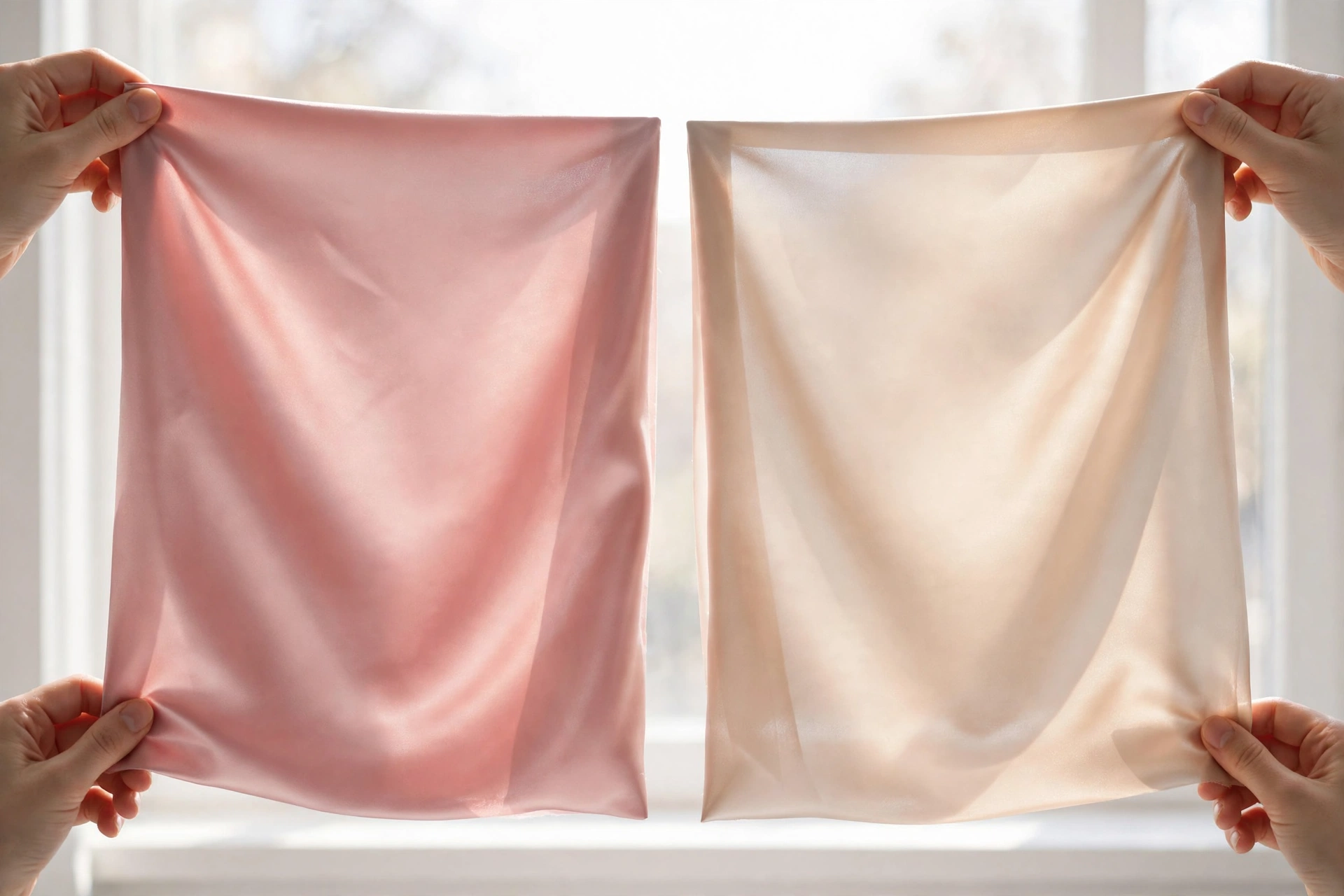
Then comes weight, and weight decides opacity. Satin’s long surface floats make it lustrous and also make it thin, so a lightweight satin in white or ivory goes sheer under daylight while the black version of the same camisole looks perfectly modest. If your white camisole goes sheer in daylight, the weight was too light for the color.
Use this decoder before you buy:
| What the label says | Typical opacity | Verdict |
|---|---|---|
| Silk charmeuse, 12-16 momme, or polyester marked “lightweight” | Sheer in white, ivory, and pastels under daylight | Needs a slip or lining in light colors; fine in black and navy |
| Silk charmeuse, 19 momme, or medium-weight polyester | Opaque in dark colors; white still risky in bright light | The safe everyday choice; test white before trusting it |
| Silk charmeuse, 22 momme and up, or heavy polyester satin | Opaque in nearly every color | Best pick for light colors; slightly less slinky drape |
| No weight listed (most fast fashion) | Unknown | Do the hand test below |
The hand test takes five seconds and beats any product description. Hold the camisole up with your hand behind the fabric. If you can clearly see your knuckles, daylight will see through it. If your hand is a vague blur, you are fine. Do this in the store, or the moment a delivery arrives, while returns are still easy. For a deeper tour of the weaves behind these labels, read our guide to the main types of satin.
Color matters as much as weight. Dark dyes absorb the light that would otherwise pass through the weave, so a 16-momme black camisole can be perfectly decent while its ivory twin is a scandal. Buying cheap polyester? Choose dark colors and pocket the savings. Want white or champagne? That is when silk at 19 momme or heavier earns its price.
How should a satin camisole fit?
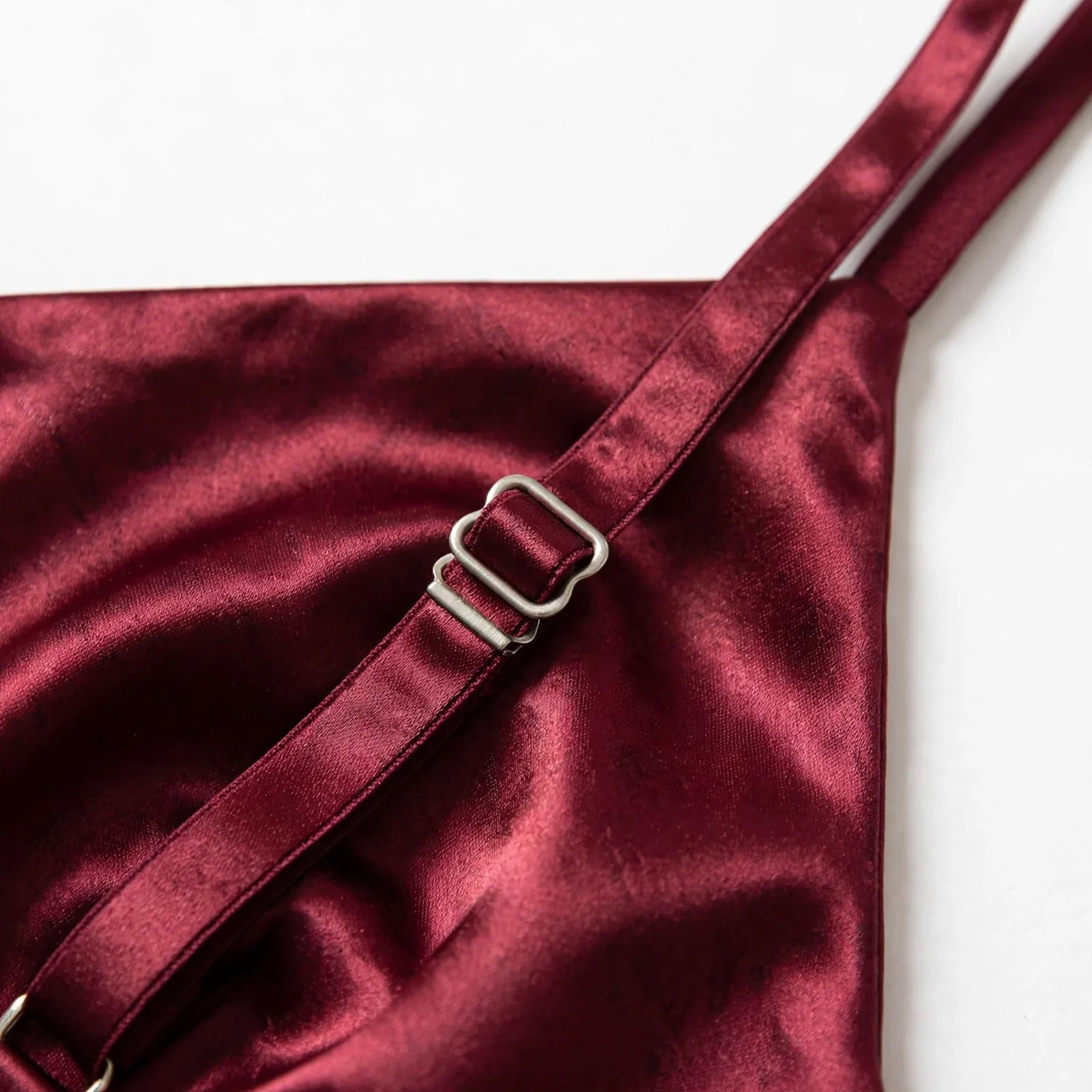
A camisole should skim, not squeeze. The bust darts or seams should sit on your bust without pulling, the neckline should lie flat against your chest, and the hem should fall past the waistband of your bottoms. Strap length does most of the fitting work: if the neckline gapes, shorten the straps before blaming the size.
Start with the straps. Adjustable straps are worth seeking out because they solve most fit problems on their own: your torso length, not your dress size, decides where the neckline sits. Set them so the neckline sits where it was designed to sit, usually just at or above the bust line, with no digging into your shoulders.
Neckline shapes change the whole garment. A V-neck elongates the torso and forgives a larger bust because the fabric has somewhere to go. A straight-across neckline looks crisp but gapes on a smaller bust and strains on a larger one. A cowl neck adds beautiful drape and visual bulk right at the bust, so try it in person if you are busty. Scoop necks are the easy middle ground.
Now the honest part about support. Most satin camisoles offer none. A built-in shelf bra gives light support at best, and its sizing runs optimistic; above a C cup, treat it as decoration and wear your own bra. Removable cups shift and peek out at the armhole, but two minutes of stitching fixes that. Silk has no stretch and polyester has none either, so the bust measurement is the one that matters. Measure the fullest part of your bust and compare it to the size chart, not your usual dress size.
Buy the larger size when you are between sizes. You can shorten a strap, but you can’t add fabric to a bust dart. This matters doubly for sleep: a camisole that fits perfectly standing up twists and rides when you roll over in it. For bed, one size of ease is a feature. For evening wear under a blazer, closer is better, since excess fabric bunches at the waistband.
How do you wear a satin camisole three ways?
One camisole covers sleep, work layering, and evening out, which is why it earns its drawer space. Wear it as sleepwear with matching shorts or pajama pants; silk breathes through warm nights and the smooth surface reduces friction against sheets. Wear it under a blazer or cardigan as a polish layer; the slim cut adds no bulk at the waist. Wear it alone as an evening top with high-waisted trousers or a skirt, tucked or half-tucked, with one piece of jewelry doing the talking.
As sleepwear
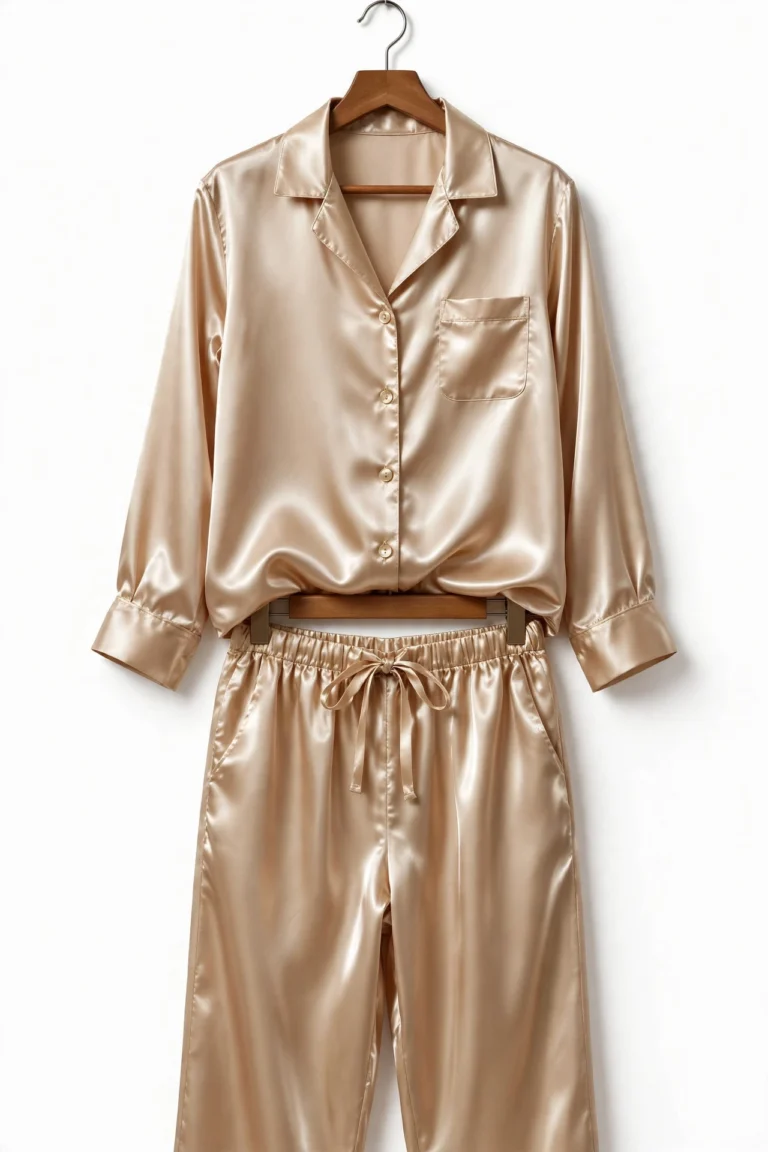
Pair it with satin shorts or pajama pants in the same color family; exact matching sets look intentional, near-matches look like laundry day. Silk wins for sleeping because it breathes, while polyester can feel clammy by 3 a.m. Keep the fit relaxed. Our satin pajamas buying guide covers full sets if you want the coordinated route.
Under a blazer or jacket
This is the camisole’s most underrated job. Under an open blazer it gives you a finished neckline with zero bulk, and the smooth fabric lets the jacket slide instead of dragging. Keep the camisole’s hem tucked or above the jacket’s hem, and its neckline clearly below the lapel line, so the layers read as intentional. Charmeuse’s matte reverse can face out for a quieter look under office lighting.
As an evening top
Tuck it into high-waisted trousers or a midi skirt and let the shine do the work. Dark colors (black, wine, navy) read expensive; champagne and blush read romantic. One statement earring or a simple pendant is enough, since the fabric is already the loudest thing you are wearing. Sheer in your lighting? A lace bralette underneath turns a problem into a styling choice. For more going-out satin, our satin blouse guide covers the sleeved version of this formula.

Why does a satin camisole cling and spark, and how do you stop it?
Static cling is the price of polyester’s dryness: a fiber that can’t absorb moisture can’t drain charge either. Movement rubs the camisole against skin or outer layers, building charge with every step. Silk is a protein fiber that absorbs moisture from the air, which quietly conducts the charge away. Polyester absorbs very little moisture, so the charge stays trapped on the surface.
Knowing the mechanism tells you which fixes actually work. Anything that adds moisture or a conductive path drains the charge. Anything that reduces rubbing generates less of it.
What works, in order:
- Choose silk for dry climates. If you live somewhere with dry winters and fight static all season, this single choice beats every spray and trick below.
- Never layer synthetic on synthetic. A polyester camisole under a polyester blazer lining is a static generator. Put cotton or silk between them, or make one of the two layers a natural fiber.
- Mist it lightly. A fine spray of water on the inside of the camisole before dressing adds the moisture polyester lacks. Anti-static sprays do the same job with longer-lasting chemistry.
- Run a metal hanger along it. Dragging a metal hanger down the inside of the camisole right before you put it on gives the charge a path off the fabric. It looks odd and works immediately.
- Dry with a damp washcloth. For polyester camisoles, tossing a damp washcloth into the dryer for the last ten minutes leaves enough moisture to prevent the worst of it. Skip the high heat, which can set wrinkles permanently and dull the finish.
Fabric softener sheets help in the dryer but coat fibers with residue that dulls satin’s shine over time, so use them sparingly on pieces you love. And if your camisole clings because of fit rather than static, no spray will save it: a hem cut too close rides regardless of charge. For the full fiber comparison behind these fixes, see our honest satin vs silk breakdown.
How do you wash a satin camisole?
Wash by fiber, not by garment. Silk wants cold hand washing with a pH-neutral detergent, a roll in a clean towel to press out water, and drying flat away from sun. Polyester can go in the machine on gentle cold inside a mesh bag, then hang to dry. Never wring a satin camisole; twisting breaks the long surface floats that make satin shine.
A few rules apply to both fibers. Wash satin with similar smooth fabrics, never with towels or anything with hooks and zippers; the floats snag easily and a snag in satin is permanent. Skip the dryer when you can. If you must use one, low heat, and remove the piece while slightly damp. For wrinkles, steam beats ironing on charmeuse: hold the steamer a few inches off and let gravity pull the fabric smooth. If you iron, use the lowest setting on the reverse side with a press cloth between iron and fabric, since direct heat can leave a permanent shine mark.
Stains need speed, not scrubbing. Blot, don’t rub; rubbing roughs up the floats and leaves a dull patch that outlasts the stain. Body oil and foundation at the neckline come out with a dab of gentle detergent worked in before the wash. Perfume goes on you, not on the camisole: alcohol-based fragrance can spot silk. Our per-fiber satin washing guide covers every fiber in detail, including the drying mistakes that ruin the most camisoles.
Frequently asked questions
Are satin camisoles see-through? Lightweight satin in white, ivory, or pastel can be sheer under daylight or flash photography. Dark colors at the same weight usually look more opaque in practice. Check any new camisole with the hand test: hold it up with your hand behind it, and if you can see your knuckles clearly, plan on a slip or nude underlayer.
What is the difference between a camisole and a tank top? A camisole has thin spaghetti straps, a fitted bust, and no structure; it originated as an undergarment. A tank top has wider straps, a sportier cut, and often an elastic hem or racerback. Camisoles are cut for drape and layering, while tank tops are cut for casual and athletic wear.
Can you wear a camisole as a top? Yes, and it is one of the best uses for it. Tuck a satin camisole into high-waisted trousers or a skirt for evening, and keep jewelry minimal since the fabric already carries the outfit. If the fabric is sheer in your lighting, a lace bralette underneath turns a problem into a styling choice.
Do satin camisoles need a bra? Most offer little to no support, so it depends on your bust. A built-in shelf bra handles light support for smaller busts; above a C cup, wear your own bra and treat the shelf as decoration. Removable cups can be stitched in place in two minutes if they shift or peek out.
Should I buy a silk or polyester satin camisole? Buy polyester for everyday wear, sleep, and anything you want to machine wash; it is cheap, tough, and nearly wrinkle-proof. Buy silk for camisoles that will be seen, for warm sleepers, and for dry climates where polyester’s static drives you mad. If you buy cheap polyester, choose dark colors, which hide the thinness that light colors reveal.
Why does my satin camisole cling to my body? Two causes, two fixes. Static cling comes from polyester’s inability to absorb moisture; mist the inside lightly or run a metal hanger along it before dressing. Fit cling comes from a hem cut too close; no spray fixes that, and sizing up is the real answer.
How do you wash a satin camisole? Hand wash silk in cold water with gentle detergent, roll in a towel, and dry flat. Machine wash polyester on gentle cold in a mesh bag and hang to dry. Never wring either one. Steam out wrinkles instead of ironing, and wash satin only with smooth fabrics, since towels and zippers snag the weave permanently.
How tight should a camisole fit? It should skim your body without pulling at the bust darts or gaping at the neckline. If you are between sizes, take the larger one; adjustable straps can take up slack, but no strap can add fabric to a tight bust. For sleep, err looser so it doesn’t twist when you move at night.