Polyester Satin: The Complete Guide
What is polyester satin, exactly?
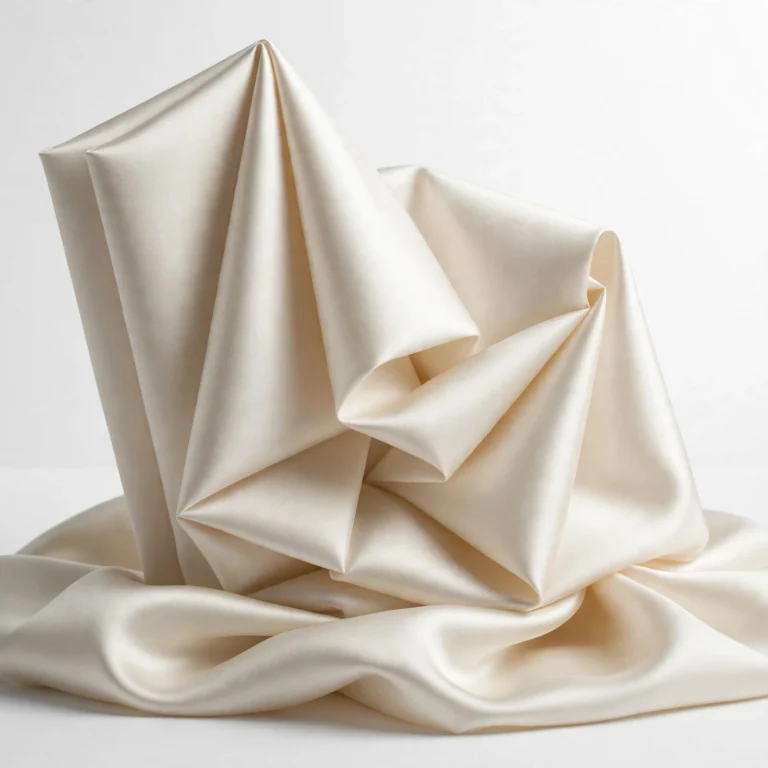
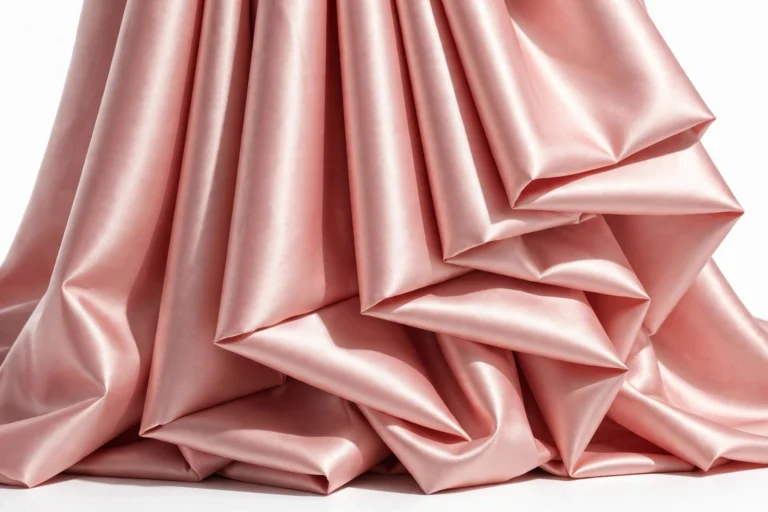
Polyester satin is plastic made to look like silk. Continuous filaments of polyethylene terephthalate (PET), the same polymer family as plastic bottles, get woven in a satin weave, where long yarn floats sit on the fabric face and bounce light back as shine. It copies silk satin’s look at a fraction of the price, with none of silk’s fiber properties.
That distinction is the whole article. Most fabric labeled “satin” in stores, on Amazon, and on Etsy is polyester satin. Sellers blur the line because “satin” sounds luxurious and “polyester” does not. Silk sellers, meanwhile, own nearly every satin-vs-silk comparison page on the internet, thumb on the scale. This guide is neither. Polyester satin is genuinely good at some jobs and bad at others, and you deserve to know which is which before you pay.
If you want the other side of this story, our silk satin guide covers what the real fiber feels and behaves like.
How is polyester satin made?
The process starts with petroleum, not worms. Crude oil derivatives get polymerized into PET resin, melted, and extruded through a spinneret into continuous filaments: long, unbroken, glass-smooth strands of plastic. Drawing (stretching) the filaments aligns the molecules and builds tensile strength, then they get wound onto bobbins as yarn.
Then comes the weave. Satin is a structure, not a fiber. In a satin weave the warp or weft yarns float over four or more crossing yarns before tucking under one, and the tuck points get scattered so no twill line shows. That is what creates the smooth, unbroken face that reflects light in a sheet. The reason polyester takes to this weave so well is the filament itself: because the yarn is one continuous smooth strand rather than short twisted fibers, the floats lie flat and even, and the reflection comes back uniform and intense. Silk does the same thing naturally. Polyester does it by engineering.
Two details separate commodity poly satin from better goods. First, yarn size. Trade listings describe polyester satin in deniers like 75D x 150D, meaning the warp yarns weigh 75 grams per 9,000 meters and the weft 150. Finer deniers pack more filaments per inch, which gives a denser face and a softer hand. Second, finishing. Mills calender the cloth (hot rollers that push the gloss up), dye it with disperse dyes, the only dye class that bonds to polyester, and sometimes add anti-static finishes. Calendering washes out unless it is resin-set at high heat, which is why a garment can lose some of its initial glassiness after laundering. That gloss was borrowed, not built in.
Why does polyester satin shine differently from silk satin?
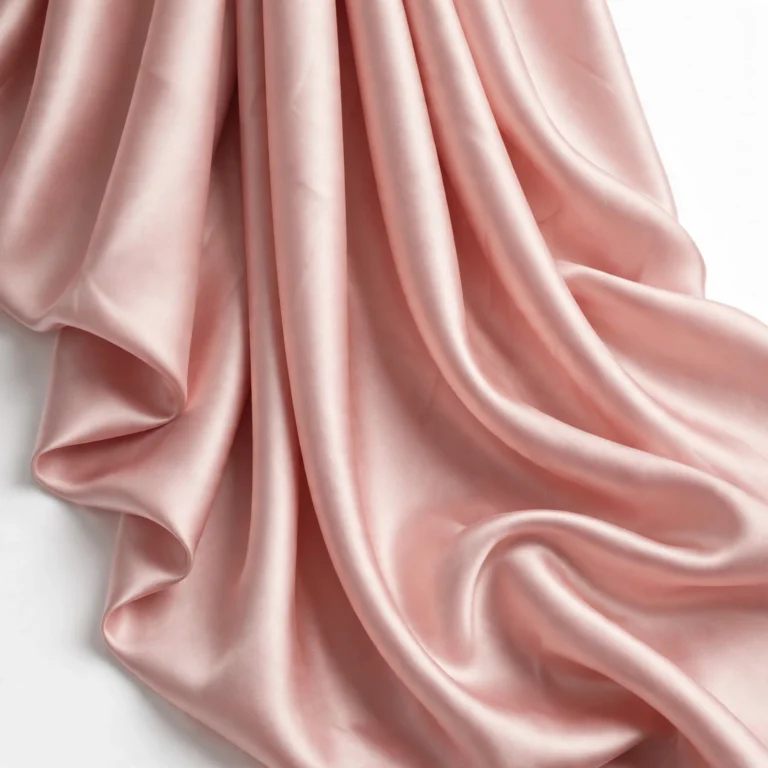
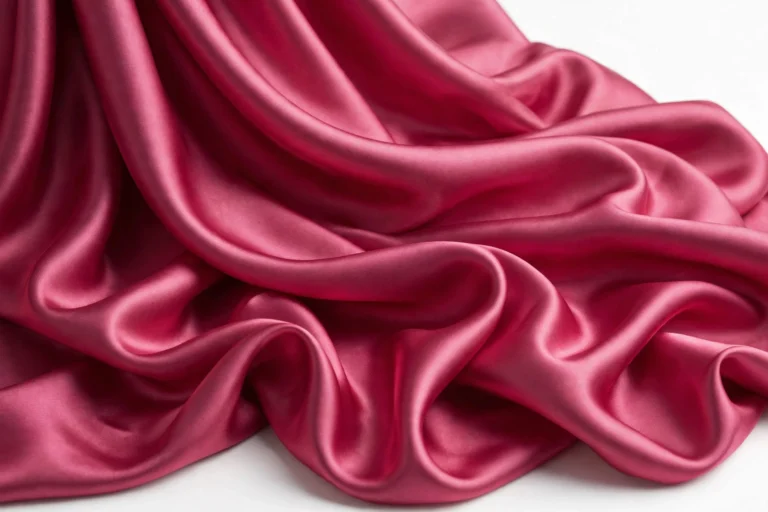
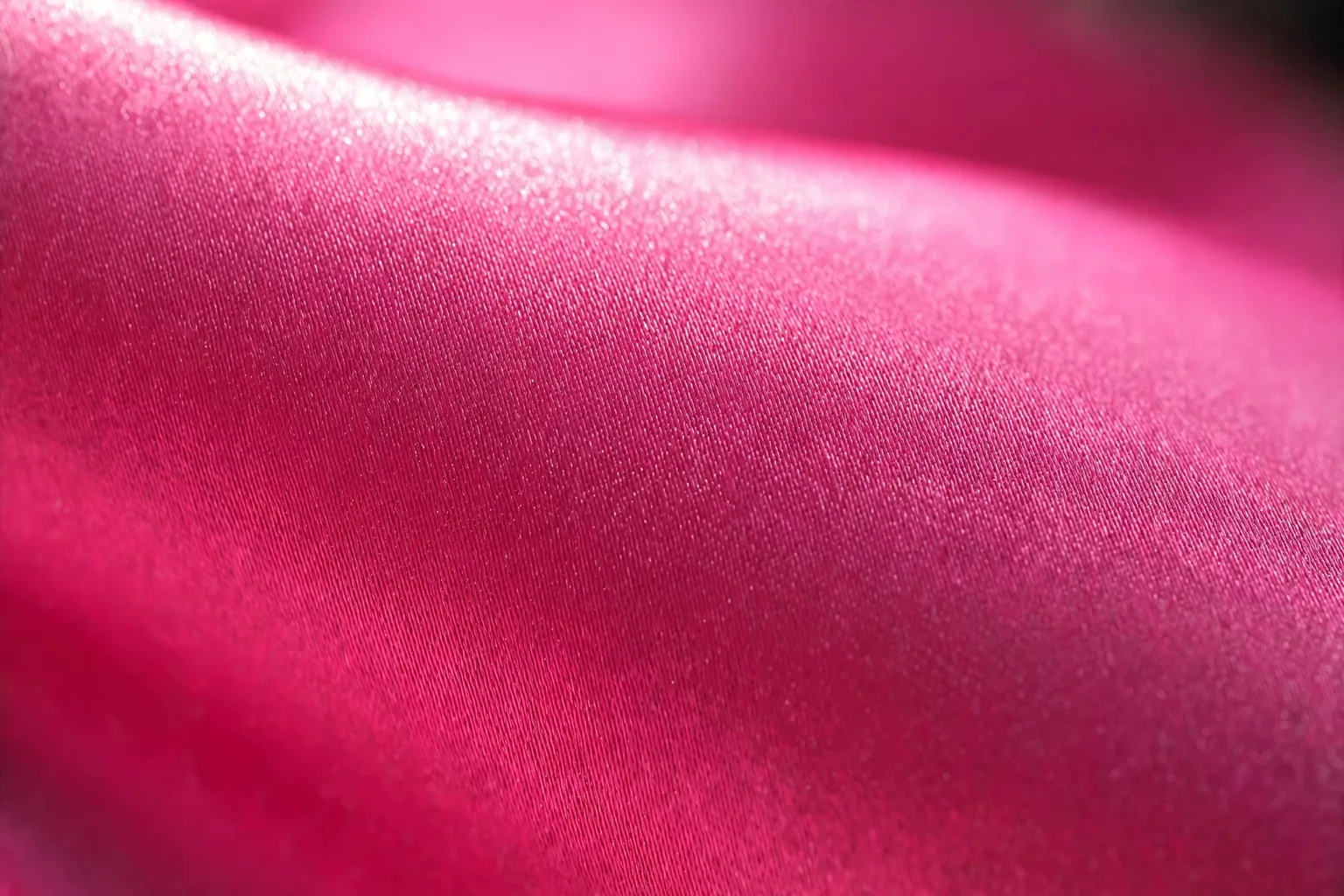
Hold both fabrics under a lamp and the difference is immediate. Polyester satin throws back a bright, flat, almost mirror-like reflection. Silk satin glows warm, with depth, like light is coming from inside the cloth rather than bouncing off the top.
The mechanism is in the fiber cross-section. A silk filament is roughly a triangular prism. Light entering it refracts and scatters in several directions, which is what produces that multi-dimensional pearl effect. A polyester filament is an extruded tube with a smooth, even surface. Light hits it and reflects in one clean direction, a hard specular bounce. Fabric photographer Docsun calls this “dead light”: bright, uniform, and a little lifeless compared to silk’s scatter.
You can see it without any lab equipment. Take the fabric into daylight or bright indoor light and look at the reflection at an angle. If the highlight is sharp and flat like a mirror, you are looking at polyester. If it shifts and deepens as you tilt it, with warmer undertones in the shadow areas, that is silk or another natural filament. A smartphone macro photo makes it unmistakable: polyester shows a rigid, mechanical grid of identical filaments, while silk shows fine organic variation. Cheap polyester satin is where this difference screams loudest; premium filament grades soften it, but the physics does not go away.
Is there such a thing as good polyester satin?
Yes, and the gap between bad and good polyester satin is wider than most shoppers expect. The $2-a-yard costume satin at a craft store and a dense, semi-dull filament satin at $10 a yard share a fiber name and almost nothing else. Here is the decoder I use before buying any of it.
Check one: read the label for what it does not say. Honest sellers name the fiber. Listings that say only “satin,” “satin silk,” “silk-feel,” or “silky satin” with no fiber content are telling you it is polyester without saying the word. Sellers who paid for real silk always say “silk,” loudly. In the US, the Textile Act requires fiber content disclosure on garments, but loose fabric and many marketplace listings dodge it. No fiber named means polyester. Treat it as such and price it as such.
Check two: feel the weight. Cheap costume satin sits around 70 to 100 GSM, thin, papery, with a rustle. Decent apparel-grade polyester satin runs 120 to 165 GSM in trade listings, with real body and a rounded drape. One Etsy filament crepe-back satin I checked specs at 150 GSM and about 8 ounces per linear yard. If the fabric feels like it would tear if you looked at it wrong, no bargain price fixes that.
Check three: tilt it at an angle. Good polyester satin is usually semi-dull or satin-back, with a controlled glow. Cheap satin glares like patent leather. That screaming mirror shine is the visual signature of low-denier, loosely woven poly satin, and it photographs worse than it looks in person.
Check four: do the fingernail test. Drag your fingernail lightly across the face and see if a float lifts. Long floats are satin’s signature and its weakness. On a well-woven dense satin the yarns stay put. On cheap satin a thread pops up immediately, which tells you the garment will snag on jewelry, zippers, and rough skin within a week.
Check five: buy the swatch. Two satins with identical fiber content can feel like different fabrics because mills vary in yarn size, density, and finishing. Wash the swatch once. If the gloss dies, the shine was calendering, not quality. If it pills between your fingers, it will pill on your body. Screens lie about satin luster. A five-dollar swatch does not.
Polyester satin vs silk satin: the honest head-to-head
Nobody wins every row. That is the point sellers on both sides hope you miss.
| Polyester satin | Silk satin | |
|---|---|---|
| What it is | Synthetic filament (PET) in a satin weave | Natural protein filament in a satin weave |
| Shine | Bright, flat, mirror-like | Warm, deep, pearl-like |
| Feel | Smooth and slick, can read plasticky | Soft, cool to the touch, fluid |
| Breathability | Low. Polyester’s moisture regain is about 0.4%, so sweat sits on the skin | High. Silk’s moisture regain is about 11%, so it absorbs and releases moisture |
| Heat | Sleeps and wears hot; the most common complaint in owner reviews | Temperature-regulating; cool in heat, warm in cold |
| Wrinkles | Resists them well; packs and travels easily | Creases readily; needs pressing or steaming |
| Durability | Strong, colorfast, holds its shape wash after wash | Delicate; weakened by sun and water spots |
| Pilling | Can pill with friction, especially cheap grades | Rarely pills; abrades and thins instead |
| Static | Prone to static cling, worse in dry air | Minimal static |
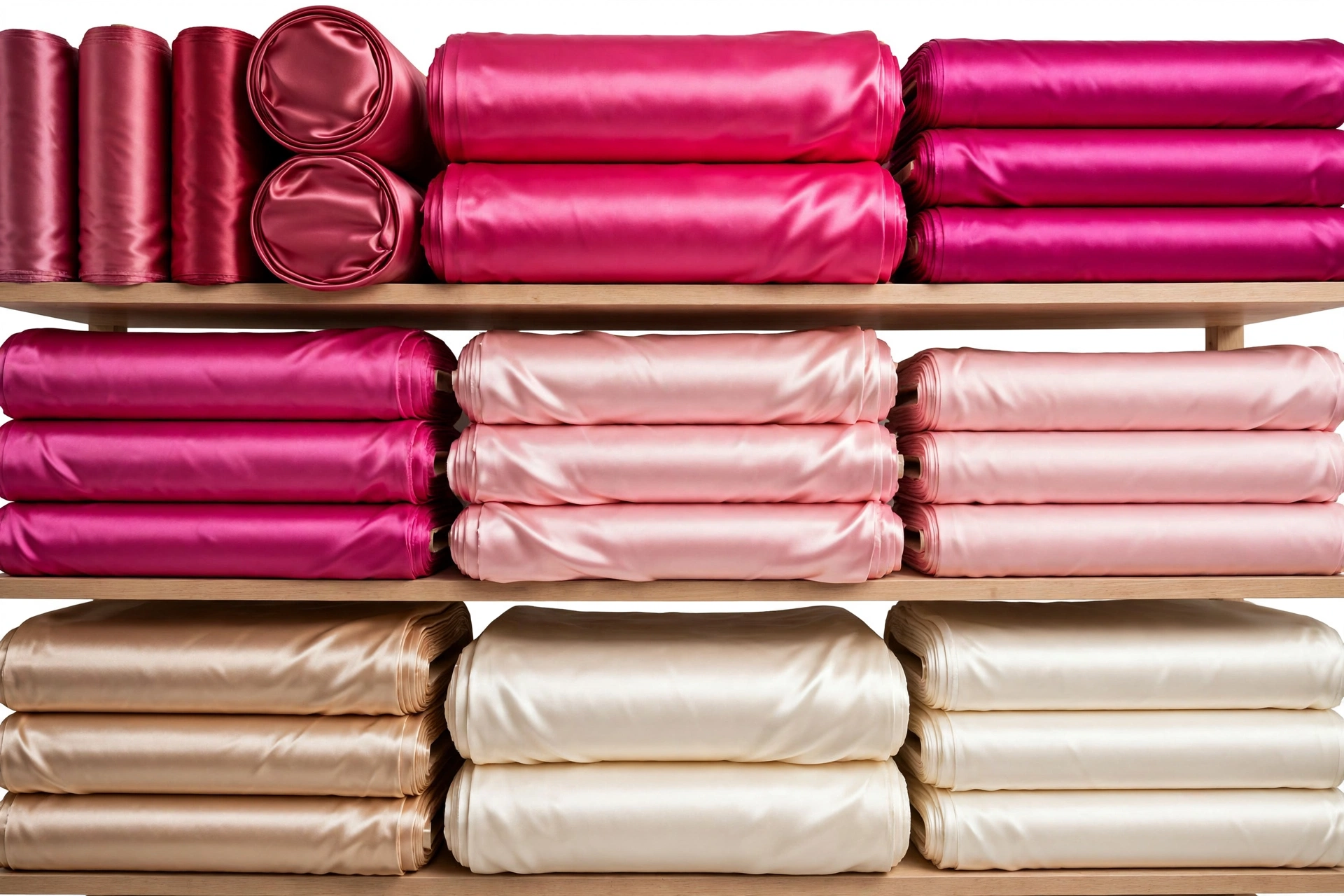
| Dye and color | Disperse dyes give intense, colorfast color in huge ranges | Acid dyes give rich color; some shades bleed and fade |
| Care | Machine washable, tumble dry low | Hand wash or dry clean |
| Price | About $2 to $15 a yard at retail, observed across US fabric sellers | About $30 to $100+ a yard for mulberry silk charmeuse |
| Best for | Costumes, decor, linings, budget fashion, kids | Next-to-skin luxury, sleepwear if you sleep hot, heirloom pieces |
The reframe that matters: the weave is doing the same job in both fabrics, which is why they look alike on a hanger. The fiber is doing a completely different job, which is why they feel nothing alike on a body. Buy the weave for the look. Buy the fiber for the comfort. Most arguments about satin are really arguments about fiber wearing a weave’s name.
For the full comparison with buying verdicts per use case, our honest satin vs silk guide goes deeper.
The labeling lies: how sellers pass polyester off as silk
This is the section the sellers wish did not exist. A garment analyst who worked with the FTC once estimated that mislabeled garments could reach around 40% of the market, and the satin corner of the market is where the labeling games concentrate. Here are the four tests, in order of ease.
The price test. Silk satin starts around $30 a yard and climbs past $100. Polyester satin runs about $2 to $15. A “silk satin” blouse selling for the price of two coffees is not silk. Price alone does not prove fiber content, but physics does not do discounts.
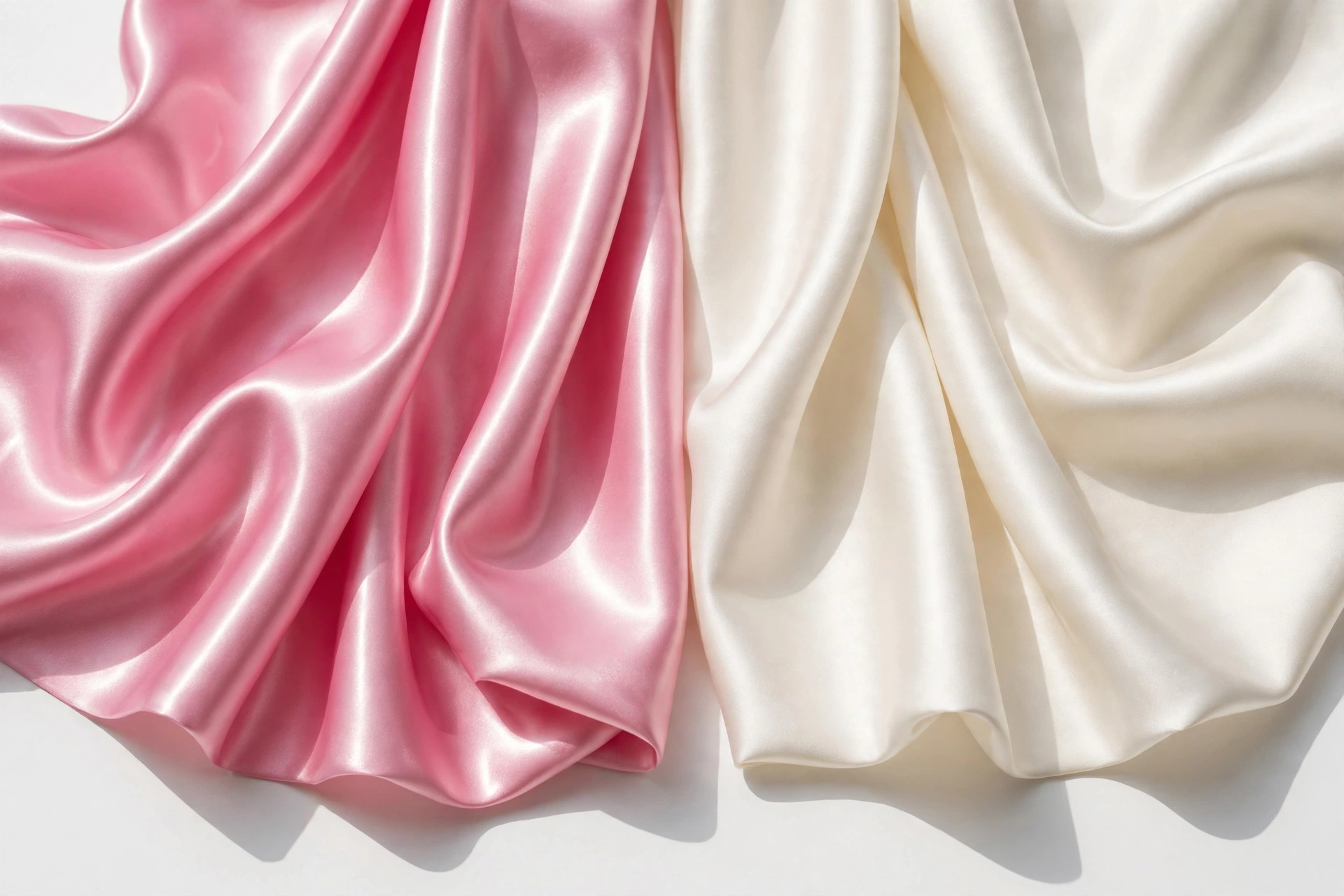
The label test. Read the actual fiber content, not the product title. Amazon and big marketplaces are full of pillowcases and pajama sets titled “Silk Satin” that list 100% polyester three scrolls down. Watch for the weasel words: “vegan silk” means polyester, “silk-feel” means polyester, “satin silk” means polyester, and bare “satin” with no fiber named means polyester. Curlsmith’s “vegan silk” pillowcase collected one-star reviews from buyers who wrote they wished they had known it was polyester. The words are chosen so you assume silk while the seller never technically claims it.
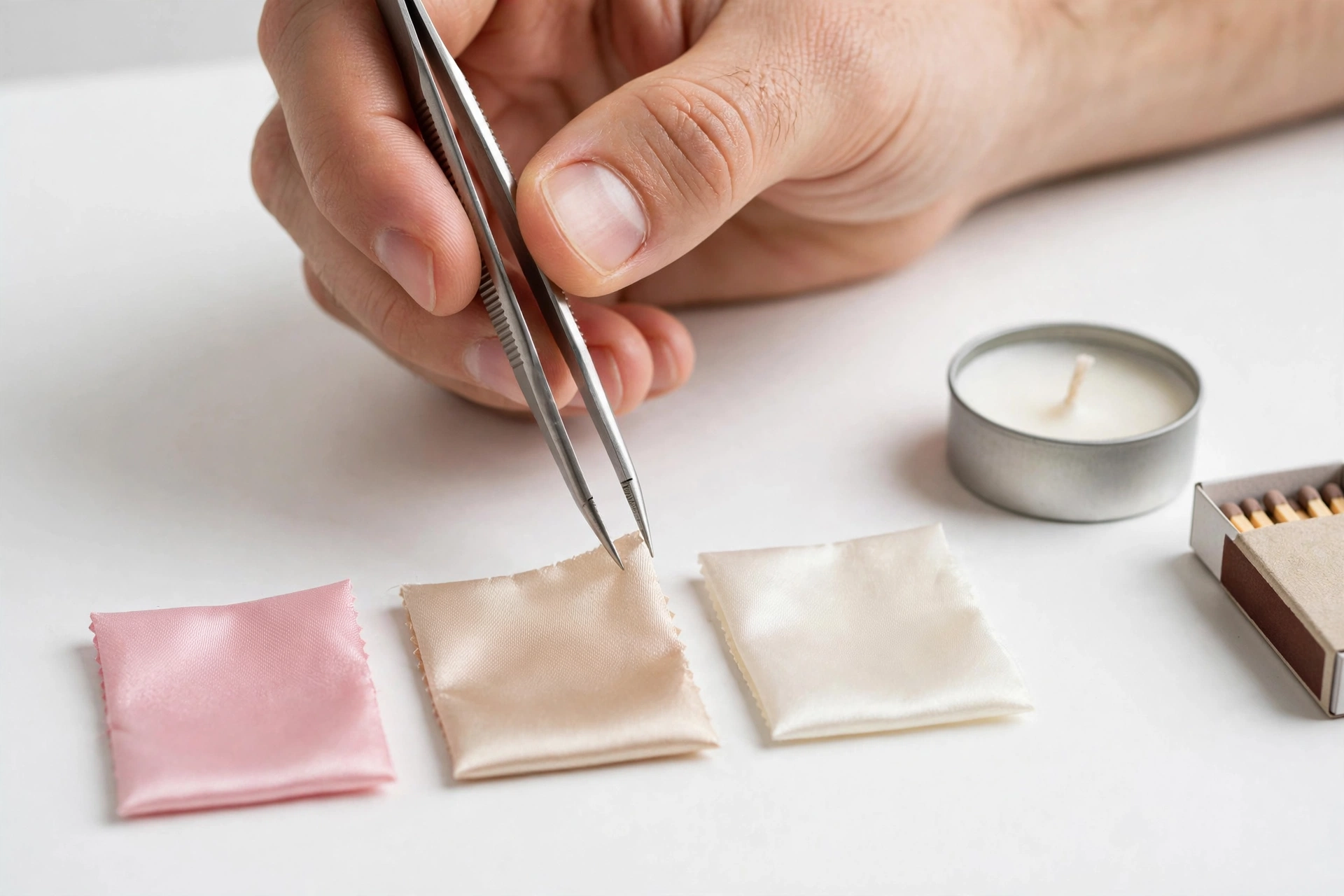
The burn test. Snip a few threads from a hidden seam, hold them with tweezers over a sink or outdoors, and touch a flame to them. Silk burns slowly, smells like burning hair, self-extinguishes, and leaves a crushable black ash. Polyester melts and shrinks away from the flame, smells like burning plastic with black smoke, and hardens into a bead you cannot crush between your fingers. It destroys the sample, so use a seam allowance, and keep water nearby. It remains the most decisive home test there is.
The macro test. No flame required. Photograph the fabric in bright light with your phone’s macro mode. Polyester reveals a uniform mechanical grid of identical extruded filaments. Silk shows fine, organic irregularity and scatters light instead of mirroring it. Pair this with the tilt test from the section above and you can identify most satins without burning anything.
One honest caveat: microfiber polyester can be spun as fine as silk yarn, and a good one can fool your fingers at first touch. That is exactly why the tests stack. Touch lies. Flame, price, and labels do not, at least not all at once.
When should you buy polyester satin, and when should you walk away?
Buy it when the job is about the look, the budget, or the washing machine.
Costumes and cosplay. This is polyester satin’s home turf. Halloween costumes, stage outfits, dance recital dresses: worn a few times, photographed a lot, and nobody is sleeping in them. The cheap grades exist for exactly this.
Kids’ clothes. Children destroy delicate fabric as a hobby. Polyester satin survives the playground, the spaghetti, and the washing machine, and you will not cry over the price when it gets outgrown.
Event decor and table linens. Runners, backdrops, chair sashes, and draping take brutal handling, and polyester satin survives setup, teardown, and storage far better than silk. The colorfastness matters here too: a hundred matching napkins actually match.
Linings. Jacket and coat linings live in the dark and take abrasion. Polyester satin’s slick face lets garments slide on easily, it is cheap, and it outlasts the shell fabric.
Budget fashion and first sewing projects. A $40 satin dress that looks great in photos is a legitimate product. Learning to sew on $4-a-yard fabric instead of $40-a-yard fabric is just smart.
Everyday easy care. If your life has no room for dry cleaning, polyester satin asks almost nothing of you. Wash, dry, wear.
Walk away when the job is about skin, sleep, or heat.
Bedding and sleepwear, if you sleep warm. This is the number one owner complaint about polyester satin: it traps heat. Polyester absorbs almost no moisture, so perspiration sits between you and the fabric. Silk satin breathes and regulates temperature. If you run hot at night, polyester satin sheets will teach you that lesson personally.
Garments worn against skin in summer. Same physics, smaller surface. A polyester satin blouse in July is a sweat management problem.
Anything priced like silk. The moment a “satin” product costs silk money, you are owed silk fiber. Check the label, run the tests above, and do not pay a luxury price for plastic.
Sensitive or allergy-prone skin. Polyester itself is not a common allergen, but the disperse dyes and finishing resins on cheap satin can irritate reactive skin, and the static cling drives some people mad. Silk’s smooth protein fiber is the gentler choice here.
Heirloom or special-occasion pieces you want to keep for decades. Polyester is strong but it can yellow with age and pill with friction. A wedding gown you hope your daughter wears deserves the fiber that ages gracefully.
How do you sew polyester satin without a fight?
Polyester satin sews like other satins, slippery and shift-prone, with a few fiber-specific twists. Cut single layer with a rotary cutter and pattern weights, never let the fabric hang off the table edge, and mark on the wrong side with chalk. Pins leave permanent holes in the smooth face, so use clips or pin inside the seam allowance.
Use a fresh Microtex or sharp needle in 60/8 to 70/10 and a short stitch around 2 to 2.5 millimeters. The walking foot is your best friend here: satin’s long floats shift under a standard foot, and the walking foot feeds both layers together so seams do not pucker. Hold both thread tails when you start a seam so the fabric does not get eaten into the needle plate.
The polyester-specific rule is heat. Polyester melts around 250 degrees Celsius, and a hot iron will gloss, scorch, or melt the face long before that becomes academic. Press on a low or synthetic setting, always on the wrong side, always with a press cloth. Test on a scrap first. Steam is fine and often safer than direct iron contact for easing out wrinkles.
Finish every raw edge. Satin unravels with enthusiasm, and polyester’s smooth filaments slip out of seams faster than textured yarns would. French seams for lightweight pieces, a narrow rolled hem for edges, and an overlocker or zigzag on anything else. Interface zipper seam allowances so the invisible zipper does not ripple: the bias wave problem hits slippery satin hardest.
How do you wash and care for polyester satin?
Here is where polyester earns its keep. Machine wash cold on a delicate cycle, inside out, inside a mesh laundry bag. The bag is not optional fussiness. Satin’s exposed floats snag on zippers, hooks, and the machine drum itself, and the bag is the cheapest insurance you own. Use a liquid detergent rather than powder, since undissolved powder can leave residue that yellows when it meets an iron.
Tumble dry low or hang to dry; high dryer heat causes gradual shrinkage and can bake in wrinkles. Skip fabric softener. It coats the fibers and dulls the sheen over time. A quarter cup of white vinegar in the rinse cuts static without coating anything.
Iron only on low with a press cloth, wrong side up. Never use the cotton or linen setting on polyester satin. That is the single fastest way to ruin it: the fibers gloss or melt and the damage is permanent.
Two honest limitations. Polyester loves oil, so body oils, foundation, and greasy food stains set faster on poly satin than on most fabrics. Treat stains promptly with a dab of dish soap before washing. And the fabric can pill where it rubs, under arms, at seat seams, against bag straps. There is no cure once pilling starts, only prevention: the mesh bag, the delicate cycle, and keeping the garment away from Velcro and rough surfaces.
For the per-fiber details across every satin type, our satin washing guide covers silk, acetate, and blends too. The weave family overview lives in the complete types of satin guide, and the weave science behind the shine is in what satin weave actually is.
Frequently Asked Questions
Is polyester satin real satin?
Yes. Satin is a weave structure, not a fiber, so any fiber woven in a satin weave is genuinely satin. Polyester satin is real satin the way a fiberglass boat is a real boat: the construction is legitimate, the material is synthetic. The confusion comes from sellers using “satin” to imply silk. Check the fiber content, not the weave name.
Is polyester satin hot to sleep in?
Usually, yes. Polyester absorbs almost no moisture (about 0.4% moisture regain versus about 11% for silk), so heat and perspiration get trapped against your skin instead of wicking away. Hot sleepers consistently report polyester satin sheets and pillowcases feeling clammy. Silk or breathable cotton sateen sleeps cooler.
Does polyester satin wrinkle?
Much less than silk satin. Wrinkle resistance is one of polyester’s genuine strengths: the synthetic fibers spring back instead of holding a crease. It packs well, travels well, and usually needs no ironing after washing. Cheap thin grades can still hold fold lines from long storage, but a short tumble on low or a steamy bathroom clears them.
Can you iron polyester satin?
Yes, but only on low heat with a press cloth, and always on the wrong side. Polyester melts around 250°C, and a hot iron will permanently gloss, scorch, or melt the fabric’s face. Steam is often safer than direct iron contact. Never use the cotton or linen setting, and always test on a hidden scrap first.
How can I tell if my satin is polyester or silk?
Stack four tests. Check the price: real silk satin starts around $30 a yard. Read the fiber label: no fiber named means polyester. Do the burn test on a hidden snippet: silk smells like burning hair and leaves crushable ash; polyester melts, smells like plastic, and forms a hard bead. Photograph it in macro: polyester shows a uniform mechanical grid.
Why does polyester satin pill?
Friction breaks the surface filaments and the broken ends tangle into little balls. It happens fastest where fabric rubs: under arms, at seams, against bag straps and seatbelts. Cheap loosely woven satin pills fastest because its floats are already half-loose. Wash inside a mesh bag on delicate, keep it away from Velcro, and there is no fix once heavy pilling starts.
Is polyester satin bad for your hair?
It is better than cotton and worse than silk. Any satin’s smooth face reduces friction versus cotton, which is the main hair benefit. But polyester’s near-zero moisture absorption and static buildup are real downsides: it can leave fine hair flyaway. For hair, polyester satin is the budget option, not the best one.
Can you dye polyester satin at home?
Barely. Polyester only takes disperse dyes, which need sustained near-boiling heat to penetrate the fiber, and home results are usually uneven with poor wash fastness. This is also why polyester satin is so colorfast from the factory: the color is locked in under industrial conditions. If you want a custom color, buy it dyed rather than dyeing it yourself.
—
A note on how this guide was written: nobody paid for it, and no fabric seller reviewed it. The comparison tables above exist because the pages that currently rank for “polyester satin” are written by people selling polyester fabric or silk products, and both have a story to tell. We checked trade specs, textile references, and owner reports, and we named the labeling tricks because they cost real buyers real money. If you spot an error, tell us and we will fix it.