


History of Satin: From Medieval Silk to Modern Fabric
Most people assume satin is a material. It is not. It is a way of weaving, and that one fact explains almost everything about its history. A weave can travel, change fibers, survive revolutions, and still be recognizable centuries later. Fibers cannot do that. So this guide does not tell one story. It tells three, braided together: how a weaving technique was born in China, how a port city’s name sailed around the world on silk, and how a royal monopoly became an everyday fabric. If you want the short version: satin started as Chinese silk, Europe fell for it in the 12th century, machines made it affordable in the 19th, and chemistry replaced the silk in the 20th. The long version is better, so let us start at the beginning.
What is satin, really? The one definition history keeps proving
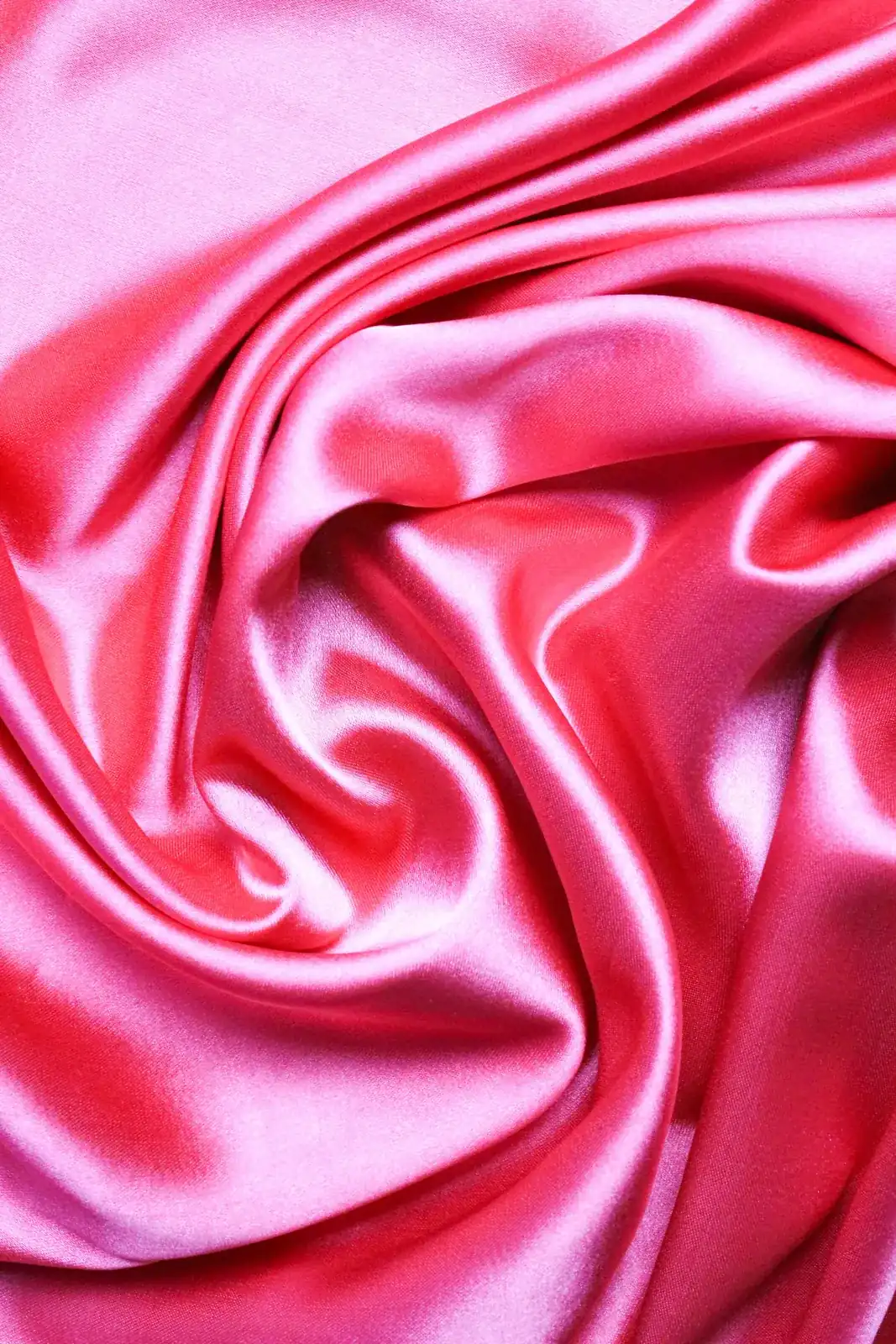
Satin is a weave structure, not a fiber. Any satin you can name, silk satin, polyester satin, acetate satin, is made by floating warp yarns over several weft yarns before locking them down. Those long spans, called floats, catch light instead of scattering it. That is the whole trick, and it is older than almost every fashion house.
The Encyclopaedia Britannica names satin as one of the three basic weaves, alongside plain and twill, and explains its sheen this way: satin exposes more warps than fillings on the face of the fabric, and those exposed warps are called floats. Twist of yarn and length of float create the variations. That definition is worth memorizing, because every era of satin’s history is really a story about what fiber weavers were floating. When the fiber was silk, satin belonged to emperors and queens. When the fiber became polyester, satin belonged to everyone. The weave never changed. The floats are the through line.
Understanding this keeps you from a common confusion: silk and satin are not rivals, and cotton and satin are not opposites. Silk is a fiber. Satin is a structure. A silk fiber woven in a satin structure gives you silk satin. A cotton fiber woven the same way gives you sateen. Compare satin with twill, the other long-float family: twill staggers its interlacings into visible diagonal ribs, denim’s signature, while satin staggers them so no line ever forms, which is why its face reads as a continuous mirror. Same floats, different arrangement: one gives you jeans, the other gives you evening gowns. The museum’s rule of thumb is concrete: most satins are woven with four or more weft threads passing over a single warp thread before interlacing, in 4-, 5-, or 8-harness variations. More threads floating means fewer interruptions on the face, which means a deeper shine. Learn more about the mechanics in our guide to what is satin weave, but for history purposes, hold onto this: the weave is the constant, and the fiber is the variable. Every turning point below is a moment when the variable changed.
Where did satin actually come from?
Satin was born in China, woven from silk, and nowhere else. Its smooth texture has roots reaching back to the Middle Ages in China, where it was woven exclusively from silk and reserved for robes and garments of the upper classes. For much of its early life, satin simply meant expensive silk woven a particular way.
That silk-only origin is confirmed by the American Textile History Museum, which traces satin’s smooth texture to medieval China and notes that, during that time, the satin fabric was woven out of silk, making it costly and typically worn only by the upper classes. Nobody disputes this part of the story. Silk production was concentrated in China for centuries, and satin, being one of the most demanding ways to weave silk, could only have been perfected where silk weaving was most advanced.
Why does the weave matter more than the fiber for a historian? Because plain weave silks existed for a long time, but satin demanded something extra: long, continuous filaments laid across the cloth with barely any interlacing to interrupt them. Only silk filament, long, strong, and fine, could do that job well. The satin weave and the silk fiber arrived together, and for roughly a thousand years they never left each other’s company. If you want to see what the original looked like, read our silk satin guide, which covers the fiber that carried satin through its first millennium.

How did a Chinese port city give English a word?
The word satin sailed out of China before most Europeans had ever touched the fabric. The accepted explanation traces it to Quanzhou, a maritime port in Fujian province that medieval Arab merchants called Zaitun or Zaytun. Silk textiles shipped from that port picked up the name zaituni, roughly “from Zaitun,” and the word drifted west with the trade.
The evidence for the port connection is unusually rich. Ibn Battuta visited the city in the 14th century and wrote that “in it are woven the damask silk and satin fabrics which go by its name,” according to a Springer-published volume on Quanzhou, which concludes: “the best of which Ibn Battuta claimed were produced in Zaytun (from which we get the English word ‘satin’)” (The Story of Zaytun). That is a traveler account, not a legend.
The word’s westward journey can be tracked through documents. A study by the Zay Initiative, a textile heritage organization, finds the transition from zaitun to satin passed through medieval Latin forms like aceytuni and setinus appearing in European documents from the 12th and 13th centuries, with Old French satin recorded in the 15th century, closely matching the modern spelling (The Etymological Origins of the Word “Satin”). The same study notes an alternative hypothesis deriving the word from Latin seta (bristle, silk), but calls the Arabic Zaitun derivation the most widely accepted theory. Two centuries of paperwork, from Latin account books to French fashion terms, carry the word from a Chinese harbor to your closet.
This is why the Quanzhou theory deserves confidence: it has a place, a mechanism, and a paper trail. Port exports carried the fabric. Arab traders coined the term. Latin merchants wrote it down. French speakers polished it into the word we use. Names rarely come with this much documentation.

When did satin reach Europe, and who wore it?
Silk satin reached Europe by the 12th century, and Italy was the first western country to produce it, according to the American Textile History Museum. By the 14th century satin was fashionable across Europe, used in royal garments and upholstery. It arrived as an import, it was considerably expensive, and only the upper classes wore it.
Stop and picture that for a moment. In the 1100s, an Italian weaver is staring at a bolt of imported silk satin, trying to reverse-engineer a structure he has never woven. There were no diagrams, no YouTube tutorials, no fiber spec sheets. There was just the cloth, the loom, and years of trial and error. Italy succeeding first is no accident: Italian city-states sat at the receiving end of the Mediterranean trade routes, and their weavers already handled fine silks. Over the following centuries, European weavers reverse-engineered what China had invented and sold it to their own nobility.
The 14th century popularity matters because it tells us satin had crossed from curiosity to institution. Royal garments are one thing, but upholstery is another: when a fabric is covering furniture, it has become part of how power displays itself, not just what people wear. A throne draped in satin and a gown sewn from satin are the same statement. The fabric had become a language of authority.
What happened when kings fell in love with satin?
European courts turned satin into a status weapon. Much of the ornate furniture and decor in the Palace of Versailles contains satin, the American Textile History Museum notes. By the late 1600s, satin was not just clothing. It was the texture of luxury itself: wall coverings, chair upholstery, bed hangings, and court dress, all cut from the same glossy cloth.
The habit outlived the courts: Victorian furniture makers also favored satin upholstery, according to the same museum.
This courtly phase lasted centuries and shaped what satin means to us today. When we say satin looks “elegant” or “formal,” we are repeating a judgment that Renaissance and Baroque courts made first. They decided the shine meant wealth, and the association never left. Designers still reach for satin when they want a gown or a room to read as luxurious, and they are quoting, knowingly or not, decisions made in palaces three hundred years ago.
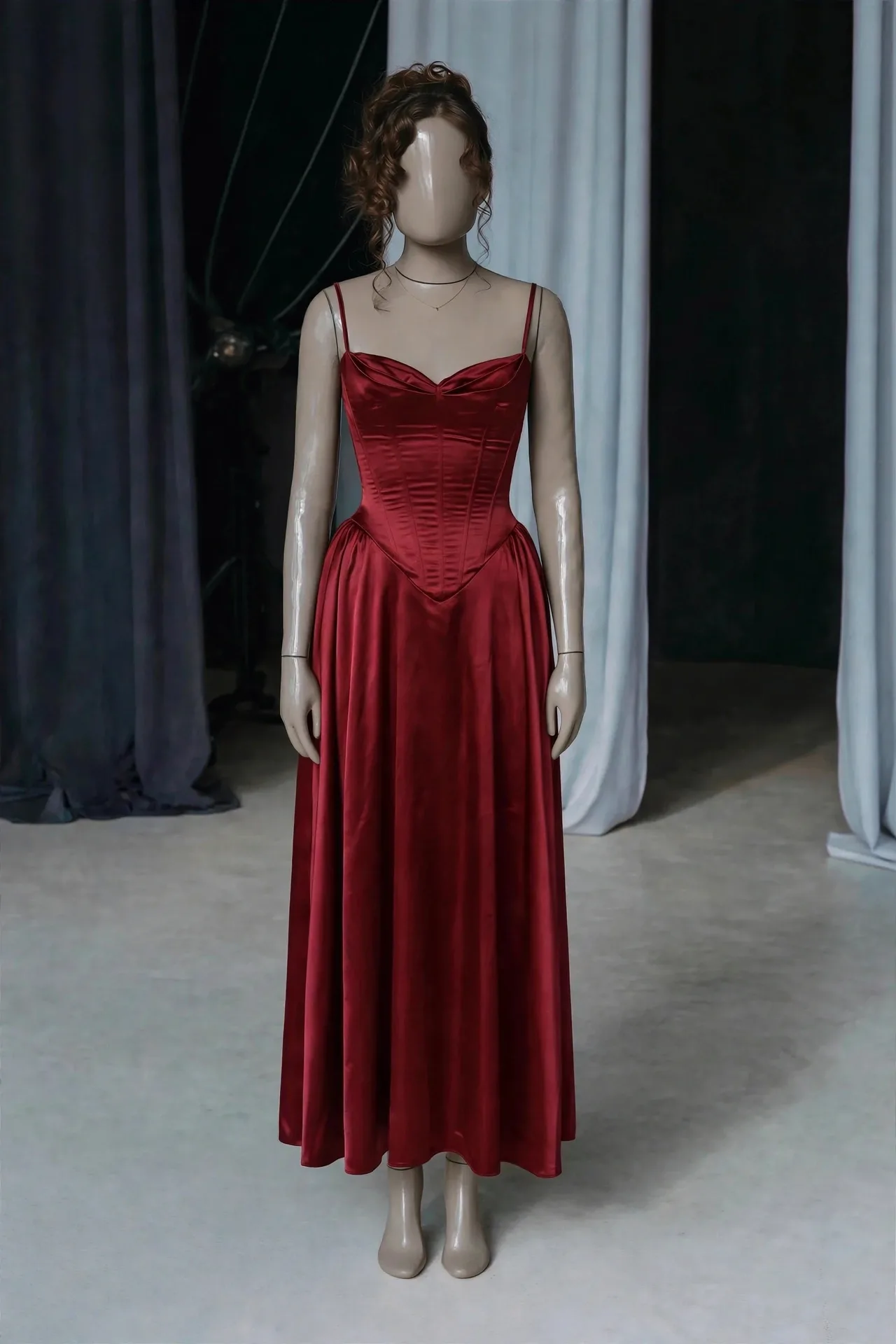
It also explains why satin accumulated so many named types. Duchess satin, with its heavy body, suited the structured gowns of court fashion. Charmeuse, lighter and more fluid, suited the drape that later eras preferred. Slipper satin went into footwear, crepe-back satin into reversible garments. Each type answered a specific demand from people who could afford to be particular. Browse the family tree in our guide to the types of satin to see how this courtly era’s demands produced the vocabulary we still use.
The six eras of satin at a glance
History is easier to hold when you can see it in one view. Below is the whole story in a single table: each era’s dominant fiber, where the action was, and the development that defined it. Notice how the weave column never changes. Only the fiber and the price change.
| Era | Dominant fiber | Center of the action | Defining development |
|---|---|---|---|
| Origins (medieval China) | Silk, exclusively | China | The satin weave is perfected in silk, a costly cloth for the upper classes |
| The naming (12th-14th century) | Silk | Quanzhou, the Zaitun port | Arab merchants name the cloth zaituni after the port; the word travels west |
| European adoption (12th-14th century) | Silk | Italy, then France | Italy becomes the first western producer; by the 1300s satin dresses royalty |
| Courtly golden age (15th-18th century) | Silk | European courts, Lyon | Satin becomes furniture, wall covering, and court dress; Versailles glitters with it |
| Industrial era (late 18th-19th century) | Silk, then blends | Factory towns of Europe | Power looms and the Jacquard mechanism raise output and cut prices |
| Synthetic era (20th century to today) | Polyester and rayon | Global | Satin leaves silk behind; the weave goes mass market |
How did machines change satin forever?
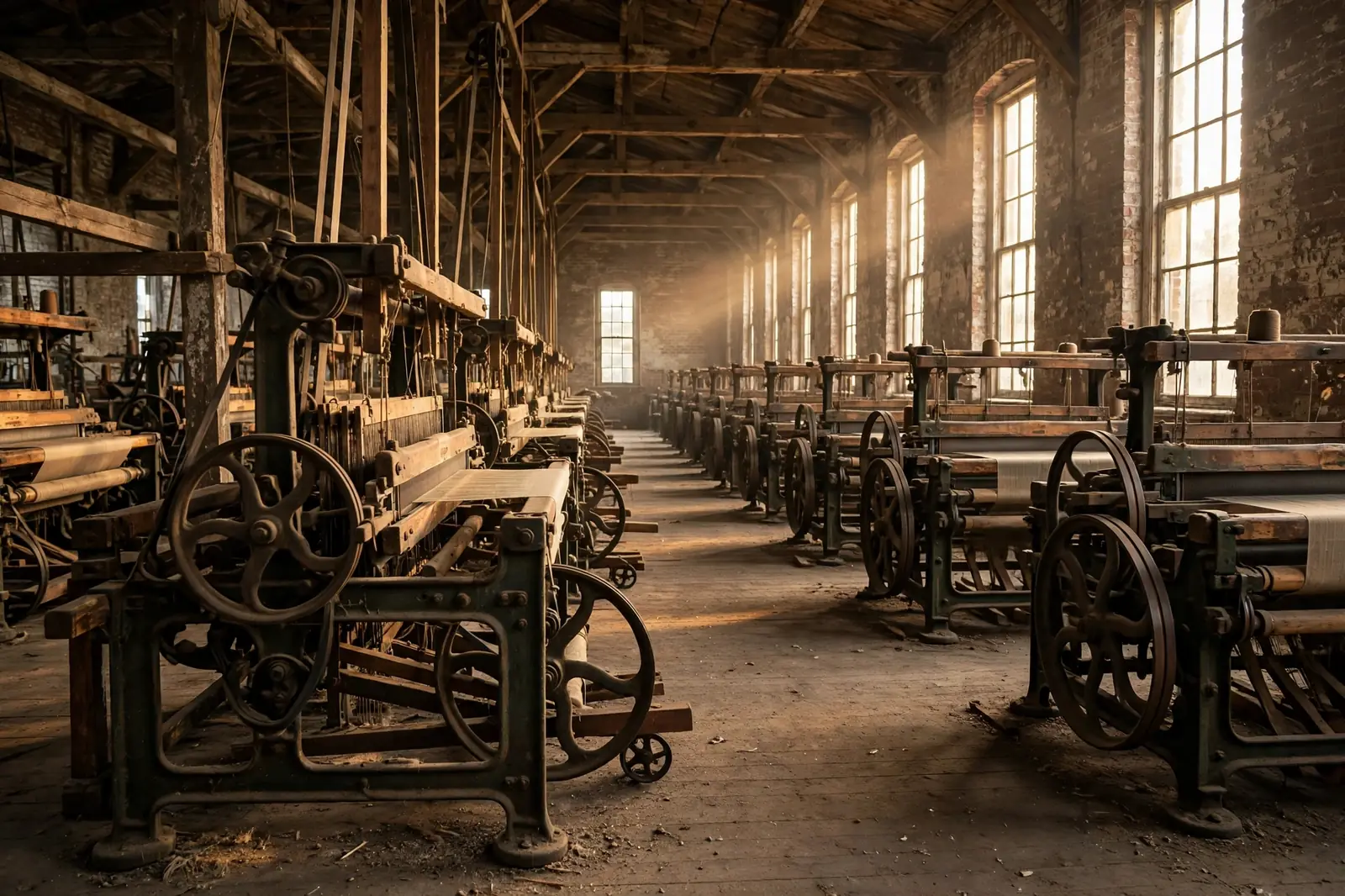
The first power-driven loom arrived in 1785, and the 19th century brought further advances including the dressing machine and the Jacquard mechanism, which allowed more complex woven-in patterns, according to Britannica. Modern looms grew increasingly automatic, and Britannica’s verdict on the whole arc is plain: these advancements increased production volume and lowered prices.
For satin specifically, mechanization did three things. First, it broke the weaver’s monopoly on skill. A satin weave is unforgiving: long floats snag, slip, and pucker if tension is uneven, and hand-weaving it well took years to learn. Power looms made the structure reproducible at scale. Second, it let satin absorb new fibers. Once machines could handle cotton and later synthetics with the same precision, satin no longer depended on silk filament to achieve its floats. Third, and most important for the story, it collapsed the price. A fabric that had signaled royalty for six centuries started showing up in ordinary wardrobes, and its meaning began to shift from status to style.
Cloth that had taken master weavers enormous labor could now leave a mill far faster, and satin’s old identity as a rarity began to crack. The Jacquard mechanism deserves a special note because it did something hand looms could never do at scale: it put complex woven patterns on top of the satin ground. Patterned satins, damask-like figures floating on a glossy field, became a signature of 19th-century luxury textiles. The loom did not just make more satin. It made new kinds of satin, and it let mills weave figured designs, florals, crests, repeating motifs, that no hand weaver could reproduce at that volume. Our guide to how satin is made walks through the modern version of this process, from yarn to finished cloth.
When did satin stop being silk?
Sometime in the 20th century, satin quietly changed its identity. Today satin does not typically contain silk; it is most often a synthetically woven fabric made from materials like polyester and rayon, in the words of the American Textile History Museum. The weave survived. The fiber did not.
This was not a single event but a long substitution. Rayon, a manufactured fiber, gave weavers a filament that behaved enough like silk to hold long floats, at a fraction of the cost. Later synthetics cut costs further still. Silk satin did not disappear, it retreated upmarket, where it still commands the highest prices and the most careful handling. But the satin most people touch today, the pillowcase, the lining, the prom dress, is synthetic. Polyester satin also resists wrinkles and survives washing, which is why it dominates bedding, linings, and event decor today.
The fiber swap opened up uses that silk satin could never have served. Bridal parties on a budget, hotels outfitting hundreds of rooms, theater costume departments dressing entire casts: all of them buy the look of luxury without the price or the fuss of silk. Satin stopped being a treasure and became a tool, and in doing so it finally reached the audience its shine was always meant for.
This swap is the final proof of the definition we started with. A fiber history would have ended when silk left. A weave history keeps going, because the structure works in any filament long and smooth enough to float. That is why this article is titled the history of satin the weave, not the history of satin the fiber. The fiber story is interesting. The weave story is the one that survived.
Why does this history still matter when you shop?
Because the price tag you see today is the end of a centuries-long negotiation between fiber and structure. When a silk satin costs ten times the polyester version, you are paying for the fiber, not the weave. The floats are the same. Only the filament differs.
History also explains the care labels. Silk satin demands dry cleaning because silk does; polyester satin tolerates machines because polyester does. The weave is innocent in both cases. And when a “satin” product disappoints, check the fiber content before blaming the weave. A rough spun yarn cannot float like a smooth filament, and no weave can fix a fiber mismatch.
One more practical lesson from the timeline: finish and weave are different things. A satin’s gloss can come from the floats, from a chemical or mechanical satin finish, or from both. Vintage and antique satins were sometimes calendared, pressed between hot rollers, to boost shine that the weave alone provided. If you are comparing a “satin finish” product with a true satin weave, you are comparing a surface treatment with a structure, and the structure will outlast the treatment. Our comparison of satin vs silk digs deeper into what you are actually paying for when the two are confused at the register.
Frequently asked questions
Is satin a fabric or a weave?
It is a weave. Britannica lists satin as one of the three basic weaves, and the American Textile History Museum describes it as a weave structure defined by floats. The same structure can be woven from silk, polyester, rayon, nylon, or acetate, which is why “satin” appears on such different price tags. When someone says “silk satin,” they are naming both the fiber and the weave.
Where does the word satin come from?
From Quanzhou, a Chinese port city that medieval Arab merchants called Zaitun or Zaytun. Silk textiles shipped from the port were called zaituni, and the word traveled west through trade, appearing as aceytuni and setinus in 12th and 13th century Latin documents before becoming Old French satin in the 15th century. The Zay Initiative’s etymology study calls this the most widely accepted theory.
When was satin invented?
No one can name a year, and you should distrust anyone who does. What is documented is that satin’s smooth texture traces to medieval China, where it was woven exclusively from silk for the upper classes. Its arrival in Europe is better dated: Italy was producing it by the 12th century, and it was fashionable across Europe by the 14th.
What was satin originally made from?
Silk, and only silk, for roughly its first thousand years. Silk filament was the only fiber long, fine, and strong enough to hold the long floats that give satin its shine. Cotton and other short-staple fibers could not do the job, which is why cotton versions are technically called sateen, a weft-faced variation.
Why was satin so expensive in the Middle Ages?
Three costs stacked up: the silk itself, which was costly to produce; the skilled labor, because the satin weave is difficult to weave well by hand; and the transport, since European satin began as an import from China or from Italian workshops working with imported silk. Expensive fiber plus difficult structure plus long supply chain equals a luxury price.
When did satin become affordable?
The 19th century did most of the work. The power loom arrived in 1785, and subsequent advances, including the Jacquard mechanism, increased production volume and lowered prices, in Britannica’s account. The 20th century finished the job when synthetic fibers like rayon and polyester replaced silk in most satin, cutting the fiber cost dramatically.
Is modern satin still made from silk?
Sometimes, but usually not. Silk satin still exists as a luxury product. But the American Textile History Museum states that today’s satin is most often synthetically woven from polyester or rayon. If the label just says “satin” with no fiber named, assume synthetic and check the fine print.


