Satin Pajamas: The Complete Buying Guide
The short answer
Most “satin pajamas” are 100% polyester charmeuse, not silk. They feel smooth and look luxurious, but polyester satin sleeps warm because the fiber barely absorbs moisture and the tight weave traps body heat. Silk satin breathes noticeably better but costs far more and needs gentler care. Buy polyester if you sleep cool and want the look on a budget. Buy silk only if you sleep hot and will hand wash.
30-second verdict
Buy polyester satin pajamas if you want the glossy look, sleep in a cool room, and machine-wash your sleepwear. **Buy silk satin pajamas** if you run hot at night, hate waking up damp, and will commit to gentle washing. **Buy cotton sateen instead** if breathability matters more to you than shine. Skip any listing that promises “cooling” satin without naming the fiber. The fiber decides the sleep, not the word “satin.”
What are satin pajamas usually made of?
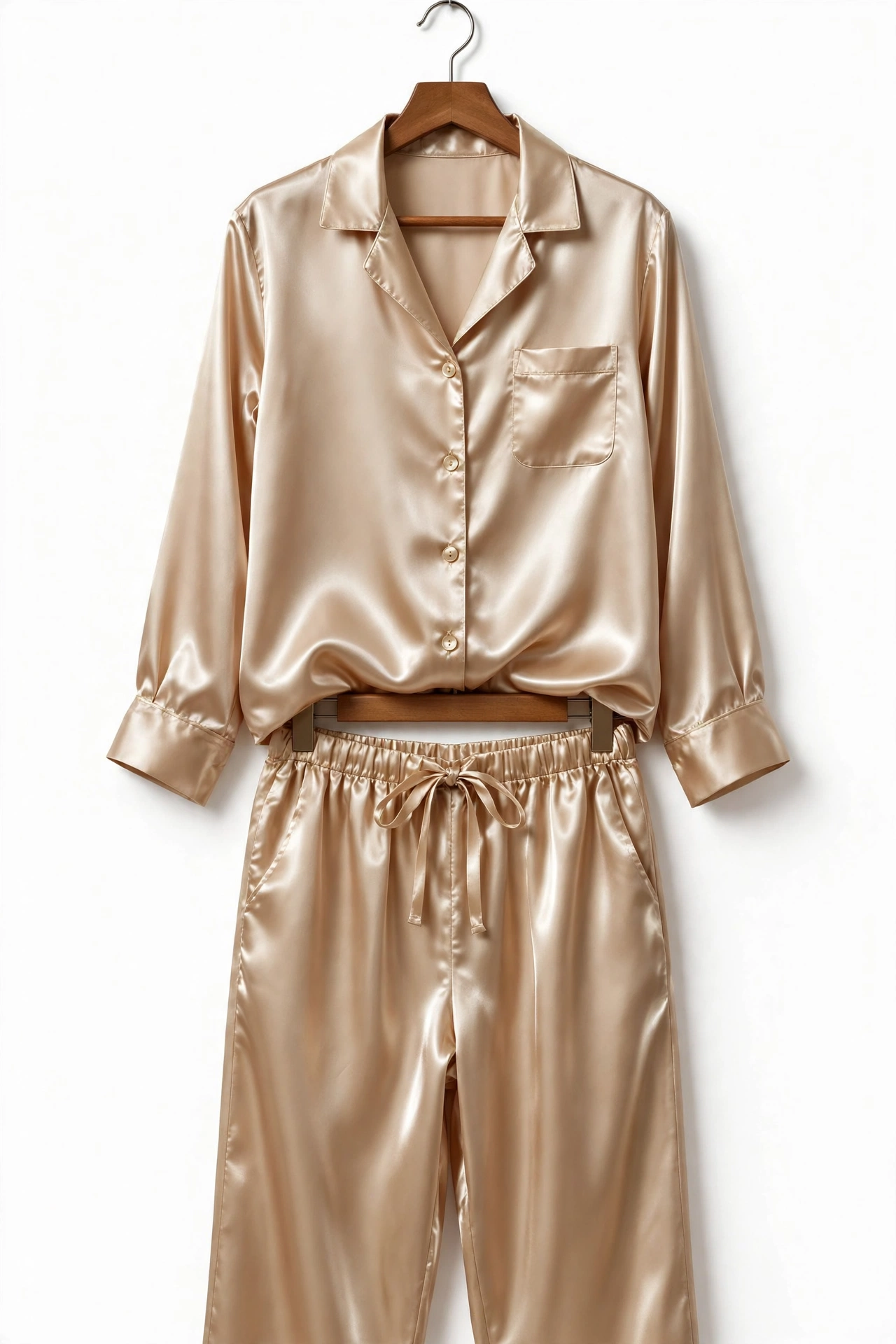
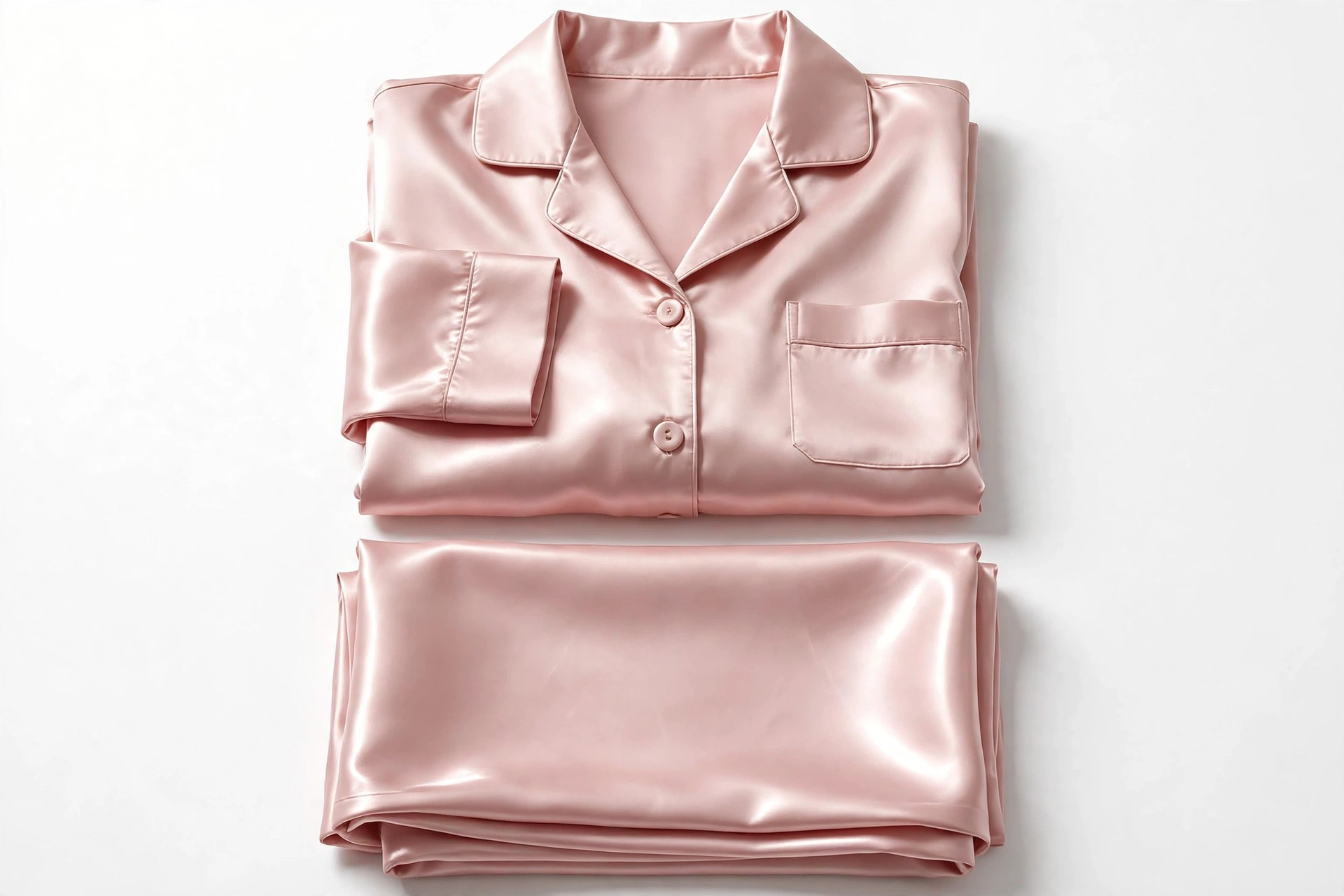
Satin is a weave, not a fiber, so “satin pajamas” can mean very different fabrics. Most sets on the market are polyester charmeuse. It is cheap, shiny, colorfast, and machine washable, which is why sellers love it.
The rest are real mulberry silk charmeuse (usually 16 to 22 momme), occasional silk blends, and a handful of rayon or acetate sets. Acetate feels like silk and drapes beautifully, but it water-spots and weakens when wet, so treat it as dry-clean-only luxury rather than everyday sleepwear.
Then there is the label trap. Many listings titled “silk satin pajamas” are polyester with zero silk in them. which satin type your pajamas are actually made from Flip the product over to the fiber-content label. If it says 100% polyester, the “silk” is just marketing.
Do satin pajamas breathe?
No, not really, and the reason sits in two facts you can check. First, the fiber. Textile-science references commonly cite polyester’s moisture regain around 0.4%, silk’s around 11%, and cotton’s around 8.5%. That number says how much water vapor the fiber itself can hold. Polyester barely holds any, so sweat stays on your skin instead of moving into the fabric.
Second, the weave. Satin weaves pack long floating threads across the surface with very few interlacing points. how satin’s weave structure works Those floats make the shine, and they also make a dense, low-porosity surface that air does not move through easily. Shine and breathability come from the same structure, and they pull in opposite directions. That is the honest trade-off nobody’s product page will state.
Will satin pajamas make you sweat at night?
Polyester satin can, and forum sleepers describe it bluntly. They say they “melt” in it on warm nights. Here is the mechanism. Your body gives off heat and moisture all night. Polyester neither absorbs the moisture nor lets it pass through the tight weave efficiently, so warmth builds between skin and fabric until you feel clammy. Air conditioning and a light duvet reduce the effect, but they do not remove it.
Silk satin handles the same night better. Silk absorbs up to about 11% of its weight in vapor, then releases it, which keeps the skin-fabric interface drier. It still is not a performance fabric. On a hot night with no airflow, silk satin will feel warm too, just later and less clammy than polyester. the full silk vs satin comparison If you are a genuinely hot sleeper, neither fiber will beat a plain-weave cotton or linen set. The honest hierarchy is cotton for cool, silk for in-between, polyester for looks.
One more warning. Ignore “temperature-regulating satin” marketing. Temperature regulation is a property of specific fibers and finishes, not of the word satin, and none of the polyester pajama listings making the claim publish any test data behind it.
Polyester satin vs silk satin vs cotton sateen: the honest comparison
Cotton sateen sneaks into this table because many shoppers ask for “satin pajamas” and would sleep better in sateen, which has a similar glow with a breathable cotton fiber. The third option matters here.
| Polyester satin (charmeuse) | Silk satin (mulberry charmeuse) | Cotton sateen | |
|---|---|---|---|
| Breathability | Poor: fiber holds ~0.4% moisture, weave blocks airflow | Good: fiber holds ~11% moisture and releases it | Good: cotton breathes, plain structure moves air |
| Warmth at night | Sleeps warm, can feel clammy | Sleeps cooler than poly, still warm on hot nights | Coolest of the three |
| Static | Frequent, especially in dry rooms | Rare | Rare |
| Snagging | Resists snags better than silk | Snags easily on rough skin or nails | Rarely snags |
| Washing | Machine wash cold, no dryer | Hand wash or gentle cycle, air dry | Machine wash normally |
| Price | Lowest | Highest, often 5 to 10x polyester | Between the two |
| Best for | Cool rooms, the look, a budget | Hot sleepers who hand wash | Sleep comfort over shine |
How should satin pajamas fit for sleep?
Satin has no stretch unless the maker blends in elastane, so fit behaves differently than cotton jersey pajamas. A button-front top that pulls at the shoulder will not “give” overnight, it will just dig. Size for your widest point, not your usual size. If the top is cut slim through the back, go one size up. The drape hides the extra room and you will actually sleep.
Pants and shorts need the same thinking at the hip. Satin shows every tension line when it is too tight, and the fabric slides against itself, so a tight pair creeps down while you sleep. Roomy through the hip and thigh wins every time.
Length is practical too. Shorts and cropped pants trap less heat, which makes them the most forgiving choice for warm sleepers who still want the look. Long pants suit cold rooms.
Elastic waistband or drawstring: which is better?
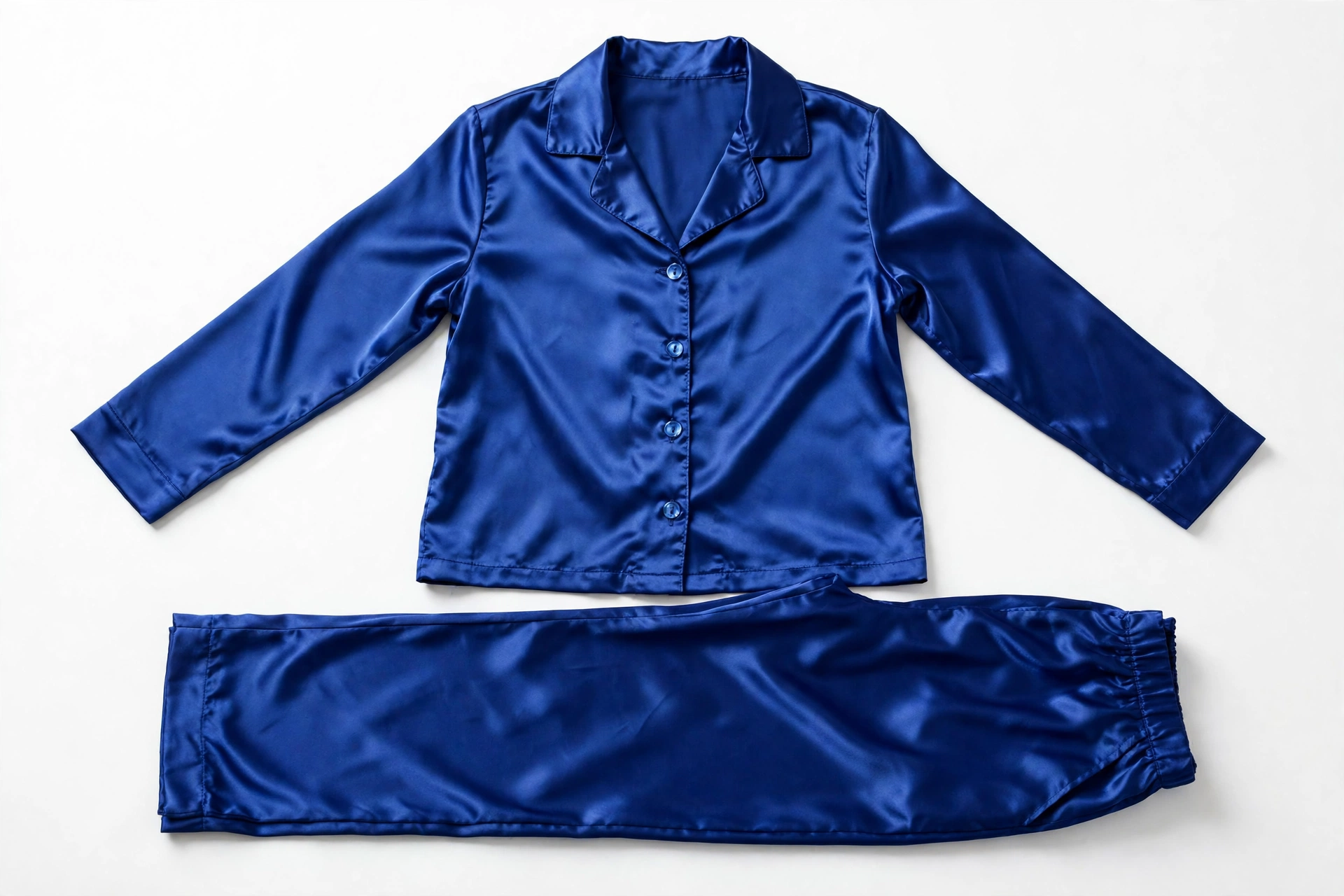
This choice affects comfort more than shoppers expect, because you spend eight hours with the waistband. Elastic is convenient and looks cleaner, but the elastic itself is the weak point. Heat from the dryer breaks down the rubber or latex inside, and a waistband that starts snug goes slack within a year of hot drying. If you buy elastic, hang dry to double its life.
Drawstring wins for sleep, in my opinion. It adjusts to exactly where your waist is that night, it never loses tension permanently, and it survives the wash better since there is no rubber to degrade. The downsides are real but minor. The knot can press into your stomach if you sleep face-down, and some drawstrings pull out in the wash if you do not knot them first.
If you are between sizes, pick drawstring. If you sleep on your stomach and hate anything pressing into you, pick elastic and hang it dry. For kids’ sets, drawstring is the clear choice since the fit stays right through growth spurts.
How often should you wash satin pajamas?
Wash polyester satin sets every two to three wears. Polyester is hydrophobic, which sounds like it would stay clean, but body oils sit on the fiber surface instead of absorbing. That surface oil feeds odor faster than it does in cotton, and it also dulls the shine over time. Machine wash cold on gentle with a mild detergent, and skip the dryer. Heat does two kinds of damage at once: it sets wrinkles into the floats and ages any elastic waistband.
Silk satin wants a gentler rhythm. Wash it every three to four wears, since silk releases odor better between wears but each cycle stresses the protein fiber. Hand wash cool with a silk-safe detergent, or use a mesh bag on the machine’s most delicate cycle. the per-fiber washing guide Never wring it. Press water out in a towel and dry on a padded hanger away from direct sun.
Whichever fiber you own, rotate two sets. Satin keeps its shine longest when it rests between wears, because the floats recover their smooth alignment instead of being crushed night after night.
The label decoder: read this before you buy
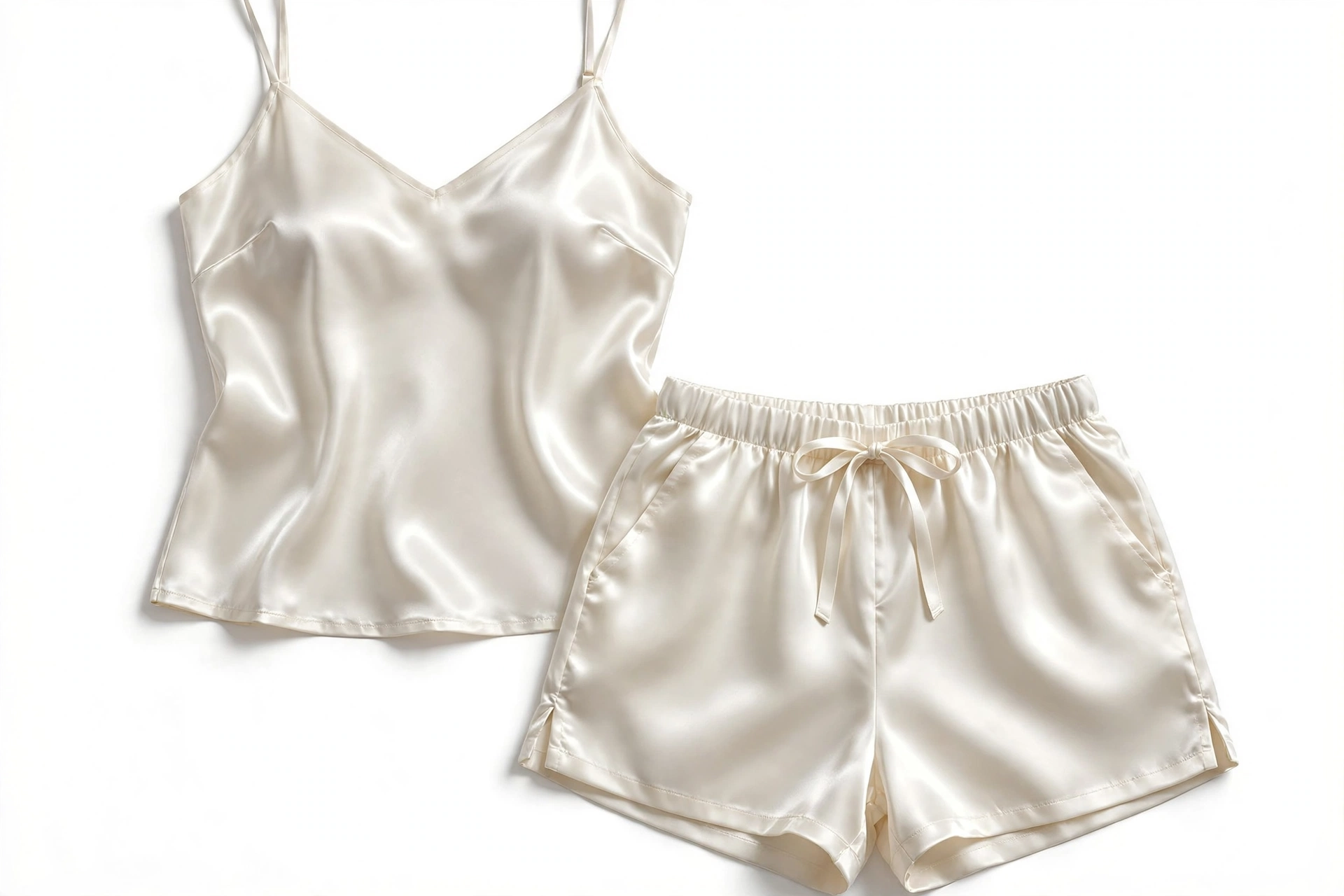
Four lines on the label tell you nearly everything. First, the fiber content. “100% silk” means real silk. “Silk satin,” “silky satin,” or “satin silk” with no fiber percentage means polyester until proven otherwise. That phrasing is the industry’s favorite dodge, and it is legal as long as the real content hides in the small print.
Second, the number after the fiber. For silk, look for momme: 16 to 19 is light and fluid, 22 is the sweet spot for pajamas that last. For polyester, look for GSM if the seller lists it; anything under about 90 GSM will feel tissue-thin.
Third, stretch. A 3 to 5% elastane or spandex blend means the set forgives fit mistakes and wrinkles less. Pure woven satin drapes better but shows every fit error.
Fourth, care symbols. A tub with a hand means hand wash. A crossed-out triangle means no bleach, which matters because chlorine bleach yellows silk permanently.
Which satin pajamas should you buy?
Match the set to your situation, not to the prettiest listing.
- **Cool sleeper, tight budget:** polyester charmeuse, drawstring waist, machine wash cold. This is the best value in sleepwear if heat is not your problem.
- **Hot sleeper who wants satin:** silk charmeuse, 19 momme or higher, shorts set. Accept the hand washing as the price of the comfort.
- **Between sizes or buying a gift:** drawstring waist, one size up from the chart. Satin does not stretch, and a gift that fits beats a gift that is technically your size.
- **Sensitive skin or latex allergy:** check the waistband fiber. Cheap elastic often contains latex; look for spandex-core elastic or choose drawstring.
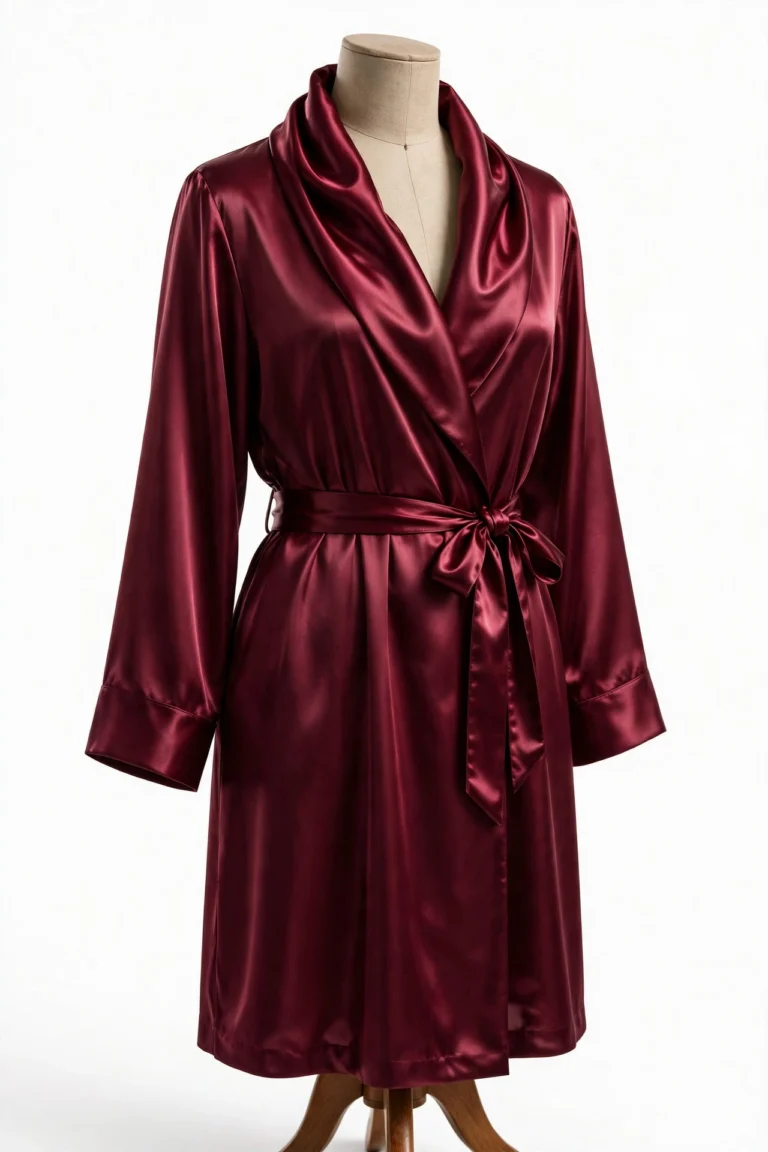
- **Full sleepwear wardrobe:** pair the pajamas with a matching robe in the same fiber so the care routine stays simple. satin robe buying guide
FAQs
Do satin pajamas make you hot at night? Polyester satin pajamas sleep warm because the fiber holds almost no moisture (around 0.4% moisture regain) and the tight weave blocks airflow. Many sleepers report feeling clammy on warm nights. Silk satin breathes better and sleeps cooler, but neither beats cotton on a genuinely hot night. Room temperature and bedding matter as much as the pajamas.
Are silk pajamas worth the price over polyester? They are if you sleep hot and will hand wash. Silk’s 11% moisture regain keeps the skin drier through the night. They are not worth it if you machine-wash everything or sleep in a cold room, where polyester gives you the same look for far less money.
Should I size up in satin pajamas? Usually yes. Woven satin has no stretch unless it contains elastane, so a snug set pulls at the shoulders and hips instead of giving. Size for your widest measurement and let the drape do the work. If you are between sizes, take the larger one.
Can you machine wash satin pajamas? Polyester satin, yes: cold, gentle cycle, mild detergent, hang dry. Silk satin, carefully: a mesh bag on the most delicate cycle works, but hand washing keeps it newer longer. Acetate satin, no: it water-spots and weakens when wet, so dry clean it.
How long do satin pajamas last? Polyester sets last years if you wash cold and skip the dryer; the waistband elastic usually fails first. Silk sets last longest with hand washing and rotation, but snagging is the real enemy: trim your nails and keep rough skin away. Two sets in rotation outlast one set worn nightly by far more than double.
Are satin pajamas good for summer? Polyester satin is a poor summer choice for warm sleepers because it traps heat and moisture. Silk satin in a shorts set works for mild summer nights. For real heat, a cotton sateen set gives you most of the look with far better airflow.
Why do my satin pajamas feel clammy? Clamminess is moisture with nowhere to go. Polyester cannot absorb your perspiration and the dense weave slows its escape, so a thin film of moisture sits between skin and fabric. A cooler room, lighter bedding, and a looser fit all reduce it. If it happens every night, the fiber is wrong for you, not the size.