How to Wash Satin: The Complete Guide (Per Fiber)
The label says “satin.” That word tells you almost nothing about how to wash it. Silk satin wants hand washing. Polyester satin tolerates the machine. Acetate satin hates water and heat both. The weave is the same in all three. The fiber sets the rules.
This guide gives you the fiber-first method: identify the fiber, follow its row in the matrix, and understand the two ways satin actually gets ruined in the wash (heat damage and water spots) so you can avoid both on purpose instead of by luck.
Can you wash satin?
Yes, but the method depends on the fiber, not the word “satin.” Polyester, nylon, and cotton sateen handle machine washing on cool and gentle. Silk and rayon want hand washing or a delicate machine cycle in a mesh bag. Acetate is the difficult one: hand wash cool or dry clean, never wring, never hot water. When in doubt, read the fiber content line on the label and follow that fiber’s row below. The care label outranks every generic guide, including this one.
The fiber-first rule
Every washing mistake with satin comes from treating the weave as the thing being washed. You are washing the fiber. The satin weave only contributes two quirks: the smooth face shows water spots and heat marks that a matte fabric would hide, and the long floats snag on anything rough in the drum.
So the procedure is always the same. Step one: read the fiber content. Step two: follow that fiber’s rules. Step three: add the two satin-specific precautions (mesh bag against snags, no spot-treating against water spots). Everything below is that procedure expanded.
why satin behaves the way it does
The per-fiber wash matrix
| Fiber | Machine? | Water temp | Detergent | Drying | Ironing | Biggest risk |
|---|---|---|---|---|---|---|
| Silk satin | Hand wash preferred; delicate cycle in mesh bag | Cool/lukewarm, max ~30C | pH-neutral or silk wash, no bleach | Roll in towel, dry flat away from sun | 2 dots (150C max) through press cloth | Water spots, heat glaze |
| Polyester satin | Yes, gentle cycle | Cool to warm, max 40C | Regular, no fabric softener needed | Tumble low or line dry | 2 dots max through cloth; glazes if hot | Heat glaze, static |
| Acetate satin | Hand wash or dry clean | Cool only | Mild, no bleach | Dry flat, never wring | 1 dot (110C max) through cloth | Water damage, melting |
| Rayon/viscose satin | Hand wash; delicate in mesh bag | Cool | Mild | Dry flat; weakens when wet | 2 dots through cloth | Stretching and tearing when wet |
| Nylon satin | Yes, gentle cycle | Cool to warm, max 40C | Regular, no bleach | Tumble low; dries fast | 1 dot through cloth | Yellowing in sun, heat damage |
| Cotton sateen | Yes, normal-ish | Warm | Regular | Tumble medium or line dry | 2-3 dots, steam OK | Shrinkage on first washes |
How to hand wash satin (silk, acetate, rayon)
Hand washing is the safe default for silk, acetate, and rayon satin. It takes ten minutes.
- Fill a clean basin with cool water and a small amount of pH-neutral or delicate detergent. No bleach, ever.
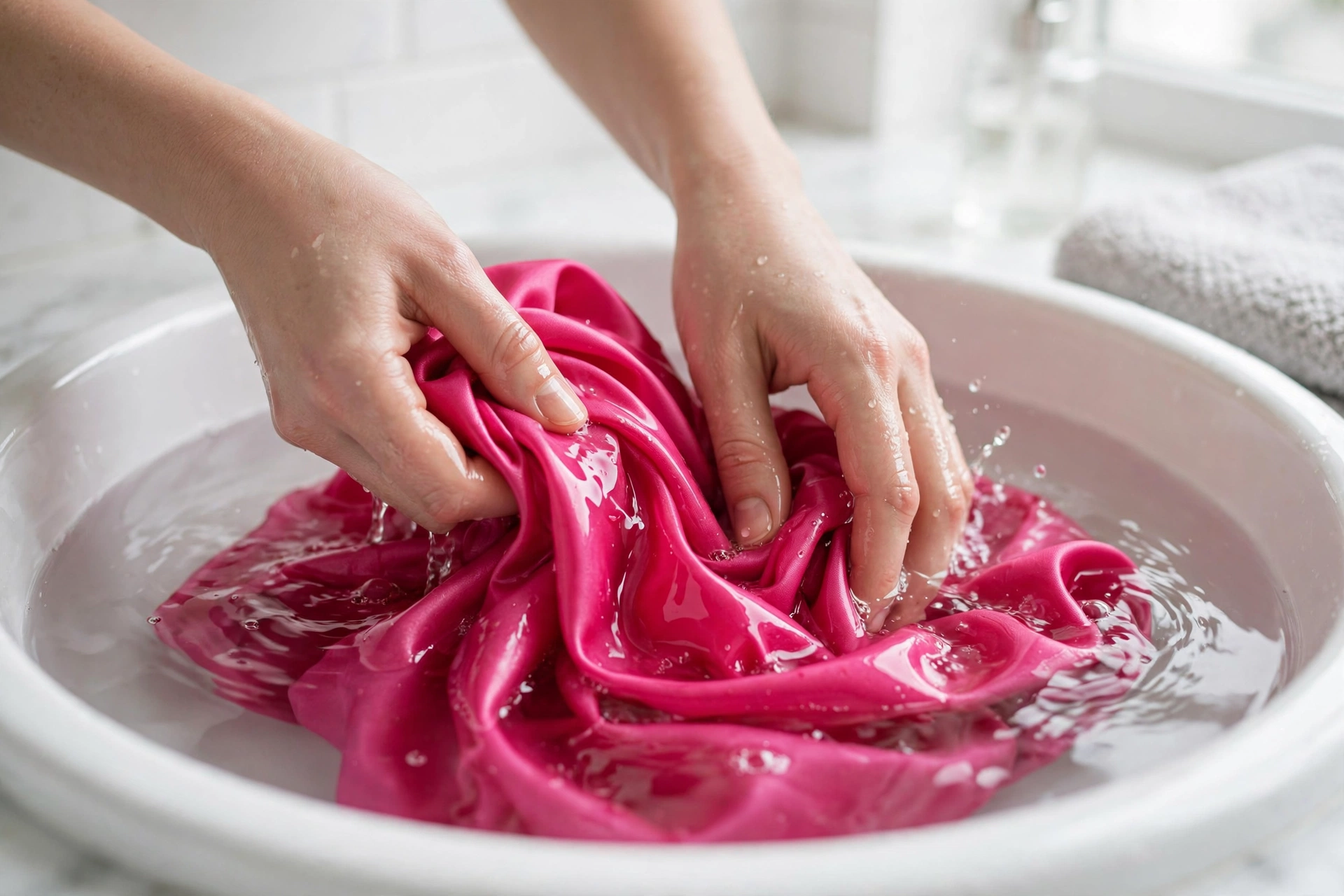
- Turn the garment inside out and submerge it. Swish gently for two to three minutes. Do not rub, twist, or scrub; friction roughens the floats.
- Drain and refill with clean cool water. Rinse by swishing until the water runs clear.
- Lift the garment out supported in both hands. Press, do not wring, to remove water.
- Roll it in a clean dry towel and press the roll to pull out more moisture.
- Reshape and dry flat on a fresh towel away from direct sun and heat.
For acetate, keep everything cool and quick: prolonged soaking is worse than a fast wash. For rayon, support the full weight of the wet garment at all times; wet rayon loses a large share of its strength.
How to machine wash satin (polyester, nylon, cotton sateen)
- Turn the garment inside out and close all zippers and hooks. Exposed hardware snags floats.
- Put it in a mesh laundry bag. This is the single most effective satin precaution in a machine.
- Select delicate or gentle, cool water (30-40C), low spin.
- Use a normal dose of detergent. Skip fabric softener on polyester satin; it coats the filaments and dulls the shine over time.
- Remove promptly when the cycle ends. Do not leave satin sitting damp in a ball; creases set.
Cotton sateen is the forgiving one here: it takes a normal warm wash like good sheets. Expect some shrinkage on the first two or three washes, then it stabilizes.
What detergent should you use on satin?
Mild and bleach-free, always. Bleach attacks silk protein and weakens every fiber it touches. For silk, use a pH-neutral delicate wash or a product made for silk and wool. For everything else, a regular liquid detergent at a normal dose is fine. Powder detergents can leave residue on dark satin if they do not fully dissolve, so liquid is the safer pick for dark colors.
How do you dry satin?
Heat is the enemy, and direct sun is heat plus UV. The safe order: towel-roll out the water, then dry flat or hang in shade with airflow.
- Silk, acetate, rayon: dry flat on a towel, reshaped, away from sun. Never wring.
- Polyester, nylon: tumble dry low or line dry. They dry fast.
- Cotton sateen: tumble medium or line dry like sheets.
Never put silk or acetate satin in a hot dryer. Polyester survives the dryer but comes out staticky; a low heat setting plus prompt removal keeps it calm.
The water-spot rule
This deserves its own section because it is the most common way careful people ruin satin. A drop of water on the smooth face disturbs the floats and any water-soluble finish, and as it dries it leaves a visible ring where the disturbed area meets the undisturbed area. On a matte fabric you would never notice. On satin’s mirror face, the boundary catches the light.
The rule: never spot-treat a water mark. Dabbing at the ring draws a new boundary and makes it worse. The professional fix is counterintuitive: wet the entire area evenly so no boundary exists, then let it dry uniformly. Or wash the whole garment. Strange until you understand the mechanism; obvious once you do.
How do you get wrinkles out of satin?
Satin wrinkles, and the fix depends on fiber. The universal safe method: hang the garment in a steamy bathroom. The ambient steam relaxes most wrinkles without touching the fabric.
For direct ironing, press on the wrong side through a press cloth, at the dot setting your fiber allows: 1 dot for acetate and nylon, 2 dots for silk and polyester. Direct heat on the face glazes the filaments into a permanent shiny stripe. Test on a hidden scrap first.
A handheld steamer works well on polyester and silk satin held at a distance. Keep it moving and never let the steamer head touch the fabric. On silk, test first: concentrated steam can water-spot.
How do you remove stains from satin?
Act fast and stay cool, literally. Heat sets most stains.
Oil and grease: cover with cornstarch or talc, leave for several hours to draw the oil out, brush off, then wash per the fiber’s row. Dish soap diluted in cool water works as a pre-treatment on polyester; test on silk first.
Food and drink: blot, do not rub. Rinse from the back with cool water to push the stain out the way it came in. Then wash normally.
Sweat: soak in cool water with a spoonful of white vinegar before washing. Hot water sets protein stains.
Makeup: pre-treat with a dab of gentle detergent or micellar water on the wrong side, then wash.
Never use bleach, never use hot water on a fresh stain, and never scrub the face of the fabric. If the stain is on silk or acetate and the garment matters to you, a dry cleaner sees these weekly.
How often should you wash satin?
Less than you think. Satin garments, especially eveningwear, usually need airing, not washing. Hang after wearing, spot-air, and wash only when actually soiled. Every wash cycle is mild abrasion on the floats. Pillowcases and anything against skin are the exception: wash weekly like other bedding.
Frequently asked questions
Can you put satin in the washing machine?
Polyester, nylon, and cotton sateen: yes, on a gentle cycle in a mesh bag. Silk and rayon: hand wash or a delicate cycle in a mesh bag. Acetate: hand wash cool or dry clean. The fiber decides, not the weave.
Can you iron satin?
Yes, on the wrong side through a press cloth at the fiber’s dot setting. Direct heat glazes the face permanently. When in doubt, steam from a distance instead.
Why did my satin get water spots after washing?
Uneven drying. Water disturbed the floats in patches and each patch dried with a visible boundary. Wash the whole garment and dry it evenly, or re-wet the area uniformly and let it dry flat.
Does satin shrink in the wash?
Polyester and nylon satin barely shrink. Cotton sateen shrinks on the first washes like other cotton. Silk can shrink slightly in hot water, which is one more reason to keep it cool. Rayon shrinks and distorts if handled roughly when wet.
Can you dry clean satin?
Yes, and for structured garments like duchess satin gowns it is the safest choice. Tell the cleaner the fiber content. Be aware that dry cleaning will not remove water-based stains well, so mention any spots.
How do you wash a satin pillowcase?
Machine wash cool and gentle in a mesh bag, inside out, like lingerie. Skip fabric softener. Tumble low or line dry. Silk pillowcases do better hand washed but survive a delicate bagged cycle.
Why trust this guide? The fiber-first rule is how textile professionals actually sort care problems, and every temperature and method above follows the fiber’s published care behavior, not generic “delicates” advice. Where practice varies (acetate’s fussiness, rayon weakness when wet), it says so. Corrections welcome.