Pink Satin Dress: The Complete Guide
Why does pink satin glow in a way other colors don’t?
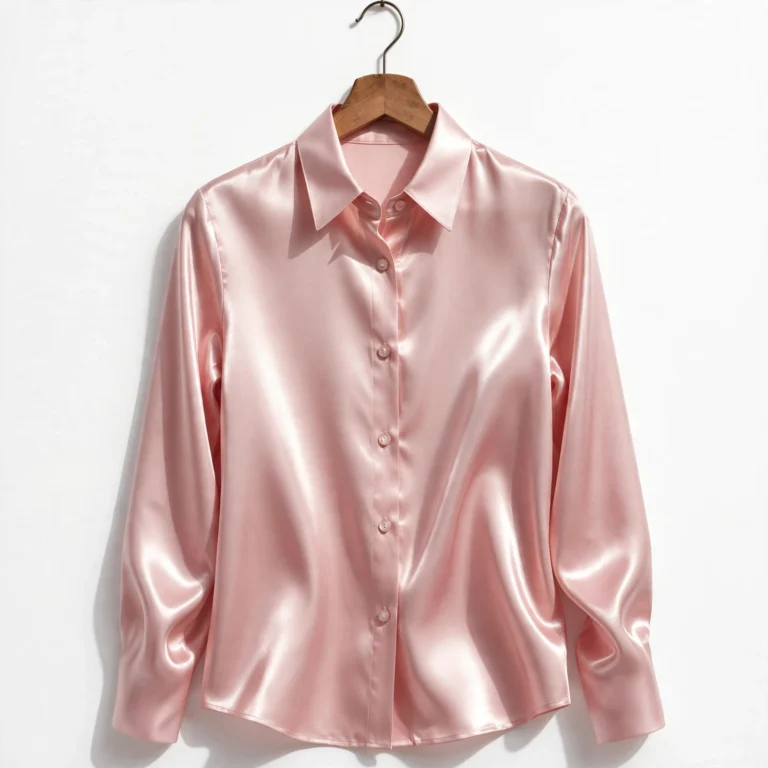
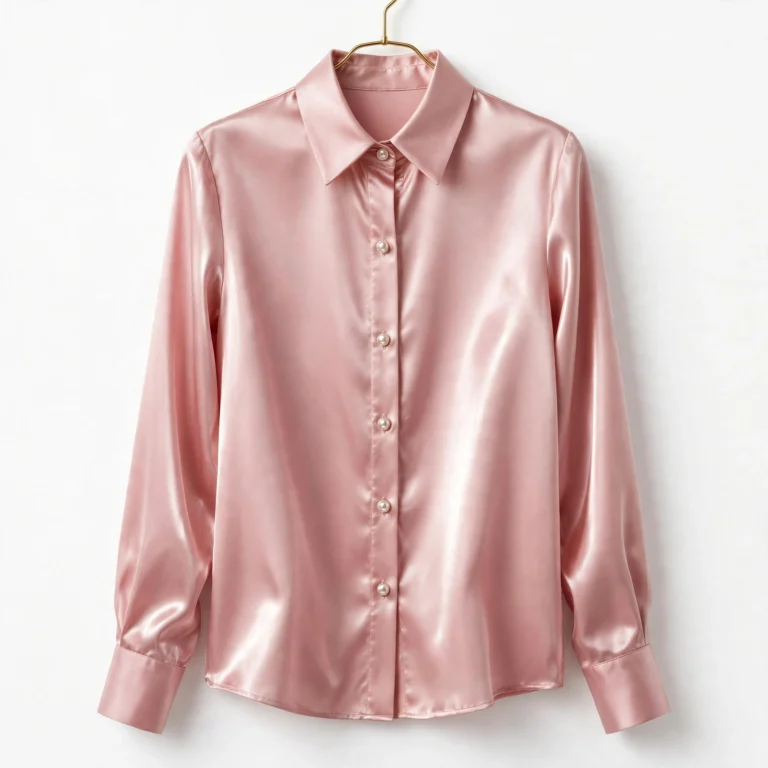
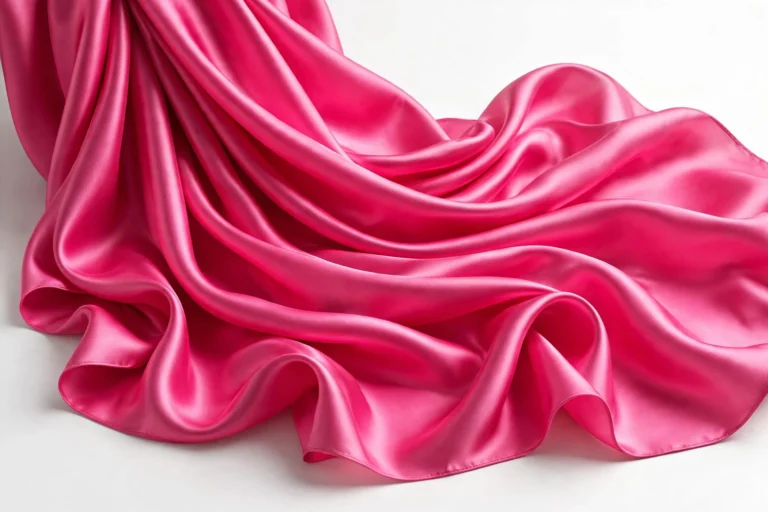
Pink sits at the high end of visible reflection: its wavelengths bounce back at you already charged, and satin’s flat float structure returns that light in organized bands instead of scattering it. So a pink satin dress doesn’t just shine, it seems lit from inside, because the weave is handing your eye a coherent sheet of pink light. That double charge, color plus weave, is why pink satin photographs so well and why the wrong shade can look neon under flash. The mechanism is pure physics: fiber × weave × color working as one system.
Which pink shade should you buy?
There is no universal best pink, only the pink that agrees with your skin’s undertone. Skin undertones run warm (golden, peachy), cool (pinkish, blue-veined), or neutral (a mix). Pink shades lean warm when they carry orange, like salmon or hot pink, and cool when they carry blue, like fuchsia. Match lean to lean and the dress makes your skin look healthy.
| Shade | Leans | Undertone match | Best occasions |
|---|---|---|---|
| Blush (pale, soft) | Cool to neutral | Cool or neutral | Daytime weddings, brunch, spring events |
| Dusty rose (muted, grayish) | Neutral | Neutral, warm | Office, dinner, fall events |
| Salmon / coral pink | Warm | Warm | Spring and summer parties, daytime |
| Bubblegum / candy pink | Warm | Warm or neutral | Parties, summer nights |
| Hot pink (high saturation) | Warm | Warm, deeper skin tones | Night out, cocktails, dates |
| Fuchsia (blue-leaning magenta) | Cool | Cool | Evening events, galas |
My opinion, after working through every shade: dusty rose is the safest first buy. It photographs well, reads elegant in every lighting, and flatters the widest range of undertones. Hot pink on warm skin is the shade that gets compliments from strangers. Know which game you’re playing.
One practical note on skin depth. Pale cool skin can get washed out by blush in harsh daylight: the dress and the face merge into one pale plane. Deep warm skin carries saturated pinks beautifully because the contrast between skin and fabric gives the dress something to reflect against. That’s why hot pink looks electric on deep skin tones and can look costume-y on very fair skin without makeup to back it up.
Charmeuse, crepe-back, or duchess: which satin makes the best pink dress?
The pink decides the color story. The satin decides how the dress behaves on your body, and this decision matters more than the shade. Charmeuse, crepe-back satin, and duchess satin are all the complete guide to satin types, but on a dress they read like three different garments.
| Charmeuse | Crepe-back satin | Duchess satin | |
|---|---|---|---|
| Shine | High gloss, liquid | Low gloss satin face | Medium gloss, controlled |
| Weight | Light, fluid | Medium, substantial | Heavy, structured |
| Drape | Clings, follows the body | Soft structured folds | Holds its own shape |
| Forgiveness | Low, shows what’s underneath | Medium-high | High, smooths over shapewear |
| Wrinkles | Creases easily | Better than charmeuse | Resists creasing well |
| Best dress style | Slip dress, cowl-neck bias | Wrap dress, draped midi | Fit-and-flare, A-line, structured mini |
| Best use | Night out, dates, parties | Office, dinner, versatile | Events, formal, bridesmaid |
My take: charmeuse is the pink satin dress everyone pictures, and it’s the hardest to wear well. It shows every line of the underwear, every wrinkle from sitting, and it clings where you’re soft. Buy charmeuse if you want the liquid-gloss night-out look and you’re honest about the maintenance. Buy crepe-back satin for the dress you’ll actually reach for: pink shine without the see-everything behavior. Buy duchess when structure matters, bridesmaid dresses and formal gowns.
One honesty note. Most pink satin dresses are polyester, dyed with disperse dyes that produce a bright, even pink. Silk takes pink dye softly and breathes better. But silk pink fades faster in sunlight than polyester pink, and pink shows fading sooner than dark colors do. The full weave story is in the satin weave, which explains why the same pink looks different on charmeuse than on duchess.
Can you wear a pink satin dress to a wedding?
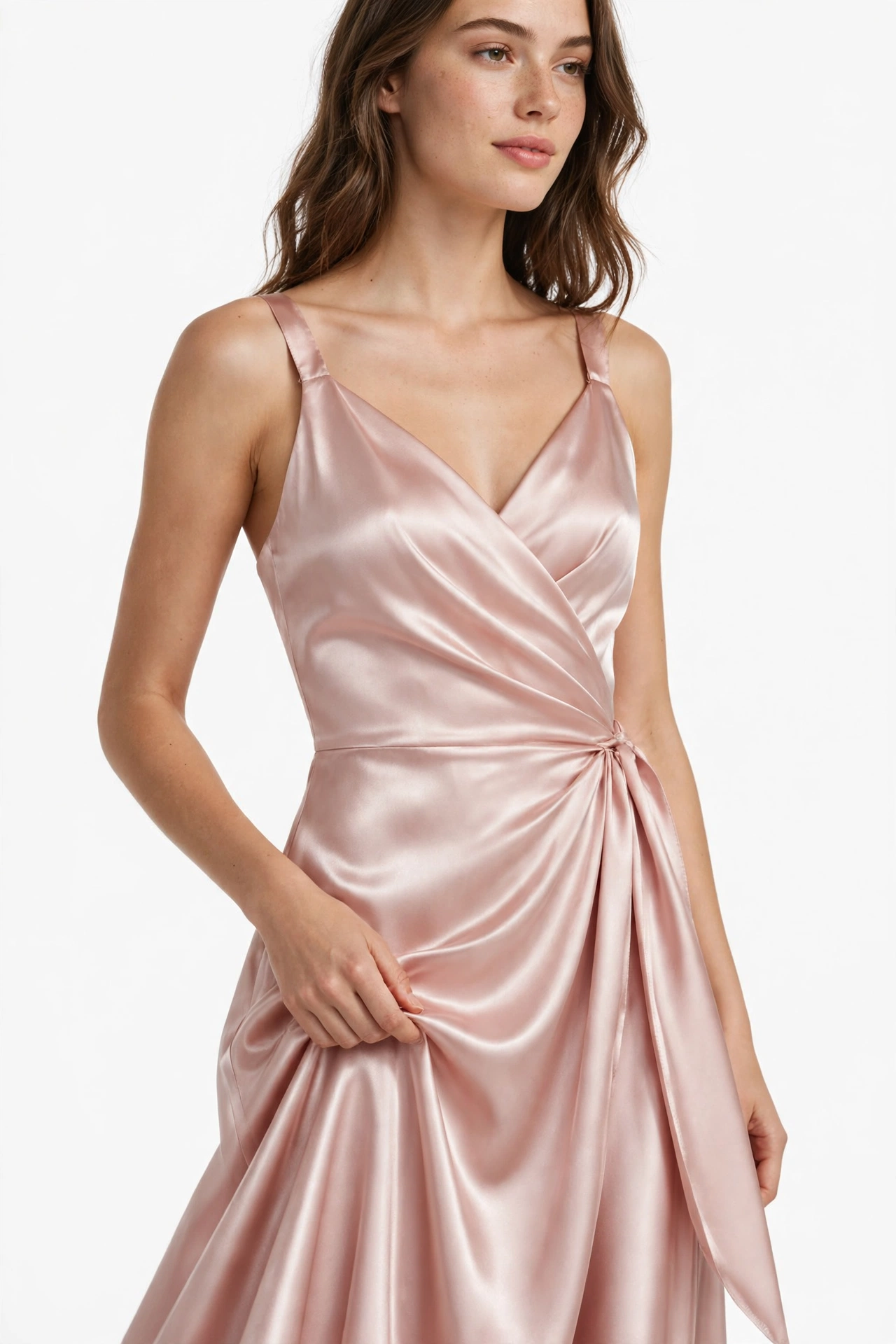
Usually yes, with two caveats. First, know the dress code: some couples state colors to avoid, and that instruction always outranks general guidance. Second, soft pinks are the safe territory. Blush, dusty rose, and rose-pink read celebratory without competing.
Hot pink needs more care. High-saturation pink photographs loudly and can pull attention in group photos, which is the actual concern. For formal or traditional weddings, muted tones are the safer choice. For cocktail, outdoor, or modern weddings, hot pink usually fits fine as long as the cut is modest and the styling is restrained.
There’s a subtler trap at the pale end. Some brides now wear pale pink gowns, so a very pale blush dress can accidentally echo the bride. If you know the bride loves non-traditional bridal looks, pick dusty rose or a saturated rose instead. When in doubt, ask the couple. One text costs nothing.
What shoes actually work with a pink satin dress?
Match the shoe’s shine level to the dress’s shine level, or beat it. A high-gloss charmeuse dress with matte suede shoes looks like two outfits colliding. A high-gloss dress with metallic shoes looks intentional, because the metal reflects light back at the fabric’s level.
Silver or metallic heels are the default right answer. Silver mirrors the cool side of satin’s specular shine, and on cool-leaning pinks (blush, fuchsia, dusty rose) it’s the pairing that looks like you planned it. Metallic silver photographs well with pink under flash because both surfaces scatter light the same way.
Nude heels are the leg-length trick. They disappear against the skin, so the eye reads one unbroken line from hem to toe. Pick nude matched to your skin tone, not the generic beige that works for nobody. Nude is the best choice when the dress is already loud: hot pink plus metallic heels can read costume, hot pink plus nude reads confident.
Gold works with warm pinks: salmon, coral, hot pink with orange lean. Black heels ground the dress and pull it toward evening, which suits hot pink night looks but can feel heavy against pale blush.
Flats for daytime: pointed flats or clean white sneakers with a pink satin slip dress work because the matte shoe lets the fabric be the only shine in the outfit. The rule holds: one shine source, one matte source.
What jewelry should you wear with a pink satin dress?
Less than you think. Satin is already a reflective surface, so jewelry competes with the fabric for light. One good piece wins over a set.
Pearls are the classic pink satin pairing for a reason with actual optics behind it. Pearls have a soft, diffuse luster, nacre glow rather than metal flash, and that soft glow sits next to satin’s hard gloss without fighting it. Pearl studs or a single pearl pendant with blush or dusty rose is the pairing that never misses.
Crystal or diamond-look pieces work with evening pinks because they throw sharp sparkles against the fabric’s broad sheen. Keep it to one piece; a full crystal set plus satin is a lot of light competing at once.
Metal choice follows the pink’s lean. Cool pinks (blush, rose quartz, fuchsia) take silver, white gold, and platinum. Warm pinks (salmon, coral, hot pink) take yellow gold. Rose gold often blurs into pink satin in photos, so pair it with grayish dusty rose rather than true pink.
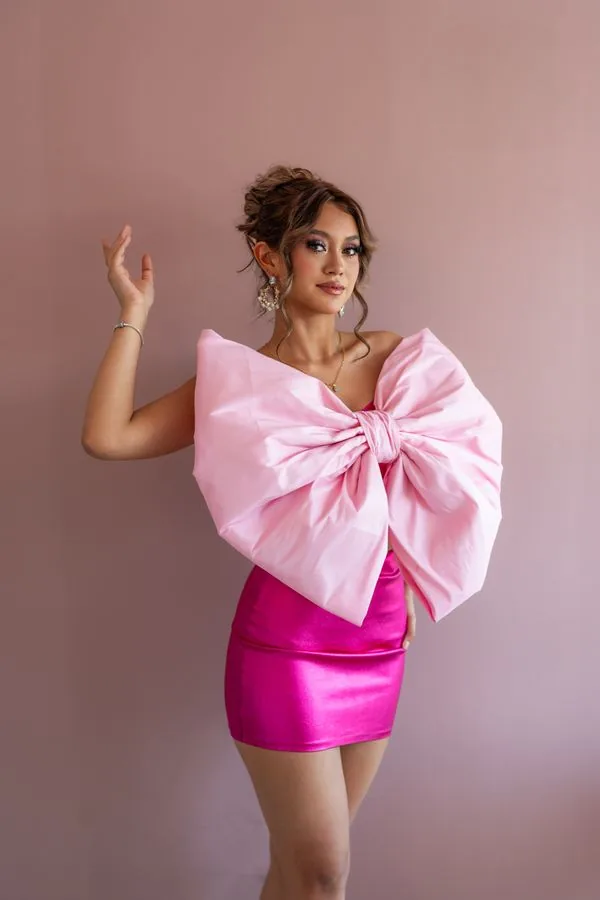
How do you style a pink satin dress for daytime?
Let the dress be the only loud thing. A pink satin slip dress with a white or cream cotton tee layered over it, or a cropped cardigan on top, reads daytime because the matte knit eats the light the satin throws. Sneakers, flat sandals, or pointed flats keep the outfit grounded. Makeup stays soft in daylight: rosy cheeks and a pink-tinted lip harmonize, heavy dark lips fight the fabric.
How do you style a pink satin dress for night?
At night the dress does the work and everything else plays support. The outfit is: pink satin dress, metallic heels, one piece of crystal or diamond-look jewelry, small clutch. That’s the whole formula, and it works for hot pink, fuchsia, and blush alike.
For hot pink specifically, confidence is the accessory styling can’t supply. The color is attention-heavy by physics: high saturation pulls the eye before the brain has opinions. Keep the silhouette simple, a slip or wrap, and let the color be the one bold choice.
Cool tip for photos: satin throws back camera flash, and pink satin under direct flash can look lighter than it is. Dusty rose and fuchsia hold their color in flash better than blush, which can wash out toward white.
What construction details matter in a pink satin dress?
Pink satin shows every shortcut, because the gloss magnifies what’s underneath. These are the details worth checking before you buy.
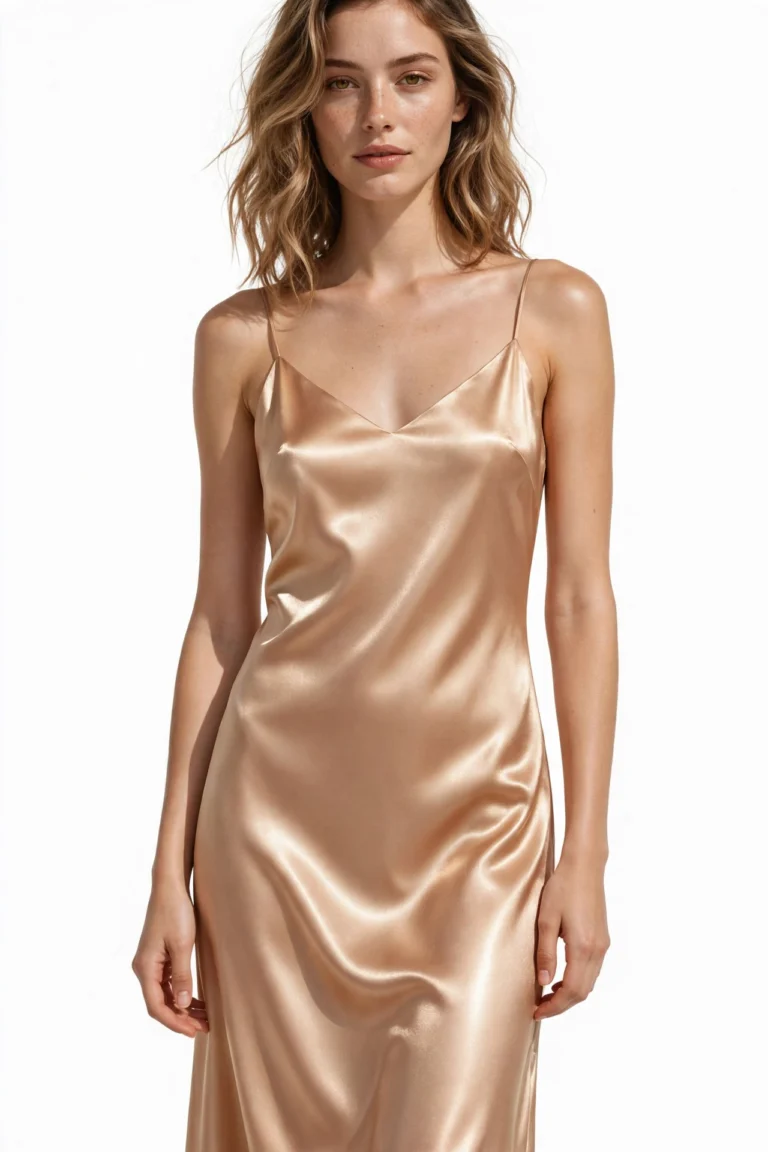
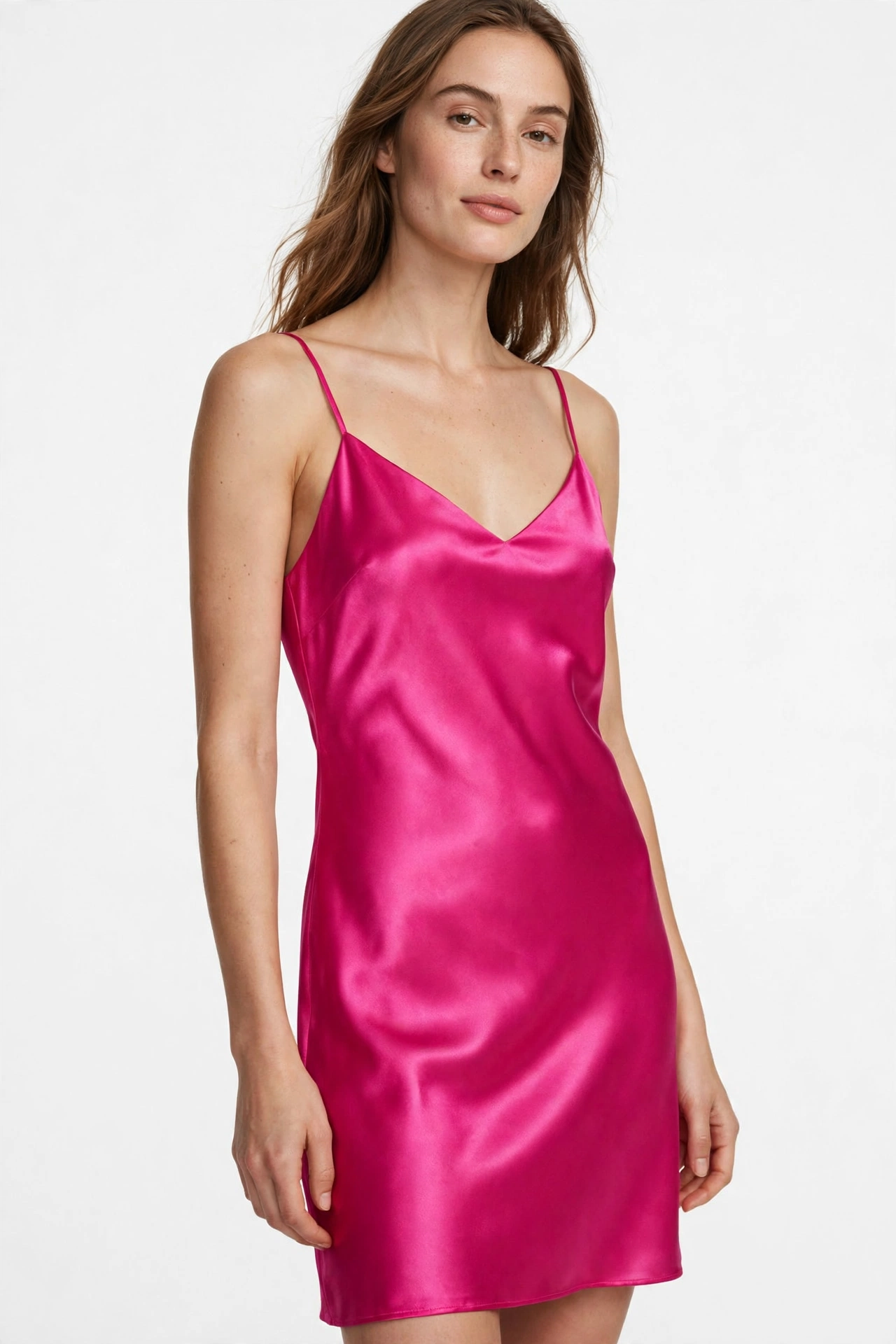
Bias cut vs straight. A bias-cut charmeuse slip is the classic pink satin dress: the 45-degree cut gives stretch that lets it cling in a way that looks molded rather than tight, and light ripples across it. For the slip-dress look, bias is the whole point. For structured styles, the fabric weight matters more than the cut angle.
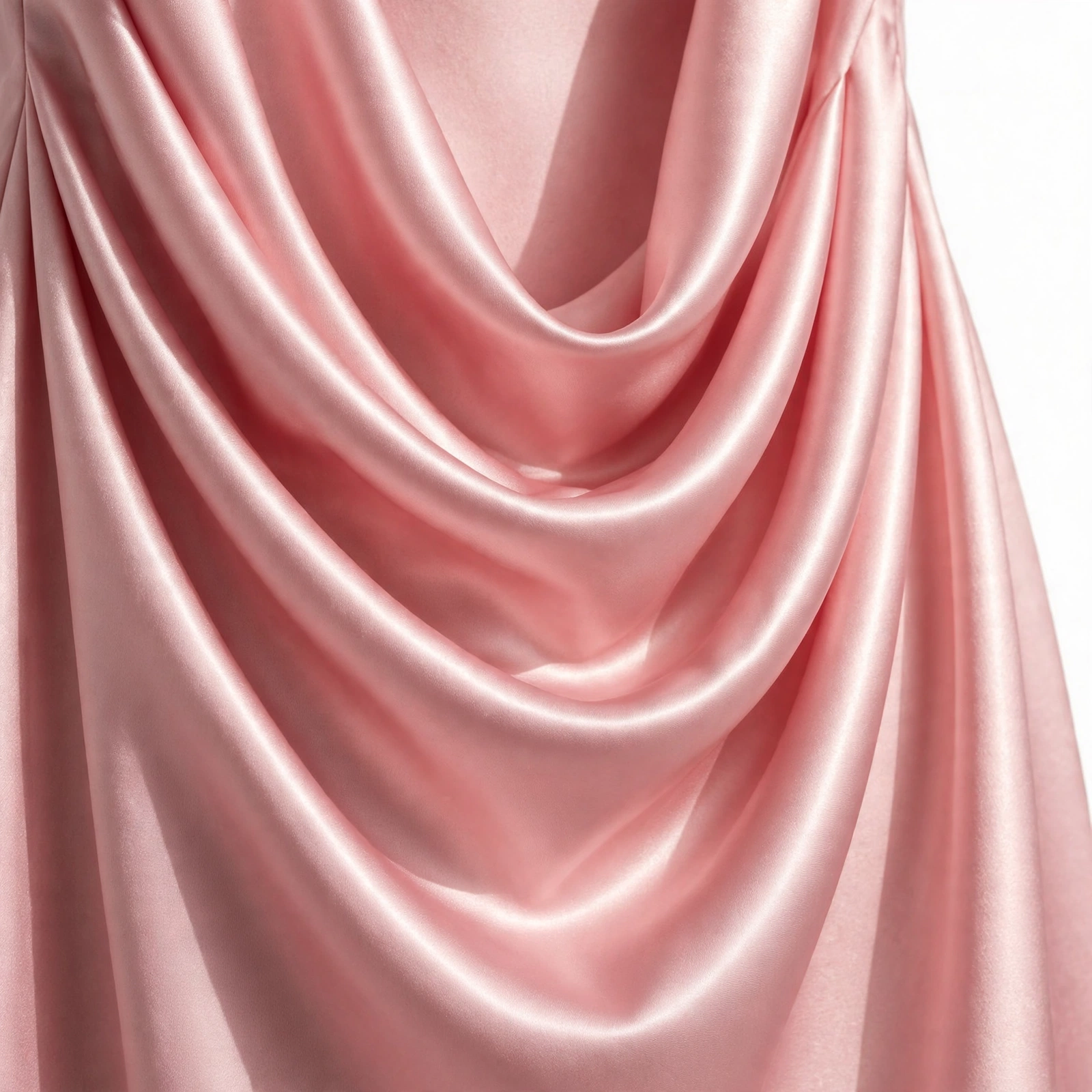
Cowl necklines are the pink satin neckline for a reason: the draped fold catches light in stacked bands. The depth of the cowl matters. A shallow cowl reads elegant; a deep cowl on thin charmeuse can gape when you sit or lean. Check it in the fitting room, not just standing.
Seams and linings. Pink satin shows seam shadows through thin fabric, especially pale blush. A lined dress costs more and looks dramatically better in pale shades. French seams or bound edges on charmeuse mean the maker understood the fabric. Stitching that glare across the face means wrong thread tension, and it shows in photos first.
What myths about pink satin dresses need to die?
Myth: pink satin always looks cheap. Cheap pink satin looks cheap, and the giveaway is never the color: uneven dye showing as patchy gloss, and harsh plasticky shine from low-grade filament yarns. Hold it to the light: thin, uneven weave is the real enemy, not the pink.
Myth: pink satin is only for young women. The shade is the age variable, not the fabric. Blush and dusty rose in a structured cut read elegant at any age. A dusty rose duchess dress with pearl studs is as adult as clothing gets.
Myth: you can’t wear pink satin in winter. Dusty rose and fuchsia are fall and winter colors by nature, and pink satin works under a dark coat the same way any dress does. Change the shade and the layering, not the fabric.
Myth: hot pink and fuchsia are the same thing. Hot pink leans warm, orange underneath; fuchsia leans cool, blue underneath. They suit different undertones. Calling them the same is why so many people buy the wrong one.
How do you wash a pink satin dress without ruining it?
Pink satin fails in three predictable ways, and each has a mechanism you can fight. The per-fiber version lives in how to wash satin per fiber.
Fading. Pink dyes fade from sunlight and heat, and pale pinks show fading sooner than dark colors because there’s less dye to lose. Wash inside out in cool water with a mild detergent, skip the dryer entirely, and line-dry in shade, never direct sun.
Water marks. Never spot-clean a water mark by dabbing; partial wetting leaves a visible ring on satin, and pale pink shows rings worse than any color except white. If a spot needs cleaning, wet the whole area evenly so it dries uniformly, or leave it alone.
Wrinkles and shine damage. Press only on the wrong side with a press cloth, on low heat. Direct iron contact on the satin face crushes the floats and leaves a shiny flattened patch that never recovers. The darker end of the family is covered in our red satin dress guide, where the same care rules apply with higher stakes.
What should you check before buying?
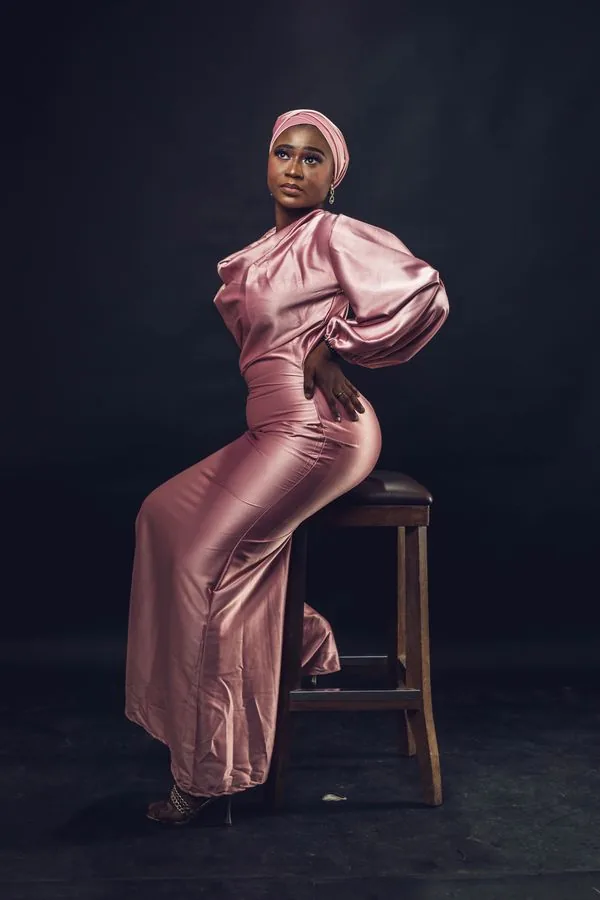
Match the pink’s lean to your undertone: warm leans (salmon, hot pink) for warm skin, cool leans (blush, fuchsia) for cool skin, dusty rose as the safe middle. Hold it to the light: if you can see through a pale pink dress, it’s too thin or needs lining. Sit down in it: charmeuse rides up, deep cowls gape, and you want to know before the event. Check the hem in bright light for puckering, and the seams for stitch glare. Finally, know your satin type before you fall in love with the shade: charmeuse for the liquid night look, crepe-back for the wearable everyday pink, duchess for structure. The broader dress family is covered in our complete satin dress guide.
Frequently asked questions
Which pink shade suits warm undertones? Warm undertones pair with warm-leaning pinks: salmon, coral pink, and hot pink. The orange under them echoes the golden quality of warm skin. Fuchsia, which leans blue, can make warm skin look sallow.
Which pink shade suits cool undertones? Cool undertones pair with cool-leaning pinks: blush, rose quartz, dusty rose, and fuchsia. Hot pink with a strong orange lean is the shade most likely to fight cool skin, so check it in natural light before buying.
Can a wedding guest wear hot pink satin? It depends on the couple and the dress code. Hot pink is widely considered fine for cocktail, outdoor, and modern weddings, but it can read as attention-grabbing at formal or traditional weddings, where muted tones are the safer choice. When in doubt, ask the couple or pick dusty rose.
What shoes go with a pink satin dress? Silver or metallic heels are the default pairing, since the metal mirrors satin’s shine. Nude heels matched to your skin tone lengthen the leg and calm loud pinks like hot pink. Gold works with warm pinks like salmon and coral. For daytime, pointed flats or clean white sneakers let the dress be the only shine.
Should I wear silver or gold jewelry with pink satin? Follow the pink’s lean: silver with cool pinks like blush and fuchsia; yellow gold with warm pinks like salmon and coral. Pearls work with almost every pink. Rose gold blurs into pink satin in photos, so pair it with grayish dusty rose.
Does pink satin show sweat? Polyester satin doesn’t absorb moisture, so sweat can sit on the surface as darker patches, and pale pink shows them more than dark colors. Silk breathes better and shows less. If you run hot, pick silk, a looser cut, or dusty rose over pale blush.
Can you wear a pink satin dress to the office? Yes, with the right shade and satin. A dusty rose dress in crepe-back satin or duchess, knee-length or midi, reads professional in most workplaces. The slip-dress-in-charmeuse version is what reads as evening wear, so the fabric and cut do the work, not the color.
How do you stop pink satin looking cheap? The giveaway is uneven dye, plasticky shine from low-grade yarns, and visible stitch glare, never the pink itself. Buy a deep, even color with controlled gloss, lined construction in pale shades, and flat-finished seams. A lined dusty rose dress with clean seams reads expensive; an unlined bubblegum slip with puckered hems reads the opposite.