Satin Shirt: The Complete Guide
The 30-second verdict. A satin shirt is mostly a menswear garment with a disco reputation, and a real womenswear one too. Buy crepe-back satin or a mid-weight charmeuse in a dark or muted color if you want to wear it in daylight; save high-shine charmeuse for evenings. The shirt needs ease through the chest, because woven satin has no stretch and the shine spotlights every pull. Check the label: most affordable satin shirts are polyester, which is washable but shows sweat. Silk satin breathes and drapes better at several times the price. That is the short version. The detail follows.
Is a satin shirt menswear or womenswear?
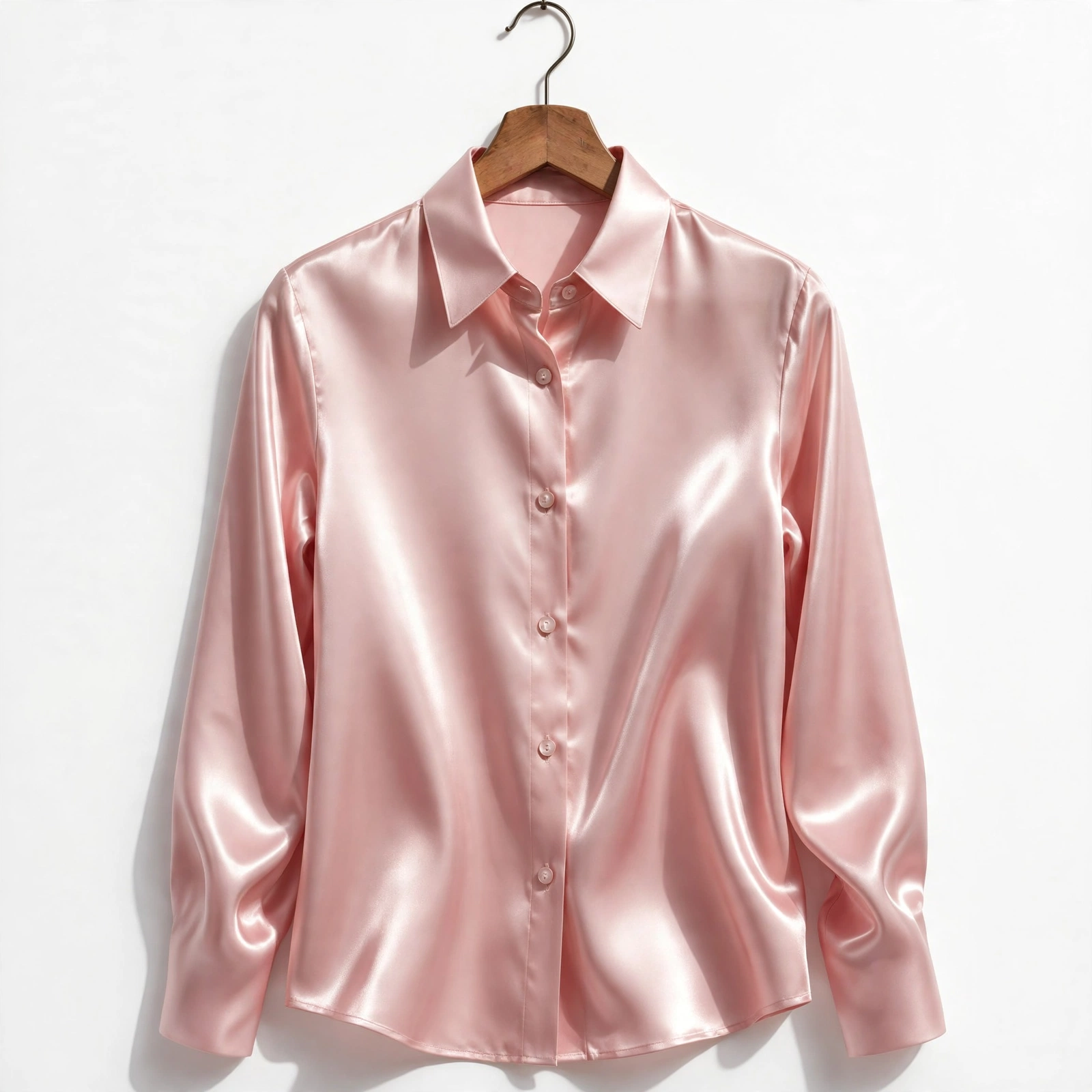
Search the phrase and the results skew men’s: going-out shirts, festive wear, the lingering shadow of the disco era. But the women’s satin shirt is a real garment with its own logic: oversized, half-tucked into high-waisted trousers, or worn open over a camisole as a light layer.
The construction differences are small but real. Men’s shirts button left over right; women’s button right over left. Men’s cuts run straighter through the waist; women’s versions often add darts or a curved hem. Fabric choice barely differs: both sexes wear the same charmeuse and crepe-back satins, just cut differently. This guide leads with men’s, because that is where most of the demand and most of the mistakes sit, and it flags the women’s differences where they matter.
Which satin should a shirt be made from?
Crepe-back satin is the best default for a shirt. Its matte reverse calms the shine for daytime wear, the crepe face gives the cloth enough body to hold a collar, and it sews and presses more forgivingly than charmeuse. Charmeuse is the classic going-out satin: maximum shine, minimum structure. Stretch satin adds comfort; silk satin adds breathability and a much bigger price tag.
| Satin type | Best shirt use | Why it works | Watch out for |
|---|---|---|---|
| Crepe-back satin | Office shirts, button-downs, daytime wear | Matte reverse keeps the shine in check; body holds a collar crisp | Two faces to manage; press on the crepe side |
| Charmeuse (polyester) | Evening and going-out shirts | The classic liquid shine; cheap and machine washable | Shows sweat; builds static; snags on rough skin and jewelry |
| Stretch satin | Fitted shirts, club shirts | A few percent elastane ends the no-stretch problem | Cling plus shine reads loud; shows underwear lines |
| Silk satin (charmeuse weave) | Premium shirts, warm climates | Breathes; drapes with more life; takes dye richly | Costs several times more; water spots show; hand wash only |
| Duchess or heavy satin | Skip for shirts | Nothing about it suits shirting | Too rigid; it is made for gowns, not shirts |
Fiber matters as much as type. A polyester charmeuse shirt and a silk charmeuse shirt share a weave and almost nothing else. The same polyester charmeuse that goes into going-out shirts is what most men’s satin pajama sets are cut from, so if you like the feel enough to sleep in it, our satin pajamas guide covers that side. For the full map of named satins with per-fiber notes, see the types of satin guide.
Why does satin shine so much, and how do you tone it down?
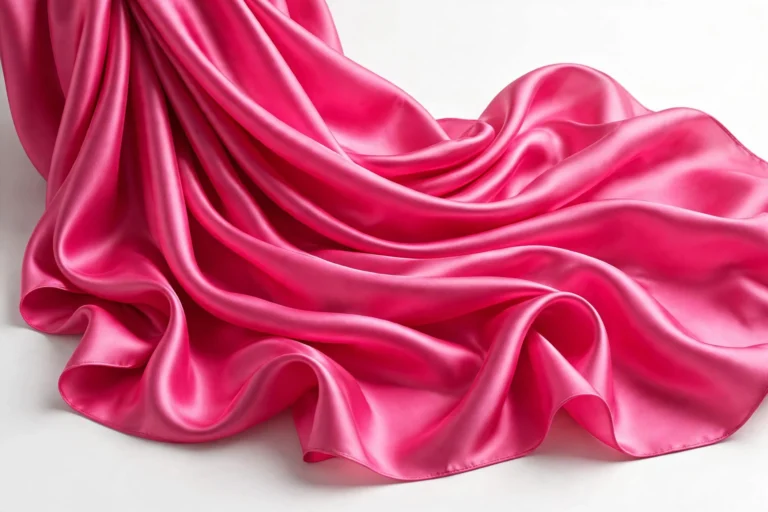
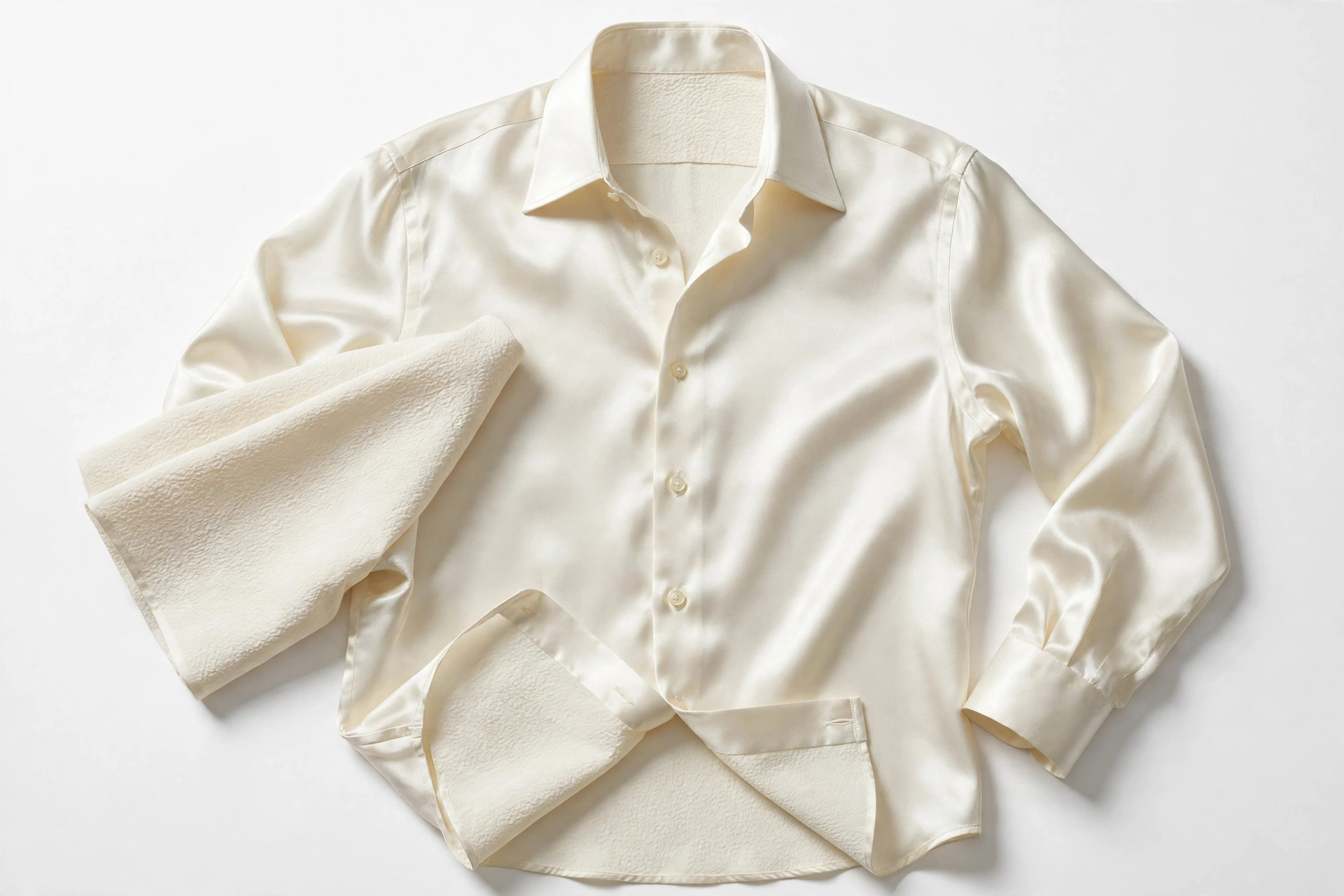
Satin shines because its weave leaves long, flat yarn floats on the face. Light hits those parallel floats and bounces off in one direction instead of scattering. Turn the fabric and the highlight slides across it. That moving band of light is the giveaway of a real satin weave, and the satin weave guide explains the float structure behind it.
For shirts, the practical upshot is that shine is directional and honest. You cannot hide it, but you can choose how much of it you get.
Pick crepe-back for daytime. Wear the matte side out and the shirt reads as a smooth dress shirt with a soft glow, not a mirror.
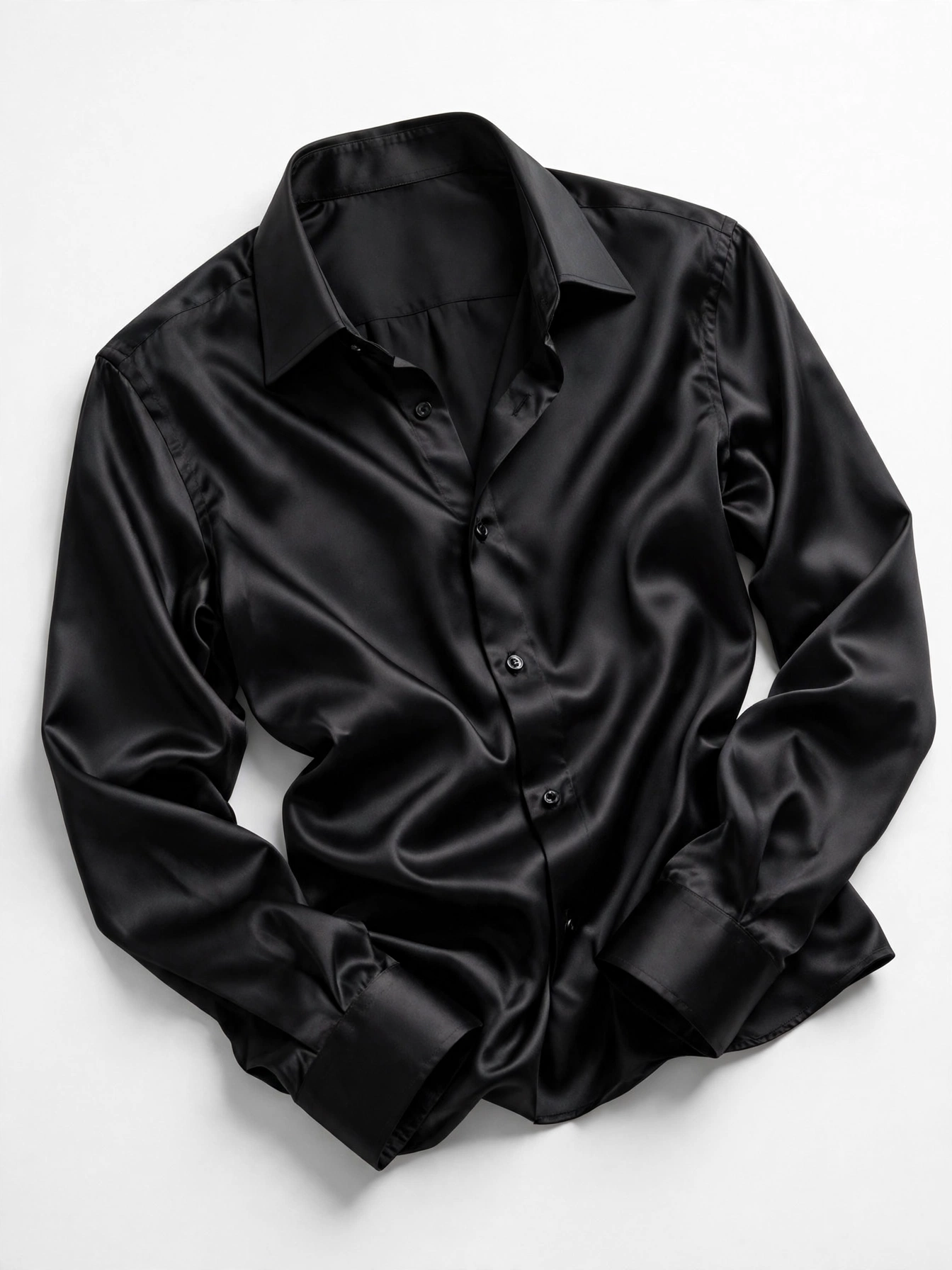
Go dark. Dark colors absorb light; pale colors bounce it. A black satin shirt at noon reads sleek. A white one reads bridal. Navy, charcoal, deep burgundy, and forest green are the safe daytime range.
Pair it with matte. One rule governs every satin outfit: one shine per piece of clothing, one shiny piece per outfit. Wool trousers, dark denim, chinos, suede shoes. A satin shirt with satin trousers is a costume.
Know your lighting. Office fluorescents are the harshest light satin will ever meet. Evening light flatters it. If the shirt looks too loud under office lights in the fitting room, it will look too loud at your desk.
How should a satin shirt fit?
Woven satin has almost no stretch, and its shine turns every pull into a spotlight. A cotton shirt forgives a tight fit. A satin shirt reports it.
Buy for the shoulders first: the seam should sit right at the edge of the shoulder bone. Leave ease through the chest. If the placket pulls between buttons, the shirt is too small, not “fitted.” Sleeves should end at the wrist bone, because satin does not hold a roll. Push the sleeves up and they slide back down all day, which is a small defeat you can plan around by choosing the right length in the first place.
For women, the same rules hold with one addition: check the bust placket for gapping in the fitting room. Woven satin has no give on the straight grain, and the smooth face makes every gap more visible than on matte cotton. Size for the bust and tailor the waist; the size tag is not a moral judgment.
The shirt should skim, not cling. Satin cut too tight shows every contour underneath and wrinkles the moment you sit. A half inch of ease is the difference between sharp and struggling.
What about buttons, collars, and cuffs?
Details decide whether a satin shirt reads sharp or cheap, because the fabric gives them nowhere to hide.
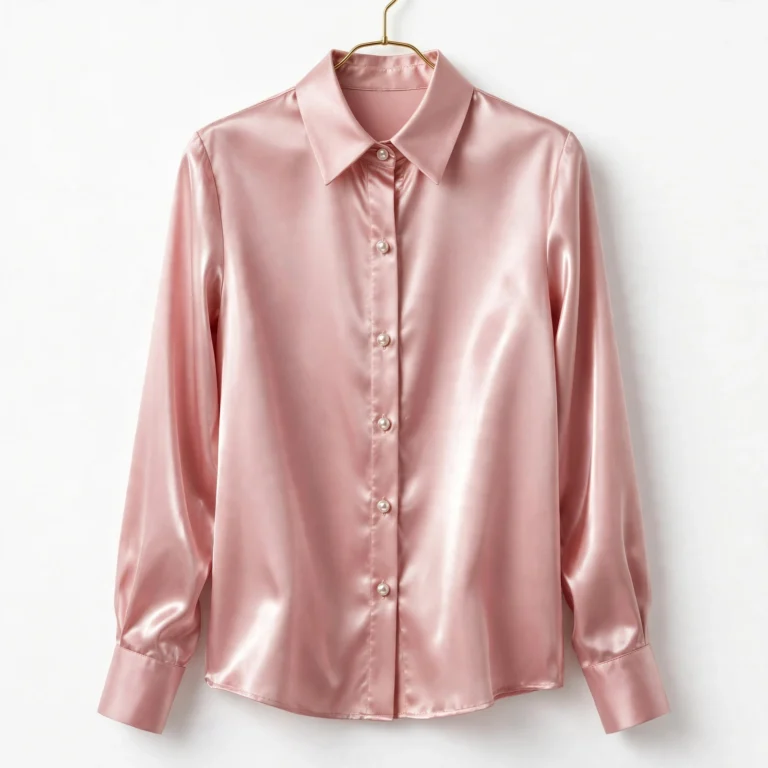
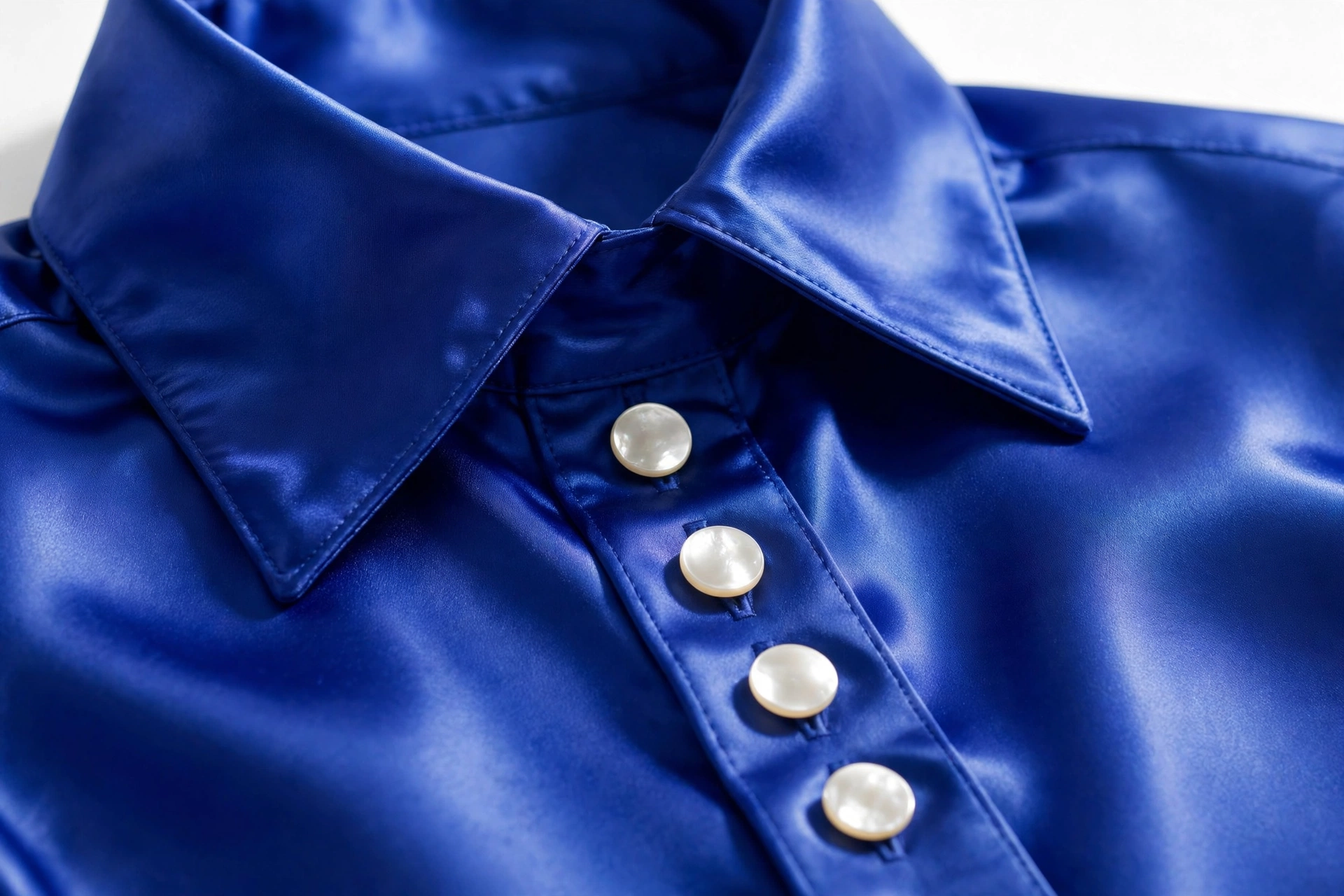
Buttons. Matte buttons win: mother-of-pearl, corozo, or matte plastic. Shiny buttons on a shiny shirt are glare on glare. Covered satin buttons look dressy but snag and wear faster. Check that buttonholes are clean and tight; on satin, a loose buttonhole fails fast because there is no surface texture to hold the stitching.
Collars. A standard point collar or a button-down collar suits satin. Oversized 70s collars are the costume trigger: the moment the collar goes wide and pointed, the disco association wakes up. Keep the collar proportional and modern.
Cuffs. Single-button barrel cuffs are the safe choice. French cuffs on a satin shirt veer into tuxedo territory, which is fine if that is where you are going and odd if it is not.
How do you wear a satin shirt without looking like a 70s extra?
The disco shirt is the ghost haunting this garment, and it earned its reputation honestly: unbuttoned to the navel, gold chains, chest hair, a collar you could land a plane on. Here is how to wear the shirt now.
Button it. Two open buttons is the line. Three is the costume.
Keep daytime colors dark or muted. Black, navy, charcoal, deep burgundy. Save the champagne and ivory for evenings.
Trousers stay matte and simple. Dark denim, wool trousers, chinos. Never satin trousers with a satin shirt.
Tuck it in. An untucked satin shirt billows; a tuck gives the shine structure. Or wear it open over a plain matte tee as a shirt-jacket, which is the modern move and sidesteps every fit problem at once.
Skip the gold chains. The shirt is already the statement piece. One more shiny thing tips it over.
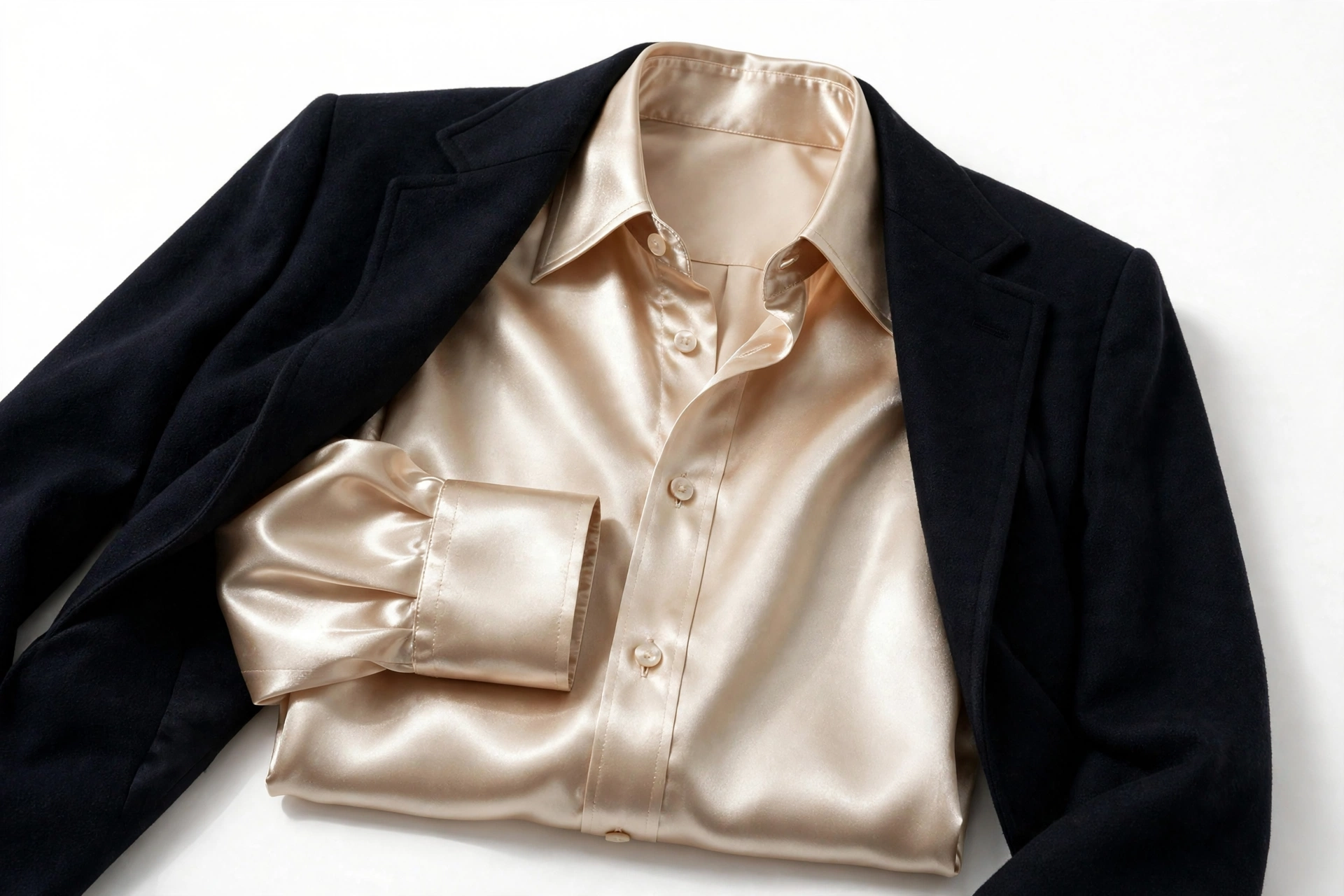
Layer over it. A blazer or a leather jacket tames the shine for the office and comes off for the evening. The jacket’s lining presses the shirt flat and hides the tuck line entirely.
One more context worth knowing: in South Asia, the satin shirt has a second life as festive wear, for sangeet and reception outfits in deep colors with a Nehru jacket over the top. The same rules apply. Matte jacket, dark satin, buttoned.
For women, the easiest entry point is the oversized satin shirt half-tucked into high-waisted trousers or a skirt, sleeves at full length. It sidesteps every fit problem satin has: no strain, no gaping, and the wrinkles read as intentional.
What does the label actually tell you?
Shirt labels lie by omission. The fiber line is the truth; the hangtag is poetry.
Fiber content is the whole game. Find the side seam tag. “100% polyester” is honest and common. “Silk” must name the fiber plainly. “Silky,” “silk-feel,” “satin silk,” and “silk touch” are marketing words, not fibers. A shirt labeled “silk satin” at a polyester price is polyester satin with a fancy name. Read the fiber line, not the branding.
For silk, check the weight. Heavier silk (higher momme) means a weightier, more opaque shirt. Lightweight silk satin goes sheer under strong light, so hold it up before you buy.
Check the inside. Turn the shirt inside out in the fitting room. Satin’s long floats fray, and cheap finishing shows at the collar points and cuff edges first. Seams should be finished, not raw, because raw satin edges unravel in the wash. Our satin vs silk guide has the full label decoder if you want to go deeper.
How do you care for a satin shirt?
Fiber sets the rules. Polyester satin: machine wash cold on gentle with mild detergent, hang to dry. Silk satin: hand wash with pH-neutral detergent, never wring, dry away from direct sun. When in doubt, the satin washing guide has the per-fiber routines.
Sweat is the real enemy. Polyester satin absorbs very little moisture, so perspiration sits on the surface and shows as dark patches, worst under the arms and across the back. The honest fixes: wear an undershirt, apply antiperspirant the night before (it needs hours to work), and choose dark colors, which hide damp patches far better than pale ones. Silk handles this better because it absorbs moisture instead of beading it.
Deodorant stains. The salts in deodorant mark satin, and the marks show worst exactly where shirts take the most sweat. Wash the shirt soon after wearing rather than letting it sit in the laundry basket.
Never spot-clean a water mark. Wet the whole panel evenly and let it dry uniformly. Partial wetting is what makes the spot visible in the first place.
Wrinkles. Steam from a distance, keeping the steamer moving so moisture never sits in one spot. If you iron, use low heat with a press cloth on the wrong side. Never iron polyester satin hot: it glazes and shines permanently well before anything melts.
Storage. Hang on a proper hanger, buttoned, so the collar keeps its shape. Folding is fine for travel; roll rather than fold hard creases into it.
FAQs
Can you wear a satin shirt to the office? Yes, with the right satin. Crepe-back satin or mid-weight charmeuse in dark or muted colors reads professional; high-shine charmeuse in pale colors reads evening. Tuck it in, keep jewelry minimal, and consider a blazer over the top for meetings.
Is a satin shirt too shiny for daytime? It can be, but the shine is controllable. Choose crepe-back satin worn matte-side out, or dark colors, which absorb light instead of bouncing it. Pair the shirt with matte trousers and shoes so it is the only shiny piece in the outfit.
Do satin shirts show sweat? Polyester satin does. It absorbs very little moisture, so perspiration sits on the surface as visible dark patches. Wear an undershirt, use antiperspirant the night before, and pick dark colors. Silk satin handles sweat better because the fiber absorbs moisture.
Is polyester or silk better for a satin shirt? Polyester is cheaper, machine washable, and holds its shape, but it builds static and shows sweat. Silk drapes better, breathes, and takes color richly, but it costs several times more, spots with water, and needs hand washing. For frequent wear, polyester is the rational buy. For occasion shirts, silk earns its price.
How do you get wrinkles out of a satin shirt? Steam from a distance with the steamer kept moving, so moisture never sits in one spot. For travel, hang the shirt in a steamy bathroom. If you iron, use low heat with a press cloth on the wrong side, and never iron polyester satin hot or it will glaze permanently.
Can you iron a satin shirt? Yes, carefully. Low heat, press cloth, wrong side only. Test on an inside seam first. Never use high heat on polyester satin: the surface melts into a permanent shiny glaze well before the fabric itself is damaged.
What is the difference between a satin shirt and a silk shirt? Satin is a weave, not a fiber. A “satin shirt” can be polyester, silk, acetate, or a blend, all woven in a satin weave. A “silk shirt” names the fiber and may be woven as satin, plain weave, or twill. Most affordable shirts sold as satin are polyester satin, not silk.
*We don’t sell shirts and we don’t take placement money from brands, so the verdicts above are ours. If you spot an error, say so: corrections make the guide better.*