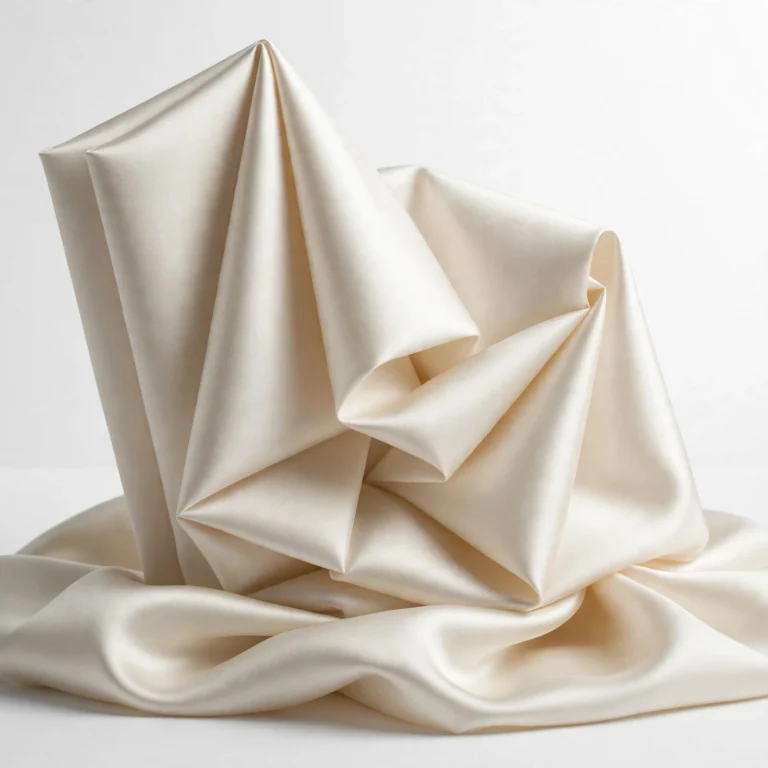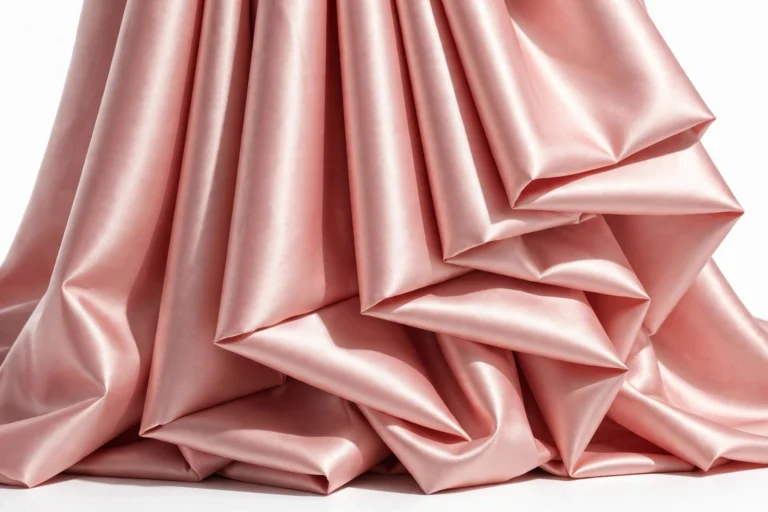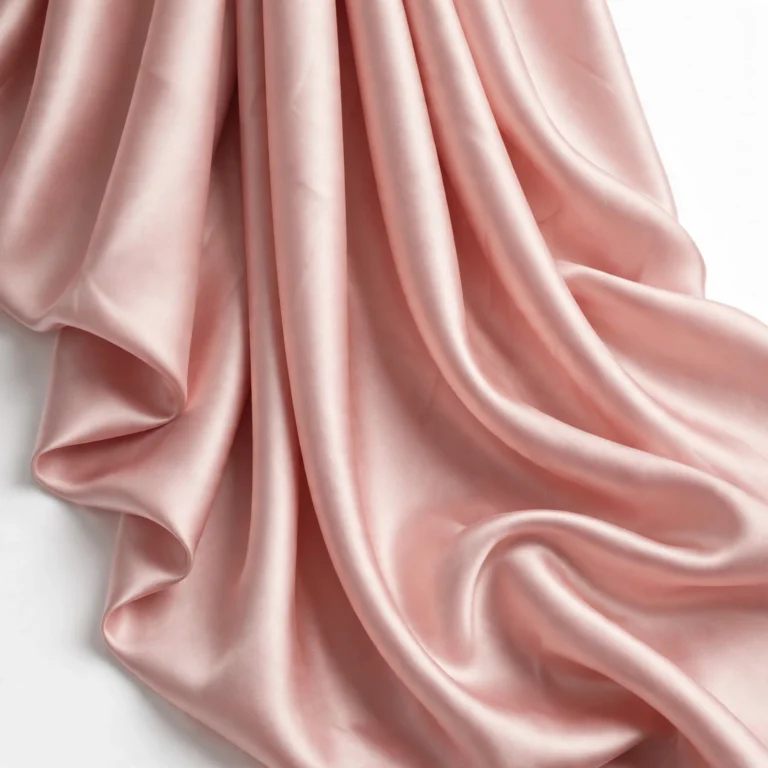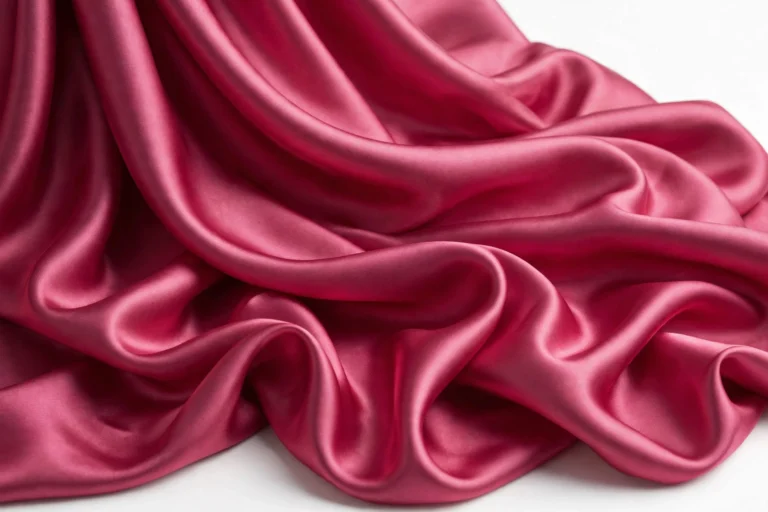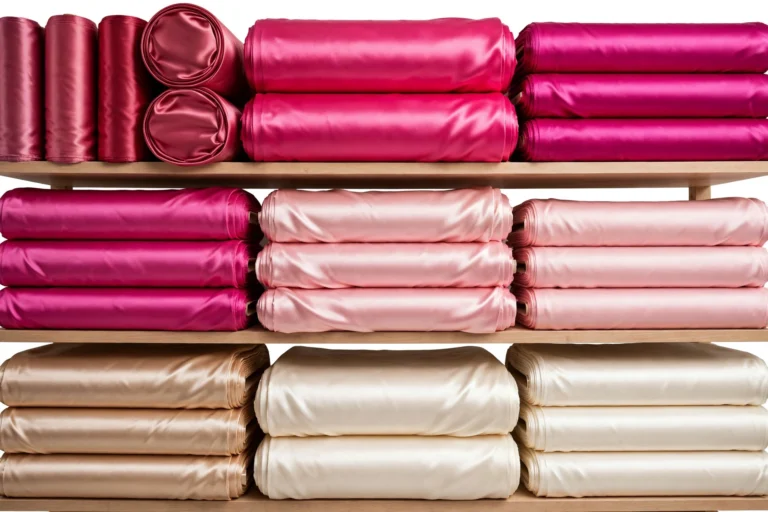
Stretch Satin: The Complete Guide
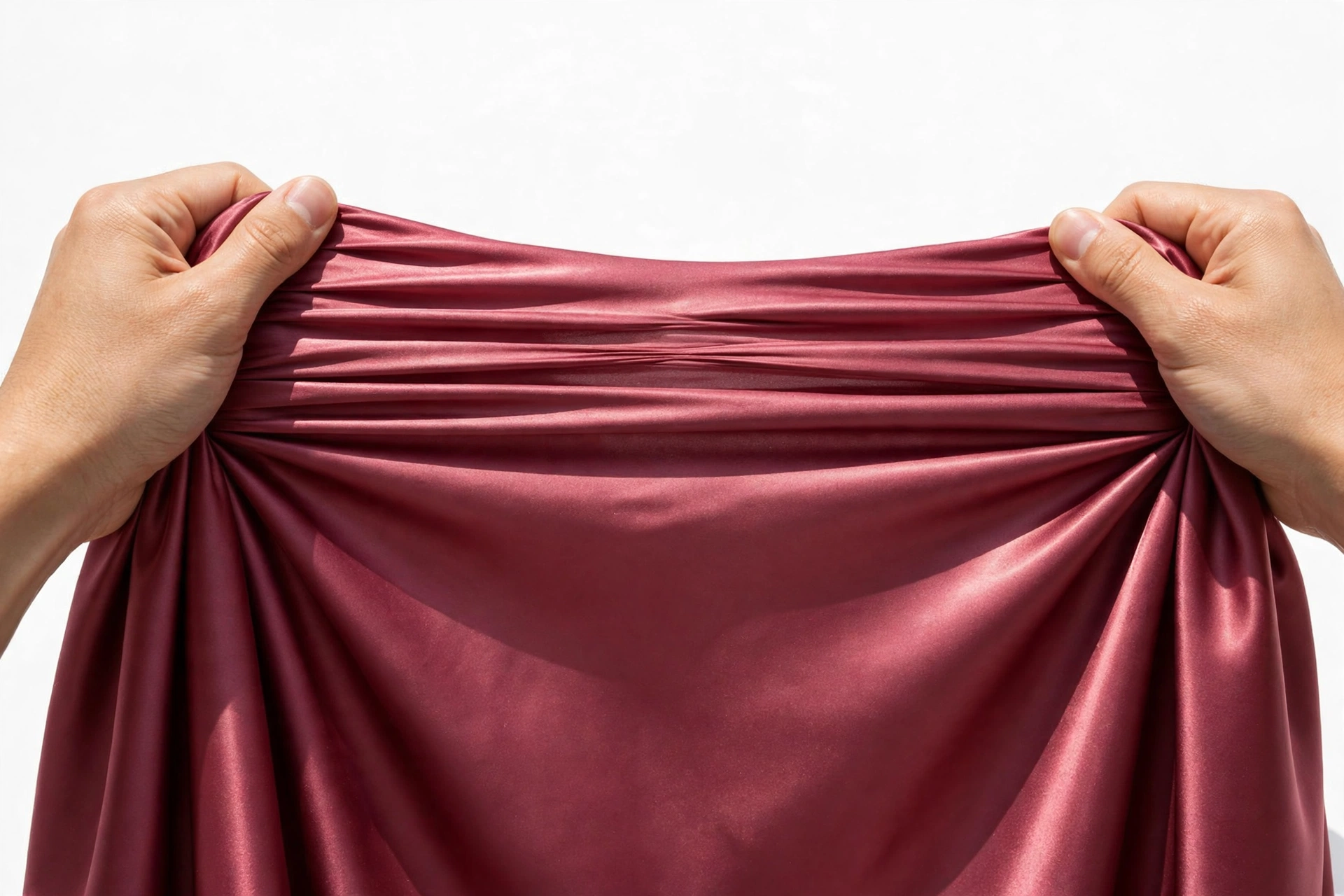
Stretch satin is a satin weave with elasticity built in. Usually that elasticity comes from a small percentage of elastane, sold as spandex or Lycra, woven into the fabric, most often 2 to 10 percent. Some versions, called mechanical stretch satins, stretch with zero elastane and get their give from engineered yarns and weave structure instead. You get satin’s glossy face and smooth hand plus the comfort and forgiveness of a stretch fabric.
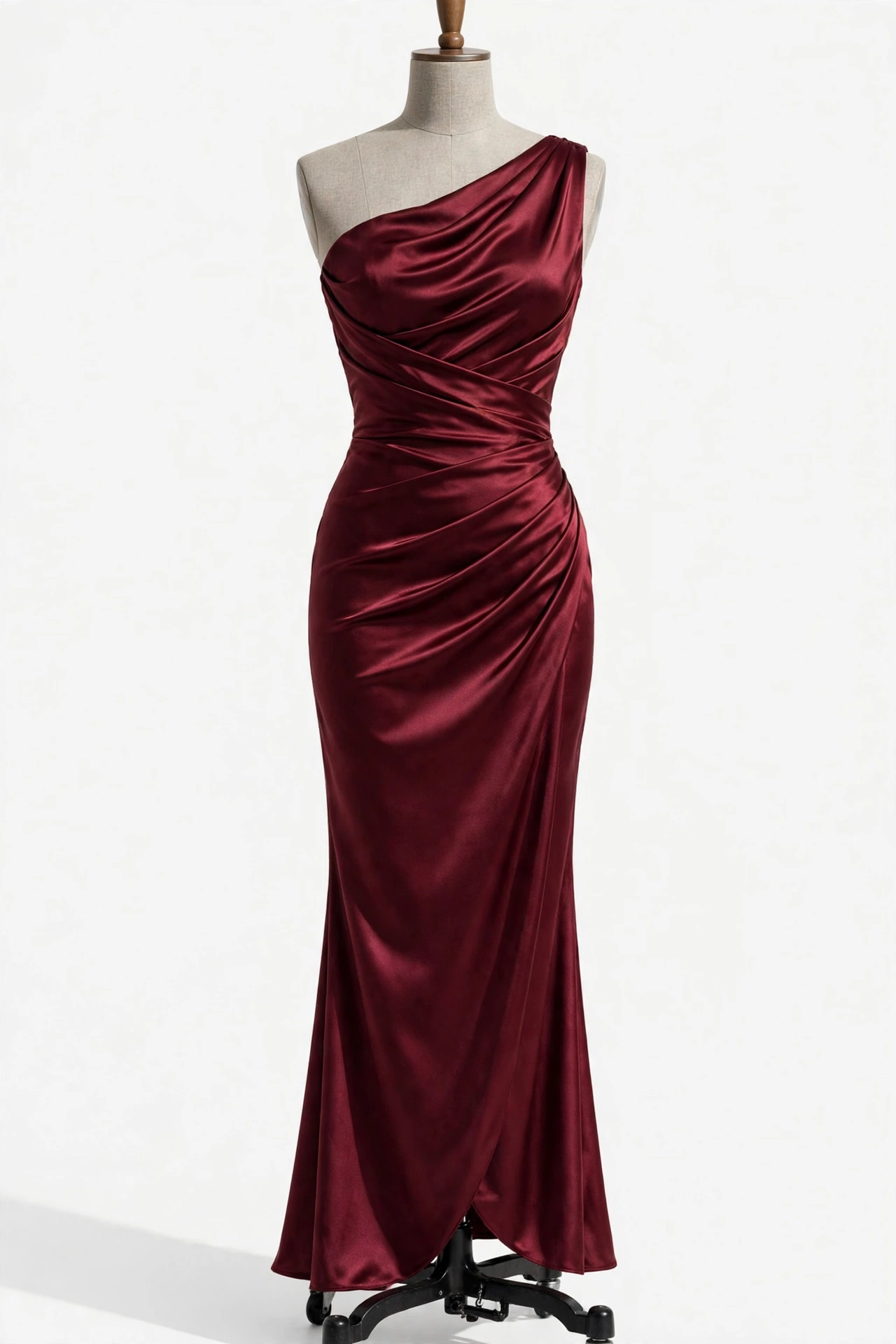
That’s why it shows up in fitted evening gowns, dancewear, and bridal dresses. A body-hugging satin dress with no give either fits perfectly or fights you all night. This guide covers how the stretch works, what the percentages mean, and how to sew it.
What makes stretch satin stretch?
Stretch satin gets its give from one of two different mechanisms, and knowing which one you’re holding matters for sewing and care.
Elastane-blend stretch is the common kind. Elastic filaments (elastane, spandex, and Lycra are names for the same polyurethane fiber) are woven in, usually as core-spun yarns wrapped in polyester or nylon filament so the satin face still shines. The elastic core pulls the structure back after stretching. Most retail stretch satin stretches across the width only (weft direction), which listings call 2-way stretch. Some, marketed as 4-way stretch satin, stretch lengthwise too.
Mechanical stretch uses no elastane. These are typically 100% polyester fabrics, like Zelouf Fabrics’ Beatrice line, where high-twist filament yarns and weave construction create the give. The advantage: no elastic fiber to degrade from heat or age, so the stretch doesn’t die over years of wear and washing.
What is stretch satin made of? The composition decoder
The fiber content line is the most honest thing about stretch satin. These are the compositions you’ll actually meet in fabric stores.
| Label | What it behaves like |
|---|---|
| 97% polyester, 3% spandex | Gentle give across the width. The workhorse for occasion dresses and bridal (Fabric Depot lists “moderate horizontal stretch”). |
| 95% polyester, 5% spandex | Noticeable comfort stretch with good recovery, often around 195 GSM. |
| 90% polyester, 10% spandex | Firm, snappy stretch for dancewear and fitted garments (Fabric UK’s KBT X717). |
| 100% polyester, mechanical | Stretch from yarn engineering, no elastane. Bridal and event linens where recovery has to last. |
The percentage is fiber content by weight, not how far the fabric stretches. Three percent spandex gives gentle, comfortable give. Ten percent gives firm stretch that pulls close to the body. Higher elastane content also means more care: elastane is the fragile partner, and heat, chlorine, and age all attack it.
Polyester is the standard base, cheap, colorfast, easy to find. Nylon versions exist for dancewear since nylon handles moisture and body heat better. Silk satins with stretch are rare and expensive, and the elastane shortens the garment’s life compared to pure silk. If a listing gives no fiber content, assume polyester and get a swatch first.
How does stretch change satin’s look and feel?
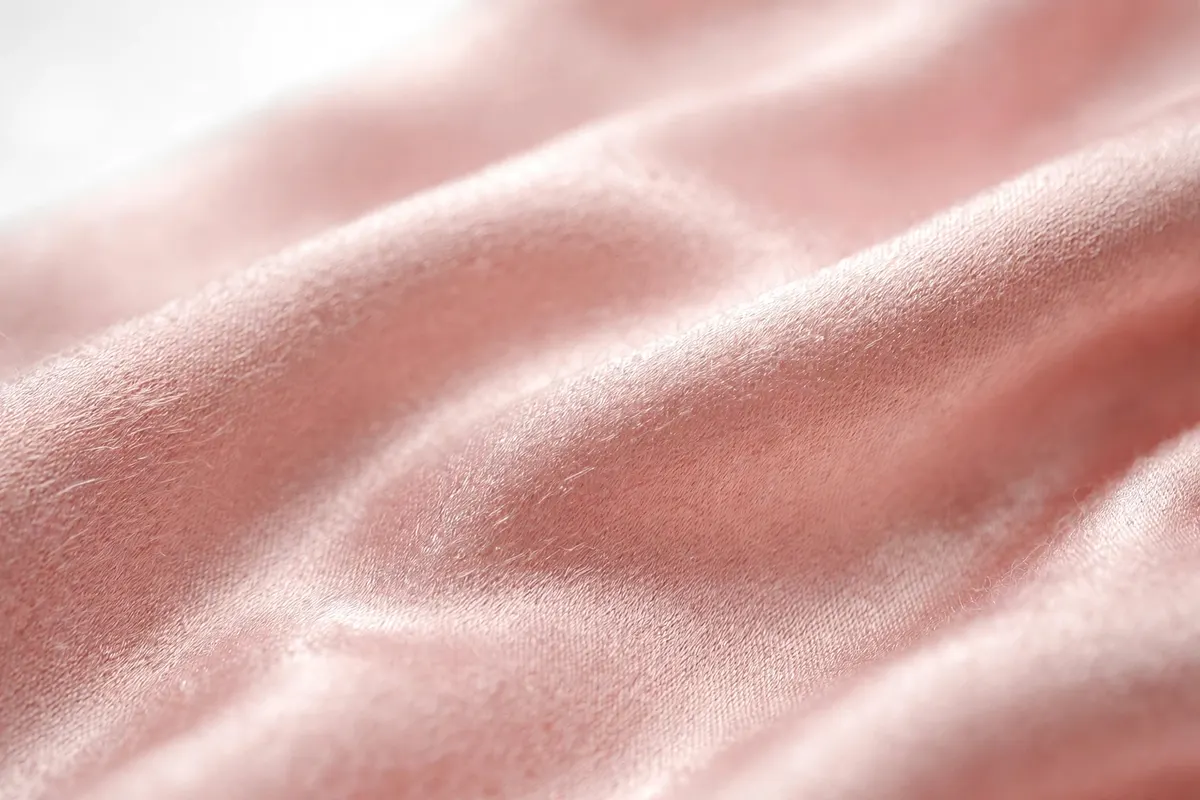
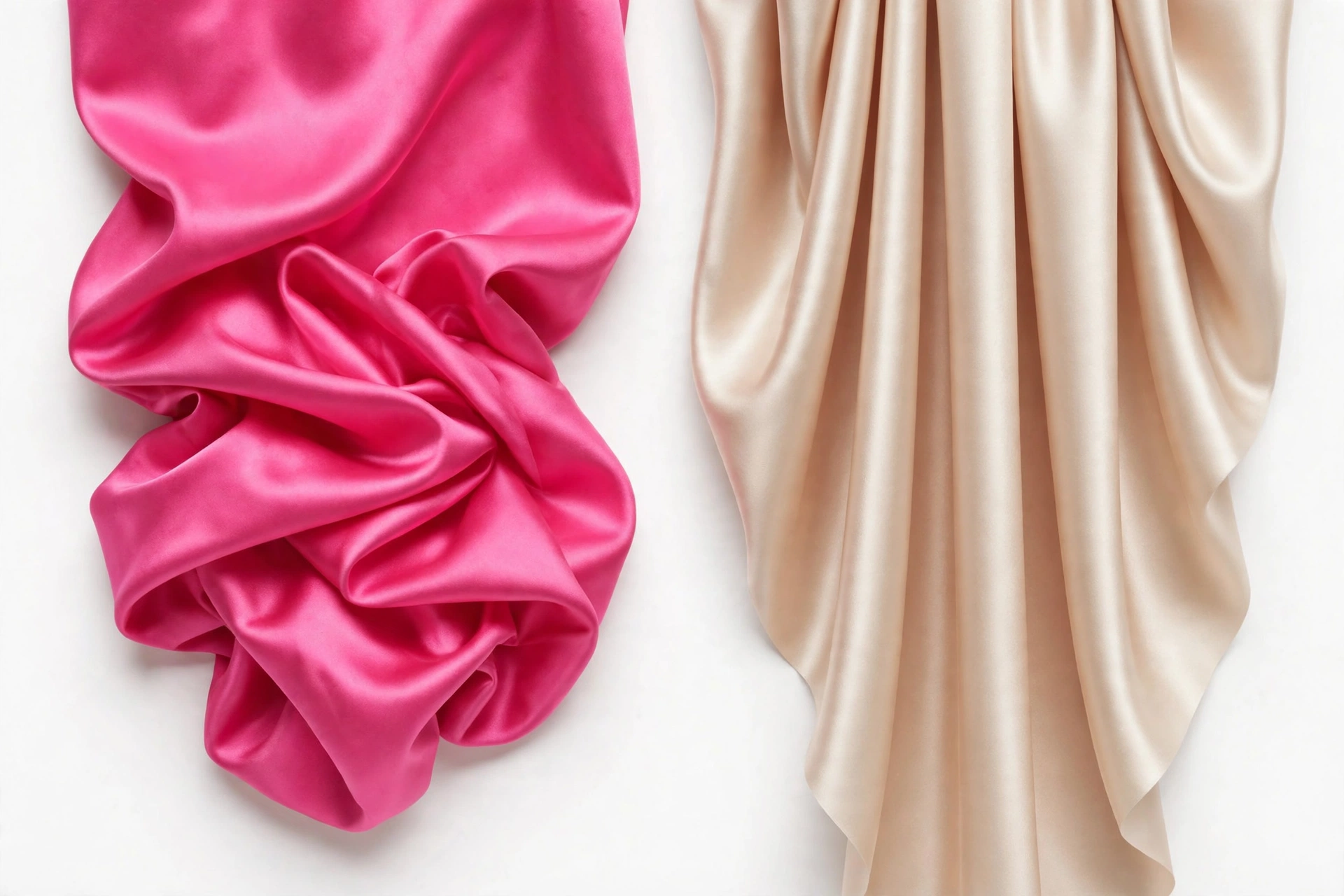
Drape gets friendlier but less liquid. Non-stretch satin falls in long, unbroken cascades because nothing pulls it back. Stretch satin clings and follows the body instead, molding over curves rather than skimming past them. That’s why it’s the choice for fitted dresses, and why flowing garments still belong to the non-stretch types of satin.
Shine stays, but it reads differently. The weave is unchanged, so the satin face throws the same sharp highlights. On a fitted garment the fabric stretches over high points, spreading the weave slightly so those areas read a touch lighter. Fitters call this “grinning.” A little over a knee or bust is normal. A lot means the fabric is stretched past its comfortable range.
The hand is softer and more forgiving. Stretch satin feels softer than regular satin’s crisper hand and moves with you instead of resisting. The tradeoff: it also shifts more under the presser foot, which is what the sewing section is about.
Wrinkling improves slightly. The elastic component helps the fabric spring back from light creases that would set into non-stretch satin. It won’t save you from a hard sit, but travel creases relax faster.
What is stretch satin best for?
Fitted evening gowns and cocktail dresses. A sheath or mermaid silhouette in non-stretch satin needs tailoring within a quarter inch to sit right. Stretch satin tolerates a half inch of fitting error and still lies smooth. Our satin dress guide matches silhouettes to satin types.
Bridal and bridesmaid dresses. A gown gets worn for twelve hours of standing, sitting, hugging, and dancing. The give takes strain off seams at the bust and waist, and one fabric across a bridal party fits more body shapes than non-stretch.
Dancewear and costumes. Latin ballroom dresses, figure skating costumes, and stage costumes use the higher-stretch blends because the garment has to move through full extension and snap back. Aerial silks, despite the name, are 2-way stretch polyester lycra, not actual silk.
Fitted separates. Skirts, camisoles, and blouses that sit close to the body: the give means you can skip a zipper in a camisole or pull on a pencil skirt without a vent.
What it’s not for. Loose, flowing garments do better in non-stretch charmeuse. Anything needing crisp structure, like a tailored jacket, wants heavier non-stretch satin. Skip high-friction uses like bag linings, where the satin floats snag and the elastane degrades.
How do you sew stretch satin without a meltdown?
Stretch satin is two hard fabrics in one. Regular satin is slippery, and stretch fabric is unstable. Combined, you get a material that slides under the presser foot and grows as you sew it. Every tip below exists because of one of those two properties.
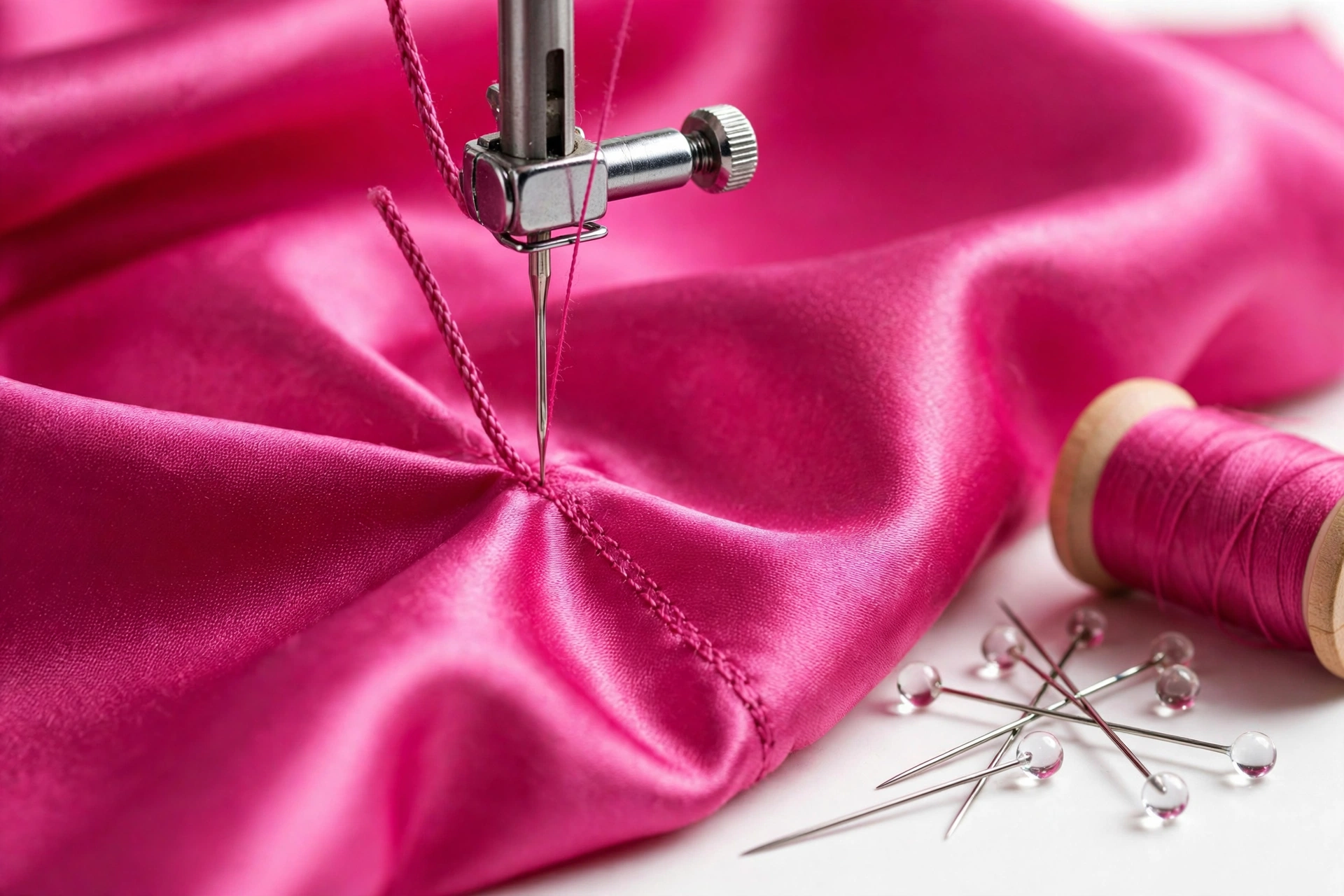
Use a stretch or ballpoint needle, not the Microtex you’d use on plain satin. This is the one place stretch satin breaks the standard satin rules. Our research found a real contradiction in sewing sources: most recommend Microtex or sharp needles for satin, one says ballpoint is “absolutely” fine, and none distinguished stretch satin. The resolution is simple. Plain woven satin wants a sharp Microtex that pierces the dense weave cleanly. Stretch satin contains elastane like a knit does, and a stretch needle’s deeper scarf and rounded point glide between fibers instead of cutting them, which prevents the skipped stitches that plague elastane fabrics. Use a 75/11 or 80/12 stretch needle and change it often, since the satin face dulls needles fast.
Sew seams with a narrow zigzag or stretch stitch. A straight stitch on a stretch seam pops. Set a zigzag about 1.5 mm wide and 2.5 mm long, narrow enough to look nearly straight on the glossy face, wide enough to flex. Use your machine’s stretch stitch for high-stress seams, or a serger’s 4-thread overlock with differential feed slightly above 1.0.
Let a walking foot do the feeding. Under a standard foot, the foot grips the top layer while the feed dogs push the bottom, and the slippery face makes the layers shift. A walking foot feeds both layers together, fixing the shifting and most of the stretching-out.
Cut in a single relaxed layer with a rotary cutter. Never stretch the fabric as you cut. Use pattern weights and a rotary cutter instead of shears, since lifting the fabric lets the stretch distort the edge. Cut pieces in a single layer when the stretch makes folded cutting unreliable.
Stabilize necklines, shoulders, and hems. Fusible stay tape on necklines, shoulder seams, and armholes stops bias edges from growing. For waistbands and hems, use a stretch fusible interfacing that moves with the fabric, not a woven one that will fight it.
Start seams on tissue paper. The needle plate loves to eat the first half inch of slippery stretch fabric. Baste pieces together first and sew without stretching the fabric, placing tissue or water-soluble stabilizer under the fabric at the seam start, then tearing it away. Brother’s own support documentation recommends exactly this. It looks fussy. It saves seams.
Pin less, clip more. Pins leave visible holes in satin’s face and can cause runs in the elastane. Sewing clips hold layers without damage. Where you must pin, pin inside the seam allowance. Baste tricky sections before final seams, especially hems.
Press with restraint. Low heat, press cloth, wrong side only, and never let a hot iron sit on the fabric. Heat is elastane’s enemy, and a scorched elastic core leaves a dead spot that won’t recover. For wrinkles, a steamer is safer and can even help refresh the fabric’s elasticity.
Hems need the stretch treatment too. A straight-stitched double-fold hem ripples and pops. Use a narrow zigzag, a twin needle, or hand catch-stitch. Invisible hems are unreliable on stretch satin because the give defeats the blind-hem mechanism.
For the general satin techniques these build on, see how to sew satin.
How do you wash and care for stretch satin?
Care for stretch satin means caring for its weakest ingredient, the elastane. Polyester and nylon are nearly indestructible in the wash. Elastane is not.
Wash cold and gentle. Cold water, gentle cycle, mesh laundry bag, turned inside out. Heat breaks down elastane’s polymer chains, and every hot wash shortens the garment’s stretchy life. The Spruce’s spandex care guide adds: at 5% elastane or less you can wash fairly normally, but higher percentages deserve extra attention.
Air dry. The dryer is the enemy. Spandex Palace is blunt about it: dryer heat ruins elastane faster than anything else. Lay flat or hang away from direct sun. If you must machine dry, use the lowest heat and pull the garment out slightly damp.
Skip fabric softener and chlorine bleach. Fabric softener coats fibers with residue that dulls satin’s shine and weakens stretch, and it traps odor-causing bacteria. Chlorine bleach chemically attacks elastane. Use oxygen-based bleach for whites instead.
Don’t wring it. Twisting a wet stretch garment snaps the tiny elastic threads. Roll it in a dry towel and press out the water.
Steam instead of ironing. Hang the garment and use a handheld steamer for wrinkles. Steam can actually help relax the fibers and refresh stretch. If you must iron, use low heat with a press cloth and test a hidden spot first.
Mechanical stretch satin is more forgiving: with no elastane to cook, 100% polyester versions tolerate more heat. Still wash cool and skip the hot dryer to protect the satin face.
How do you buy stretch satin? Read the label and run the recovery test
Listings are vague in exactly the places that matter. “Stretchy,” “2-way stretch,” and “good recovery” appear on every listing including the bad ones.
Read the fiber content first. The spandex percentage predicts both the stretch and the care burden, as the composition table shows. If the listing gives no fiber content, ask.
Run the recovery test on a swatch. This separates good stretch satin from the kind that bags at the knees after one wear. Pinch the fabric across the width, marking about 10 inches with your fingers. Stretch to about 14 inches, hold ten seconds, release. Good stretch satin snaps straight back. Bad satin stays visibly wider, and that slack is what your dress will look like by the end of the night. Test at the cut edge and mid-swatch.
Check the stretch direction. “2-way stretch” almost always means across the width only. If your pattern needs lengthwise give, look for listings that specifically say 4-way. Match stretch to the garment: fitted dresses want moderate stretch with firm recovery.
Watch for naming traps. “Stretch charmeuse” is charmeuse’s lightweight weave with elastane, drapier and lighter than generic stretch satin. “Stretch duchess” is the heavier duchess weave with elastane, with more body and structure. Generic “stretch satin” sits in the middle. Don’t confuse any of them with scuba or neoprene knits, which some sellers loosely call “stretch satin.” If the fabric is spongy thick with a foam-like middle, that’s scuba, not satin.
Buy a swatch before the bolt. Satin’s color shifts in different lighting, and the recovery test needs real fabric. A few dollars of swatches beats dozens of yards of the wrong fabric.
Stretch satin vs non-stretch satin vs stretch sateen
| Stretch satin | Non-stretch satin | Stretch sateen | |
|---|---|---|---|
| What it is | Satin weave (warp-faced) with elastane or mechanical stretch | Satin weave, no stretch component | Sateen weave (weft-faced) with elastane, usually cotton-based |
| Fiber base | Polyester, nylon, sometimes silk | Silk, polyester, nylon, acetate | Cotton with elastane, sometimes poly blends |
| Shine | High gloss, mirror-like highlights | High gloss, the shiniest of the three | Soft, even glow, no mirror shine |
| Drape | Clings and molds to the body | Falls in long liquid cascades | Soft and relaxed, fuller hand |
| Stretch | 2-way across width (some 4-way) | None, cut on bias for give | 2-way, usually gentler than stretch satin |
| Sewing difficulty | Hard, slippery plus stretchy | Medium, slippery but stable | Medium, stable weave with mild stretch |
| Care | Cold wash, air dry, no heat | Per fiber, generally delicate | Machine washable, more forgiving |
| Best for | Fitted gowns, dancewear, body-hugging dresses | Flowing gowns, lingerie, decor | Casual dresses, shirts, everyday wear with a soft sheen |
Satin is warp-faced, so the long lengthwise yarns float on the surface and create the sharp shine. Sateen flips it: the crosswise yarns float, which is why sateen reads softer and warmer. Fabric retailer fabric-fabric.com’s weave guide confirms this warp-versus-weft distinction and the filament-versus-cotton fiber split. For the full breakdown, our satin vs sateen guide goes deeper.
Frequently Asked Questions
Does stretch satin have spandex in it?
Usually, yes. Most stretch satin is woven with 2 to 10 percent elastane, sold as spandex or Lycra. But mechanical stretch satins exist with zero elastane, using yarn and weave engineering instead. If the fiber content says 100% polyester and still claims stretch, it’s mechanical.
Is stretch satin hard to sew?
It’s one of the harder satins because it’s slippery and stretchy at once. The fabric shifts under the presser foot and grows as you sew. A walking foot, a stretch needle (75/11 or 80/12), a narrow zigzag stitch, and tissue paper under seam starts solve most problems. Stabilize necklines and shoulder seams with fusible stay tape.
Can you iron stretch satin?
Carefully. Use low heat, a press cloth, and press on the wrong side, since high heat can kill the stretch permanently. A steamer is safer and can even refresh elasticity. Mechanical stretch satin with no elastane tolerates heat better, but keep the iron low to protect the satin face.
How much stretch does stretch satin have?
A 97/3 polyester-spandex satin has gentle give across the width. A 95/5 blend has noticeable comfort stretch. A 90/10 blend stretches firmly for dancewear. Almost all stretch satin stretches across the width only (2-way). Look for listings marked 4-way if you need lengthwise stretch too.
Does stretch satin lose its stretch over time?
Elastane blends can. The causes are heat, chlorine, age, and overstretching. Hot dryers and chlorine bleach break down the elastic fibers fastest, and the damage is permanent. Mechanical stretch satin, with no elastane to degrade, holds its recovery much longer.
Is stretch satin the same as stretch charmeuse?
No, though they’re related. Stretch charmeuse uses charmeuse‘s lightweight satin weave with elastane added, so it’s drapier and lighter than generic stretch satin, with stretch duchess at the heavy, structured end.
Which is better, stretch satin or stretch sateen?
Stretch satin gives high-gloss shine and a body-molding fit for evening wear and fitted dresses. Stretch sateen gives a softer glow and a more relaxed hand, usually in an easier-care cotton base. Satin is warp-faced and shinier; sateen is weft-faced and softer.
Can you machine wash stretch satin?
Yes, on a gentle cycle with cold water and mild detergent, in a mesh bag and turned inside out. Then air dry, never use a hot dryer. Skip fabric softener and chlorine bleach, both of which damage the elastane.
Stretch satin is the practical member of the satin family: it keeps the shine, and trades a little liquid drape for something non-stretch satin can’t offer, a dress you can actually live in. Buy by the fiber content, test the recovery, sew with a walking foot and a stretch needle, and keep it away from heat.