Satin Lingerie Guide: Types, Fabrics, Fit and Care
Satin lingerie is lingerie cut from satin-weave fabric, and the best satin for it depends on fiber. Silk charmeuse is the luxury choice: breathable, cool, fluid. Polyester satin charmeuse is the everyday choice: durable, washable, wrinkle-resistant. Stretch satin suits close-fitting pieces like teddies. Here’s the part most shoppers miss: satin is a weave, not a fiber. A $30 polyester chemise and a $300 silk one are both “satin lingerie.” Only the fiber-content label tells you which you are holding.
Why Does Satin Work So Well for Lingerie?
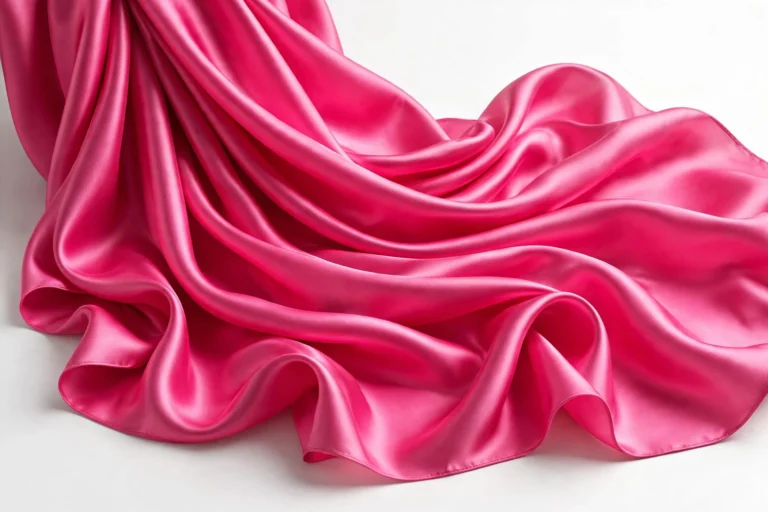
Satin works for lingerie because its weave leaves long threads floating across the surface, so the fabric drapes and flows instead of holding stiffness. Those same floats create the signature shine. The shine shows every ripple and seam, which is why fit and finishing matter so much in satin. Get those right and nothing else feels quite like it.
The mechanism starts in the weave. In satin, each face yarn passes over several cross yarns before interlacing, so few anchor points lock the structure together. The fabric bends instead of resisting, and that is drape: why a chemise pours off the shoulders and a slip skims instead of folding. Our guide to the satin weave covers the full mechanics.
Hand feel is where fiber enters. Silk satin feels smooth and cool and breathes, suiting pieces worn for hours. Polyester satin is smooth too, but it traps heat and can feel synthetic, suiting structured or occasional-wear pieces. Rayon satin sits between them: soft with beautiful drape, but it weakens when wet.
Then there is bias. Cut woven fabric at 45 degrees and it gains stretch with no elastic, because the weave’s rectangular gaps shear into diamonds. That’s why non-stretch silk satin chemises still skim the body: the cut supplies the give. La Perla labels its silk chemises non-stretch satin, yet they fit, because they are cut to use the bias. The trade is that bias relaxes and lengthens under gravity, so a chemise snug in the fitting room may skim looser by evening, and hems cut even will hang uneven after wearing.
The shine cuts both ways. Satin’s unbroken surface gives the eye nothing to hide behind, and sewing specialists rank it the worst fabric for showing seam puckering: every ripple becomes a light-catching ridge. The same physics makes satin lingerie honest. It can’t fake good construction, which is why the buying checks in this guide work.

What Are the Types of Satin Lingerie?
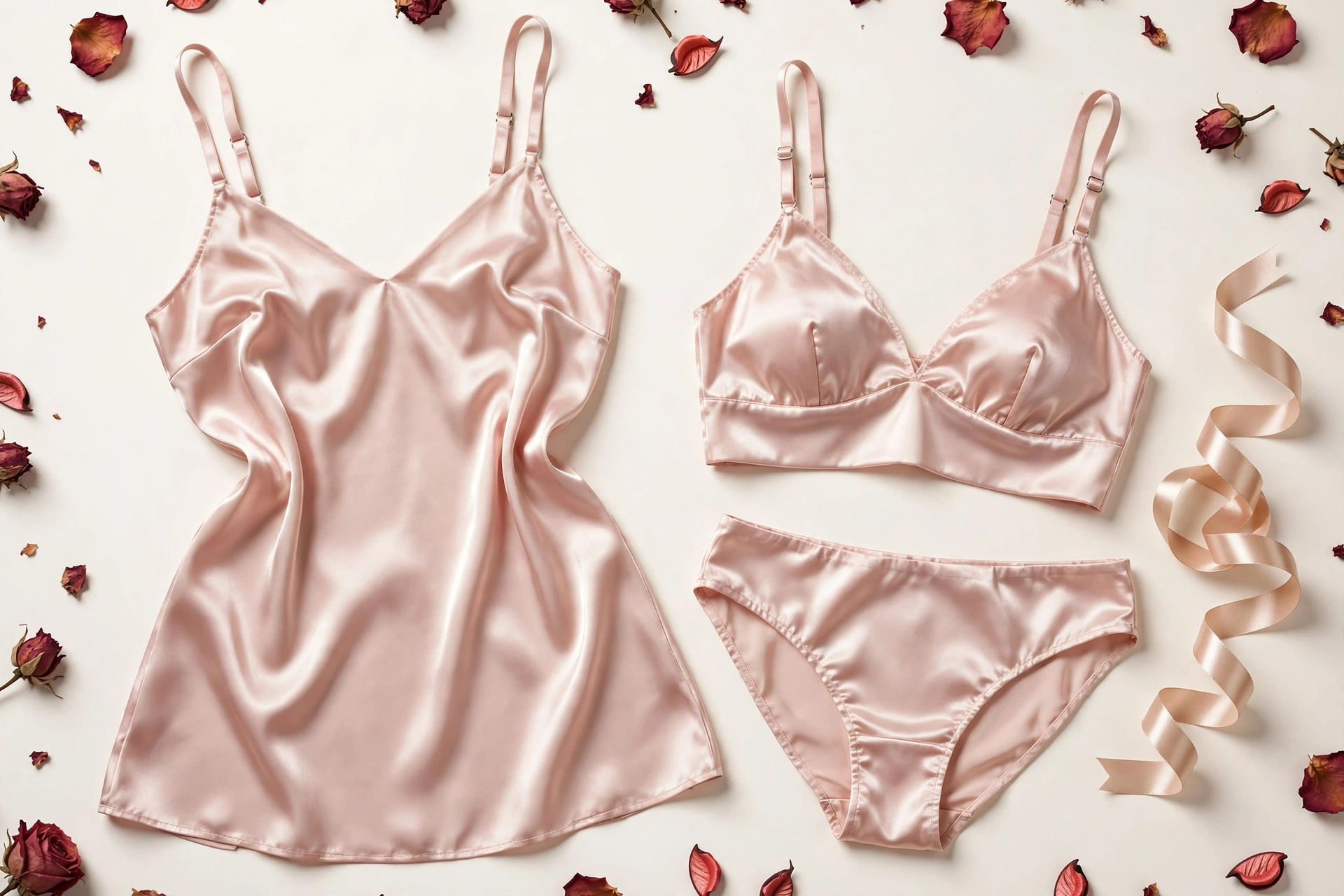
Satin lingerie comes in seven main types: chemise, babydoll, teddy, slip, camisole with tap shorts, bralettes and panties, and robes worn over the rest. The silhouette changes the job. Some types are made for sleep, some for layering under clothes, some for the bedroom.

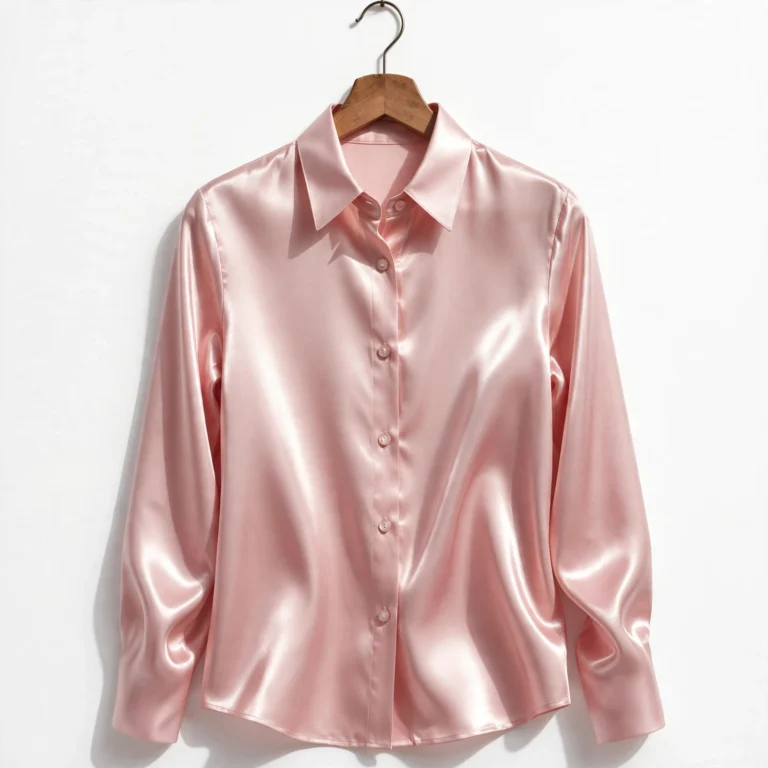
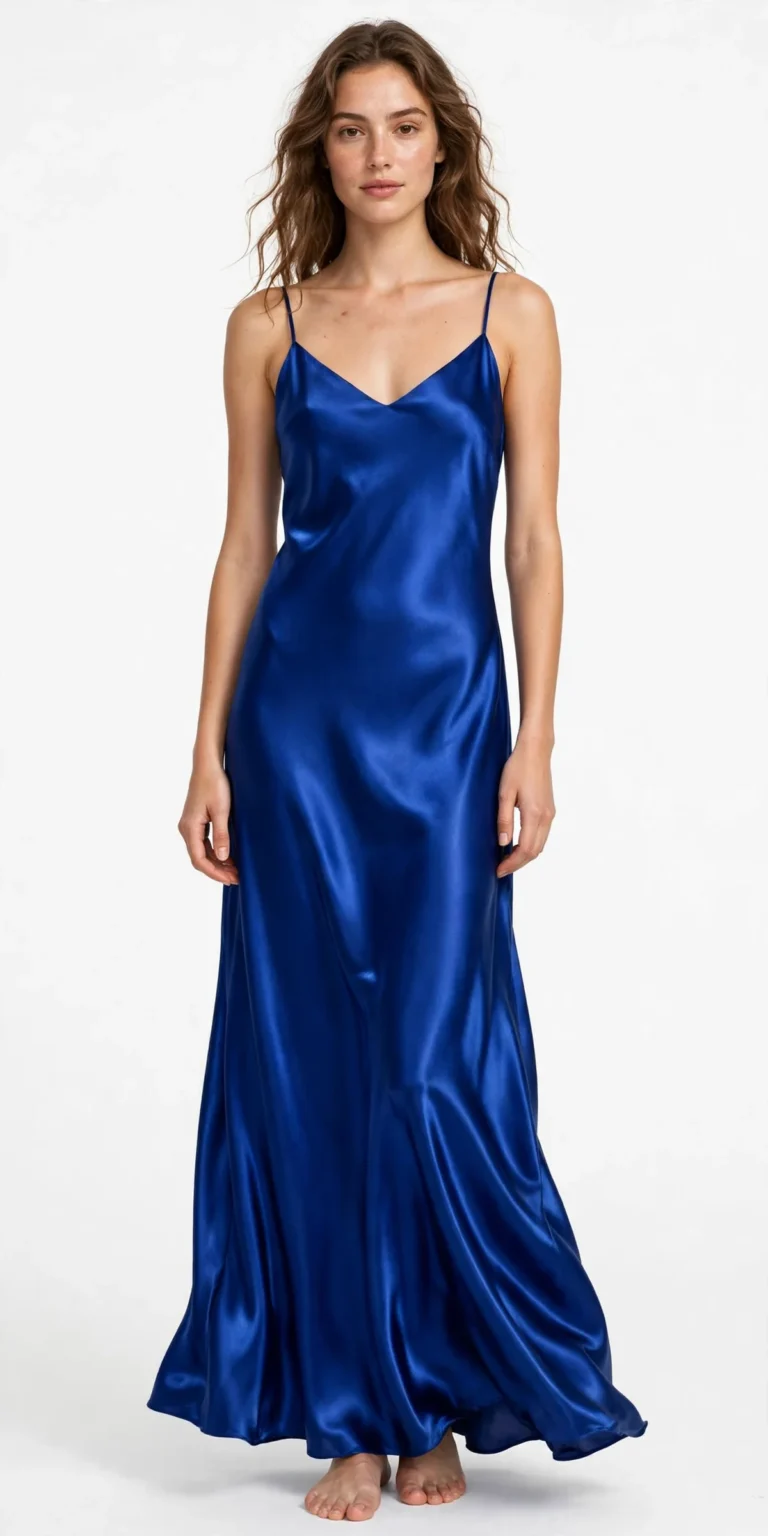
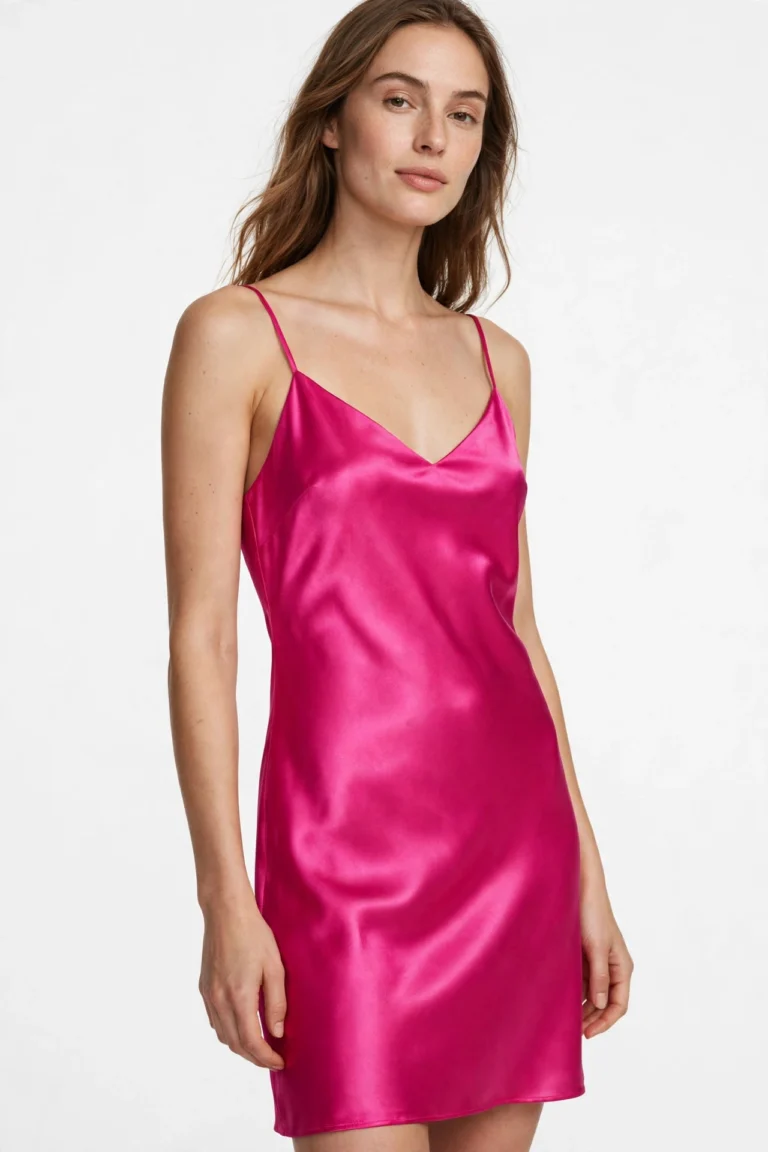
Chemise. A short nightgown hanging straight from the shoulders on thin spaghetti straps, body-skimming or loose, in lengths from below the hips to the knees. The most versatile silhouette, and the one most often cut on the bias. Velrose’s classic runs 34 inches in 100% polyester satin charmeuse with adjustable straps; La Perla cuts theirs in lightweight non-stretch silk satin, 31 inches from shoulder in size small.
Babydoll. A short, loose, floaty nightgown with bra-like cups and a skirt flaring from the empire line, usually sold with matching panties. The chemise is a straight slip silhouette; the babydoll is a cupped top with a gathered skirt. Chemise reads elegant; babydoll reads flirtatious.
Teddy. A one-piece covering torso and crotch, cut like a leotard, with modern versions running to cut-outs, lace-up details and open cups. It fits close with no drape to hide behind, so this is where stretch satin earns its place.
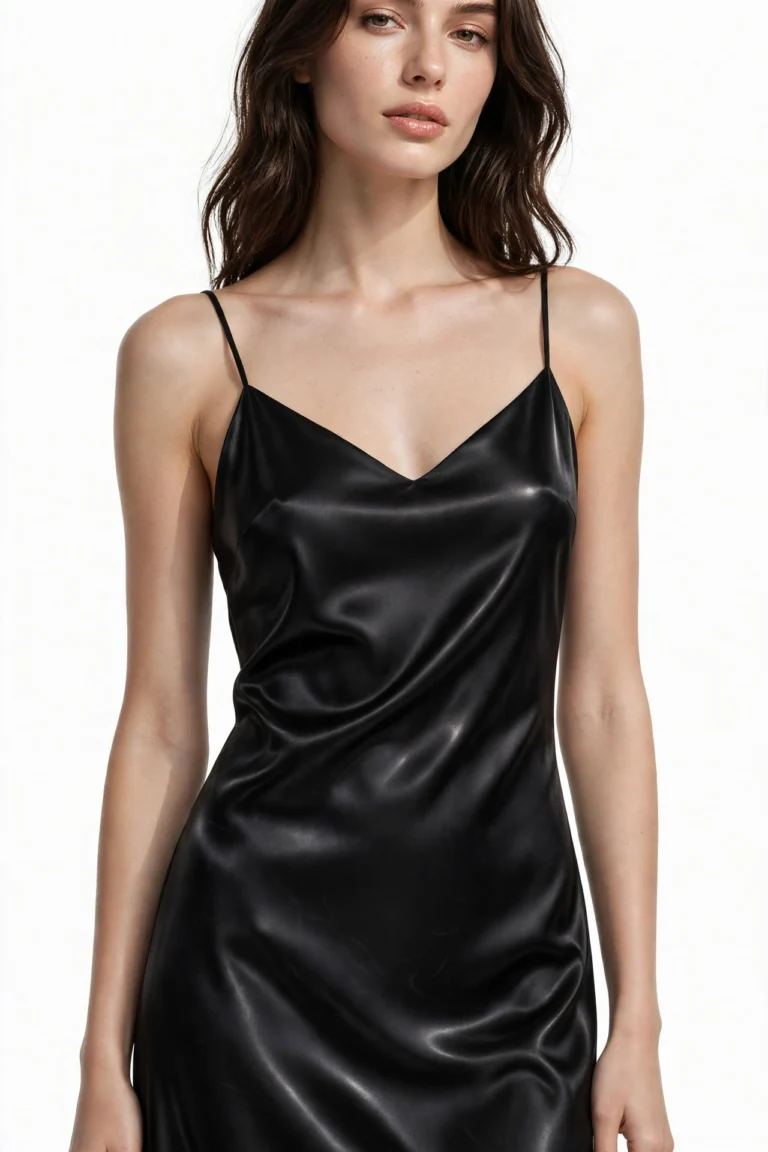
Slip dress / nightgown. The slip is an undergarment, thin-strapped and body-skimming, built to disappear under dresses. The nightgown is for bed. Vintage slips were typically nylon, wartime 1940s slips were rayon, pre-1950s could be silk or cotton; modern ones run to polyester, nylon blends or high-end silk. The slip crossed into outerwear in the 1990s on designers including John Galliano and Dolce & Gabbana. The peignoir set, nightgown plus matching robe, is the luxury format; vintage satin sets trade on resale markets around $55-145.
Camisole and tap shorts. A sleeveless, waist-length top on thin straps, paired with tap pants: loose short shorts with an elastic waist and often a shirttail hem. Marketed as “sexy PJs” for sleep, lounge and boudoir. At the luxury end, makers like Christine Lingerie cut them in silk satin trimmed with French Calais lace.
Bralettes and panties. Satin bralettes are usually unlined and wire-free, pairing a soft satin underbust band with sheer, flexible lace cups. Structured satin bras come as balconettes with rigid satin cups, sometimes a lace overlay at the top edge. On panties, expect a cotton-lined gusset even on satin pairs.
Robes. The layering piece, worn over chemises and cami sets. It has its own full treatment in our satin robe guide.
Which Satin Is Best for Lingerie?
The best satin for lingerie depends on the job. Silk charmeuse is the luxury pick, breathable and cool against skin. Polyester satin charmeuse is the durable everyday pick. Stretch satin suits fitted pieces. Crepe-back satin gives two looks in one cut. The fiber matters more than the word satin on the label.
Polyester satin charmeuse is the workhorse of the mid and mass market. Velrose and Shadowline build whole cami, tap and chemise lines on “100% Polyester Satin Charmeuse,” and Y2K-era Victoria’s Secret satin slips are polyester satin. It costs far less than silk, holds its shape, and resists wrinkles better. The trade is a flatter, more uniform gloss and a hand that traps heat. See our polyester satin guide for the fiber breakdown.
Silk satin and silk charmeuse are the luxury standard: La Perla, Christine Lingerie, Agent Provocateur. Lightweight, high-luster face, matte back, real drape. In lingerie the names usually mean the same thing, silk in a satin weave, charmeuse naming the lighter, more fluid end. Our charmeuse satin guide covers the distinction.
Stretch satin, satin with elastane, belongs wherever close fit and recovery matter: teddies, fitted chemises, structured bralettes. Elastane stretches several times its length and snaps back repeatedly, which keeps shaped pieces from bagging out. The catch is heat: hot water or a hot dryer melts the polyurethane springs permanently. That single fact drives the care rules below.
Crepe-back satin has a shiny satin face and a matte, slightly textured crepe reverse, and it is genuinely reversible. One cut, two looks; fabric sellers list it explicitly for nightgowns.
Acetate satin is the historical entry. 1930s bias-cut nightgowns were cut in acetate and rayon satins, prized as affordable silk stand-ins. Rare in modern lingerie, worth knowing when you meet it in vintage.
Two buying truths cut across all of these. First, finishing changes what the label cannot tell you. Calendering, glazing or heat-setting can push up gloss and change hand, so two satins with identical fiber content can look and feel different off the mill. Touch the fabric, not the description.
Second, read the fiber-content label, not the product name. “Silk satin” in marketing copy is not a fiber claim. Under the US Textile Fiber Products Identification Act, fiber content must be accurately disclosed with percentages for blends. “Silk satin” with no percentage breakdown, or “silk” on a twenty-dollar polyester-feeling piece, is a red flag.
One cheap test beats all the copy. Run a fingernail across the satin face: if a float lifts easily, that garment will snag in wear. The floats that lift on the rack catch on jewelry, hooks and rough seams later.
My take: if you buy one piece, make it a chemise in silk charmeuse. It sleeps, lounges and layers under a robe, and nothing else in the drawer does all three. Skip the stiff, papery polyester. It feels plasticky on day one, traps heat, and never gets better with washing.
How Should Satin Lingerie Fit?
Satin lingerie has to fit right because the fabric forgives nothing. The smooth, reflective surface shows every gap, dig and ripple. Adjustable straps are the main fit control on non-stretch woven satin, since the garment body cannot stretch to compensate.

Adjustable spaghetti straps are close to universal on quality chemises, camisoles and slips, from Velrose to La Perla to Adore Me. On non-stretch woven satin they are the only fit adjustment the garment has, so fixed straps on a woven satin piece are a reason to walk away. Straps should not carry the support load: support comes from the underband and cups, so digging straps signal the wrong size. Re-adjust regularly.
For structured pieces, check three points. The center gore, the fabric between the cups, should rest flat against the sternum. The underwire should encase tissue entirely, never sit on top of it or poke at the underarm. Cups should sit smooth with no gaps, wrinkles or spillage, edges lying flat. Bodies are rarely symmetrical, so fit the larger side.
Bias changes the fitting-room math. Bias-cut satin relaxes and lengthens with wear and gravity, so a snug first try may skim looser by evening. It also shows every line underneath, so what goes under light satin matters: smooth, skin-tone pieces, no lace or bulky seams.
Checklist before you commit:
- Band sits level, not riding up or digging in
- Cups smooth, no gaping and no overflow
- Straps adjusted without digging into shoulders
- Underwire flat, fully encasing tissue
- Teddy or bodysuit not pulling at shoulders or crotch
- Fabric lying smooth, not twisting or sliding
- No urge to keep re-adjusting it
Don’t size down to feel more secure. A tighter band makes pressure marks and visible lines, and satin broadcasts both. Move in it first: sit, bend, walk, raise your arms, then re-check neckline, straps and back in natural and indoor light. Satin reads different under each.
How Do You Choose Satin Lingerie?
Choose by use, not by look. Silk charmeuse suits special occasions and bridal. Polyester charmeuse suits frequent wear and easy washing. Stretch satin suits close-fitting teddies and bralettes. Cami-and-tap sets and loose chemises suit sleep and lounging. Start from the use case, then pick the fiber.
- Everyday wear: polyester satin charmeuse. It survives the machine on a delicate cycle in a mesh bag, resists wrinkles, and holds its shape.
- Special occasions and bridal: silk charmeuse or crepe-back satin. Liquid drape, cool hand, luster that photographs beautifully.
- Sleep and lounge: cami-and-tap sets or a loose chemise. Loose cuts move with you instead of twisting.
- Under clothes: a smooth bias-cut slip with flat seams, edges lying flat, lace trims kept where they will not show through.
- Fitted and supportive: stretch satin. Teddies and structured balconettes need elastane’s recovery or they bag out.
Roughly: mid-range cami sets land around $38-55, Victoria’s Secret slips show retail tags near $75-98, La Perla silk starts near EUR 145-214, and Agent Provocateur runs from about $100-500 past $900 on sale. Across the tiers, price is a weak proxy for quality. It should buy fiber, construction (French seams, real lace instead of glued trim), and fit engineering.
What to avoid:
- Stiff, papery “satin.” Cheap polyester satin is often a low-density weave with a heavy glaze. Plasticky, heat-trapping, and the glaze never improves with washing.
- Glued trims. Check lace, bows and appliques are stitched, not glued. Stitching survives the wash; adhesive lifts.
- Non-adjustable straps on woven satin. Fixed straps remove the only fit adjustment a non-stretch garment has.
- Poor seam finishing. Puckered or wavy seams are the most visible defect on satin because shine broadcasts every ripple. French seams on lightweight satin are the quality signal.
- Misleading “silk” labeling. Read the fiber-content label, not the product name.
- Snag-prone pieces. Do the fingernail test, and skip designs where hooks, sequins or coarse lace sit against the satin face.
How Do You Wash and Care for Satin Lingerie?
Hand wash satin lingerie in lukewarm water at or below 30C with a mild detergent made for delicates. Never wring or tumble dry. Press out water in a towel and air dry away from direct sun. Heat destroys silk’s sheen and melts elastane, so cool and gentle wins every time.
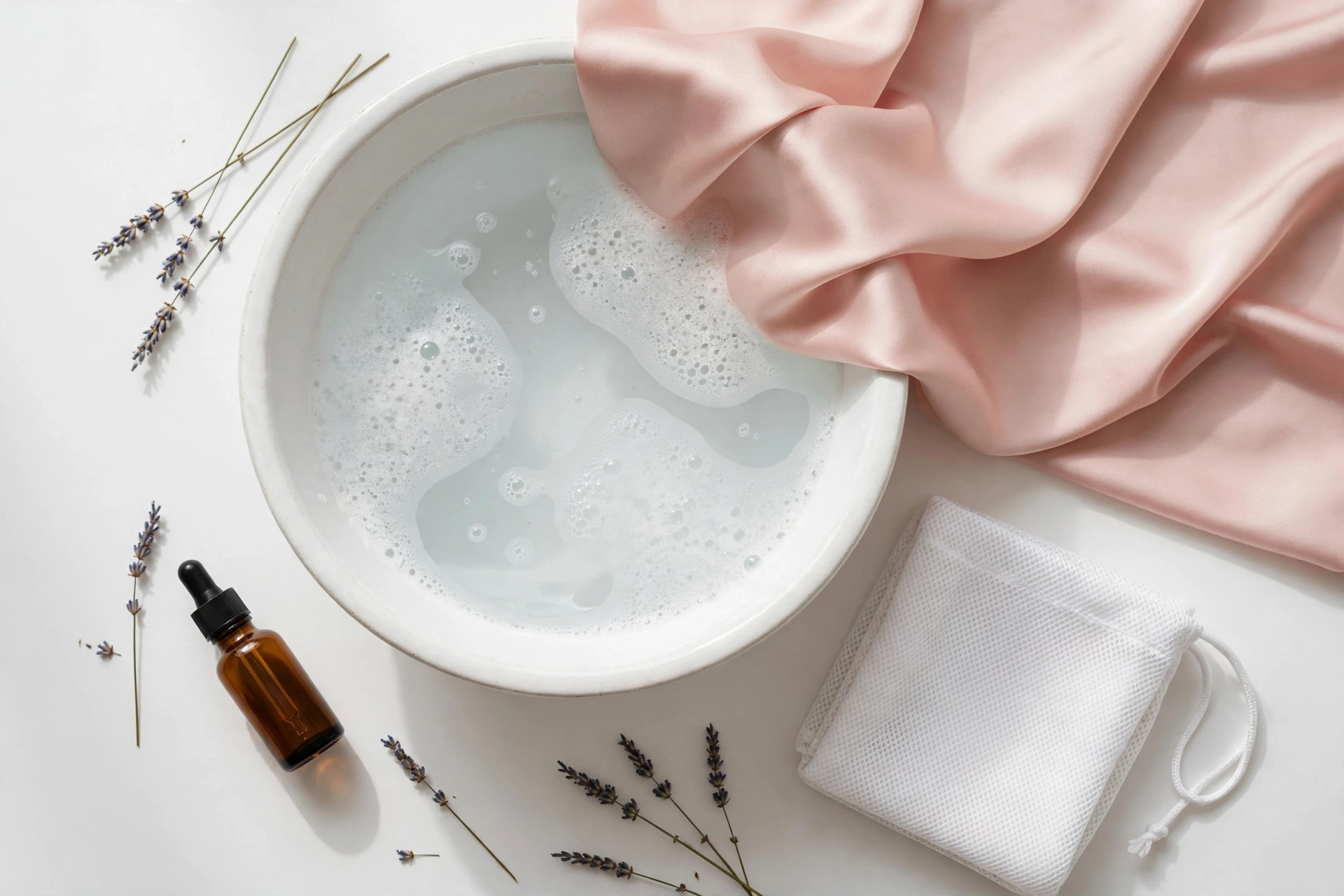
Hand washing is the default for silk satin and for delicate or heavily structured pieces. Machine washing suits only sturdier polyester satin, on a delicate cycle, inside a mesh bag. The method: lukewarm water, 30C maximum, mild detergent for silk, wool or delicates, a few minutes of soaking, gentle massaging, never rubbing or wringing, then a thorough cold rinse. Cold tap water is the safe default if you cannot measure. Don’t over-soak: around three minutes is enough, and past ten minutes dyes start to loosen.
On detergent: no bleach, no enzymes, no optical brighteners, no fabric softener. A half cup of white vinegar in the final rinse helps neutralize odor and dissolve soap residue.
Drying is where most damage happens. Never tumble dry silk satin: heat shrinks silk and kills its sheen, and it destroys elastane’s recovery in stretch pieces. Press water out in a clean towel instead of wringing, then air dry flat or hang away from direct sunlight. Hang bras by the center gore, never by the straps. Cool iron only, inside out, with a pressing cloth, and don’t slide the iron back and forth: that stretches silk out of shape.
Storage matters because of the floats. Long exposed threads catch on jewelry, rough seams and sharp edges, so keep satin away from them in drawers and in the wash. Close bra hooks and remove detachable accessories before washing or storing with other delicates. Store folded or rolled, tissue in the fold lines, garment bags for the good pieces.
Give bras a rest between wears, every two to four wears, rotating three or four so the elastic recovers; panties go in the wash after every wear. For the per-fiber details, see our how to wash satin guide.
Silk Charmeuse vs Polyester Satin vs Stretch Satin: Which Should You Buy?
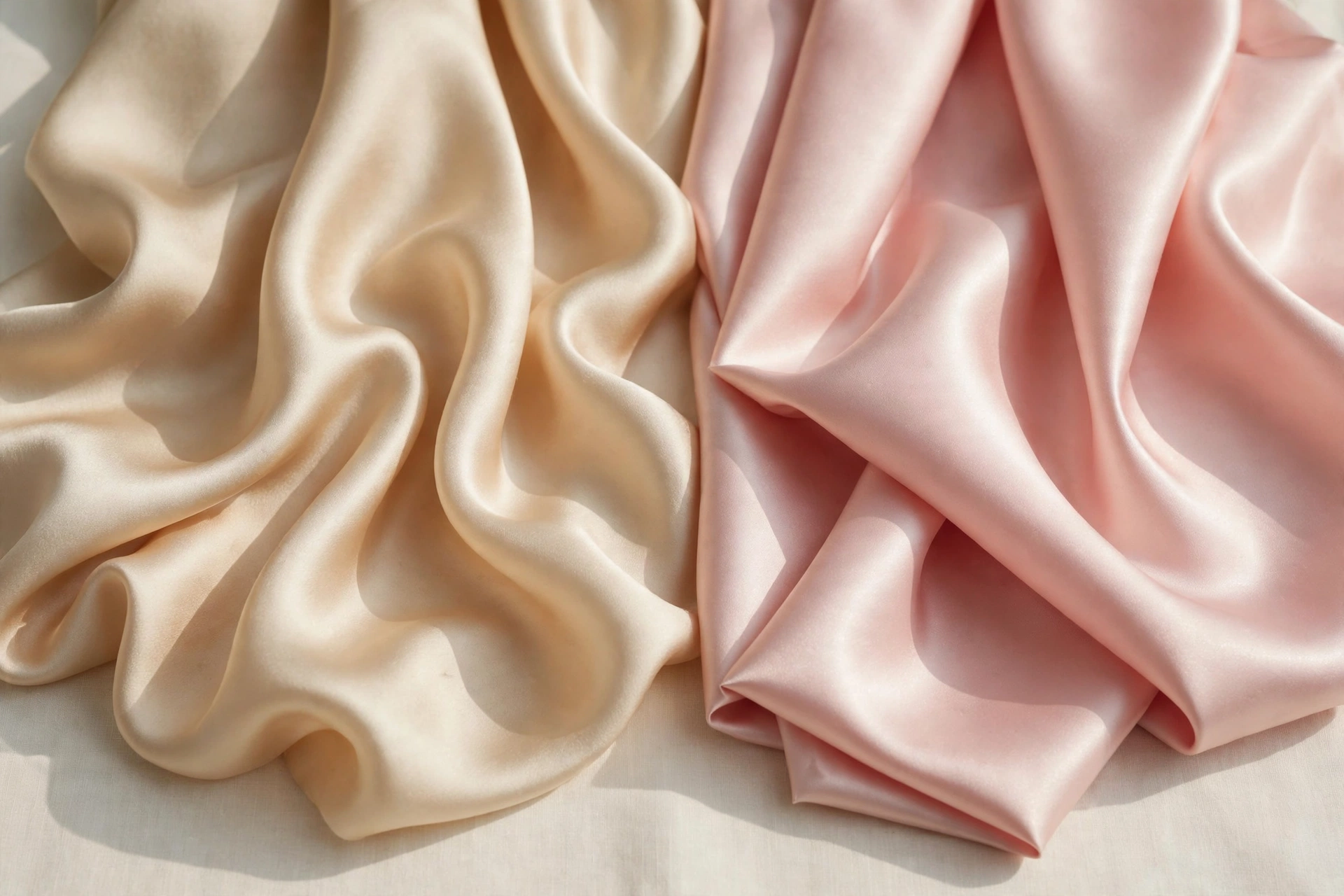
For lingerie, silk charmeuse is the luxury buy, polyester satin charmeuse is the practical buy, and stretch satin is the fitted buy. “Silk satin” and “silk charmeuse” usually mean the same thing on a label: silk woven in a satin weave. The real choice is fiber, plus whether the piece needs stretch.
| Silk charmeuse | Polyester satin charmeuse | Stretch satin (with elastane) | |
|---|---|---|---|
| What it is | Silk in a satin weave, light and fluid | Polyester in a satin weave | Satin with elastane for stretch and recovery |
| Feel | Smooth, cool to the touch | Smooth, can feel synthetic, traps heat | Smooth with give |
| Shine | High-luster face, soft glow | Comparable shine, flatter, more uniform | Varies with base fiber |
| Drape | Liquid, moves with the body | Good drape, holds shape more | Clings where cut close |
| Stretch | Bias give only | Bias give only | Real stretch with recovery |
| Care | Hand wash, 30C max, no heat | Machine washable, delicate cycle, mesh bag | Cool wash, never hot dryer |
| Price band | Premium: ~EUR 145-214 at La Perla | Mid: ~$38-55 sets, ~$75-98 slips | Mid to premium |
| Best for | Chemises, bridal, special occasions | Everyday sets, frequent wear | Teddies, fitted chemises, bralettes |
If the choice is silk or polyester, our satin vs silk guide settles it the honest way: sellers own most of that comparison, and fiber plus use case decide it, not marketing.
Satin Lingerie FAQs
Is satin lingerie comfortable to sleep in?
Yes, in the right fiber and cut. Silk charmeuse breathes and feels cool, and loose cuts like cami-and-tap sets move with you. Polyester satin traps heat, so it suits cooler rooms better.
Does satin lingerie show every flaw?
It shows every flaw in fit and construction, not in the wearer. The reflective surface broadcasts puckered seams, gaping cups and digging bands. Adjustable straps, correct sizing, and clean finishing matter more in satin than in any textured fabric.
Should I size up in satin lingerie?
Don’t size down to feel more secure. A tighter band makes pressure marks satin broadcasts. Bias-cut pieces relax and lengthen with wear, so a snug fitting-room fit often settles into a skimming one. Fit the larger side where the body is asymmetrical.
Can you machine wash satin lingerie?
Sturdy polyester satin, yes: delicate cycle, cold water, mesh bag, mild detergent. Silk satin, structured pieces, anything with lace or boning: hand wash. Whatever the fiber, skip the tumble dryer.
Why is my satin chemise getting longer?
Bias-cut satin elongates under gravity. The weave shears at 45 degrees, giving the drape and the stretch-without-elastic, but the garment also relaxes with wear and on the hanger. A hem that started even hangs uneven over time. Normal for the cut, not a defect.
What is the difference between a chemise and a babydoll?
Construction. A chemise hangs straight from the shoulders in one slip-like line. A babydoll has bra-like cups with a skirt flaring from the empire line, usually with matching panties. The chemise reads elegant; the babydoll reads flirtatious.
Is “silk satin” lingerie actually silk?
Only the fiber-content label can answer that. “Silk satin” in a product name is marketing, not a fiber claim, and the law requires real content on the label with percentages for blends.
How do I stop satin lingerie from snagging?
Buy tight weaves and test them: run a fingernail across the satin face, and if a float lifts easily, expect snags. Keep satin away from jewelry and rough seams. In the wash, close hooks, remove detachable accessories, and use a mesh bag.
Final Word
Satin lingerie rewards the shopper who reads labels and checks seams. The fabric is honest: it drapes beautifully when the cut is right, and it exposes bad construction the moment it is wrong. Buy the fiber that matches the job, insist on adjustable straps and clean finishing, wash cool and gentle, and a good piece stays smooth for years. Start with the chemise. It put satin on the bedroom map a century ago, and it’s not going anywhere.