Satin Finish Explained: Why Satin Shines
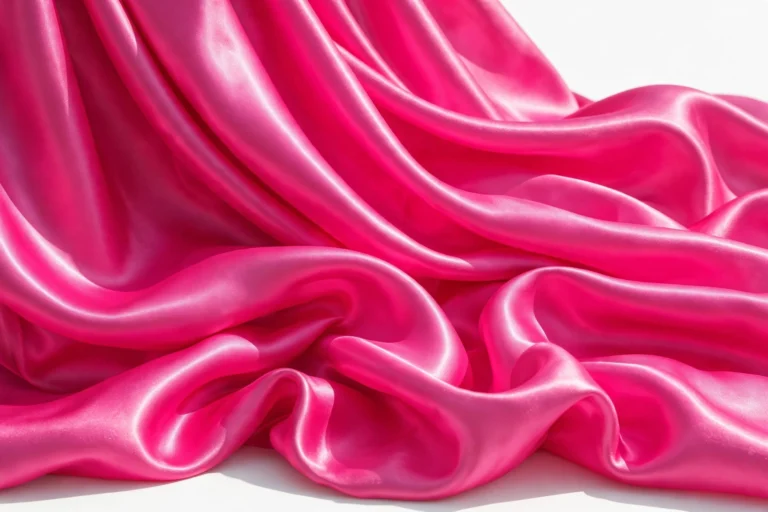
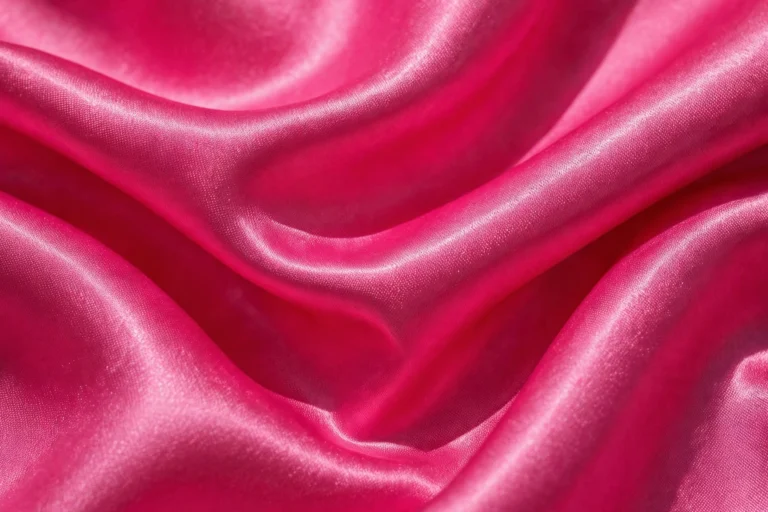
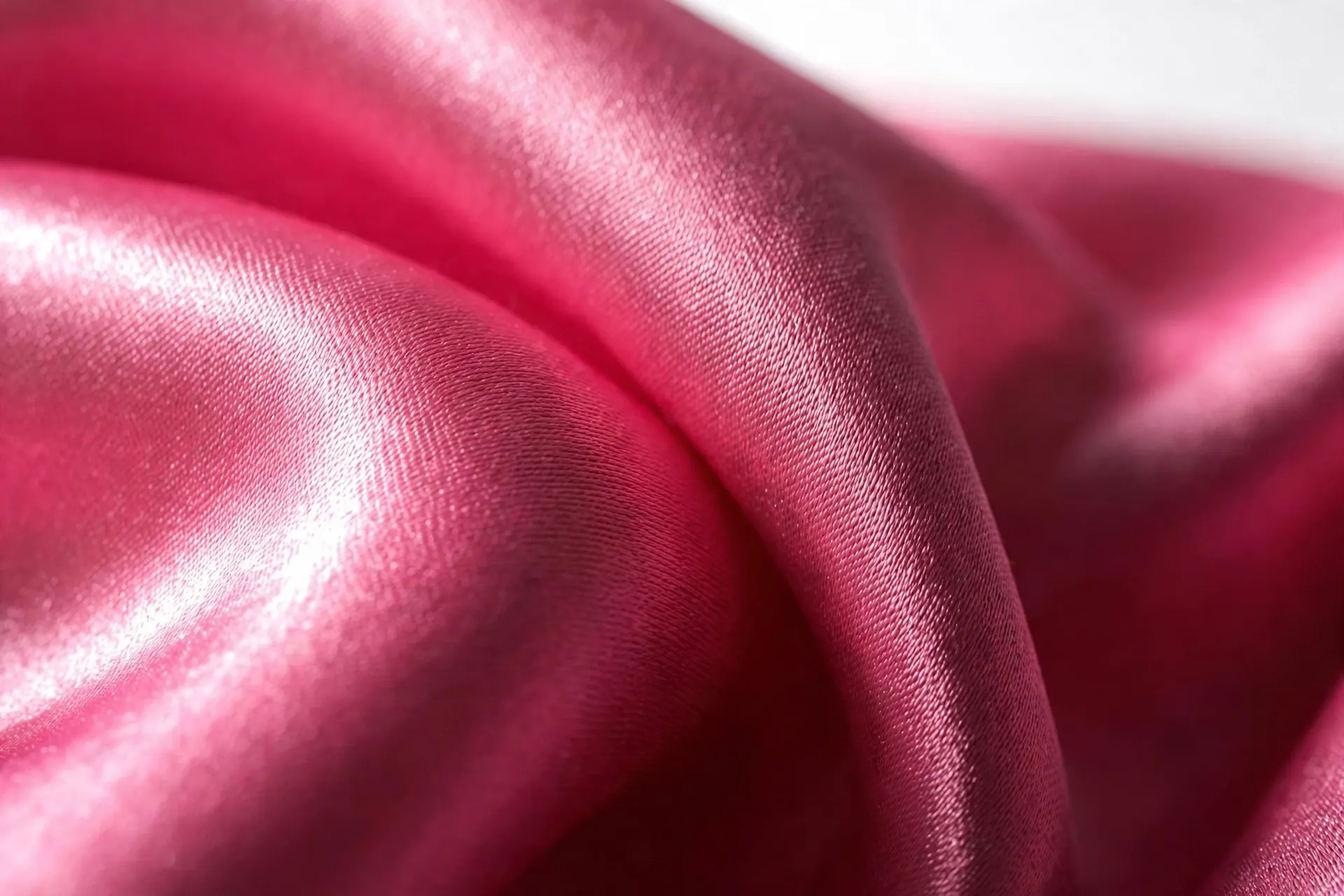
Satin shines because of its weave, not a coating. In a satin weave, long yarns float over several crossing threads before tying down, so the surface is one long, smooth runway of yarn. Light hits that runway and bounces off in one coherent direction instead of scattering. An uninterrupted surface reflects light like a mirror; a broken-up one reflects it like gravel.
This guide gives you the mechanics, so you can judge any satin on the bolt in about ten seconds.
Why is satin shiny?
Satin is shiny because its weave structure leaves very few interlacing points on the surface. Each yarn floats over four, five, or more crossing threads before it ducks under one, so the face of the fabric is nearly all parallel yarn, not a grid. Parallel yarns lined up side by side act like a bank of tiny mirrors: incoming light reflects off them in the same direction, which is what we call specular reflection. Your eye reads that coherent bounce as shine.
Compare that with plain weave, where every yarn goes over one, under one. Every crossing bends light in a different direction, so the light scatters and the surface reads matte. Twill sits between the two, with short diagonal floats that give a soft, broken luster instead of a full shine.
Here is the picture that makes it click: sunlight on a calm lake versus a gravel driveway. Same sun, totally different result. The lake reflects one clean bright spot. The gravel throws a dull glow everywhere. Satin weave is the calm lake. Plain weave is the gravel. Everything else in this guide is about making the lake smoother or throwing pebbles in it.
This is also why satin is a weave structure, not a fiber. Shine is a geometric property of how yarns are arranged. You can weave the same silk into plain weave and get a matte, crisp organza-like surface. You can weave cotton into a satin weave and get sateen with a soft sheen. The fiber changes the character of the shine. The weave creates it.
Does a longer float always mean more shine?
Longer floats mean more shine, with one catch: they also mean a weaker, snaggier fabric. A longer float puts more unbroken yarn on the surface, so the “mirror” gets bigger and the reflection cleaner. An 8-harness satin is glassier and reflects light more evenly than a 5-harness. But every inch of that floating yarn is unanchored, waiting to catch on a fingernail, a zipper, or a ring.
Weavers talk about satin in harness counts: 4, 5, 8, and higher. In practice the number tracks with float length. A 4-harness satin has shorter floats, less sheen, and better abrasion resistance, which is why you find it in linings and utility fabrics. Standard apparel satin is usually 5-harness. Step up to 8-harness and you get the bridal-gown glass, the liquid surface that reads as luxury in photos, and a more fluid drape.
One nuance few guides mention: harness count sets the ceiling, not the result. A rough spun 8-harness can look duller than a fine 5-harness in smooth filament. Float length is the biggest lever, not the only one. That is the point of the finish equation below.
Does the fiber change how satin shines?
Fiber changes the shine’s character, even though the weave creates it. The weave is the lake, the fiber is the water: satin weave makes the lake calm, and the fiber decides whether the water is glass-clear or milky.
Filament fibers are the clear water. Silk, polyester, and nylon run the entire length of the yarn as continuous strands with no loose ends poking out. Light has nothing to scatter against, so filament satins produce the sharpest sheen. Same satin geometry, wildly different shine.
Spun staple fibers are the milky water. Cotton and rayon staple are short fibers twisted into yarn, with millions of tiny fiber ends poking out. Each end scatters light. A spun satin still has the long floats, so it outshines a plain weave in the same fiber, but the shine is softer, hazier, almost pearly. The weave says shine. The fiber says calm down.
Within filaments, three things move the needle:
Yarn twist. The brightest satin comes from bright filaments with little or no twist. Twist wraps filaments into a spiral, and every wrap tilts surface away from the light. High-twist yarns kill filament luster. Satin yarns are deliberately low-twist, which is one reason satin snags so easily.
Delusterant. Many synthetic filaments are extruded with a delustering agent, usually titanium dioxide, mixed into the polymer. That dulls the fiber from the inside, so a delustered polyester satin can read almost matte even with long floats. Two polyester satins side by side, one glaring and one quietly pearly? Delusterant is usually the explanation. For linings and suitings, the matte version is the point, not a defect.
Fiber optics. Silk filaments are slightly triangular in cross-section, which gives silk satin a soft, deep glow instead of a hard flash. Polyester filaments are round and glassy, so polyester satin flashes brighter, which some people love and others read as cheap. Acetate sits between: crisp and bright. Same weave, three personalities. Our silk satin guide goes deeper on how fiber defines the fabric.
What is the satin finish equation?
Here is the original framework this site runs on, applied to shine. Every satin’s sheen is the product of four factors.
Sheen = Fiber x Float length x Yarn character x Finishing.
Run any satin through it. Silk charmeuse: lustrous filament, medium-long floats, low-twist yarn, minimal finishing. Result: liquid, deep shine. Delustered polyester bridal satin: bright-capable filament deliberately dulled, medium floats, smooth yarn, delusterant plus light calendering. Result: a controlled pearly glow that photographs without hot spots. Cotton sateen: hazy staple fiber, medium floats, spun yarn. Result: soft sheen, never a flash.
Why does this matter? A seller can only tell you the name on the bolt: “satin.” The equation tells you the questions to ask: what fiber, how long are the floats, filament or spun, calendered or not. Four factors, four questions, and you never buy satin on faith again.
Why is the back of satin dull?
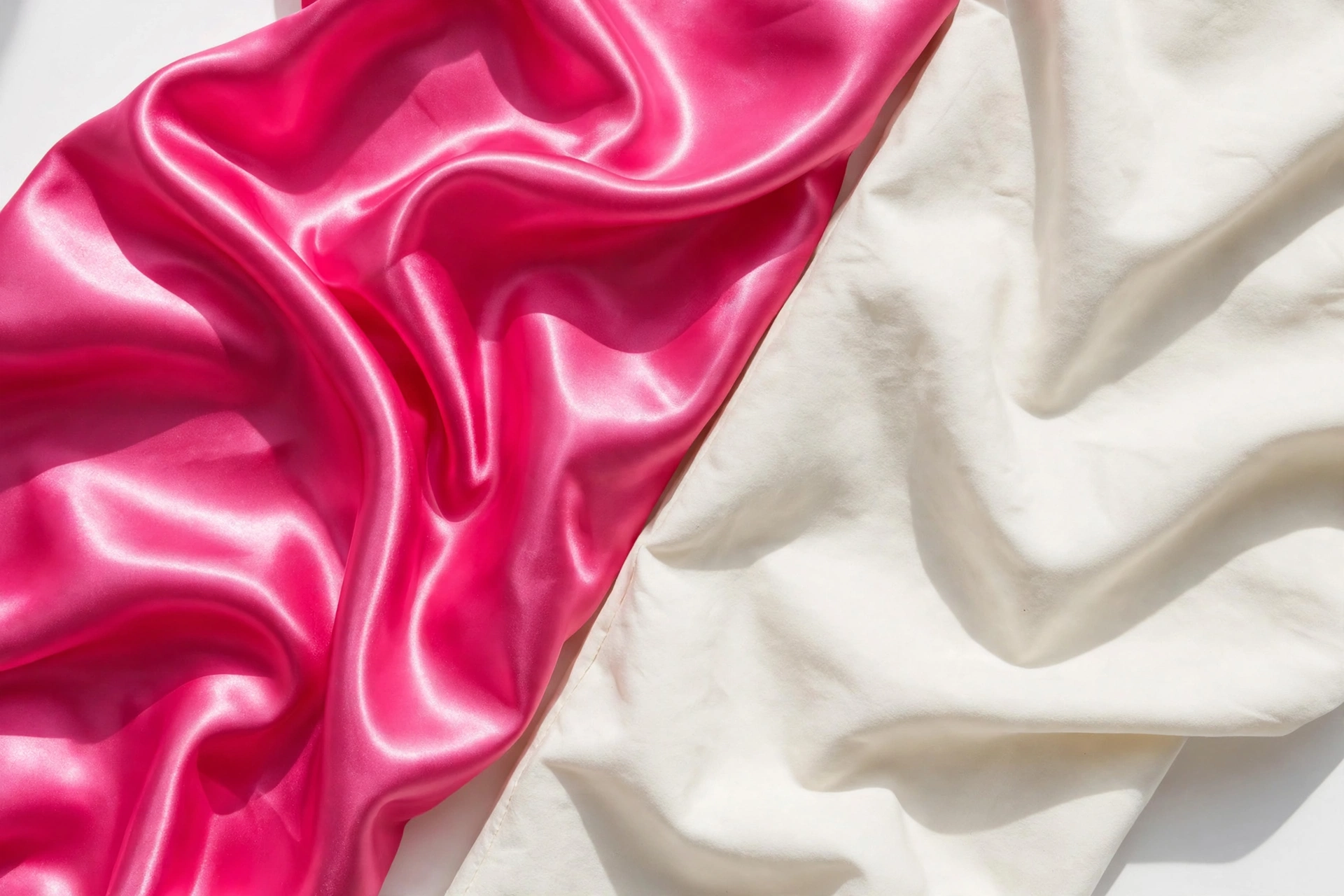
Almost every satin is warp-faced: the long floats that create the shine live on the face, and the back is a different surface. On the back, the same yarns tie down constantly instead of floating, so light scatters and the back reads matte.
This is not a flaw. It is the structure. A plain weave looks the same on both sides because every yarn ties down everywhere. Satin concentrates the smooth side on one face by design.
Three things follow. First, keep every pattern piece’s floats running the same direction, or you get the two-toned dress: same fabric, one panel bright, the other dark. Second, crepe-back satin is woven with a usable matte crepe reverse, two fabrics in one. Third, a “satin” shiny on both sides is probably a double-faced satin or a cheap all-over calendering, so check the label. Our complete guide to the types of satin maps which side each satin uses.
What does calendering do to satin shine?
Calendering is the finishing step that irons shine into fabric, literally. The cloth runs between massive heated rollers under heavy pressure, and the squeeze flattens the yarns and polishes the surface into a more light-reflective sheet. On satin it pushes the natural weave sheen up a notch or two.
Here is the part almost nobody tells shoppers: ordinary calendering is temporary. It reshapes the fibers mechanically, so the first wash or a good steaming lets the yarns relax and the extra gloss disappears. This is the most common explanation for “my satin went dull after one wash.” The satin did not break. The finish washed off.
Mills have three answers to that, and each gives a different satin:
Simple calendering. The gloss is temporary and disappears in the first laundering. Fine for garments that never see a washing machine.
Resin-set calendering. The fabric is padded with resin, calendered, then cured at around 150C, locking the flattened yarns in place so the gloss survives washing. Most washable satins carry some version of this.
Specialized calendering. Friction or glazed calendering burnishes a high polish, the chintz look. Cire calendering adds waxes or resins for a wet, almost patent-leather shine on polyester and nylon. Schreiner calendering uses a roller engraved with fine diagonal lines to imprint a soft, silky luster.
So when you judge a satin, ask whether the shine belongs to the weave or the finish. Weave shine is structural and permanent. Finish shine is a houseguest. Only one survives the laundry.
How do the satin types compare on sheen?
Every named satin is a different setting on the finish equation. Here is how the common ones stack up.
| Satin type | Sheen level | Why it shines this way |
|---|---|---|
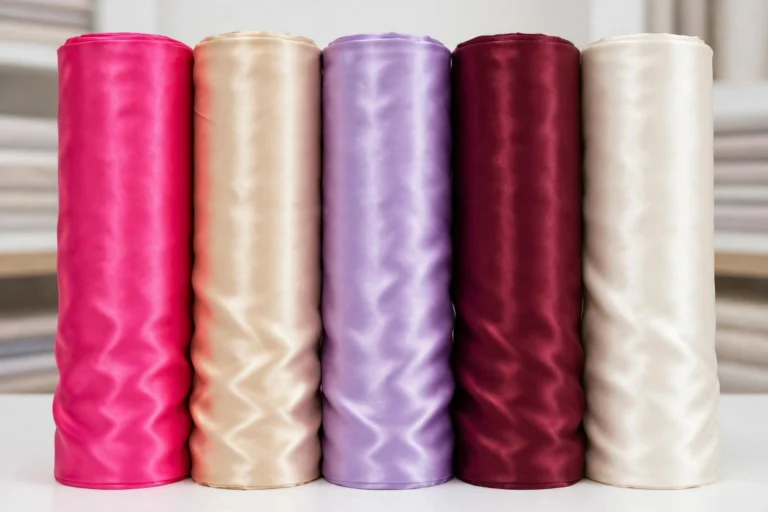
| Charmeuse | High, liquid, reflective | Long floats, smooth filament yarn, low twist, minimal delusterant. |
| Duchess satin | Medium-high, pearly and dense | Heavier yarns and tight construction diffuse the flash into a rich glow. |
| Bridal satin | Medium, controlled | Deliberately delustered polyester so it photographs without hot spots; resin-set for washability. |
| Crepe-back satin | High on the face, matte on the back | Satin weave on the face, crepe texture on the reverse. Two finishes in one cloth. |
| Polysatin (cheap) | Very high, glassy flash | Bright round filaments plus aggressive calendering; can read plasticky. |
| Cotton sateen | Low-medium, soft haze | Spun staple fiber blurs the weave’s shine into a gentle sheen. |
| Matte / delustered satin | Low, nearly flat | Delusterant plus shorter floats; satin structure with the shine dialed down. |
| Antique satin | Medium, slubbed | Slub yarns interrupt the floats for a textured, vintage shimmer. |
Read the table with the equation in mind and it becomes a decoder. Charmeuse maxes out fiber, float, and yarn. Duchess trades flash for weight and body. Cheap polysatin leans on finishing to fake what fiber and yarn do not earn. Know the type and you already know the sheen. The deep profiles live in our charmeuse satin guide and the full types guide.
How do you judge sheen quality when buying satin?
Grade a satin’s sheen in the store, no tools, about ten seconds. Four tests, in order.
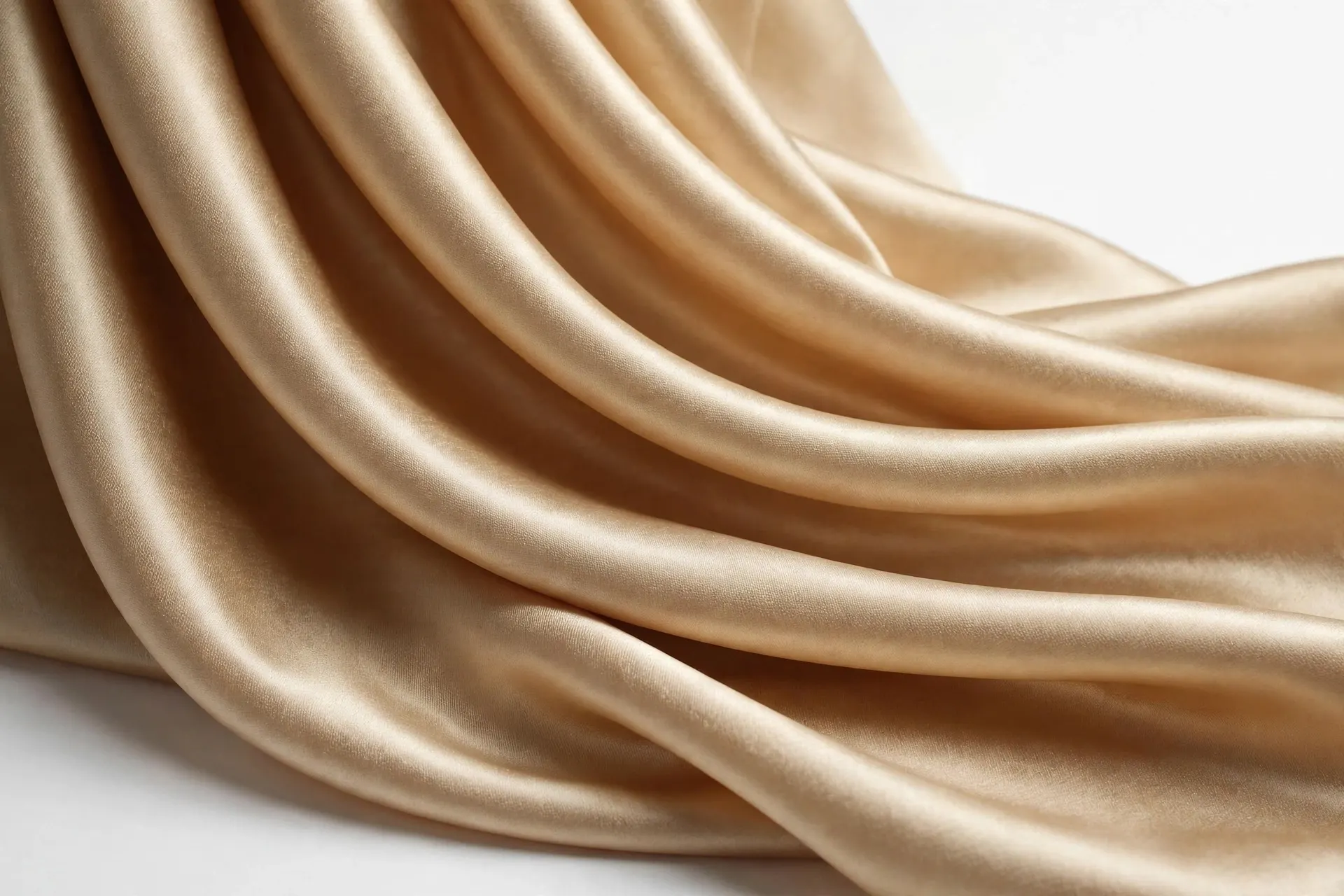
First, rake the light. Hold the fabric so light skims across it at a low angle. A weave-born sheen glows evenly along the floats. A finish-only gloss, calendering over a rough weave, breaks into patchy hot spots. If the shine looks painted on, it probably was.
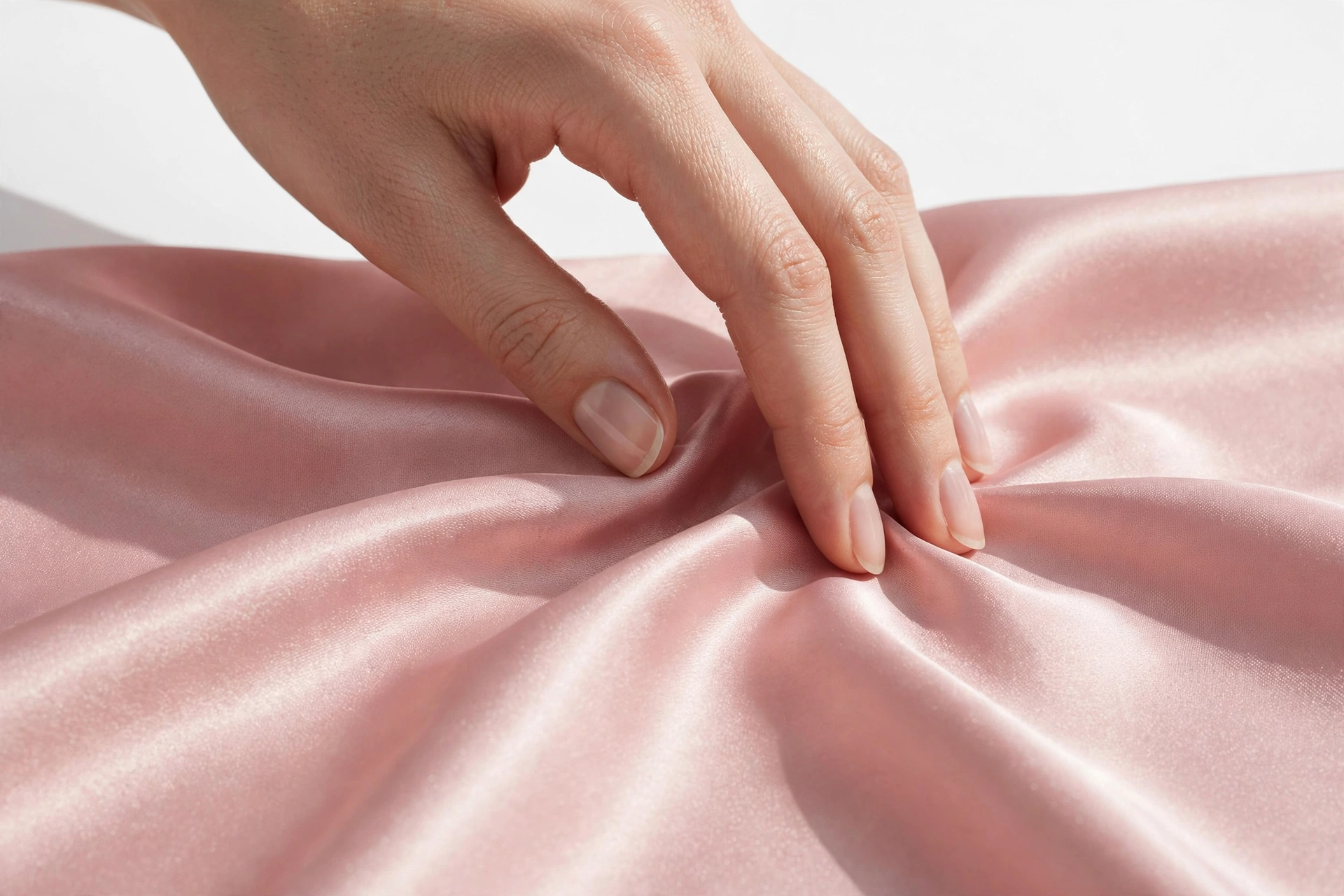
Second, check the hand. Real weave sheen comes with the smooth, cool hand of long floats. If the fabric feels rough but looks glassy, you are looking at finish, not structure. A calendered gloss feels thin and papery, while structural sheen feels liquid.
Third, scrunch and release. Crush a corner in your fist for ten seconds, then let go. A resin-set finish springs back with its gloss intact. A temporary calendering comes back visibly duller where you crushed it. This is the closest thing to a wash test you can do in a shop.
Fourth, read the fiber. The label is the quietest voice and the most truthful. Silk, acetate, nylon, or polyester filament means the sheen has structural backing. Cotton or rayon staple means expect a soft haze, with any glassy shine on the bolt coming from finish. A dull 100% polyester satin is usually delustered, a feature of bridal and suiting satins, not a defect.
One warning from experience: a mirror gloss on a suspiciously cheap satin is almost never a bargain. It is usually bright polyester filaments plus heavy calendering with no resin set. It photographs beautifully in the store and washes into something tired by the third laundry. The quieter satin on the bolt is often the one still shining a year later.
Does shine affect sewing and care?
Yes, in ways that trace straight back to the physics. The long floats that make satin shine are the same long floats that make it slippery, snag-prone, and fussy under the needle. You get the lake, and everything the lake implies.
Sewing. Shiny satin shows every mistake because light is a merciless inspector. A puckered seam on matte cotton hides in the scatter. The same pucker on satin catches a highlight and announces itself across the room. Press seams open on the wrong side with a press cloth, never iron the face directly: a hot iron on the shiny side can permanently scorch or flatten the floats. Use a fresh Microtex needle and keep every piece’s floats running the same direction. Our complete sewing guide covers the full technique set.
Care. Wash satin knowing what you are washing. If the shine was resin-set or weave-born, gentle washing keeps it. If it was a temporary calendering, the first wash takes it down a level and no detergent brings it back. Wash on the fiber’s terms: silk and acetate gently or by dry cleaner, polyester cool in the machine, and skip the tumble dryer’s heat on anything glossy. For the fiber-by-fiber rules, see our how to wash satin guide.
Wear. Sheen is a surface, and surfaces wear. Trouser seats, elbow creases, and bag-strap zones go dull as floats break and fuzz. Slow it by rotating garments and avoiding rough surfaces. A satin’s first year is its glossiest.
What do people get wrong about satin shine?
“Satin shine comes from chemicals.” No. The shine is structural, from the weave geometry putting long parallel yarns on the surface. Finishing can boost it, but no satin needs a coating to shine. Silk charmeuse proves it: it shines with almost no finishing at all.
“Shinier means better quality.” Often the reverse. The glassiest satin in the store is frequently cheap bright polyester with heavy temporary calendering. Duchess satin, the fabric of couture gowns, is deliberately less flashy. Judge satin by evenness and depth of sheen, not brightness.
“The shine washes out, so it was fake.” Half true. The weave’s shine never washes out. A temporary calendering finish does, by design, on the first wash. If your satin dulled after washing, the weave underneath is still satin. It is just showing its honest face now.
“‘Satin finish’ means the fabric.” A naming collision. In paints, wood stains, and nail polish, “satin finish” is a sheen level between matte and gloss. It has nothing to do with the fabric weave. If you searched “satin finish” looking for paint, now you know why the results feel split.
“All shiny fabric is satin.” Taffeta, lame, and coated fabrics all shine, and none of them are satin weaves. Taffeta is plain weave with twisted yarns. Lame shines because of metal threads. A “wet look” legging shines because of a coating. Satin is defined by the long-float weave, and shine alone never proves it. People confuse satin and silk constantly, so read our honest satin vs silk guide.
Frequently Asked Questions
Why is satin shiny?
Satin’s weave places long yarn floats across the fabric’s face with very few interlacing points. Those parallel floats act like tiny mirrors, reflecting light in one coherent direction instead of scattering it. The weave creates the shine; fiber and finishing only modify it.
Does satin lose its shine after washing?
The weave’s shine is permanent, but a temporary calendering finish is not. If a satin was calendered for extra gloss without a resin set, the first wash relaxes the flattened yarns and the extra shine disappears. Resin-set and unfinished silk satins keep their sheen.
Which is shinier, satin or silk?
Wrong comparison: satin is a weave, silk is a fiber. Silk woven in a satin weave is among the shiniest fabrics that exist. But polyester in a satin weave can flash even brighter, since round synthetic filaments reflect light more harshly than silk’s triangular ones.
What is the difference between satin finish and matte finish?
A satin finish means the long-float weave structure that produces sheen. A matte finish means the floats are shortened, the yarn is spun or textured, or a delusterant was added, so the surface scatters light. Matte satins are still satin weaves. They just dial the shine down.
Is 8-harness satin always shinier than 4-harness satin?
Almost always: longer floats create a larger uninterrupted reflecting surface. The exception is a rough spun 8-harness versus a fine 5-harness in smooth filament, where fiber and yarn quality can overtake the harness advantage. Harness count sets the ceiling; the other three factors decide where the fabric lands.
Why does my satin dress look two-toned in photos?
The sheen flips with direction. Satin’s floats reflect light most strongly along one axis, so two pieces cut with floats running opposite ways throw light differently. One panel bright, one dark, identical fabric. Cut every piece with the floats running the same direction.
Can you make satin less shiny?
Yes. Wash out a temporary calendering with one gentle wash, choose delustered or matte satins, pick heavier duchess over charmeuse, or turn crepe-back satin to its matte reverse side. The dull back of most satins is a built-in second option.
How do you tell real sheen from cheap gloss?
Rake light across the fabric at a low angle. Structural sheen flows evenly along the floats; finish-only gloss breaks into patchy hot spots. Then scrunch a corner: if the crushed spot comes back dull, the gloss was temporary calendering and will not survive washing.