


Satin vs Chiffon: The Honest Guide
# Satin vs Chiffon: The Honest Guide
Quick answer: Satin is a weave with long floating yarns that create a smooth, glossy, mostly opaque surface. Chiffon is a plain weave made from tightly twisted yarns that make it sheer, lightweight, and matte. Pick satin for structure and shine; pick chiffon for airiness and soft drape. The fiber (silk or polyester) matters as much as the weave, so check the label.
The 30-Second Verdict
Most "satin vs chiffon" guides compare two fabrics. That is the wrong comparison. Satin is a weave. Chiffon is a different weave. And each one comes in silk or polyester, which behave differently enough to change the answer.
The honest decision is two questions, in order: silk or polyester? Then satin weave or plain weave? Once you answer those, the choice between satin and chiffon almost makes itself. Satin gives you shine, structure, and coverage. Chiffon gives you air, movement, and a soft matte surface. Everything else in this guide follows from the weave.
Satin vs Chiffon: Side-by-Side
| Satin | Chiffon | |
|---|---|---|
| What it is | A weave: long floating yarns, few interlacings | A plain weave: tightly twisted yarns, open construction |
| Opacity | Opaque or near-opaque | Sheer; needs layering or a lining |
| Weight | Heavier dress-weight fabric | Very light, roughly half to a third the weight of dress satin |
| Surface | Smooth, glossy face with a dull back | Slightly grainy, matte, no real shine |
| Drape | Falls in smooth folds, holds shape | Floats, flutters, follows air movement |
| Feel | Cool and slippery to the touch | Dry, soft, slightly textured |
| Wrinkles | Wrinkles, and shows them clearly on the gloss | Silk chiffon sheds wrinkles fast; polyester chiffon holds creases |
| Snagging | Snags: long floats catch on jewelry and rough edges | Snags: open weave exposes filaments to pulls |
| Care | Water spots show on the gloss; press with low heat and a cloth | Delicate; hot irons and steam can damage it |
| Cost | Polyester satin is cheap; silk satin is luxury-priced | Polyester chiffon is very cheap; silk chiffon costs several times more |
| Best for | Structured gowns, linings, dresses that need presence | Overlays, flowing skirts, veils, summer bridal wear |
What Satin Actually Is

Satin is not a fiber. It is a way of weaving. The yarns float over several others before interlacing, which puts a smooth unbroken surface on the face of the cloth. That unbroken surface is the entire reason satin shines, feels slippery, and shows water spots. Light reflects evenly off the long floats instead of scattering.
Read the full guide to what satin is for the plain-English version, or the weave deep dive for the mechanism. The short version: satin weave means gloss, and gloss means the fabric will show everything. Every wrinkle, every water drop, every seam pucker sits on display. That is the price of the shine. We cover this in depth in our guide to satin vs organza. For more detail, read our guide to satin vs taffeta.
Satin comes in silk, polyester, nylon, and rayon, and the fiber changes the fabric more than most people expect. Silk satin drapes like water and costs like jewelry. Polyester satin is stiffer, cheaper, and the version in most budget bridesmaid dresses. Same weave, two very different garments.
What Chiffon Actually Is

Chiffon is also a structure, not a fiber. It is a plain weave, the simplest weave there is, made with yarns that are twisted hard before weaving. That hard twist does two things. It makes the surface slightly pebbly instead of smooth, and it leaves the weave open enough for light to pass through. Open plain weave plus twisted yarns equals sheer, airy, and matte.
Traditional chiffon was silk. Almost everything labeled chiffon in a fabric store today is polyester. Silk chiffon is softer, drapes better, and releases wrinkles quickly. Polyester chiffon is tougher, far cheaper, and holds creases stubbornly. Same name, different behavior, and the label is the only thing that tells you which one you are buying.
Chiffon is genuinely light. Trade listings put typical dress-weight chiffon around 30 to 75 grams per square meter, against dress satins that run well above that. You feel the difference the second you pick up both.
The Fiber Trap: Why "Satin vs Chiffon" Is an Incomplete Question
Here is where most comparisons go wrong. They treat satin and chiffon as two finished products, when each name hides two different fabrics.
Silk satin and polyester satin share a weave but almost nothing else. Silk satin is breathable, drapes fluidly, and presses reasonably. Polyester satin is warmer, stiffer, and shows water spots more aggressively because the gloss is harder. A comparison that calls one "satin" and moves on is comparing an average of two fabrics that do not average.
Same story on the other side. Silk chiffon feels like a cloud and costs like one. Polyester chiffon is the affordable workhorse of bridesmaid dresses, and it wrinkles, snags, and melts under an iron in ways silk chiffon does not. When someone asks "which is better, satin or chiffon," the first honest reply is "which fiber?" If the answer is polyester on both sides, you are comparing two budget fabrics and should judge them on that basis. If silk is on the table, the budget and the care rules change completely.

Opacity and Drape: The Two Things That Actually Decide
Forget shine for a moment. Shine photographs well but it is not what decides whether a dress works. Two things decide: how much shows through, and how the fabric falls.
Satin is opaque. Chiffon is not, and no amount of wishing changes that. A chiffon skirt worn as a single layer is a lining failure, not a style choice. Chiffon needs layers, two or three, or a slip underneath. That layering is also the source of its beauty. Multiple sheer layers catch light at different depths, which is why a chiffon skirt glows in a way a single flat layer never could.
Drape is the second decision. Satin falls in smooth, heavy folds and holds the shape the pattern gives it. That is why structured bodices and ball gown skirts are satin territory. Chiffon does not hold a shape. It follows the body and the air. It skims instead of sculpting, which is why it flatters more body types in simple cuts but cannot support a corseted bodice on its own.
A useful rule: if the design needs the fabric to do work, pick satin. If the design needs the fabric to disappear into movement, pick chiffon.
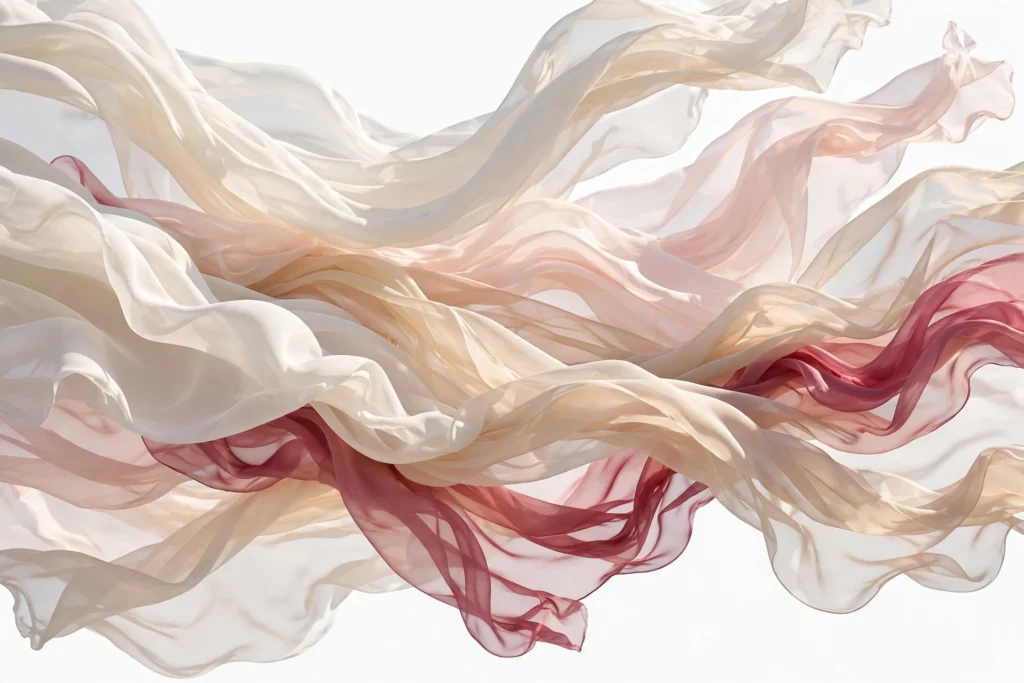
Head-to-Head by Use Case
Wedding gowns. Satin suits formal, structured gowns: ball gowns, fitted mermaid cuts, winter weddings. The weight keeps you warm and the opacity means no lining puzzles. Chiffon suits relaxed and outdoor weddings: beach ceremonies, garden settings, A-line and empire cuts that move in the breeze. Read the bridal satin guide if you are leaning toward satin for a gown.
Bridesmaid dresses. This is where the debate actually lives. Chiffon wins for comfort across a long day. It is lighter, breathes better, and drapes forgivingly over different body shapes, which matters when one dress has to fit five different people. Satin wins for formal evening weddings and photographs with more drama. One honest warning from real brides: satin shows curves without mercy, so pregnant bridesmaids and satin are a hard combination. Chiffon in an empire cut is the kinder choice.
Eveningwear and cocktail dresses. Satin owns this category when the dress is meant to look expensive. The gloss reads as luxury under artificial light. Chiffon works for softer, romantic evening looks, usually layered over a satin or crepe base. A chiffon overlay on a satin dress is the classic combination: structure underneath, air on top.
Scarves, veils, and overlays. Chiffon, easily. Sheerness is the point here, and satin has none to offer.
Sewing. Both are difficult, in opposite ways. Satin shifts under the presser foot because the long floats slide, so it wants a walking foot and sharp microtex needles; the full method is in the satin sewing guide. Chiffon is worse for beginners. It frays if you look at it, stretches out of shape on the bias, and needs French seams or rolled hems because raw edges cannot be left exposed. Stabilize it with tissue paper under the seam or a light starching before cutting. Press both with low heat and a press cloth. Never press chiffon with a hot iron; polyester chiffon melts and silk chiffon scorches.

The Color Lie Nobody Warns You About
Brides learn this one the hard way. The same dye formula looks like a different color on satin and chiffon. Satin's glossy surface reflects more light, so colors read darker and richer. Chiffon's sheer open weave scatters light, so the identical dye looks lighter and flatter. Side by side, they do not match, even when the dye lot is the same.
This matters because mixed-fabric bridal parties are trendy. Satin dresses for the maid of honor, chiffon for the rest, all in "dusty rose." In the photos, the satin reads as deep rose and the chiffon reads as pale pink. Real brides on wedding forums report exactly this surprise, and the advice is consistent: if you mix satin and chiffon in one color line, order swatches first and look at them together in daylight. Or accept that the fabrics will photograph as two different shades.
The same effect applies to separates. A satin camisole and a chiffon overskirt in the "same" color will not look like a matched set. Charmeuse sits in the middle here, with a softer sheen than bridal satin, which is why it blends with chiffon overlays more gracefully.

Which Should You Buy? Honest Verdicts
- Formal winter wedding, structured gown: satin. The weight, warmth, and structure are doing real work. Silk satin if the budget allows, bridal satin if it does not.
- Beach or summer outdoor wedding: chiffon. Breathable, light, and it photographs beautifully in motion. Layer it or line it.
- Bridesmaid dresses for mixed body types: chiffon in an empire or A-line cut. It drapes instead of clinging, and everyone stays comfortable.
- Maximum glamour in evening photos: satin. Nothing photographs like gloss under event lighting.
- A dress that does both: satin base with a chiffon overlay. This is the most common solution in actual bridal design, and it exists because the fabrics solve each other's weaknesses.
- First sewing project: neither. Satin slides and chiffon frays. If you must pick one, satin with a walking foot is the easier fight.
- Tight budget: polyester chiffon is the cheapest way to look romantic; polyester satin is the cheapest way to look formal. Judge both as budget fabrics and you will not be disappointed.
How to Tell Them Apart in a Store
Hold the fabric up to light. If you can read a price tag through it, that is chiffon. Satin blocks the light. Scrunch a corner in your fist. Satin feels cool and slippery and springs back with creases that show on the gloss. Chiffon feels dry and slightly rough and unfolds with a soft crinkle. Check the label for the fiber before you decide anything about care or price: "100% polyester chiffon" and "100% silk chiffon" are different fabrics wearing the same name. If the label just says "satin" with no fiber, assume polyester and check the satin finish guide to understand what the sheen level tells you.
For the deeper taxonomy of which satin is which, the types of satin guide sorts them by name instead of by label guesswork.

FAQs
Is chiffon a type of satin?
No. Chiffon is a plain weave made with tightly twisted yarns. Satin is a satin weave with long floating yarns. They are different structures that produce opposite surfaces: chiffon is sheer and matte, satin is opaque and glossy.
Which is better for a wedding dress, satin or chiffon?
It depends on the wedding. Satin suits formal, structured gowns and cooler seasons because it is heavier, opaque, and holds shape. Chiffon suits relaxed, outdoor, and warm-weather weddings because it is light, breathable, and moves beautifully. Many gowns use both: a satin base with a chiffon overlay.
Is satin or chiffon more expensive?
The fiber decides, not the weave. Polyester versions of both are inexpensive, with polyester chiffon usually the cheapest of all. Silk satin and silk chiffon both cost several times more than their polyester equivalents. A "satin vs chiffon" price comparison without naming the fiber is meaningless.
Can you wear chiffon without a lining?
Not as a single layer. Chiffon is sheer by construction, so an unlined chiffon skirt or dress shows everything underneath. Wear it in two or three layers, or over a slip or a satin base layer. The layering is part of the look.
Which wrinkles less, satin or chiffon?
Silk chiffon sheds wrinkles faster than satin and recovers well from packing. Polyester chiffon holds creases stubbornly. Satin wrinkles too, and its glossy surface makes every crease more visible than it would be on a matte fabric.
Does satin or chiffon snag more?
Both snag, for opposite reasons. Satin's long floating yarns catch on jewelry, zippers, and rough surfaces. Chiffon's open plain weave leaves individual filaments exposed, so pulls and runs happen easily. Neither fabric belongs near Velcro.
Can I mix satin and chiffon bridesmaid dresses in the same color?
Order swatches first. The same dye looks darker and richer on satin and lighter on chiffon, and the two photograph as different shades. Many brides mix them successfully, but only after checking the swatches together in daylight.
Why This Guide Is Unbiased
Most satin vs chiffon pages are written by stores selling one of the two. This guide sells neither. The comparisons above follow from weave structure and fiber content, not from inventory. If you spot an error, say so, and it gets fixed with the correction noted.


