


Satin Color Library: 22 Satin Shades, Their Uses and How They Behave in Light
What is the Satin Color Library?
The Satin Color Library is a guide to 22 satin shades, grouped into five families: neutrals, warm metallics and earth tones, pinks and reds, purples and deep tones, and blues, greens and black. For each family you get the shades, what they suit, how they behave in light and how to look after them, with links to the full guide when we have one.
Colour is harder to judge in satin than in almost any other fabric. The long floats that give satin its shine reflect light like small mirrors, so the same cloth can look pale at one fold and deep at the next. That is why the chart below shows three blocks for every shade: the body colour, the highlight and the shadow. When you pick a satin colour, judge it in daylight, and ask for a swatch.

The shades were sampled from photographs of real fabric, so they are approximate and will differ a little on every screen. Use them to compare shades with each other, not to match a paint colour.
Why does satin look different in different light?
Satin looks different in different light because its floats are long, parallel and flat, so they reflect light in one direction instead of scattering it. Where a fold catches the light, you see the highlight. Where it turns away, you see the shadow. The result is a wider range of tone than a matte fabric of the same dye would show. Read how satin floats work and how drape and shine interact for the full explanation.
This has three practical effects. First, a pale satin photographs lighter and a dark satin photographs darker than it looks in person. Second, a satin skirt or dress shows every fold as a change in colour, so a slim cut looks darker than a full one. Third, a satin in a deep shade, such as black or navy, shows grey highlights where light catches the folds.
Which neutral satin colours are there?
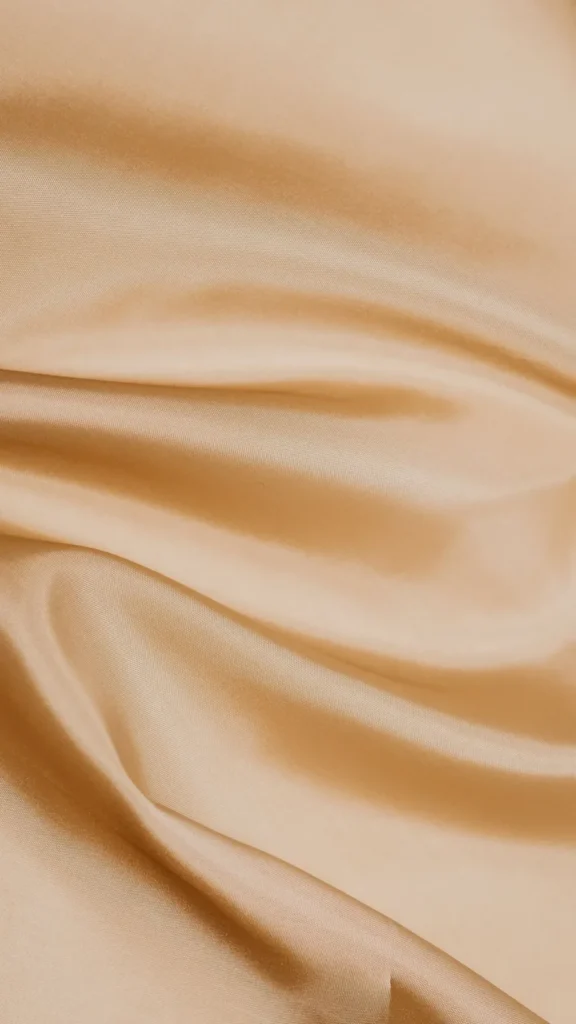
Neutrals are the most used satin colours, because they suit weddings, evening wear and everyday sleepwear. The table separates white, ivory, cream and champagne, which are easy to confuse, and adds silver and grey. If this is your question, see our guide to gold satin.


| Shade | Undertone | Typical use | Read more |
|---|---|---|---|
| White | Cool to neutral | Bridal, sleepwear, blouses | White satin guide |
| Ivory | Warm, slightly yellow | Bridal gowns, christening wear | Bridal satin |
| Cream | Warm, softer than ivory | Blouses, linings, everyday dresses | Satin dress guide |
| Champagne | Warm, with a pink or gold cast | Evening dresses, bridesmaids | Champagne satin dress |
| Silver | Cool, metallic look | Evening wear, accessories | Satin dress guide |
| Grey | Cool to neutral | Sleepwear, suiting, co-ords | Satin co-ords |
Ivory and white are the pair most often mismatched. Put them next to each other in daylight before you commit, because white can look stark against warm skin and ivory can look yellow against a cool white. Our white satin guide explains how to test them.
Which warm and earth-tone satin colours are there?
Warm metallics and earth tones include gold, antique gold, taupe and greige. They are less common than neutrals, and they reward good lighting, because the highlight and the shadow sit far apart in tone.


| Shade | Look in light | Typical use | Read more |
|---|---|---|---|
| Gold | Bright highlights, deeper amber shadow | Evening wear, accessories | Antique satin |
| Antique gold | Muted, with a slubbed surface | Drapes, formal dresses | Antique satin guide |
| Taupe | Soft grey-brown, calm shine | Sleepwear, trousers, shirts | Satin shirt guide |
| Greige | Between grey and beige | Linings, shirts, co-ords | Satin co-ords guide |
Which pink and red satin colours are there?
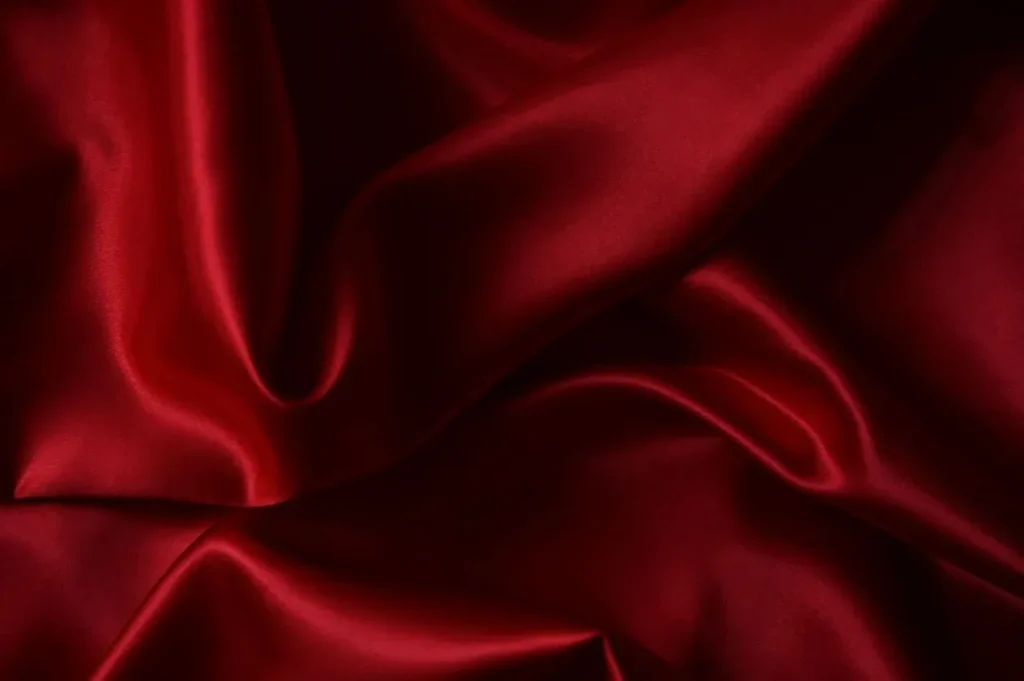
Pinks and reds are the most photographed satin colours, from pale pink and blush to hot pink, red and burgundy. They are also the colours with the widest spread of highlight to shadow, so a red satin gown can look nearly orange where it catches the light and nearly black in the deepest fold.


| Shade | Look in light | Typical use | Read more |
|---|---|---|---|
| Pale pink | Soft and light, shows folds gently | Bridesmaids, sleepwear | Pink satin dress |
| Blush | Warm pink-beige, flattering to many skin tones | Bridal, lingerie, blouses | Pink satin dress |
| Pink | Mid pink, clear highlight | Dresses, pajamas | Pink satin dress |
| Hot pink | Strong, saturated, bright highlight | Party wear, accessories | Pink satin dress |
| Red | Deep, with orange-red highlights | Evening dresses, robes | Red satin dress |
| Burgundy | Dark wine, close to black in shadow | Suits, skirts, robes | Men’s satin fashion |
Which purple and deep-tone satin colours are there?
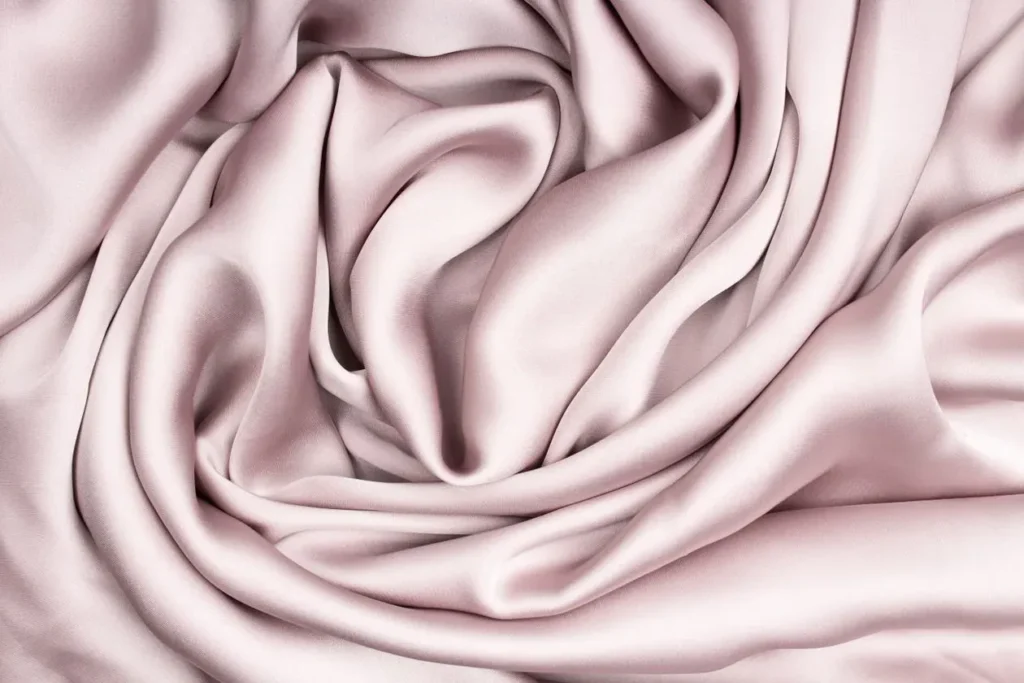
Plum, deep rose and wine tones read as rich and formal. They are forgiving, because dark colours hide small marks, but they are more likely to transfer dye by rubbing, a fault called crocking. Test with a damp white cloth before the first wear, and wash separately for the first few washes.


Which blue, green and black satin colours are there?
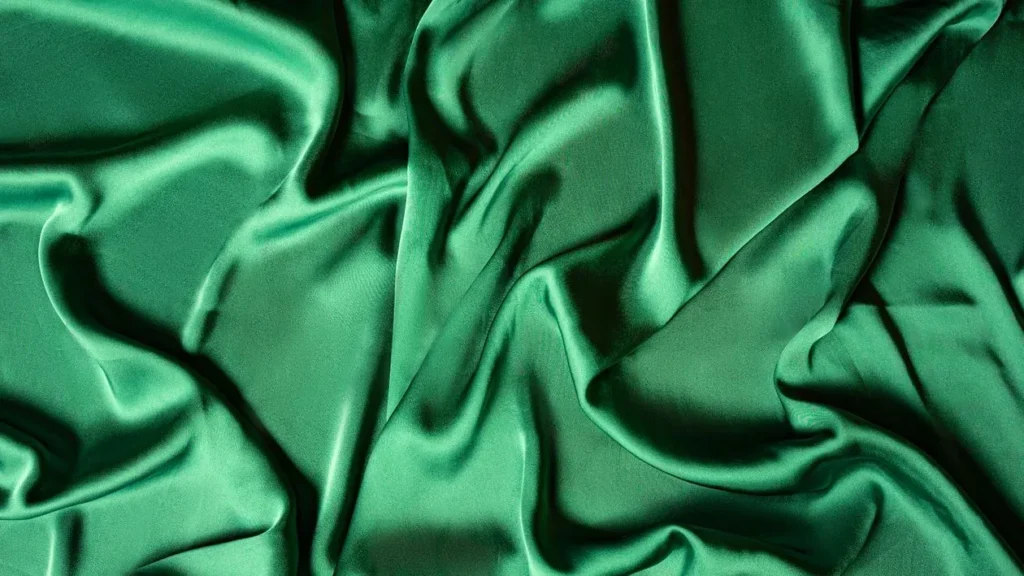
Navy, sapphire, teal, green and black make up the deepest part of the range. They are the most common in eveningwear and suiting, and they show the largest difference between the body colour and the highlight. Green and black each have their own guides: green satin and black satin.


| Shade | Look in light | Typical use | Read more |
|---|---|---|---|
| Navy | Near black, with blue highlights | Suits, evening dresses, linings | Satin suits and tuxedos |
| Sapphire | Deep, vivid blue | Gowns, bridesmaids | Blue satin dress |
| Teal | Blue-green, rich shadow | Dresses, scarves | Satin scarf |
| Green | From emerald to bottle, strong highlight | Evening wear, pajamas | Green satin guide |
| Black | Grey highlights, deep shadow | Dresses, skirts, tuxedo facings | Black satin guide |
How does satin get its colour?
Colour is added in dyeing, and the dye class depends on the fibre. Silk and nylon take acid dyes. Polyester takes disperse dyes at high temperature, about 130 degrees Celsius for an hour in the method described by Jozi and Izadan in 2022, followed by reduction clearing to remove loose dye. Because the process is chemically heavy, the authors note it is not environmentally friendly. See how satin is dyed and finished and whether you can dye satin at home.
Colourfastness is tested in labs with the ISO 105 series, described by Centexbel. The series covers washing, rubbing, light and perspiration, so a good report tells you how a shade will behave in real use. A mill that can quote results is a better bet than one that cannot.
How do you choose the right satin colour?
- Start with the use. Sleepwear and everyday blouses suit soft shades. Evening wear and bridal wear suit rich or pale ones.
- Check the undertone. Warm shades such as ivory and champagne tend to flatter warmer skin, and cool shades such as white and silver tend to flatter cooler skin. Treat this as a rule of thumb and try it on.
- Think about shine. A pale satin shows less contrast. A deep satin shows more.
- Order a swatch. Screens misrepresent satin more than other fabrics. A swatch settles it.
- Buy once. Dye lots differ, so buy all the yardage together. See satin fabric by the yard.
- Read the care label. Dark and saturated shades are the ones most likely to run or crock.
Care also changes by colour. Pale satin shows water marks and stains, and dark satin shows lint and chalky marks, so use the gentle methods in how to wash satin. For storage guidance on textiles in general, see the Canadian Conservation Institute’s page on textiles and costumes, which stresses limiting light exposure to slow fading.
Which satin colour suits which occasion?
Occasion matters more than trend when you choose a colour. This table gives a starting point, and the guides linked earlier give the detail for each shade.
| Occasion | Safe choices | Bolder choices | Avoid |
|---|---|---|---|
| Wedding (bride) | Ivory, white, champagne | Blush, pale pink | Strong white in harsh light if it reads stark |
| Wedding guest | Champagne, sapphire, teal, plum | Red, emerald | White and ivory, which are usually reserved for the bride |
| Evening and black tie | Black, navy, burgundy | Sapphire, green, gold | Very bright shades under bright stage lighting |
| Sleepwear | Blush, taupe, grey, navy | Hot pink, red | Very dark dyes that may crock onto sheets |
| Everyday blouse | Cream, taupe, greige, black | Teal, pink | Stark white if it shows through |
| Menswear | Black, navy, burgundy | Green, plum | Hot pink unless it is intentional |
How should you care for satin by colour?
Care follows the fibre, but colour changes the risk. Dark and saturated shades are more likely to crock or bleed, and pale shades show marks and water spots more. Pre-test any new product on a hidden seam.
| Colour group | Main risk | What to do |
|---|---|---|
| White, ivory, cream | Yellowing, water marks, stains | Store away from light, spot clean quickly, avoid chlorine bleach |
| Pinks and reds | Bleeding and crocking when new | Wash separately for the first washes, test with a damp white cloth |
| Navy, black, deep green | Lint, chalky marks, fading | Wash inside out in cool water and dry in shade |
| Gold and metallic looks | Dulling from heat | Use low heat only and a press cloth |
For washing steps, see how to wash satin and how to iron satin.
Frequently asked questions
What is the most popular satin colour?
Black, white, ivory and champagne are the staples for dresses and bridal wear, and pink and red lead for sleepwear and party wear. Popularity varies by product, so treat this as a general pattern.
What is the difference between ivory and white satin?
White is neutral to cool, and ivory has a warm, slightly yellow undertone. Compare them in daylight.
What colour is champagne satin?
A pale gold with a pink or beige cast. It sits between ivory and gold.
Why does my satin look different in photos?
Satin reflects light by angle and screens vary, so the colour shifts between photos. A swatch in daylight is the best check.
Does black satin fade?
Yes, with sun and washing. Wash cool, inside out and dry in shade to slow it.
Can dark satin stain other clothes?
It can, especially when new. Wash it separately for the first few washes and test with a damp white cloth.
Is it better to buy satin by colour name or code?
Use the code or a swatch when you can, because colour names vary between sellers.
Where can I see all satin colours together?
The shade chart on this page shows 22. The Satin Visual Library shows more fabrics and garments.
Where to go next
Go deeper on a single colour with the white, black or green guides, or match colours to garments with fashion by satin type. The Satin Visual Library shows these shades in photos, and the Satin Glossary defines the terms.

