


Satin Visual Library: Weaves, Diagrams, Comparisons and Garments in Pictures
What is the Satin Visual Library?
The Satin Visual Library is a curated set of images that show satin rather than describe it: weave close-ups, original diagrams, side-by-side fabric comparisons, garments on display mannequins and the steps of making and caring for satin. Every image links back to the guide that explains it, so you can move from seeing to understanding in one click.
Pictures are the fastest way to learn what a word like float, drape or lustre means. A float is easy to define and hard to picture, until you see it magnified. Use the sections below in order for a short course in reading satin by eye, or jump to the one you need. For definitions, keep the Satin Glossary open, and for the numbers behind the pictures see the Satin Database.


What does satin look like up close?
Under magnification, satin is a surface of long, parallel threads that lie flat. Each thread travels over several crossing threads before it dips under, and those long runs, called floats, act as tiny mirrors. This is the whole reason satin shines. The three images above show warp floats in three colours, and the images below compare satin with the fabrics it is most often confused with.
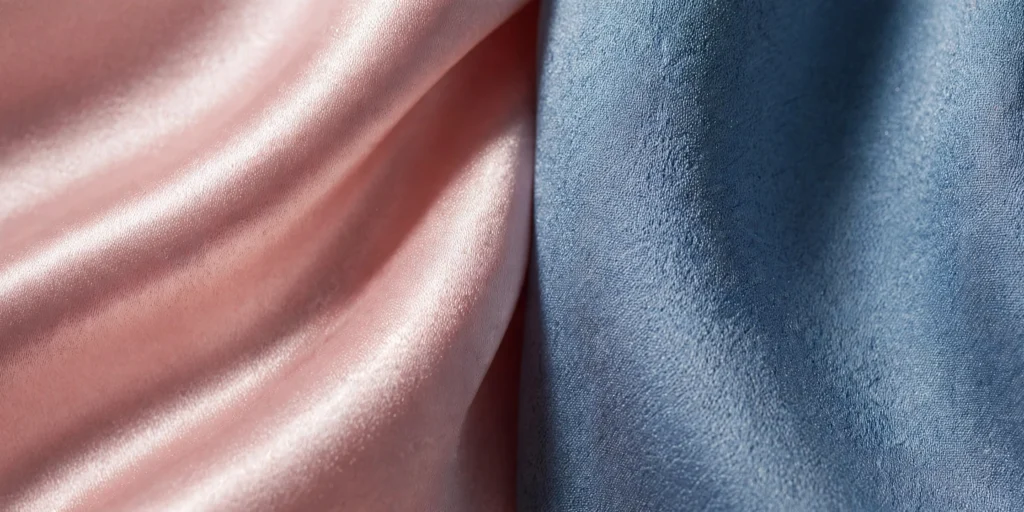


Left to right, you can see satin against sateen, a microfibre structure and a velvet pile. Satin and sateen use the same pattern, but sateen is built from short cotton fibres, so its surface is softer and less glassy. Microfibre has no special weave at all, only very fine fibres. Velvet shines from a pile of cut tufts, so its shade changes as you turn it. For the full comparisons, read satin vs sateen, satin vs microfibre and satin vs velvet.


Here are stretch, slipper and duchess satin close up. The weave is the same idea in each, but the yarn, the density and the finish change how the floats catch the light. Stretch satin carries elastane, slipper satin is made firm, and duchess satin is made heavy. See stretch satin, slipper satin and duchess satin.
Which diagrams explain satin best?
The diagrams below are original to Satin Universe. They turn the big ideas into a single picture each, so they are the quickest route to the concept. On a phone, swipe a diagram sideways to see all of it.
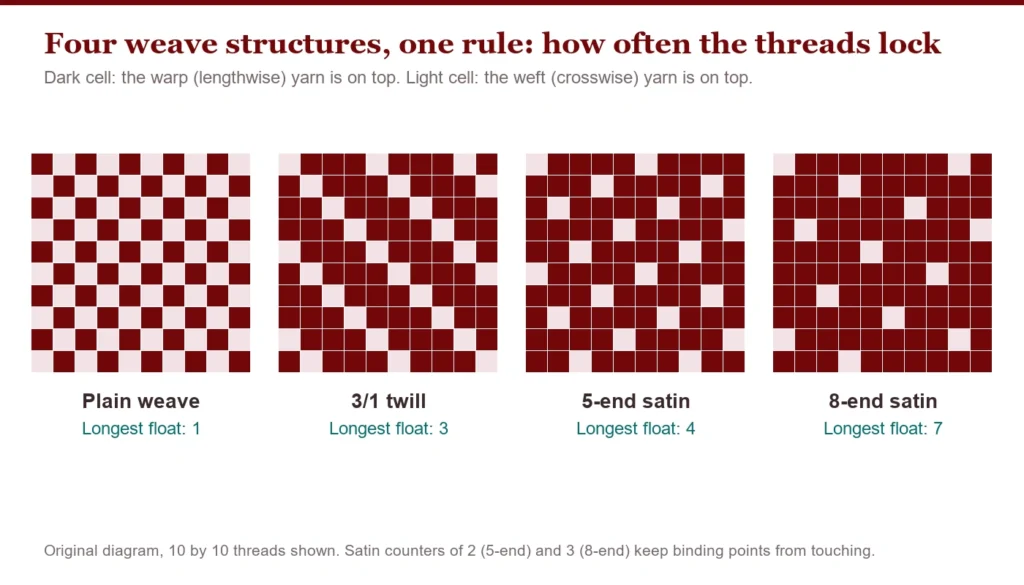
What the weave looks like. Read the full guide: What Is Satin Weave? The Complete Guide.

How long floats differ by weave. Read the full guide: Satin Floats Explained: Why Satin Shines and Snags.

Why floats shine. Read the full guide: Satin Floats Explained: Why Satin Shines and Snags.

What controls drape. Read the full guide: Satin Drape and Shine: What Controls Them and How to Judge Them.

How to measure GSM. Read the full guide: GSM in Satin: What Fabric Weight Means and How to Measure It.

Momme to GSM to ounces. Read the full guide: Momme Explained: What Silk Weight Means and What to Buy.

The momme weight ladder. Read the full guide: Momme Explained: What Silk Weight Means and What to Buy.

Dyeing and finishing steps. Read the full guide: Satin Dyeing and Finishing: How Colour and Gloss Are Made.

Satin type by garment. Read the full guide: Fashion by Satin Type: Which Satin to Choose for Each Garment.

Body and lustre of satin types. Read the full guide: Peau de Soie: What It Is and Why Every Definition Differs.

Where satin goes on a tuxedo. Read the full guide: Satin Suits and Tuxedos: Where Satin Belongs on Formalwear.

Satin in menswear through time. Read the full guide: Men’s Satin Fashion: Suits, Shirts, Jackets, Ties and Sleepwear.
How do different satins compare side by side?
Seeing two fabrics together teaches more than reading about either. These pairs show the differences that matter most when you choose: fibre, body, face and back, and stretch.


Silk and polyester satin look alike in a photo and differ in the hand. Silk usually has a deeper, softer glow, while polyester usually has a brighter, more uniform gleam. Read silk satin versus polyester satin for the checks that work in a shop.


Duchess and bridal satin differ in stiffness and lustre, and crepe-back satin shows two faces in one cloth, a glossy satin side and a matte crepe side. See bridal satin and crepe-back satin.


Drape is the difference you notice first on a body. Charmeuse falls in fluid folds, slipper satin holds a firmer line, and stretch satin follows the body while keeping its shine.
How does satin look on a garment?
A fabric behaves differently when it is cut and sewn. These garments are shown on display mannequins so the focus stays on the cloth, the cut and the fall of the fabric.


Notice how the slip dresses fall straight and close, while the gowns hold a fuller skirt. The straight, clinging fall is typical of light satin cut on the bias. The fuller shape needs a heavier cloth or an underskirt. For more, see the satin dress guide and fashion by satin type.


Menswear uses satin in a quieter way: as a suit in a deep colour, as a robe, or as an evening shirt. See men’s satin fashion and satin suits and tuxedos.
How is satin made, finished and cared for?
The last set of images follows satin from yarn to wardrobe: low-twist filament on bobbins, the loom, the calendering rollers that polish the surface, and the care steps that keep it looking new.


Filament yarn with little twist lies flat, which keeps floats smooth. The loom then arranges those yarns so floats dominate the face, and calendering presses the cloth between heated rollers to raise the sheen. See how satin is made and dyeing and finishing.


Ironing, steaming and dyeing all carry risk for satin because heat and water change the surface. Use low heat, test first and read the label. See how to iron satin and can you dye satin.
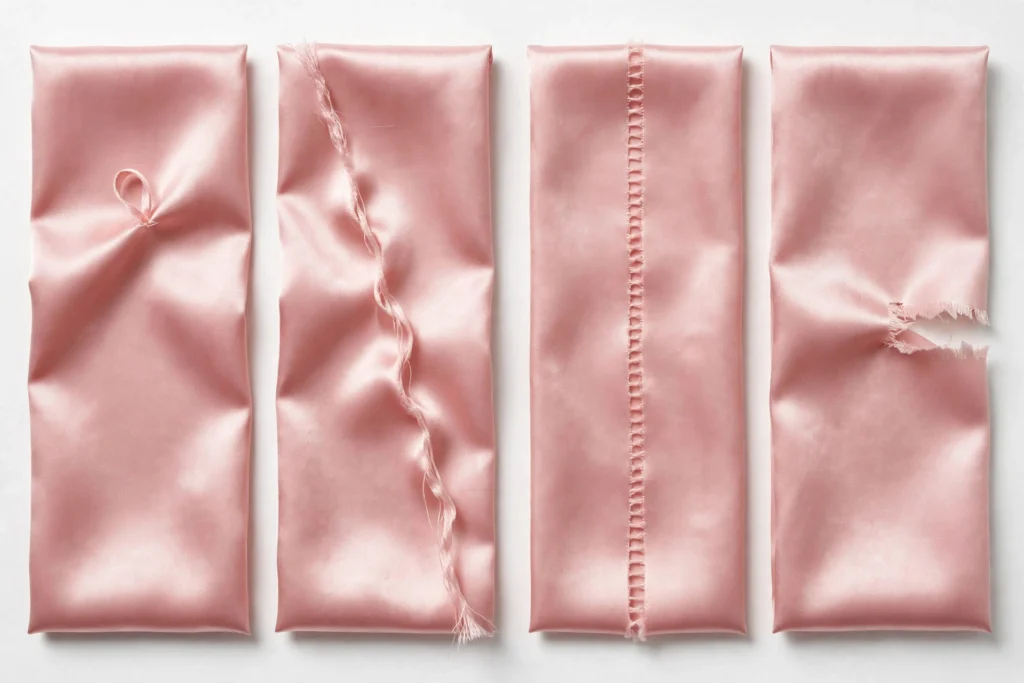

Snags happen because floats are long and loose. The repair guide shows how to grade the damage and fix it without cutting the thread: how to fix snagged satin.
How can you tell silk from polyester satin by sight?
Photos can mislead, so treat any visual cue as a hint and not proof. Silk satin often shows a deeper, softer glow, while polyester satin often shows a brighter, whiter highlight. The label is the only reliable answer. In the United States, the Textile Fiber Products Identification Act sets what a fibre content label must say, and the Canadian Conservation Institute explains how to look after fabrics in its guidance on textiles and costumes.
Which image answers which question?
Use this table to jump to the picture that answers your question fastest. Each row names the image type and the guide that explains it in words.
| If you want to know | Look at | Then read |
|---|---|---|
| Why satin shines | The macro photos and the float diagrams | Satin floats |
| How satin differs from sateen | The satin and sateen macro comparison | Satin vs sateen |
| How heavy a fabric is | The momme ladder and the conversion chart | Momme explained |
| How to measure weight yourself | The GSM measuring diagram | GSM in satin |
| Which satin suits a garment | The type by garment matrix | Fashion by satin type |
| Where satin goes on formalwear | The tuxedo diagram | Satin suits and tuxedos |
| How colour and gloss are made | The dyeing and finishing diagram | Dyeing and finishing |
| How to repair a snag | The snag grading and repair photos | Fixing snagged satin |
How should you read a photo of satin?
A photo of satin is a record of one moment of light, not of the fabric itself. Three habits help you read one well. First, look for the highlight and the shadow together, because their gap tells you how glossy the fabric is, and a wide gap means a high-lustre satin. Second, look at how the folds fall: soft, rounded folds point to a light, fluid cloth, and wide, stiff folds point to a heavy one. Third, check the edges of the fabric, where the surface turns away from the camera, because a good satin keeps its colour there while a cheap one goes grey.
Remember too that product photos are edited. Colour is adjusted and shine is often boosted, so a swatch in your own light is the only fair test. The Satin Color Library explains why the same fabric looks different from one image to the next.
Frequently asked questions
Can I use these images?
The diagrams and photos on Satin Universe are for reading and sharing by link. Please do not republish them without permission.
Why do some photos show only mannequins?
Mannequin shots keep attention on the fabric and the cut, and they avoid showing people in sleepwear or underwear.
What is the best image to understand a satin float?
Start with the float length chart and the diagram of why floats reflect light, both in the diagram section.
Why does the same satin look different in different photos?
Satin reflects light by angle, so a change in light or fold changes the shade and the highlight.
How do I tell charmeuse from duchess in a photo?
Charmeuse falls in soft, fluid folds. Duchess holds a stiff, wide shape.
Where can I see satin colours?
Use the Satin Color Library for shade names and uses by colour.
Are the diagrams accurate?
They are simplified illustrations built from the sources in the linked guides, and they show structure, not exact scale.
What does a satin swatch look like when it is ruined by heat?
The surface turns flat, hard or glazed, and the shine goes patchy. That is heat damage.
Where to go next
Pair the pictures with the words. The Satin Glossary defines every term used here, the Satin Database holds the tables, and the Satin Color Library shows the shades.