


Satin Bralettes: Fit, Fabric and Care
What is a satin bralette, and how is it different from a satin bra?
A satin bralette is a soft, usually wire-free top worn as underwear or loungewear, made from or covered in satin. It differs from a satin bra mainly in structure. A bra normally has shaped or molded cups, a firmer band and often underwire, while a bralette is typically unlined or lightly lined, with little or no padding. The bralette trades support and shaping for comfort and a lighter look.
Satin changes both. It adds a smooth, glossy surface and a dressier feel, but woven satin does not stretch, so the design has to make room for movement in other ways. This guide explains who a satin bralette suits, how it should fit, which fiber to choose, and how to wash it so it keeps its shape. If you want the structured version, read our satin bra guide, and for the wider family of sets and slips, see the satin lingerie guide.
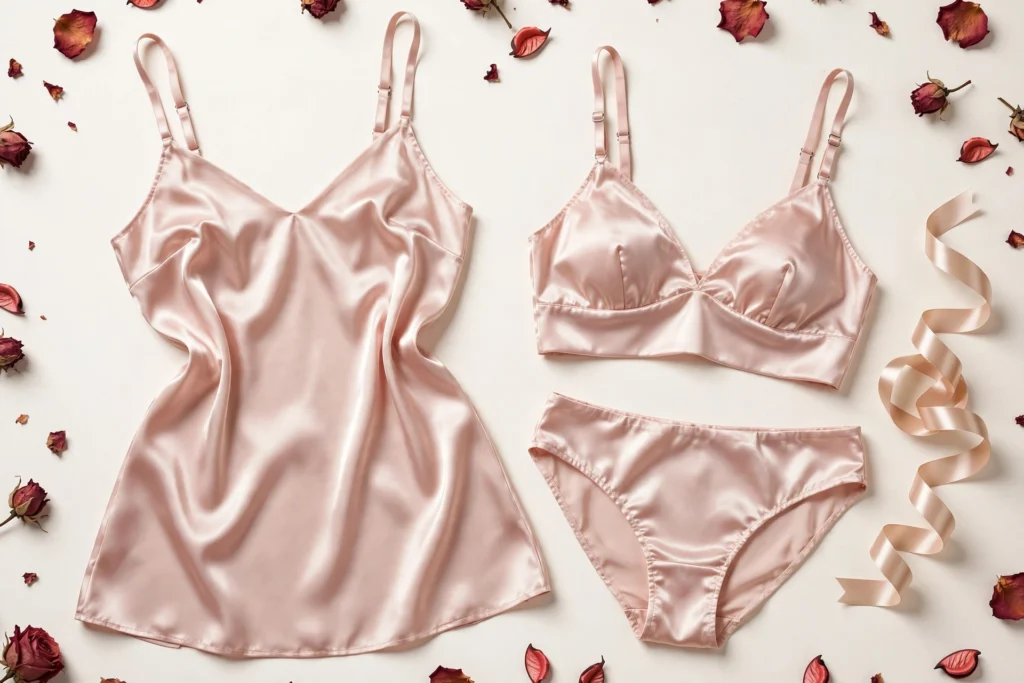
Who is a satin bralette for, and who should choose a structured bra?
A satin bralette suits low-impact wear: lounging, sleep, layering under open necklines and relaxed days. It is a weaker choice when you need firm support, such as for exercise, a long day on your feet, or a fuller bust. Support depends on design and fit as much as on fabric. As the University of Wollongong’s Breast Research Laboratory puts it, “For a bra to be comfortable and provide adequate support, it must fit properly”, and breasts “contain no supportive muscle or bone” (University of Wollongong, Biomechanics of Breast Health).
| If you want | A satin bralette | A structured satin bra |
|---|---|---|
| Comfort for lounging or sleep | A strong fit | Fine, but heavier |
| Light layering and a soft look | A strong fit | Can look bulky |
| Firm lift and shaping | Limited | A better fit |
| Support for a fuller bust | Often not enough | A better fit |
| Wear under fitted tops | Edges and shine can show | Molded cups hide edges better |
| Easy care | Often simple | Can have wires and foam to protect |
If you are unsure, try both. Many people keep a satin bralette for evenings and weekends and a structured bra for work or activity.
What does satin change about how a bralette fits and feels?
Satin changes stretch, grip, shine and thickness. A cotton or jersey bralette gives with your body, while a woven satin one only moves where the design allows. Each difference has a practical consequence.
| Satin trait | What it does | What to look for |
|---|---|---|
| Little stretch | Cups and bands that do not adjust to your shape | A stretch back or band, elastic trim, or stretch satin with elastane |
| Smooth, low-friction surface | Straps slide and bands ride up | Wider adjustable straps, a snug band, a racerback or a halter shape |
| Glossy finish | Highlights show seams, edges and wrinkles | A lining, flat seams and smooth edges |
| Thin fabric | Shape can show through, and it can feel cold | A double layer at the cups, or a light lining |
| Low breathability (polyester) | Can trap heat and sweat | Silk, a loose cut or a lining that breathes |

How should a satin bralette fit?
A satin bralette should sit level and stay in place, with the cups containing the breast without gaping or spilling. Do not choose by size label alone. Sizing in bralettes is often S, M and L, and the fit varies between brands. Research on bra sizing shows why the label can mislead. A study by Jenny White and Joanna Scurr in the journal Ergonomics (2012) measured 45 women and compared the traditional tape-measure method with professional fitting criteria. It found that the traditional method tended to overstate band size and understate cup size, and its inaccuracy grew as band size increased (University of Portsmouth Research Portal, Evaluation of professional bra fitting criteria).
That study looked at underwire bras, so apply it as a general reminder, not as a rule for bralettes. The practical lesson is to try the bralette on and check how it fits, instead of trusting a measured number. Use these checks, which are common fitting practice:
- Band. It should sit level around the body and feel snug, not tight. It should not ride up your back when you raise your arms.
- Cups. The fabric should lie flat. If it wrinkles, the cup is too big. If you spill over the top or sides, it is too small.
- Straps. They should stay on the shoulders without digging in. If they slip, shorten them or choose a style with straps that sit closer to the neck.
- Centre. The front should sit flat against the body, or close to it, without gaping.
- Movement. Raise your arms, bend over and sit. A bralette that shifts a lot or digs in will do the same all day.
- Shape under clothes. Look in a mirror with the outfit you plan to wear, because satin shows shape and edges.
If the bralette is between sizes, a stretch back or stretch satin is more forgiving than a woven satin with a fixed back.
Which satin is best for a bralette?
For most people, stretch satin or a polyester satin with a stretch back is the practical choice, and silk satin is the comfort choice. Read the fiber content on the label, because “satin” tells you only the weave.
| Fabric | Strengths | Weaknesses | Good for |
|---|---|---|---|
| Polyester satin | Affordable, durable, easy to wash, strong colours | Traps heat and sweat, low breathability | Everyday use and gifts |
| Silk satin | Soft, breathable, luxurious feel | Costs more, needs gentler care, can water-mark | Special pieces and sleep |
| Nylon satin | Smooth and strong, with a softer hand | Can pill or cling in dry air | Everyday wear |
| Stretch satin | Moves with the body, forgiving fit | Slightly flatter shine, and elastane can age | Close-fitting bralettes |
| Satin trim on cotton or jersey | Comfort with a hint of shine | Less glossy overall | Daily comfort |
A cotton or breathable lining makes a polyester satin bralette more comfortable, and a soft, flat seam at the underband prevents rubbing.
Is a satin bralette comfortable for sleep and lounging?
It can be, if it is wire-free, flat-seamed and made from a breathable fabric. The soft, light structure suits lying down, and satin feels smooth against skin. Three things decide whether it works overnight.
- Closure. Choose a pull-on or a bralette with a soft front or side closure, because hooks at the back press when you lie on your back.
- Temperature. Polyester satin holds heat. If you sleep hot, choose silk or a loose cut, or skip it on warm nights.
- Edges and straps. Look for soft elastic and flat seams, and avoid decorative hardware that can dig in.
If you are unsure whether to sleep in a bralette at all, that is a personal choice and not a health requirement, so go by comfort.

Does a satin bralette show under clothes?
It can, because gloss highlights edges and seams. A satin bralette shows more than a matte cotton one under thin or fitted tops. The fix is mostly about colour, cut and layering.
- Match your skin tone for white, light or thin tops, and avoid pure white or black under them.
- Choose a smooth, lined version if you plan to wear it under fitted knits.
- Layer with an open shirt, a blazer or a loose top, where the bralette is meant to show or not matter.
- Check in daylight. Indoor light hides edges that sunlight reveals.
How do you wash and store a satin bralette?
Hand wash it in cool water and let it air dry. Satin is delicate, and the elastic and any lining need protecting too. Always follow the care label first. In the United States, clothing makers must provide care instructions, and the FTC Care Labeling Rule requires terms and symbols that describe care accurately (FTC, Care Labeling of Textile Wearing Apparel).
- Close any hooks, so they do not snag the satin or other garments.
- Fill a basin with cool water and a small amount of mild detergent for delicates.
- Press the water through the fabric gently. Do not scrub, wring or twist.
- Rinse in cool water until the water runs clear.
- Press out water in a clean towel, then lay flat or hang away from heat.
- Store flat or loosely folded, with cups nested, not crushed.

If you wash by machine, use a mesh bag and a gentle cycle, and never put the bralette in a hot dryer, because heat damages elastic and can dull the satin. For fiber-specific steps, see our how to wash satin guide.
What styles of satin bralette are there?
Satin bralettes come in a handful of shapes, and each one changes how it fits and where it works. Pick the shape first, then the fabric.
| Style | What it looks like | Best for | Fit note |
|---|---|---|---|
| Triangle | Two triangle cups with ties or a band | Lounging and layering under open tops | Adjustable ties allow some fit change, but give little lift |
| Longline | A longer band that reaches below the bust | Sleep, wearing with high-waist bottoms, and a smoother line | The longer band holds better than a short one, but can ride up |
| Racerback or halter | Straps that cross or sit close to the neck | Preventing slipping straps, and wearing under tank tops | Check the neck and back for comfort |
| Bandeau | A straight band with no straps | Strapless tops, and light layering | Slips easily, and needs a snug fit or silicone grip |
| Lace-trimmed | Satin body with lace edges | A decorative look | Lace can scratch, so check the inside edge |
| Lightly lined | A thin layer inside the cups | Under thin tops, and with less shape showing | A little warmer, and slightly stiffer |
If you are choosing a first satin bralette, start with a longline or a racerback in a stretch satin. These two shapes give the steadiest fit and the fewest slipping problems.
How do you style a satin bralette?
Style it as a layer, and let the cut and colour decide how visible it is. Most people wear a satin bralette under another top. If you want it to show, treat it as an accessory piece and choose the pairing with care.
- Under an open shirt or a blazer. A satin bralette with a loose white shirt and tailored trousers looks polished and relaxed, and the satin adds a quiet touch of shine.
- Under a knit or a loose top. The smooth fabric slides under knitwear without grabbing, and a matching colour keeps the line clean.
- At home. Pair it with matching shorts, a robe or a cardigan, and keep the look simple.
- Mind the occasion. A bralette is underwear or loungewear, so check dress codes at work, school and family events before you wear it as a visible piece.
Choose a shade that works with your wardrobe. Neutral tones such as champagne, ivory, blush and black pair with most outfits, and brighter colours work as accents. A satin camisole is the longer, outerwear-friendly cousin of the bralette.

What goes wrong with satin bralettes, and how do you fix it?
Most issues come from fit, fabric or care, and many can be fixed without replacing the piece.
- Straps slip. Shorten them, check that the band is snug, or choose a racerback or halter style.
- The band rides up. The band is probably too big or too loose. Try a smaller band size, and consider a longline style.
- It clings with static. Dry air makes polyester and nylon cling. A cotton layer or a light mist of water on the hands helps.
- The satin snags. Rings, nails and hooks catch the long surface threads. Close hooks before washing, and handle it gently.
- Cups wrinkle or gap. The cup is the wrong size or shape for you. Try the next size, or choose a stretch fabric that moulds better.
- Skin feels hot or irritated. Choose a breathable lining or silk, avoid tight elastic, and wash it before wearing, since finishes from manufacture can irritate some skin.
When should you replace a satin bralette?
Replace it when it no longer holds its shape or sits where it should. Elastic wears out before satin does, so the band is usually the first part to fail. Watch for these signs:
- The band has stretched, and rides up or no longer feels snug.
- The straps slip even after you adjust them.
- The fabric has pulled threads, pilling or fraying at the edges.
- The shine has gone dull or patchy after repeated hot washing.
- Seams have started to open, or the lining has torn.
Why should you trust this guide?
We do not sell bralettes and earn nothing from any brand named here. We did not test products for this guide, and we are not medical or professional fitting advisers. The fit research comes from the University of Portsmouth’s published paper record and the University of Wollongong’s Breast Research Laboratory, and the care information comes from the FTC. The fabric advice follows from how satin is woven. Where a point depends on your body or on a specific brand, we say so, and fit is always best confirmed by trying a garment on.
Frequently asked questions
Is a satin bralette supportive?
Usually only lightly. A bralette has little structure and often no wires, and satin adds no stretch or hold. It suits comfort and low-impact wear. For firm support, choose a structured bra and check the fit.
Can you wear a satin bralette every day?
Yes, if it is comfortable and fits well, and you wash it regularly. Polyester satin can feel warm in hot weather, so choose a breathable lining or silk, and keep a second one to rotate.
Do satin bralettes run small?
Sizing varies a lot between brands because many bralettes use S, M and L. Check the size chart, and consider sizing up if you are between sizes and the fabric has no stretch.
Can you sleep in a satin bralette?
You can if it is soft, wire-free and has flat seams. Choose a pull-on or a gentle closure so that hooks do not dig in, and take care in warm weather.
How do you stop the straps slipping?
Shorten them, choose a racerback or halter shape, or pick a design with straps set closer to the neck. A snug band also helps, because a loose band pulls the straps out of place.
Can you machine wash a satin bralette?
Some can be washed on a gentle cycle in a mesh bag with hooks closed, but hand washing is safer. Check the label, and never tumble dry.
What is the difference between a satin bralette and a satin camisole?
A bralette is a short top designed to hold and cover the bust, and it is often worn as underwear. A camisole is a longer top with thin straps, worn alone or under other clothes. See our satin camisole guide for the longer style.
Is a satin bralette good for sensitive skin?
Satin is smooth, but polyester can trap heat and sweat, which may irritate some skin. If you have a skin condition, ask your doctor. A cotton lining, flat seams and a tag-free design usually help.
Final word
A satin bralette is an easy way to add softness and a little shine to your everyday layers. Choose it for comfort, check the fiber and the stretch, test the fit with a few movements, and wash it by hand. For structured support, move to a bra.


