Satin Dress: The Complete Guide
A satin dress looks the way it does because of physics, not magic. Long yarn floats in the weave let the fabric drape close to the body and reflect light in smooth sheets, which is the shine and the cling people either love or fight. Buy by fiber first (polyester behaves nothing like silk), match the satin type to the dress style (charmeuse for slip dresses, duchess for structured ones), and read the label before the price tag. Everything below is the detail.
Why does satin make dresses look the way it does?
Two weave facts explain almost everything about a satin dress.
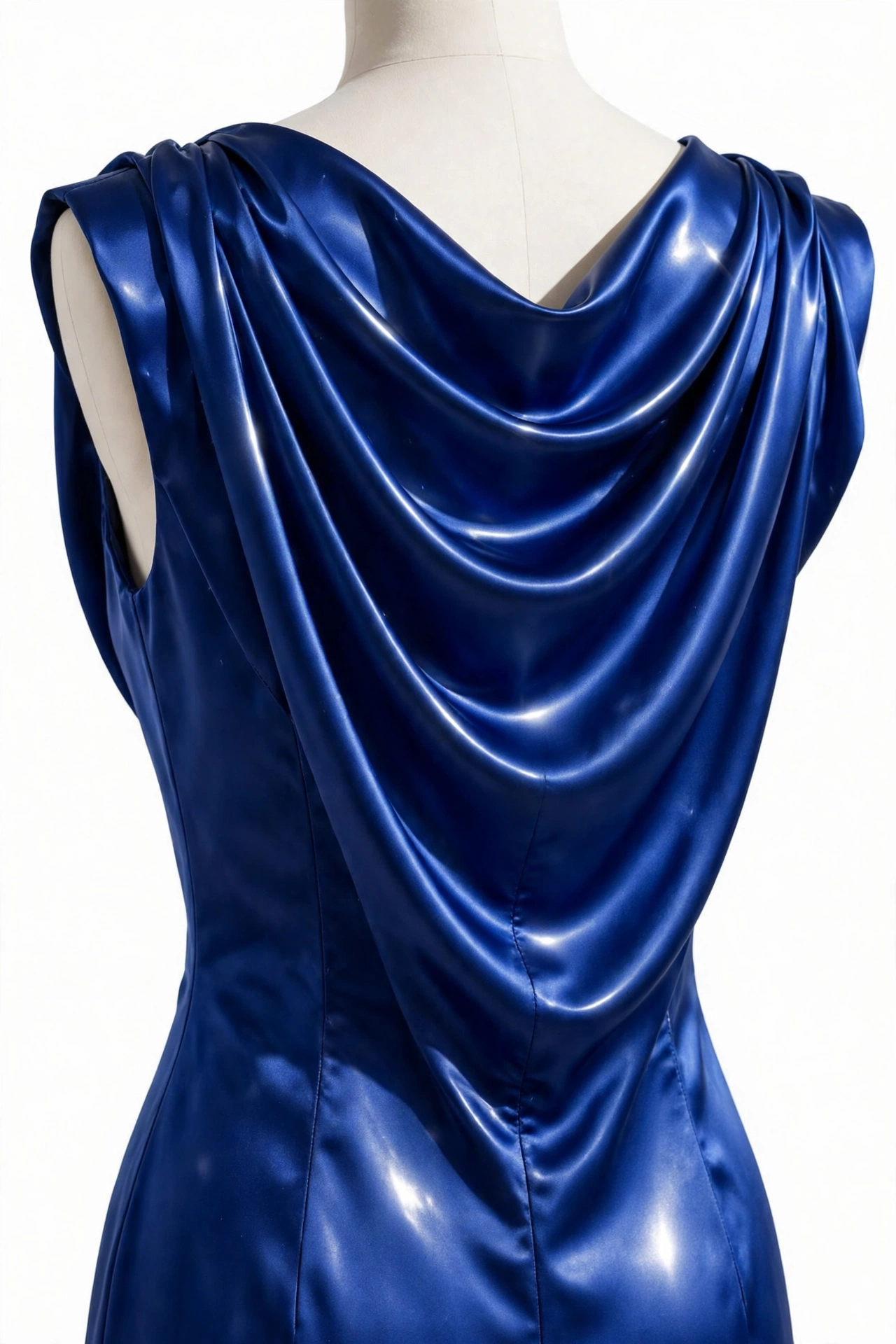
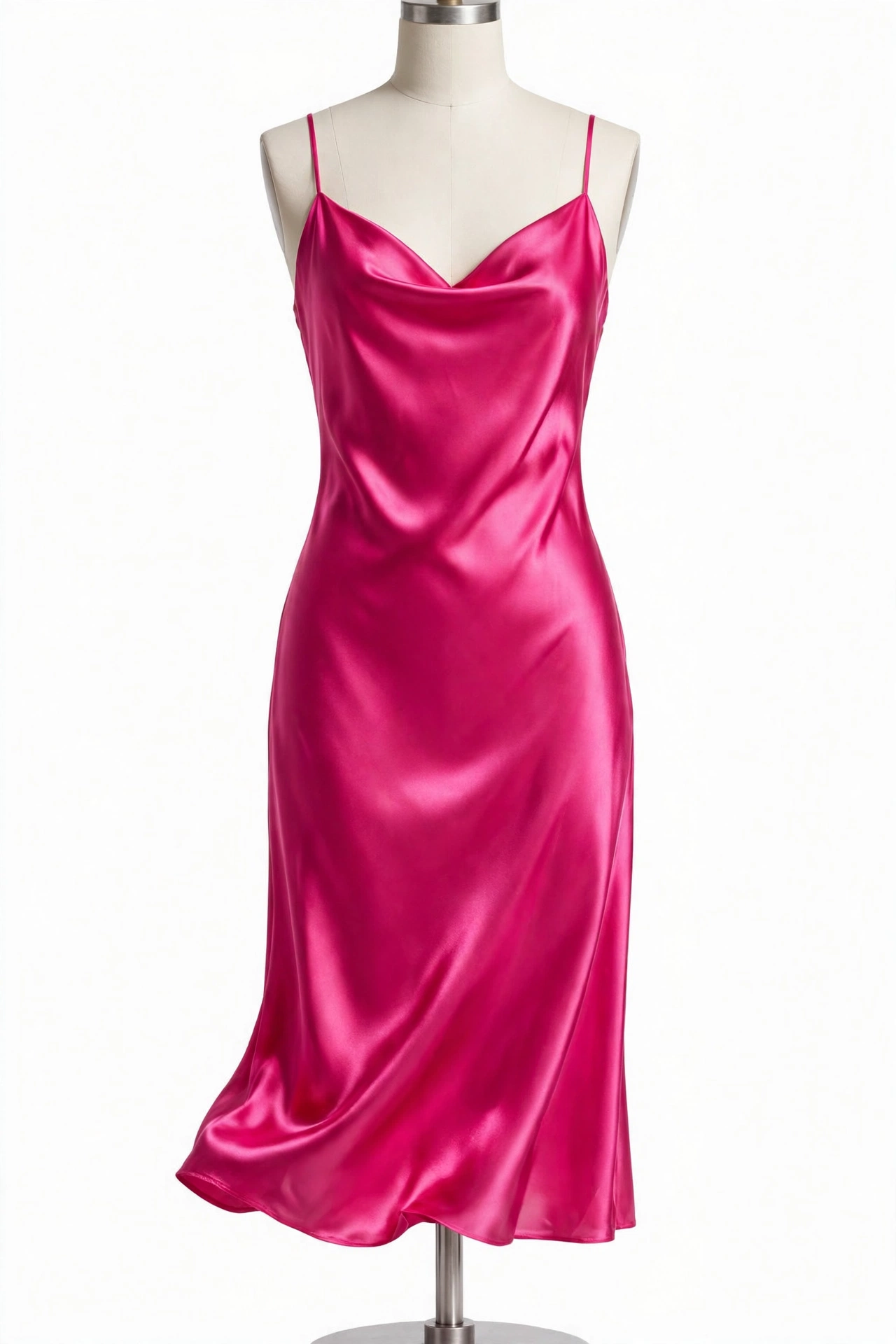
Drape. In a satin weave, yarns float over several crossing yarns before anchoring. Those long floats make the fabric bend easily instead of holding its shape, so it falls close to the body and follows curves. That is why slip dresses, bias cuts, and cowl necklines are satin’s home territory: the fabric does the shaping work that tailoring does in stiffer cloth.
Shine. The same floats put long, smooth yarn segments on the fabric face. Light reflects off them evenly instead of scattering, which reads as gloss. More floats and finer yarns mean more shine. This is also why satin shows every flaw in cutting: a crooked seam or uneven hem catches light unevenly and announces itself.
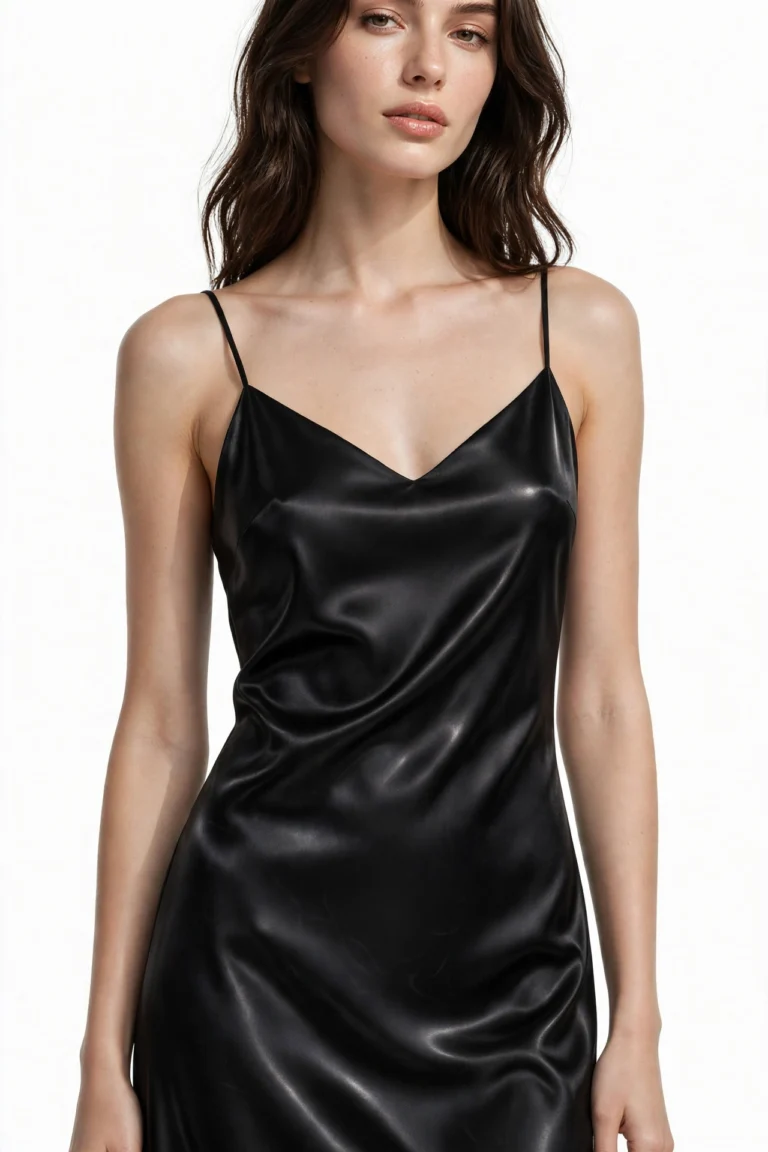
The bias cut. Cut fabric on the bias, at 45 degrees to the warp and weft, and it gains stretch and drape it does not have on the straight grain. Madeleine Vionnet built her reputation on this in the 1920s and 30s, and the bias-cut satin slip dress has been cycling back ever since: the 90s minimalism moment, a 2016 revival, and designers still opening collections with satin slips. A bias dress skims instead of clinging, which is why it flatters more bodies than a straight-cut satin sheath. The trade-off is practical: bias stretches as it hangs, so the dress must hang for a day or two before hemming, and it should be stored folded, never on a hanger, or it grows longer at the hem.
satin weave explains the float structure in full if you want the mechanism behind the shine.
Which satin should your dress be made from?
Not all satins behave alike in a dress. The type decides the silhouette more than the designer does.
| Satin type | Hand and weight | Best dress styles | Watch out for |
|---|---|---|---|
| Charmeuse | Light, fluid, very drapey | Slip dresses, bias cuts, cowl necks | Shows every lump; snags easily; hardest to sew neatly |
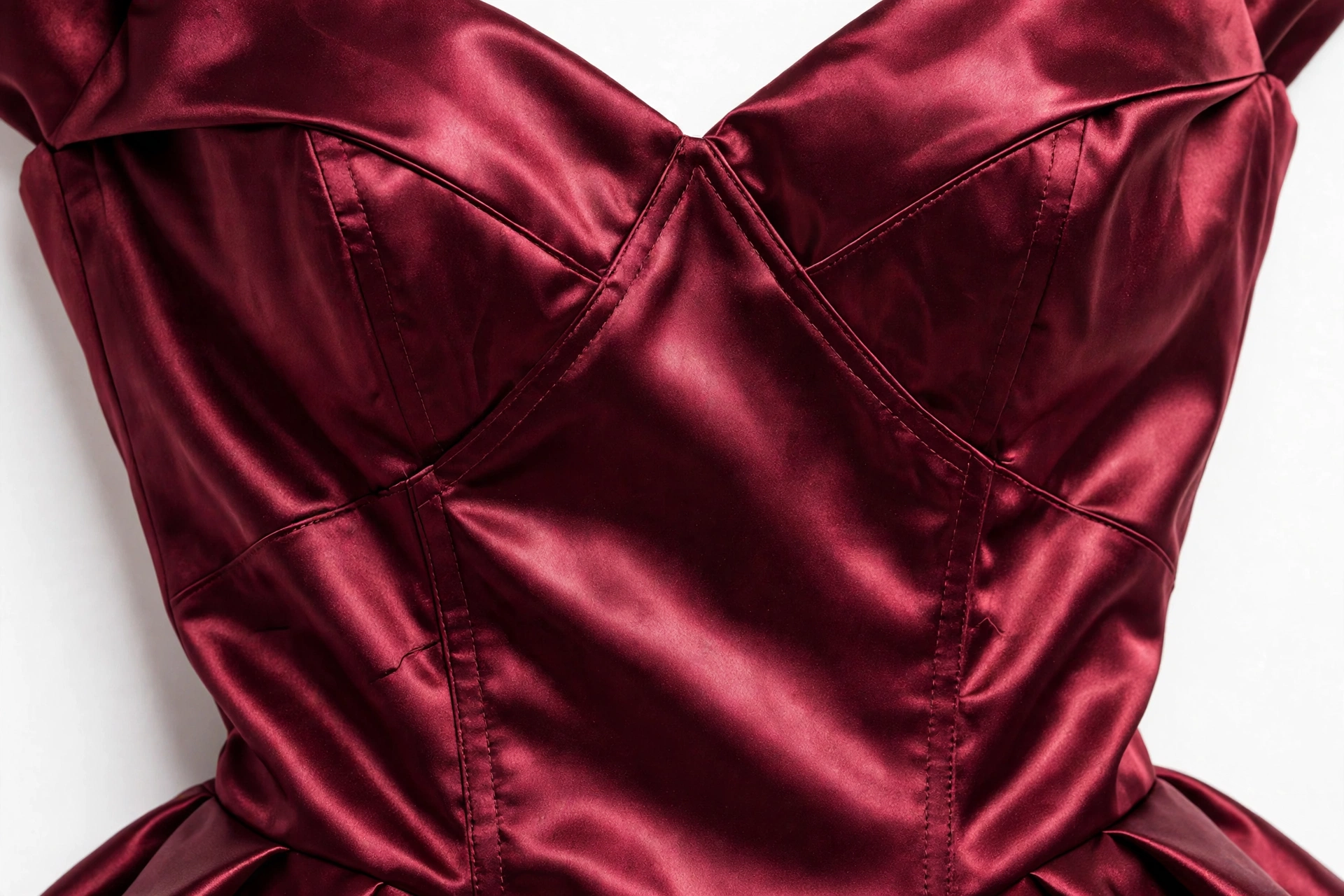
| Duchess satin | Heavy, stiff, structured | Ball gowns, bridal, sculpted bodices | Almost impossible to hem invisibly; too rigid for drape |
| Stretch satin | Medium, with elastane give | Fitted sheaths, bodycon, dance dresses | Shine plus stretch equals maximum cling |
| Crepe-back satin | Medium, matte reverse side | Day dresses, office wear, subtle shine | Two faces to manage; the matte side can look dull in photos |
The fiber lens sits on top of this. A polyester charmeuse slip dress and a silk charmeuse slip dress share a weave and almost nothing else: one is cheap, washable, and static-prone; the other breathes, costs several times more, and wants gentle care. Decide the fiber first, then the type. Our types of satin guide maps every named satin with per-fiber notes.
What does the label actually tell you?
Labels lie by omission more than by commission. Here is the decoder for dresses.
Fiber content is the whole game. It is usually on a side seam tag in small print. “100% polyester” is honest and common. “Silk” must name the fiber. “Silky,” “silk-like,” “satin silk,” and “sateen finish” are marketing words, not fibers. A dress labeled “silk satin” at a polyester price is polyester satin with a fancy name. Read the fiber line, not the hangtag poetry.
“Satin” tells you the weave, nothing else. Two dresses can both say satin and behave like different garments if one is polyester charmeuse and the other is silk duchess. The word on the front of the tag describes the shine. The small print on the inside seam describes the dress.
Price anchors. A polyester satin slip dress costs little to make, and honest ones are priced that way. When a polyester dress carries a silk-level price with no fiber content listed, you are paying for branding. Silk satin dresses cost several times more because the fiber does. If the price looks too good for silk, it is not silk.
Which color should you choose?
Color changes how satin behaves visually, because shine amplifies whatever the color does.
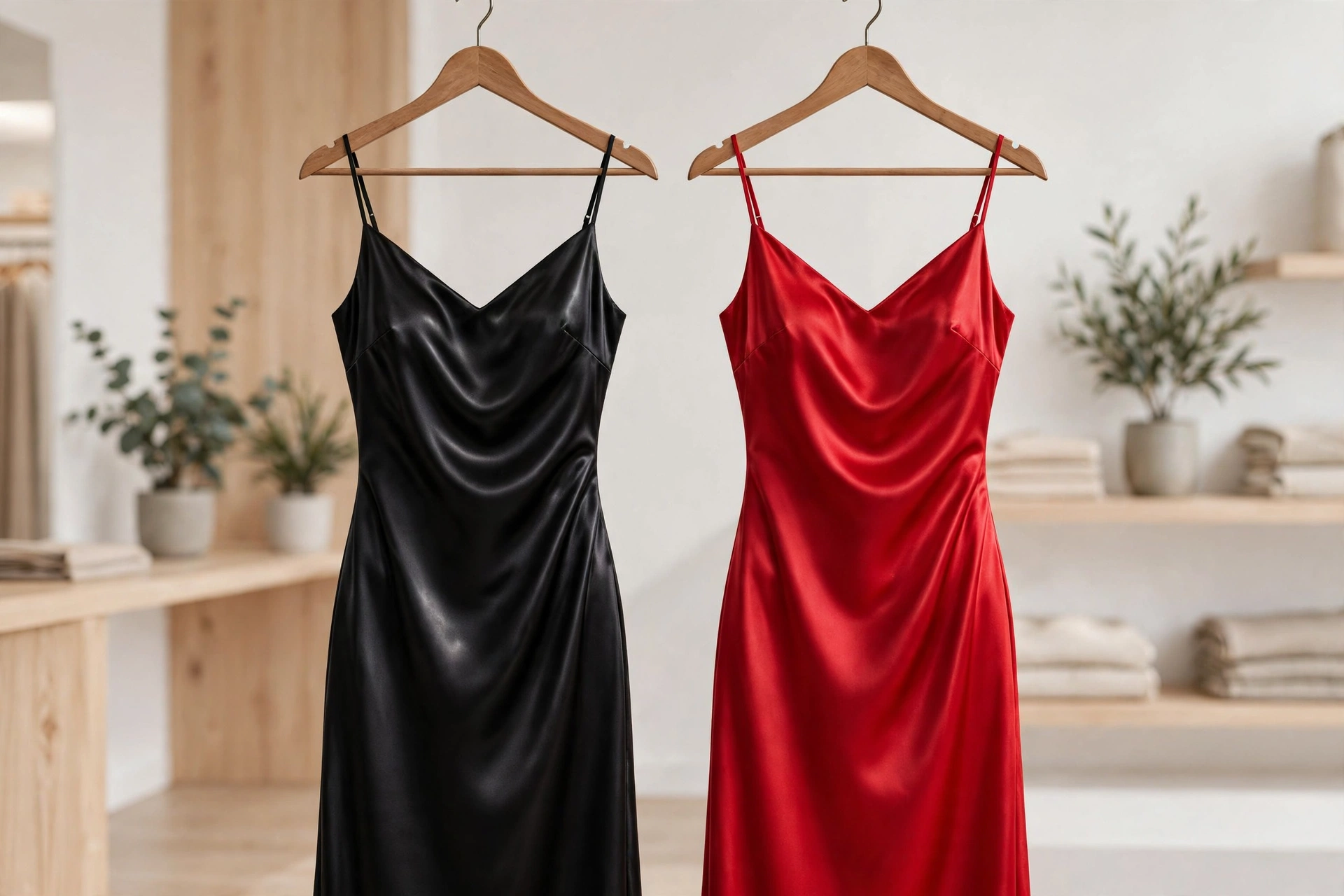
Black. The most searched satin dress color, and the most forgiving. Black absorbs the shine instead of broadcasting it, hides wrinkles and water spots, and works for evening, office, and everything between. It is also the color with the least honest editorial competition online: mostly marketplace listings, almost no real buying guides.
Red and burgundy. Maximum drama, maximum attention. Red satin photographs beautifully and shows wrinkles more than black. Burgundy is red’s quieter sibling and hides wear better.
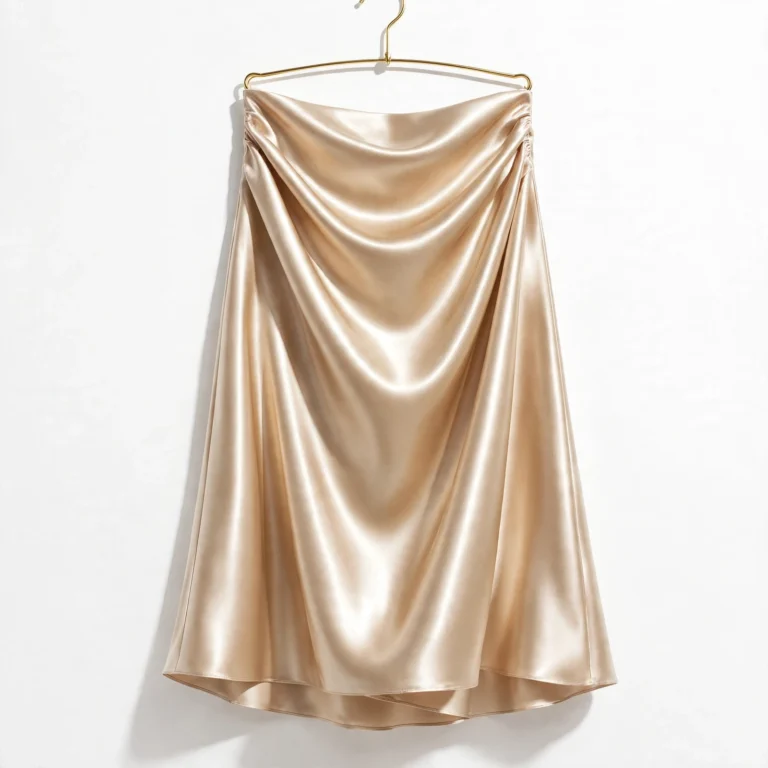
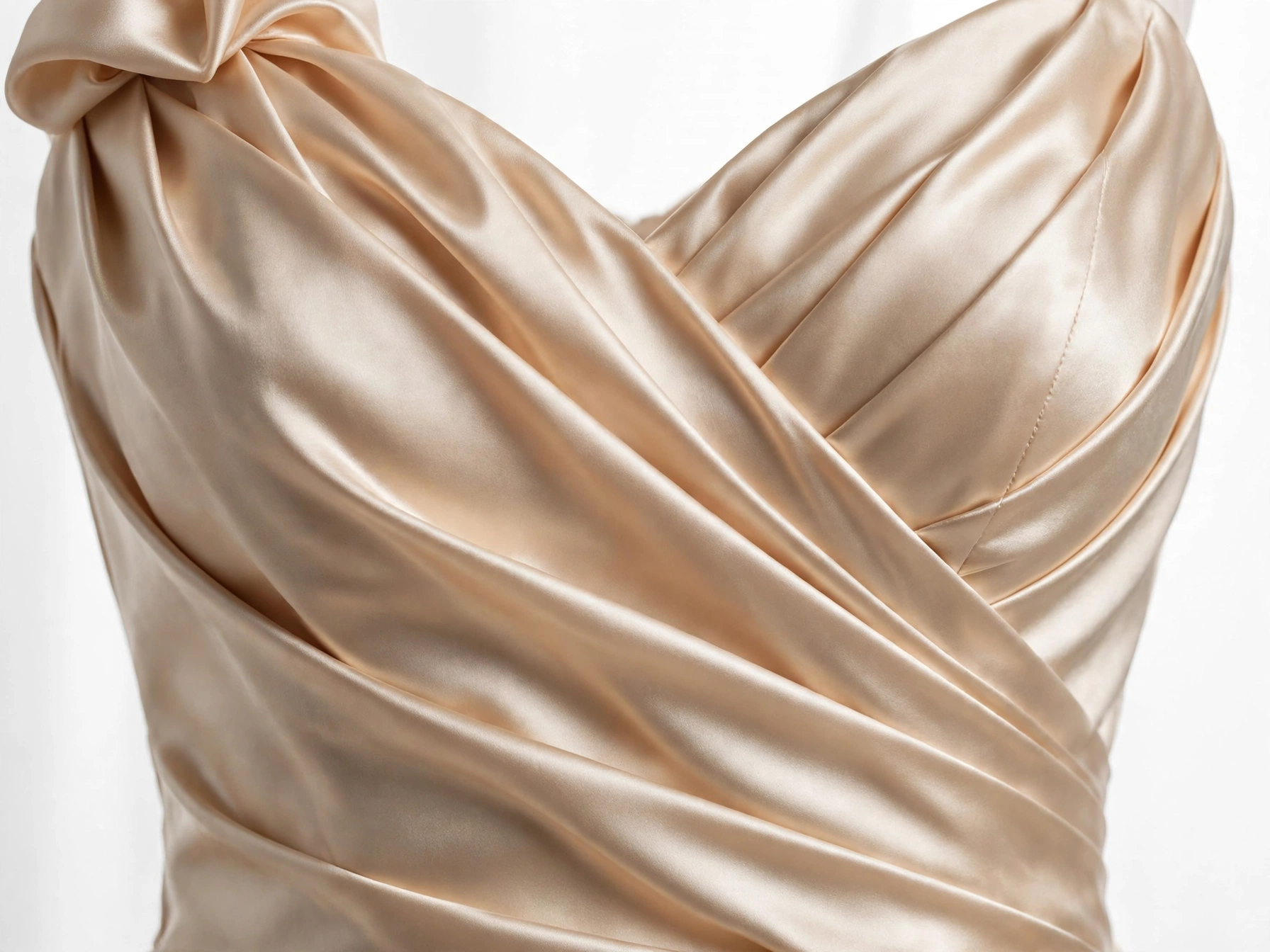
Champagne and ivory. Bridal territory. They show every water spot and stain, which is why bridesmaids in champagne learn about blotting the hard way. Gorgeous, high maintenance.
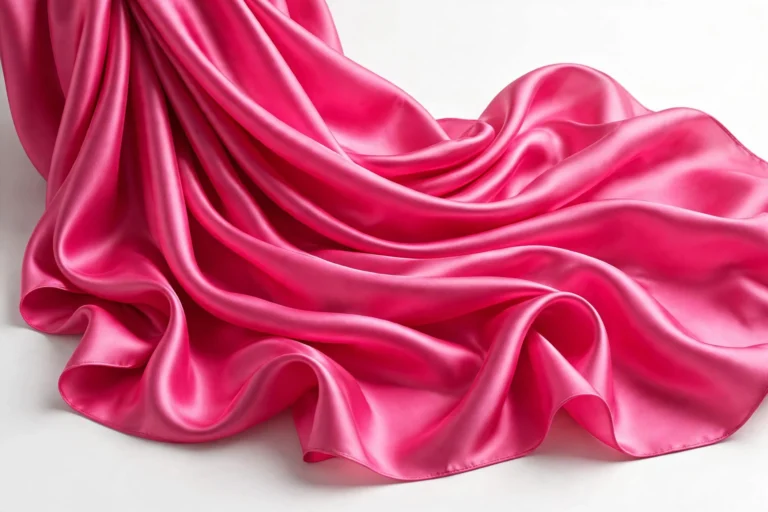
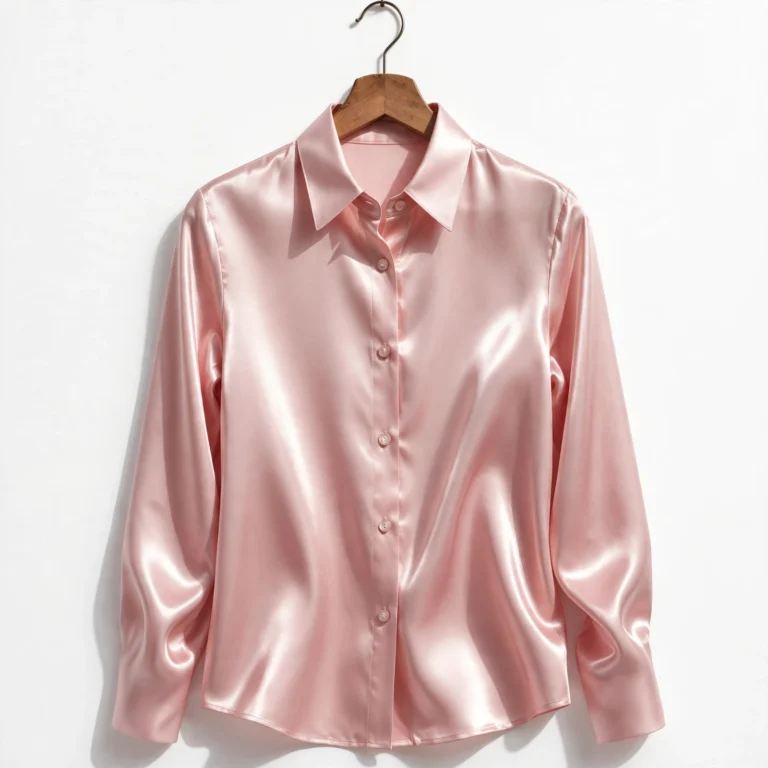
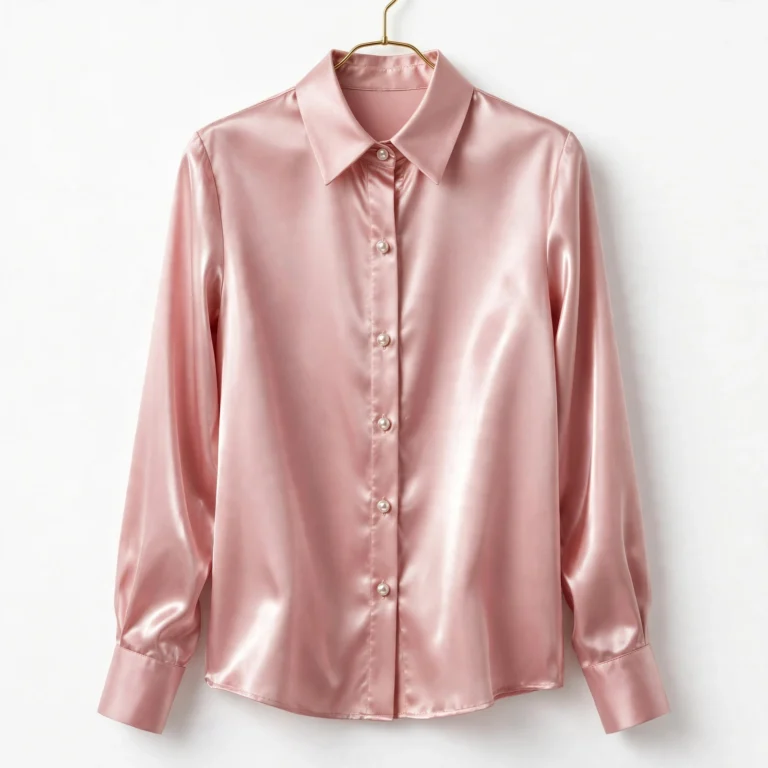
Pink. Blush pink reads romantic and soft; hot pink reads bold and modern. Pink satin is having a long moment, and it suits the fabric: the shine keeps pale pink from looking flat.
Sage, emerald, royal blue. Jewel and muted tones sit between black and brights for formality. Royal blue satin in particular holds shine well without the severity of black.
One practical rule: the paler the satin, the more it shows. Water spots, wrinkles, and sheerness all scale with lightness. If you want low maintenance, go dark.
What satin shows that other fabrics hide
This is the section seller pages skip, and it is the most useful one.
It clings. Drape means the fabric follows the body, and following the body means showing its shape. Satin, especially stretch satin and charmeuse, reveals underwear lines, belly shape, and hip curves. This is not a flaw in the fabric. It is the fabric doing exactly what its weave dictates. If you want smoothing, that job belongs to lining and undergarments, not to wishful thinking.
Lining matters more than the satin. A lined satin dress behaves like a different garment: more opaque, less clingy, more structured. An unlined charmeuse slip is essentially underwear as outerwear, which is the look, but know that going in. When trying on, check whether the dress is lined before judging the fit.
Wrinkles happen. Sitting creases satin, and the creases catch light. Polyester satin resists wrinkles better than silk satin but still creases at pressure points. If you will sit through dinner in it, accept the creases or choose duchess, which holds its shape.
Static is real. Polyester satin in dry air clings with static electricity, not just drape. A lined skirt and a light anti-static spray handle most of it.
On bodies: bias cuts skim and suit the widest range of shapes. Straight-cut sheaths in charmeuse are the least forgiving silhouette in the satin family. Duchess and structured styles give the most support. None of this is about “dressing for your body type” as a rulebook; it is about matching the fabric’s behavior to what you want it to do.
How do you care for a satin dress?
Fiber sets the rules. Polyester satin: machine wash cold or warm on gentle, mild detergent, hang or line dry. Silk satin: hand wash or delicate cycle in a mesh bag, pH-neutral detergent, never wring, dry away from sun. Acetate satin: follow the label exactly and handle it like it is fragile, because it is.
Three rules for all satin dresses: never iron polyester satin hot (polyester melts around 250C, but it glazes and shines permanently well below that); never spot-clean a water mark, wet the whole area evenly and let it dry uniformly, because partial wetting is what makes the spot visible; and store bias-cut dresses folded, never hung, or gravity stretches the hem over weeks. The full per-fiber routines are in the satin washing guide.
Satin dress vs silk dress: the honest version
Here is the confusion, stated plainly: most “satin dresses” are polyester satin, and most “silk dresses” are silk fiber, often in a satin weave too. You are usually comparing a cheap synthetic weave against an expensive protein fiber.
Silk has a real edge. It breathes, drapes with more fluidity, takes dye more richly, and does not build static. Polyester satin wins on price by a mile, resists wrinkles better, and survives the washing machine. For a dress you will wear and wash often, polyester satin is the rational pick. For a dress you will keep for years and wear on occasions, silk earns its price.
The practical difference in photos is small; in hand-feel and longevity it is not. Buy the polyester dress for trends, the silk dress for keeps. Our satin vs silk guide settles the fiber question without a sales pitch.
If you sew, the satin sewing guide covers why charmeuse fights back and which type to start with.
FAQs
What is the best satin for a dress? It depends on the silhouette. Charmeuse for slip dresses and bias cuts, duchess satin for structured and bridal gowns, stretch satin for fitted styles, crepe-back satin for a quieter shine. Match the type to the dress shape first, then choose the fiber.
Is a satin dress flattering? Bias-cut satin dresses skim the body and suit a wide range of shapes. Straight-cut charmeuse sheaths are the least forgiving because the fabric follows every curve. Structured satins like duchess give the most support. Lining and undergarments matter more than the satin itself.
Can you wear a satin dress to a wedding as a guest? Yes, with judgment. Avoid white, ivory, and champagne unless the dress code says otherwise. Darker satins and jewel tones are safe. Keep the shine appropriate to the setting: matte crepe-back satin for daytime, high-shine charmeuse for evening.
Why does my satin dress cling? Two reasons: the weave drapes close to the body by design, and polyester satin builds static in dry air. Lining fixes the first; anti-static spray and natural-fiber underlayers fix the second. Stretch satin clings most.
How do you get wrinkles out of a satin dress? Steam from a distance for polyester satin, keeping the steamer moving so moisture never sits in one spot. For silk satin, press on the wrong side through a press cloth on low heat. Never iron polyester satin hot, and never spot-wet a water mark.
Is silk satin better than polyester satin for dresses? Silk drapes better, breathes, and ages gracefully; polyester is cheaper, wrinkle-resistant, and machine washable. For occasion wear you keep for years, silk justifies its price. For trends and frequent wear, polyester is the rational buy.
What should I wear under a satin dress? No-show underwear in a skin-tone shade, because satin shows lines and light colors show through. For unlined charmeuse, consider a slip: it adds opacity and cuts cling at once.
The trust note
No dress brand paid for a word here, which is rare in fashion content: most satin dress pages are affiliate listicles or retailer descriptions. The weave explanations come from textile science, the sewing notes from practitioner sources, and the color guidance from observed search demand. Spot an error and it gets fixed with a dated correction.