Satin vs Silk Pillowcase: Which Is Better? The Honest Guide
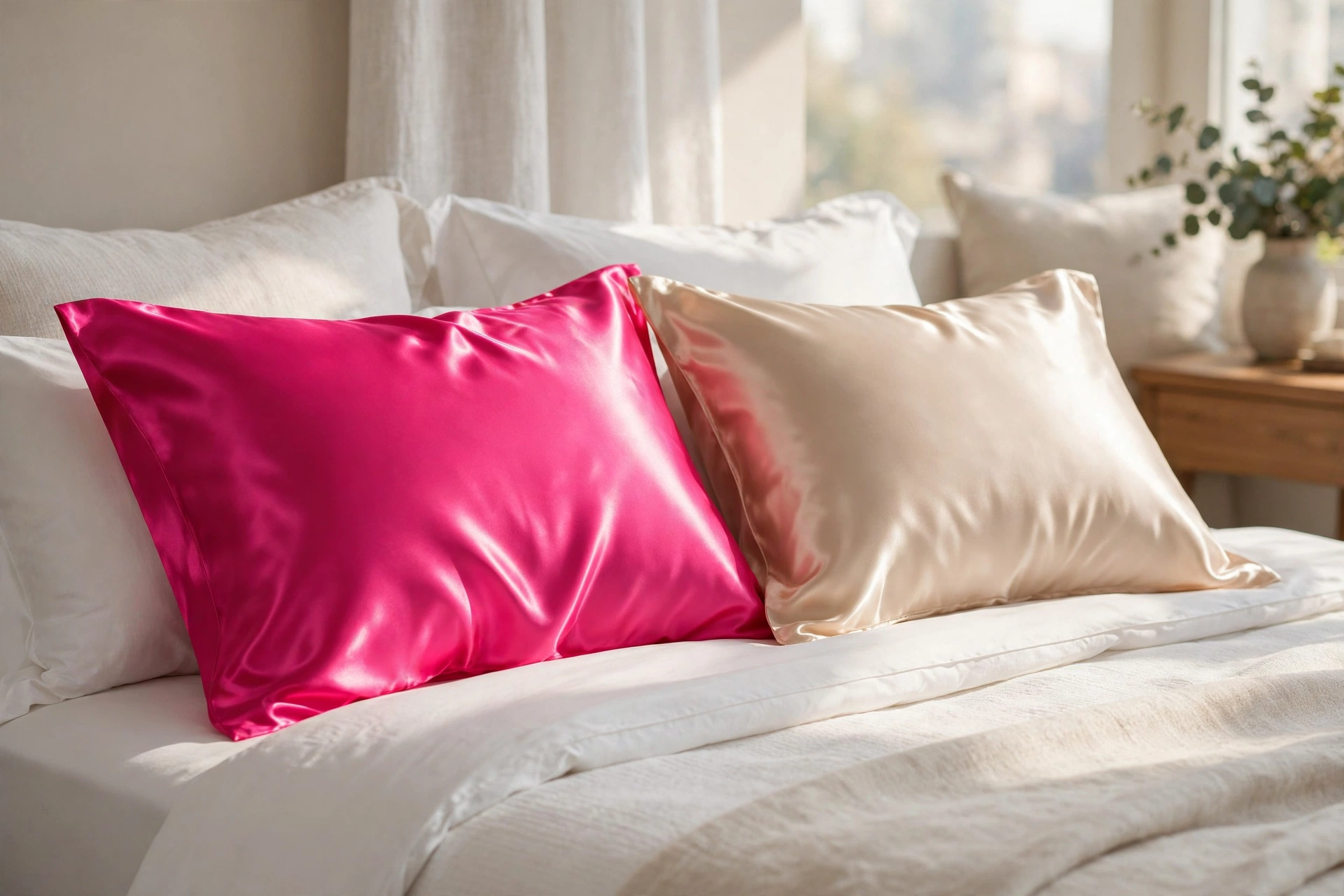
Walk into this question with the wrong definitions and every answer will confuse you. Here is the reframe that makes the whole debate simple: almost every pillowcase sold as “satin” is polyester satin, and almost every pillowcase sold as “silk” is silk woven in a satin weave (usually charmeuse). So “satin vs silk pillowcase” is really polyester satin vs silk satin, and the weave is barely the question at all. The fiber is.
This guide compares the two honestly, names the seller bias that owns this topic online, and ends with a clear buying decision for your hair, your skin, and your budget.
The 30-second verdict
Buy the friction benefit, which both deliver almost equally, and let the fiber decide the rest. Polyester satin gives you 90 percent of the benefit for a tenth of the price but sleeps warmer and feels less luxurious. Silk breathes better, feels better, and lasts years with proper care, but costs 8 to 15 times more and demands gentle washing. For most people, polyester satin is the rational buy; silk is the luxury buy. Neither will erase wrinkles or cure acne, no matter what the product page claims.
Why you cannot trust most satin vs silk pillowcase comparisons
This corner of the internet is owned by silk sellers. The best-ranking comparisons are written by brands that sell $90 silk pillowcases, which is like asking a Ferrari dealer whether you should buy a Ferrari. Their pages emphasize silk’s advantages, downplay the price gap, and present polyester satin as a sad compromise rather than a legitimate choice.
We sell nothing. The test that matters is simple: both fabrics put a smooth, low-friction satin face against your head all night, and that mechanism does not care much which fiber the yarns are made of. Everything below follows from that.
Side-by-side comparison
| Polyester satin pillowcase | Silk pillowcase | |
|---|---|---|
| What it actually is | Polyester yarns in a satin weave | Usually mulberry silk in a charmeuse (satin) weave |
| Friction | Very low | Very low, marginally lower |
| Feel | Slippery, can feel plasticky | Soft, smooth, warms to skin |
| Breathability | Poor, sleeps warm | Good, temperature regulating |
| Moisture | Absorbs almost nothing | Absorbs some, releases it |
| Durability | Very durable, years of machine washing | Delicate, 2-5 years with gentle care |
| Care | Machine wash, tumble low | Hand wash or delicate cycle, air dry |
| Static | Can build up | Rarely |
| Price | $8-20 for a pair | $60-120 for one |
| Best for | Budget buyers, first try, kids | Hot sleepers, luxury feel, sensitive skin |

What a polyester satin pillowcase actually is
It is the honest value pick, and you should not let silk marketing make you feel bad about it. The friction benefit, which is the entire reason to buy a satin pillowcase, is nearly identical to silk from the first night. Hair glides instead of dragging. Styles survive the night better. Morning frizz drops, especially for curly and long hair.
The trade-offs are comfort, not function. Polyester does not breathe, so hot sleepers may find it clammy. It can feel slick rather than soft, and it builds static in dry air. It is also the durable one: machine wash it, tumble it, and it will outlast a silk pillowcase by years. For a first purchase, for kids, or for anyone unsure the habit will stick, this is where to start.
The one thing to check is the weave quality. A dense, smooth polyester satin feels noticeably better than a thin, rough one. If the price is under $5 for a pair, the weave is probably too thin to stay smooth for long.
What a silk pillowcase actually is
When a listing says “100% mulberry silk pillowcase,” it almost always means mulberry silk woven as charmeuse, which is a lightweight satin weave. So the silk side of this comparison is also satin, structurally. The difference is the fiber, and silk fiber brings real advantages: it breathes, it regulates temperature, it feels soft rather than slick, and it is naturally hypoallergenic in the narrow sense that dust mites and mold like it less than damp cotton.
The number that matters is momme, the silk weight unit. A 19-momme pillowcase is the light, common grade. 22 to 25 momme is denser, more durable, and more expensive, and it is what you want if you are paying luxury prices. Anything not stating momme is hiding its grade.
The honest costs are money and effort. Expect to pay 8 to 15 times the polyester price, and expect to hand wash or run a delicate cycle in a mesh bag, then air dry. Treat it roughly and a $90 pillowcase becomes a $90 rag within a year. The full fiber comparison behind all of this is in the satin vs silk guide.
The third option nobody mentions
Since both contenders are satin weaves, the weave was never the decision. The real third option is a different fiber in a different structure: the cotton sateen pillowcase. It breathes like cotton, feels smooth (though less slippery than satin), costs little, and survives the washing machine without complaint. If your priority is cool sleep on a budget and you find polyester clammy, cotton sateen beats both satin options for you.
Another quiet third option: buy the polyester satin first. If you love the low-friction sleep after a month, upgrade to silk knowing the habit is worth the investment. If you do not notice much difference, you saved $80 finding out.
Head-to-head by use case
Curly, coily, or long hair. Both work. The friction reduction is the mechanism and both deliver it. Silk has a small edge in feel, polyester wins on price by a mile. Start with polyester; upgrade only if you love the routine.
Acne-prone or sensitive skin. Neither treats acne, and no good independent evidence says either clears skin. Silk’s breathability and smooth hand make it slightly pleasanter for irritated skin, but the honest expectation is comfort, not treatment.
Hot sleepers. Silk, clearly. Polyester satin traps heat and moisture against the face. If you wake up warm, the price premium buys real comfort here.
Tight budget. Polyester satin, no contest. The core benefit for a tenth of the price is one of the best value ratios in bedding.
Longevity per dollar. Polyester wins again. It survives years of machine washing; silk needs babying and still ages faster under nightly use.

How to read a pillowcase listing without getting fooled
Pillowcase listings are where satin labeling is at its worst. Decode them in this order:
- Find the fiber line. “100% polyester” or “100% mulberry silk.” If the listing says only “satin” with no fiber, it is polyester at a silk-adjacent price. Walk away.
- For silk, find the momme. 19 is standard, 22 to 25 is premium. No momme listed means the seller does not want you comparing grades.
- Check the closure. Envelope closures stay put; zippered ones can snag hair if the zipper is exposed. Hidden zippers are fine.
- Be skeptical of “vegan silk.” That phrase means polyester or plant fiber processed to feel silky. It is marketing, not a material.
- Read the wash instructions before buying. If you will not hand wash, do not buy the item that requires it.
Which should you buy? (decision list)
– First satin pillowcase ever: polyester satin, envelope closure, under $20. Prove the habit before spending. – Curly or long hair on a budget: polyester satin. The friction benefit is what your hair needs. – Hot sleeper who can spend: 22-momme mulberry silk. The breathability difference is real at night. – Sensitive or easily irritated skin: silk if the budget allows, polyester if not. Expect comfort, not treatment. – Kids or guest rooms: polyester satin. Durable, washable, replaceable. – Luxury gift: silk, 22 momme or higher, from a seller that states the grade. The feel justifies it as a gift in a way it rarely does as a utility purchase.
For the broader buying walkthrough, closure types, and what to avoid, see the complete satin pillowcase buying guide. For why the smooth face does what it does, the mechanism is in the satin weave guide. Care rules per fiber live in the how to wash satin guide.
Frequently asked questions
Is a silk pillowcase better than a satin pillowcase? Better at comfort and breathability, not meaningfully better at the core job. Both are low-friction satin surfaces. Silk feels softer, sleeps cooler, and costs 8 to 15 times more. Whether that is “better” depends on your budget and how hot you sleep.
Are satin pillowcases as good as silk for hair? For reducing friction, breakage, and frizz, yes, nearly as good. Hair does not know the fiber content; it responds to the smooth surface. Silk’s advantage for hair is marginal, not night-and-day.
Why are silk pillowcases so expensive? Mulberry silk is labor-intensive to produce, and the pillowcases use a dense, high-momme charmeuse weave. You are paying for the fiber, the weave density, and the brand. Whether the comfort difference justifies it is personal.
Do satin pillowcases help with acne? No good evidence says so. They reduce friction, which can mean less irritation for sensitive skin, but they do not treat acne or harbor meaningfully less bacteria in any proven way.
What momme silk pillowcase should I buy? 19 momme is the standard grade and fine for most buyers. 22 to 25 momme is denser, smoother, and longer-lasting, and worth it if you are paying premium prices. Below 19, the silk is thin and wears out fast.
Can you wash a silk pillowcase in the machine? On a delicate cycle, in a mesh bag, with gentle detergent, yes. Hand washing is safer and extends its life. Never use hot water or bleach, and air dry away from direct sun.
Is “vegan silk” the same as silk? No. It is a marketing term for polyester or plant-based fibers finished to feel silky. Check the fiber content line; the truth is always there.
How long does a satin pillowcase last? Polyester satin lasts years with machine washing. Silk lasts 2 to 5 years depending on momme and care. Replace either when the surface feels rough instead of smooth, because the friction benefit is gone at that point.
*Why trust this guide? The satin pillowcase internet is written by silk sellers. This page names that bias, compares the fibers on the mechanism that matters (friction), and recommends the cheap option most of the time. If you spot an error, contact us and we will correct it.*