Satin vs Silk: The Honest Guide
If you’ve searched “satin vs silk” before, you’ve probably read the same article five times: satin is cheap, synthetic, and vaguely disappointing; silk is natural, luxurious, and worth every penny. Then, curiously, a button to buy silk.
There’s a reason for that. Most of the pages ranking for this comparison are owned by silk brands. They have a financial interest in exactly one verdict. So let’s do this differently. No store. No affiliate links disguised as advice. Just the honest breakdown, including the parts where silk genuinely wins and the parts where it doesn’t.
The 30-second verdict
Satin and silk aren’t opposites. Satin is a weave, a way of threading yarns together. Silk is a fiber, a material that comes from silkworms. Comparing them is like comparing “knitted” with “wool.” You can knit wool. And you can weave silk into satin. That’s literally what silk satin is.
Once you understand that one fact, the whole debate reorganizes itself:
- Most “satin” products are polyester satin: polyester fiber woven in a satin weave. Affordable, durable, shiny.
- Silk products are usually silk in a plain or charmeuse weave: natural protein fiber, breathable, expensive.
- Silk satin exists: the luxury overlap of both. It’s also the most expensive option.
- Neither is “better.” They win in different categories, for different people, at wildly different prices.
what a satin weave actually is
Satin vs silk: side by side
| Polyester satin (what “satin” usually means) | Silk (usually mulberry, plain/charmeuse weave) | Silk satin (the overlap) | |
|---|---|---|---|
| What it is | Synthetic fiber, satin weave | Natural protein fiber | Natural silk fiber, satin weave |
| Feel | Smooth, slippery, slightly plasticky | Smooth with a dry, warm hand | The smoothest of the three |
| Shine | High gloss, can look flashy | Soft, liquid luster | Rich, deep shine |
| Breathability | Low: traps heat and moisture | High: regulates temperature | High |
| Durability | Very durable, resists wrinkles | Delicate, weakens with sun/washing | Delicate |
| Care | Machine washable, easy | Hand wash or dry clean, fussy | Hand wash or dry clean |
| Price | Budget-friendly | 5–10× polyester satin | The most expensive |
| Best for | Costumes, décor, crafts, budget fashion | Pillowcases, luxury garments, sensitive skin | Bridal, couture, heirloom pieces |
What “satin” actually means on a label
When a pillowcase, dress, or bonnet just says “satin,” it is almost always polyester satin. The satin weave, long floating yarns on the surface with minimal interlacing, is what creates that glossy face and dull back. The fiber underneath is usually polyester because it’s cheap, colorfast, and nearly indestructible.
This is neither a scandal nor a virtue. It just is. Polyester satin does exactly what it’s engineered to do: look shiny, drape smoothly, survive the washing machine, and cost very little. Judging it for not being silk is like judging a Toyota for not being a Ferrari.
The confusion is deliberate in some corners of the market. Labels like “silk satin,” “satin silk,” or “silk-feel satin” on a $20 garment are, in the overwhelming majority of cases, 100% polyester. Real silk satin announces itself with a price tag to match. If the price seems too good for silk, it isn’t silk.
What silk actually is, and where it genuinely wins
Silk is a natural protein fiber, and it has properties no synthetic fully replicates:
Breathability and temperature. Silk’s moisture regain (around 11%, vs polyester’s 0.4%) means it absorbs and releases moisture instead of trapping it against your skin. This is the single biggest functional difference. It’s why silk pillowcases sleep cooler and why silk garments feel comfortable across seasons. If you run hot at night, this matters more than any other factor on this page.
Skin and hair feel. Dermatologists who’ve weighed in on the pillowcase debate describe silk’s benefits as real but modest: less friction, less moisture wicked away from skin and hair. Friction data from textile testing (TRI Princeton, via published comparisons) shows satin-weave fabrics dramatically lower friction than cotton; silk sits close to satin on friction but adds breathability on top. Honest summary: silk is the best pillowcase material if the price doesn’t bother you, but the gap between silk and polyester satin is smaller than silk marketing suggests.
Biodegradability. Silk breaks down; polyester doesn’t. If that matters to you, it’s a real point in silk’s column.
Where silk doesn’t automatically win: durability (it loses, since sunlight and repeated washing weaken it), ease of care (hand wash, dry clean, or anxiety), and stain forgiveness. Silk water-spots. Silk shows sweat. A silk dress demands a lifestyle; polyester satin demands nothing.
The third option nobody mentions: silk satin
Here’s what the silk-brand comparisons never tell you: silk satin is a thing, and it’s the actual top of the ladder. Silk fiber woven in a satin weave gives you the breathability of silk with the liquid shine of satin. It’s what high-end bridal gowns, couture linings, and the famous bias-cut dresses of the 1930s were made from.
It is also ruinously expensive and about as practical as a chocolate teapot for everyday use. It exists so you know the full picture, and so you recognize that “satin vs silk” was always a false binary. The real question was never satin or silk. It’s which fiber, in which weave, for which purpose.
the many named types of satin fabric
Head-to-head by use case
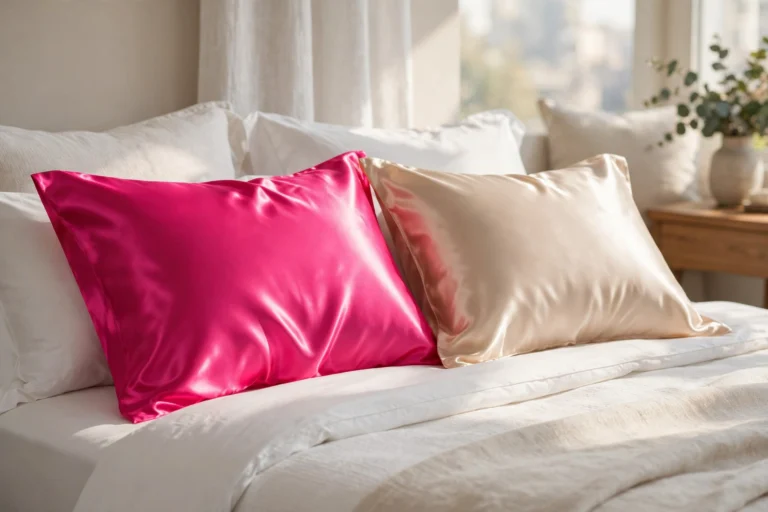
Pillowcases: silk wins on comfort, satin wins on value
For sleeping, the ranking is honest and simple: silk > polyester satin > cotton, with the gap between the first two being real but modest. Polyester satin still gives you the low-friction surface that protects hair and reduces sleep lines. It just sleeps warmer and feels less breathable. If you sleep hot, pay for silk. If you don’t, polyester satin gets you most of the benefit for a fraction of the price. Beware any article telling you satin pillowcases are “bad for you.” That’s marketing, not science.
Dresses and clothing: depends what you’re after
Polyester satin dominates party dresses, costumes, and fast fashion for good reasons: it photographs beautifully, holds vibrant dye, and survives a night out plus the washing machine. Its weakness is exactly its strength: that high shine can read cheap in daylight, and it doesn’t breathe, so a summer wedding in polyester satin is a commitment.
Silk (usually in charmeuse or crepe weaves rather than high-shine satin) is the choice for garments meant to look expensive up close: the soft luster reads as wealth, not flash. It drapes like water and feels alive. It also wrinkles if you look at it wrong and costs serious money.
The practical rule: shiny occasion wear on a budget → polyester satin. Understated luxury, bridal, or anything worn against skin for hours → silk.
Sheets and bedding: think about heat first
This is the category where the fiber matters most and the weave second. Polyester satin sheets look glamorous and feel slippery-smooth, but multiple sleepers report sleeping hot in them. Polyester’s near-zero moisture absorption means sweat stays where it is. Silk sheets breathe beautifully and feel incredible, at a price that makes most people laugh nervously. A middle path many people love: cotton sateen, the satin weave in cotton fiber, which gives sheen plus breathability at a sane price.
satin vs sateen, the full comparison
Hair (bonnets, scarves): satin’s home turf
Here’s where polyester satin punches far above its price. For protecting hair at night, what matters is a smooth, low-friction surface, and polyester satin provides exactly that for a few dollars. The expensive silk bonnet is marginally better (more breathable, less static), but the practical difference for most hair types is small. This is the one category where I’d tell most people to save their money: a well-made polyester satin bonnet does the job.
Price and longevity: no contest
Polyester satin wins on price by an order of magnitude and on durability by a wide margin. Silk wins on biodegradability and on feeling extraordinary. Neither fact is an argument. They’re just the terms of the trade.
How to tell them apart (and read a label like a detective)
1. Read the fiber content, not the marketing name. The law requires fiber disclosure. “100% polyester” in small print under a big “SILK SATIN” header is telling you everything. Real silk says “100% silk” or “100% mulberry silk.”
2. The price test. If a “silk” pillowcase costs less than a restaurant dinner, it isn’t silk. This test has never failed.
3. The burn test (for fabric swatches, carefully). Silk burns slowly, smells like burning hair, and leaves crushable ash. Polyester melts into a hard bead and smells chemical. Only test swatches, never garments, and never near anything flammable.
4. The hand test. Crumple it. Silk warms quickly in your hand and springs back with soft wrinkles; polyester satin feels cooler, slightly plasticky, and either springs back perfectly or holds a sharp crease.
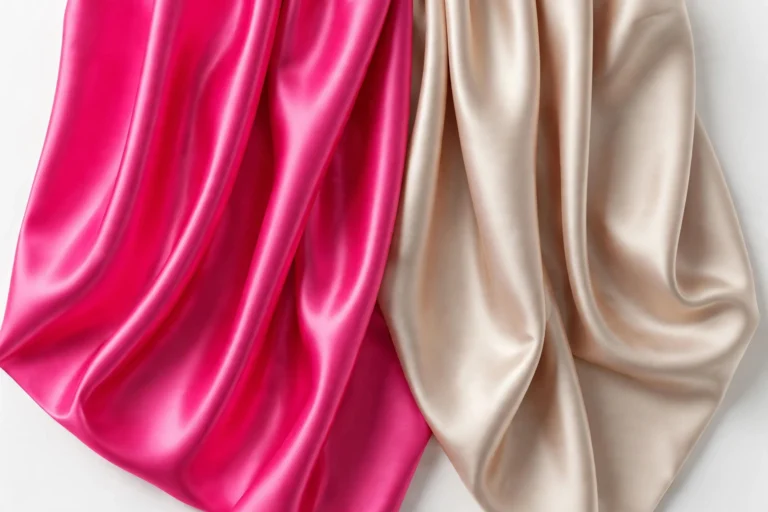
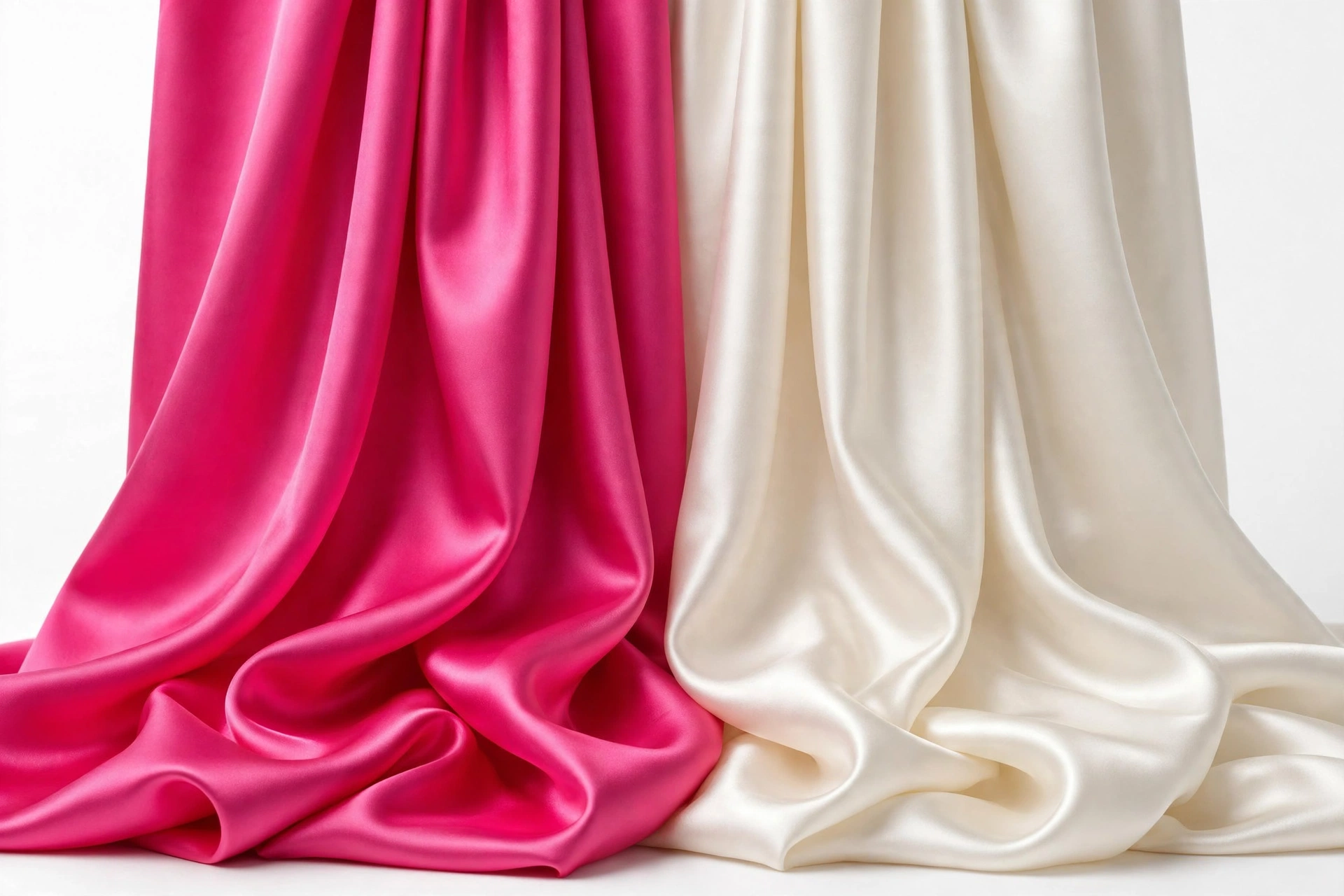
5. The shine test. Polyester satin has a bright, almost reflective gloss. Silk’s luster is softer and seems to come from within the fabric. Side by side, the difference is obvious; in isolation, it takes practice.
So which should you buy?
- Tight budget, any category: polyester satin. It’s honest value.
- Pillowcase and you sleep hot: real silk. Worth it.
- Pillowcase and you sleep cool: polyester satin. Pocket the difference.
- Bonnet or hair scarf: polyester satin. The upgrade to silk is marginal.
- Party dress, costume, décor, crafts: polyester satin. This is literally what it’s for.
- Wedding dress, heirloom garment, luxury gift: silk or silk satin. Some things deserve the real thing.
- Sheets: cotton sateen if you want sheen + breathability; silk if money is no object; polyester satin only if you sleep cold and love the slippery feel.
Frequently asked questions
Is satin real silk?
No. Or rather, not necessarily. “Satin” describes the weave; “silk” describes the fiber. Most satin products are polyester. Silk can be woven into satin (that’s silk satin), but the word “satin” alone on a label means polyester satin in practice.
Is silk better than satin?
They’re different categories, so the question needs reframing: silk (fiber) vs polyester (fiber) is the real comparison. Silk breathes better and feels more luxurious; polyester is cheaper, tougher, and easier to care for. In a satin weave, both are smooth and low-friction.
Why is silk so much more expensive than satin?
Because you’re comparing a labor-intensive natural fiber (thousands of silkworm cocoons per garment, careful processing) with a mass-produced synthetic. The weaves cost roughly the same to produce; the fibers don’t.
Is “silk satin” from online marketplaces real?
Overwhelmingly, no. If it doesn’t state “100% silk/mulberry silk” in the fiber content and the price looks like polyester, it is polyester. Genuine silk satin is a luxury fabric with a luxury price.
Does satin cause acne?
No fabric causes acne, but any pillowcase that isn’t washed regularly can aggravate it, satin included. Silk’s lower absorbency means it pulls less moisture from skin, which some dermatologists consider a modest advantage. The honest version: wash your pillowcase every few nights, whatever it’s made of.
Which is better for curly hair: satin or silk?
Both work because both are smooth. Silk has a slight edge on breathability and static; satin has an enormous edge on price. For most people, a polyester satin bonnet or pillowcase is the smart buy.
Why trust this guide? Because nothing is for sale here. Most competing “satin vs silk” pages are published by silk retailers with a direct financial interest in one answer. This guide was written from textile references (weave structure, fiber properties) and published dermatologist commentary, and where evidence is thin or contested, it says so. If you spot an error, we want to know: corrections make the guide better for everyone.