Satin Nightgown: The Complete Guide
# Satin Nightgown: The Complete Guide
A satin nightgown is a loose, usually sleeveless sleeping dress cut from fabric woven in the satin weave, which gives it that liquid shine and slick hand feel. The one thing most shoppers miss: satin is a weave, not a fiber. Your nightgown’s fiber, silk or polyester, decides whether it sleeps cool and breathes, or sleeps hot and clings with static. Everything below follows from that one fact.
Most nightgown buying guides are just catalogs of pretty pictures. This one decodes the style names retailers use interchangeably, explains the fiber mechanics that decide comfort, and ends with a straight buy-or-skip verdict. You’ll know what to look for on a label and what to leave on the rack.
What is the difference between a nightgown, a chemise, a babydoll, and a slip dress?
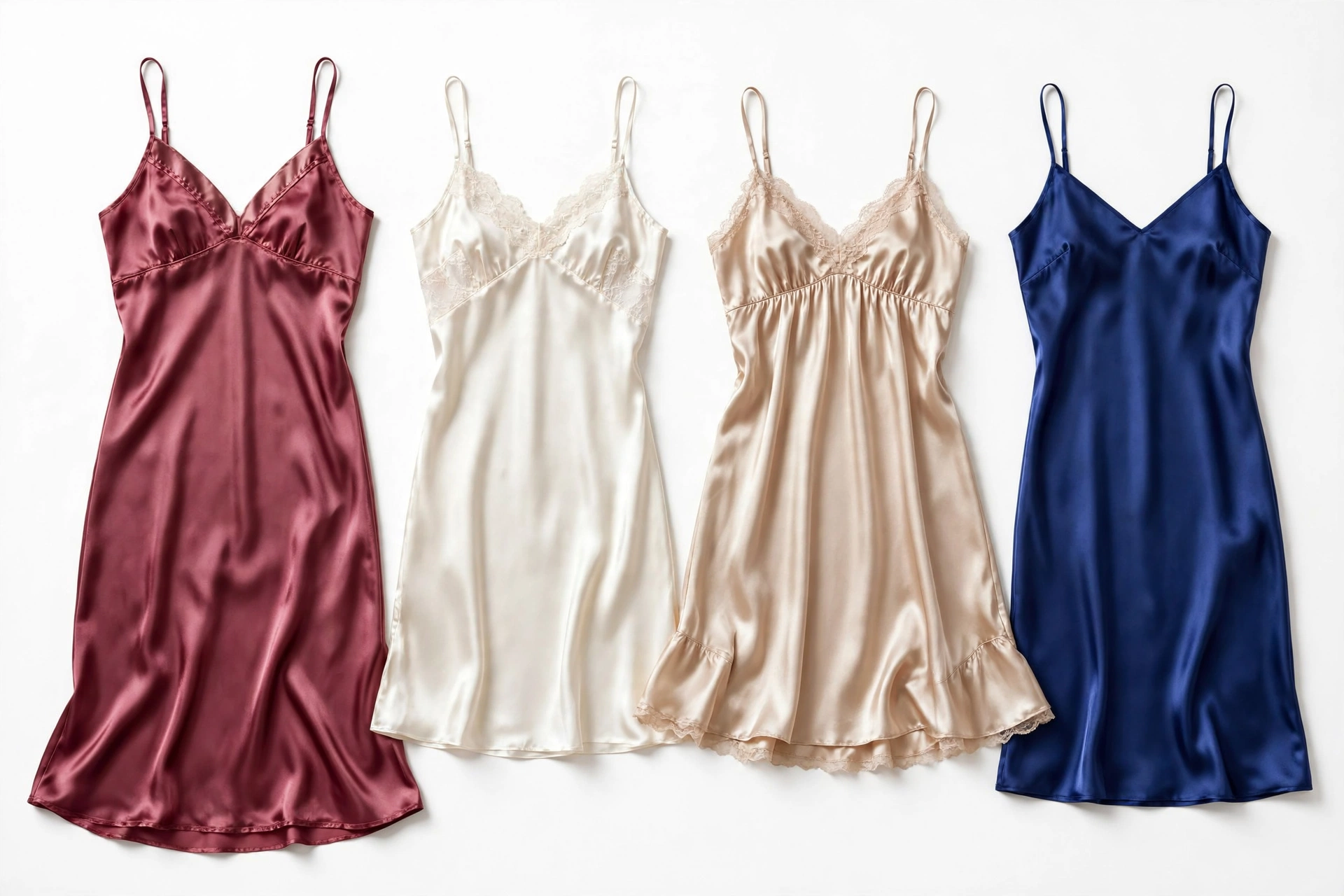
A nightgown is the full-length or midi sleeping dress; a chemise is its shorter, body-skimming sibling; a babydoll is a short, loose, empire-waist number with a flared skirt; a slip dress is outerwear that happens to look like the others. Retailers swap these names freely, so buy by the measurements and the silhouette, never by the label’s poetry.
The confusion is deliberate, or at least convenient. “Chemise” sounds French and sells better than “short nightgown,” so a seller calls a babydoll a chemise and nobody checks. Ignore the name. Look at four things: length, waistline shape, bust construction, and how it flares. Those four tell you what the garment will actually do on a body.
The style decoder
| Style | Typical length | Waist | Bust support | Best for |
|---|---|---|---|---|
| Nightgown | Mid-calf to ankle, some midi | Follows the body or straight | Minimal: soft cups at most | Full coverage, cooler rooms, classic sleepers |
| Chemise | Mid-thigh to knee | Body-skimming, no defined waist | Light: shelf bra or cups | Warm sleepers who want coverage without fabric bunching |
| Babydoll | Hip to mid-thigh | Empire (high, under bust) | Almost none; loose skirt hides everything | Readers/loungers who want airflow; pregnancy-friendly fit |
| Slip (sleep) | Knee to mid-thigh | Straight, bias-cut | Light; thin straps | Petite frames; doubling as a dress layer under a robe |
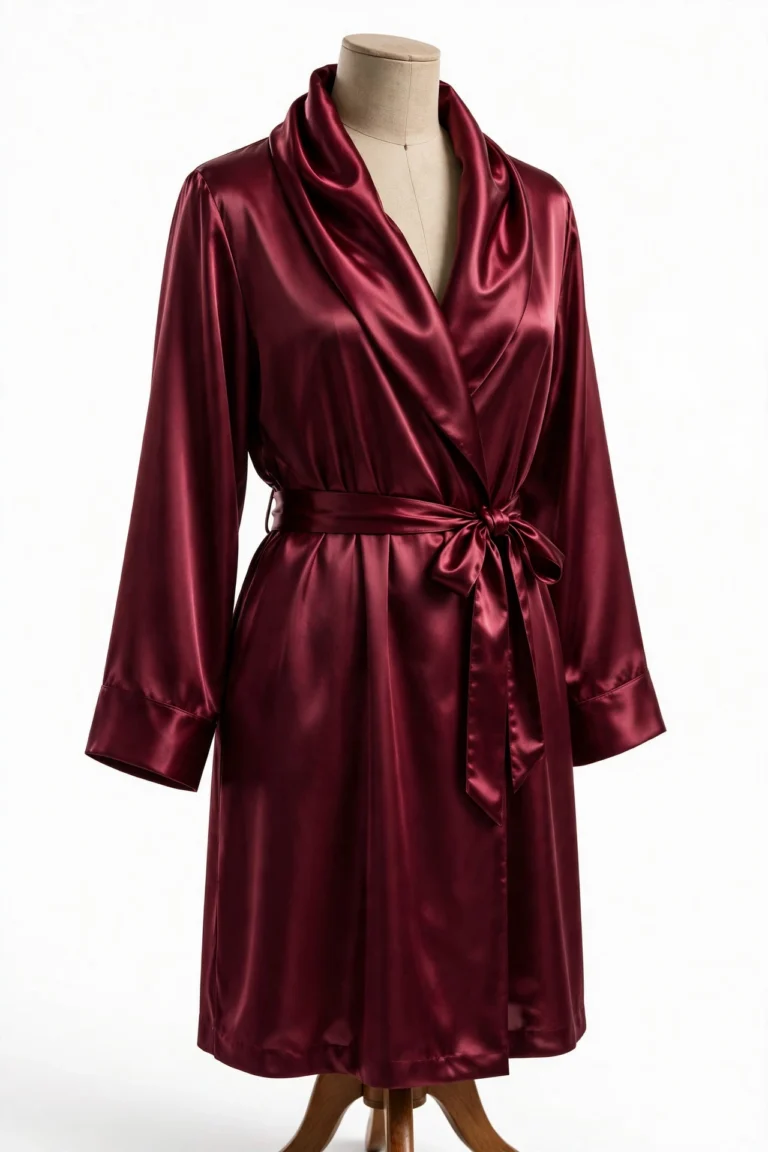
The nightgown is the only one of the four designed primarily for sleeping rather than lounging. Babydolls flare from the bust, which feels airy when you’re awake but rides up and tangles when you turn over at 3 a.m. If you’re buying to actually sleep in, default to the nightgown or chemise. If you’re buying for the mirror, pick whichever silhouette flatters you and pair it with a satin robe for the classic layered look.
Which satin is best for a nightgown: silk or polyester?
Silk satin sleeps cooler and feels better; polyester satin costs a fraction as much and survives the washing machine. The mechanism is simple: silk is a protein fiber that absorbs moisture and lets it evaporate, so it pulls heat and sweat off your skin through the night. Polyester is a plastic fiber that absorbs almost nothing, so moisture sits on your skin and the fabric clings. That’s the whole difference, and it’s a big one.
Here’s the catch nobody on the polyester side admits. Satin’s long floating threads put maximum fiber against your skin. In a plain weave, fiber touches skin at scattered points; in satin, the floats lay flat against you. That amplifies everything. Silk’s breathability feels luxurious times two. Polyester’s clamminess feels plasticky times two. The weave is a multiplier, and it multiplies whichever fiber you chose.
Then there’s the price reality. A genuine silk satin nightgown runs several times the cost of a polyester one, often into triple figures. Polyester charmeuse at $20 to $40 is the volume seller for a reason: it looks the part in the mirror and survives regular machine washing. But polyester satin also generates static, pills at friction points over time, and can feel warm enough that hot sleepers wake up sweaty. Silk satin regulates temperature, resists odor, and drapes better, but it demands hand washing or delicate cycles and loses its sheen faster if you mistreat it.
My honest ranking for sleep, not for Instagram: silk charmeuse first, silk-blend satin second, high-quality polyester charmeuse third, cheap polyester “satin” last. The bottom category is the shiny stuff that feels like a gift bag and smells faintly of plastic when warm. If you’re choosing between satins, read our guide to the types of satin first, because charmeuse, duchess, and “bridal satin” behave very differently on skin.
What length and neckline should you choose?
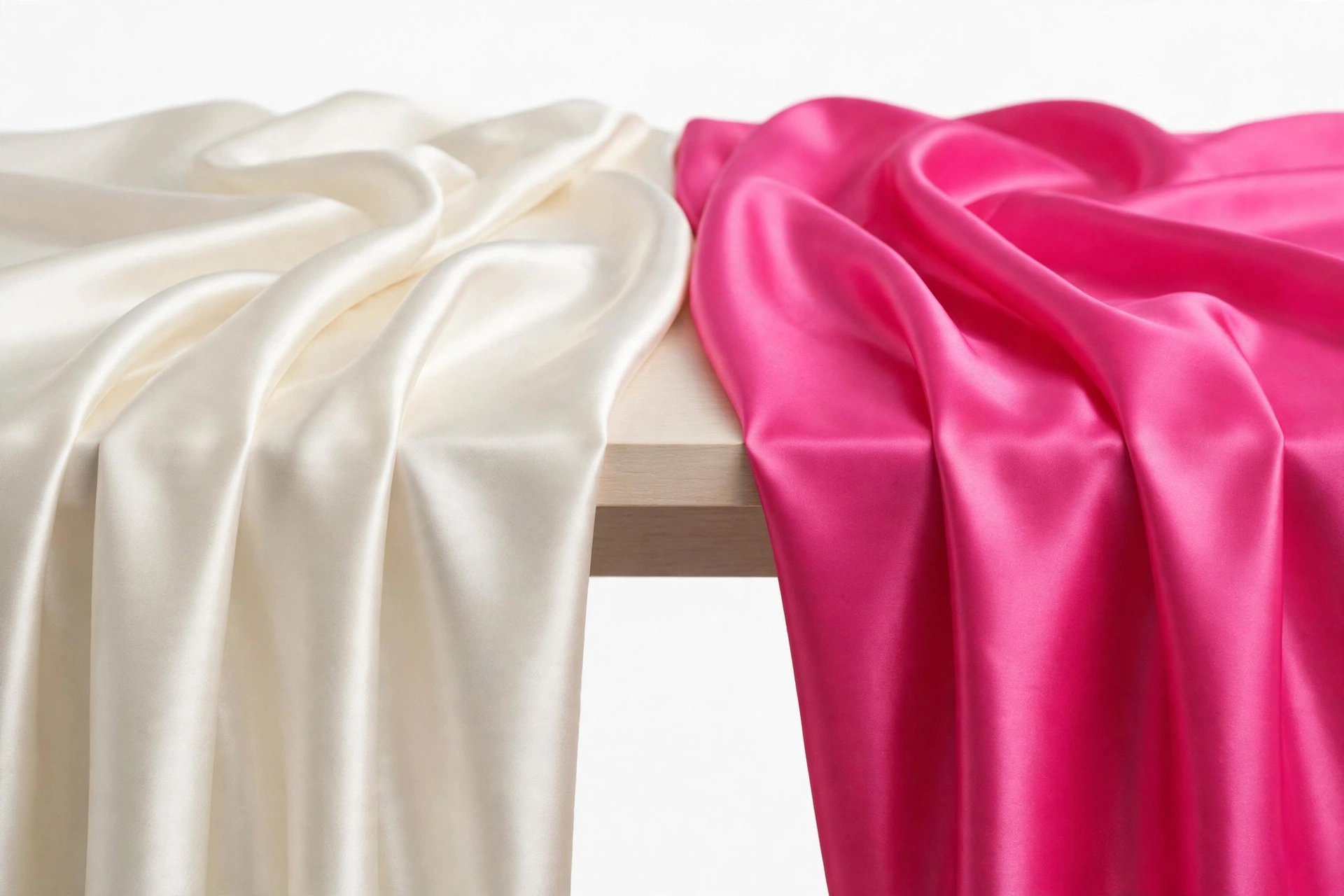
Pick length by how you sleep, not how it looks on the model. If you sleep on your side and turn over, a long nightgown winds around your legs; a knee or midi length stops that. If you sleep still on your back, full length feels wonderfully indulgent. Tall shoppers should check the listed length in inches, not the size label, because one brand’s “long” ends at another brand’s “midi.”
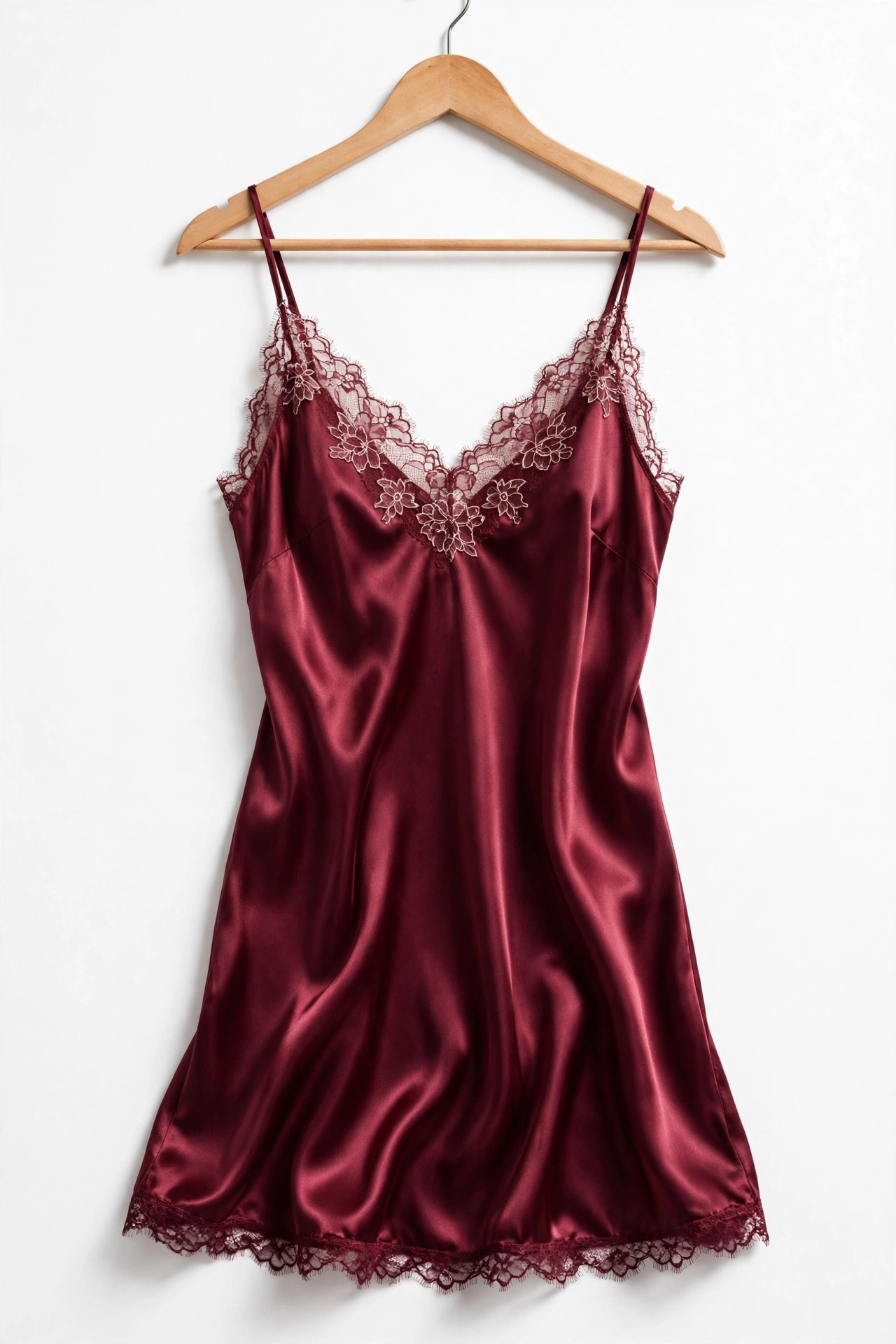
Necklines are mostly about comfort and secondarily about looks. A V-neck with lace trim photographs beautifully but the lace can itch where it touches skin, so check whether the lace is lined with soft fabric on the inside. A scoop or square neckline distributes the fabric evenly and rarely irritates. Halter necklines concentrate all the garment’s weight on your neck, which gets uncomfortable by morning on anything heavier than featherweight charmeuse. Straps should be adjustable; fixed straps fit almost nobody exactly, and a nightgown sliding off one shoulder every night is a one-way trip to the back of the drawer.
One more length note: satin shows every pull and snag, and longer hems take more abuse around the house. If you’ll wear it to make coffee and answer the door, a tea length is the practical sweet spot. Save the floor-length version for the bedroom.
How much bust support does a satin nightgown actually give?
Almost none, and you should plan around that honestly. Most satin nightgowns have thin adjustable straps, no band, and at best a soft shelf bra or lightly padded cups. There’s no underwire structure because the satin weave’s long floats don’t grip anything; the fabric slides instead of anchoring. That sliding is the shine mechanism working against you.
What this means in practice: if you wear a D cup or above, a nightgown will not support you the way even an unstructured bralette does. You’ll get coverage and comfort, not lift or separation. Some shoppers solve this by sleeping in the nightgown over a soft sleep bra, which works fine and doesn’t show through. If the nightgown has built-in cups, check their size range; one-size cups fit almost nobody and gape on smaller busts while squashing larger ones.
Straps matter more than most buyers expect. Wide-set straps slip on narrow shoulders; racerback or crisscross straps stay put but can dig. The best everyday solution is the most boring one: straps that adjust from the front, wide enough to distribute weight, set at a width that matches your shoulders. Try it on and shrug, reach overhead, and lie down before you decide. A nightgown that behaves standing up can still slide everywhere lying down, and that’s the position it was bought for.
Is a satin nightgown worth the money over satin pajamas?
Buy the nightgown if you sleep warm, toss and turn, or love the feeling of fabric sliding over sheets; buy pajamas if you get cold, have a partner who steals blankets, or wear sleepwear around the house all morning. The decision comes down to coverage, warmth, and how the garment interacts with your bedding, not to how it looks in the product photo.
Run through this framework before you spend:
Buy the nightgown when: you run hot at night (one layer beats two), you sleep alone or under a shared duvet (no waistband digging in), you like matching your satin pillowcase aesthetic, or you want one garment for sleep and lazy weekend lounging. Silk satin nightgowns are also the better gift purchase; they read as more special than pajamas at the same price.
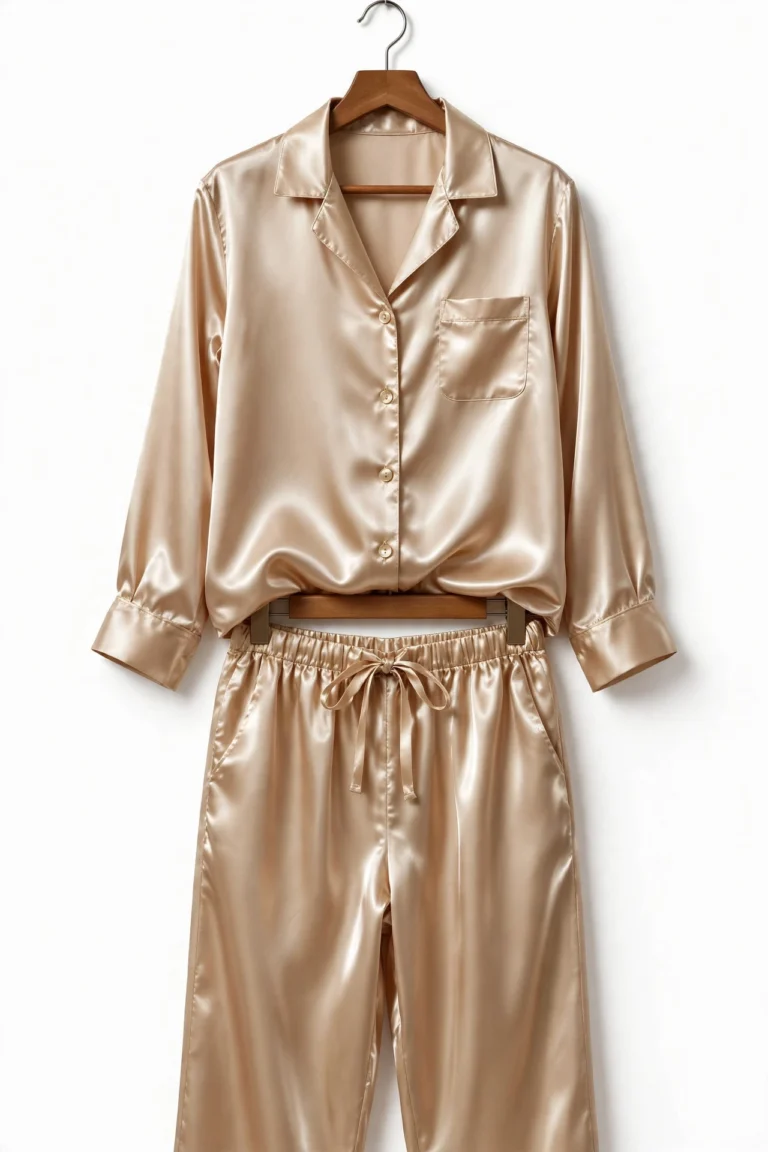
Buy the pajamas when: your bedroom gets cold in winter, you do chores or childcare in your sleepwear (a top that stays tucked beats a skirt that rides up), you sleep with a restless partner or pet (separates stay put), or you’re buying polyester (a cheap polyester nightgown twists around the body; a cheap polyester pajama set at least stays where you put it). Read our satin pajamas buying guide for the full comparison.
Skip both and reconsider when: the “satin” is unlined lace over scratchy mesh at the bust, the price is suspiciously low yet claims to be silk (real silk satin costs far more to produce, so treat the label with skepticism), or the listing shows no fabric close-up. Satin’s shine hides nothing about quality in a macro shot; sellers who hide the close-up know exactly what their fabric looks like up close.
How do you wash a satin nightgown so it stays smooth?
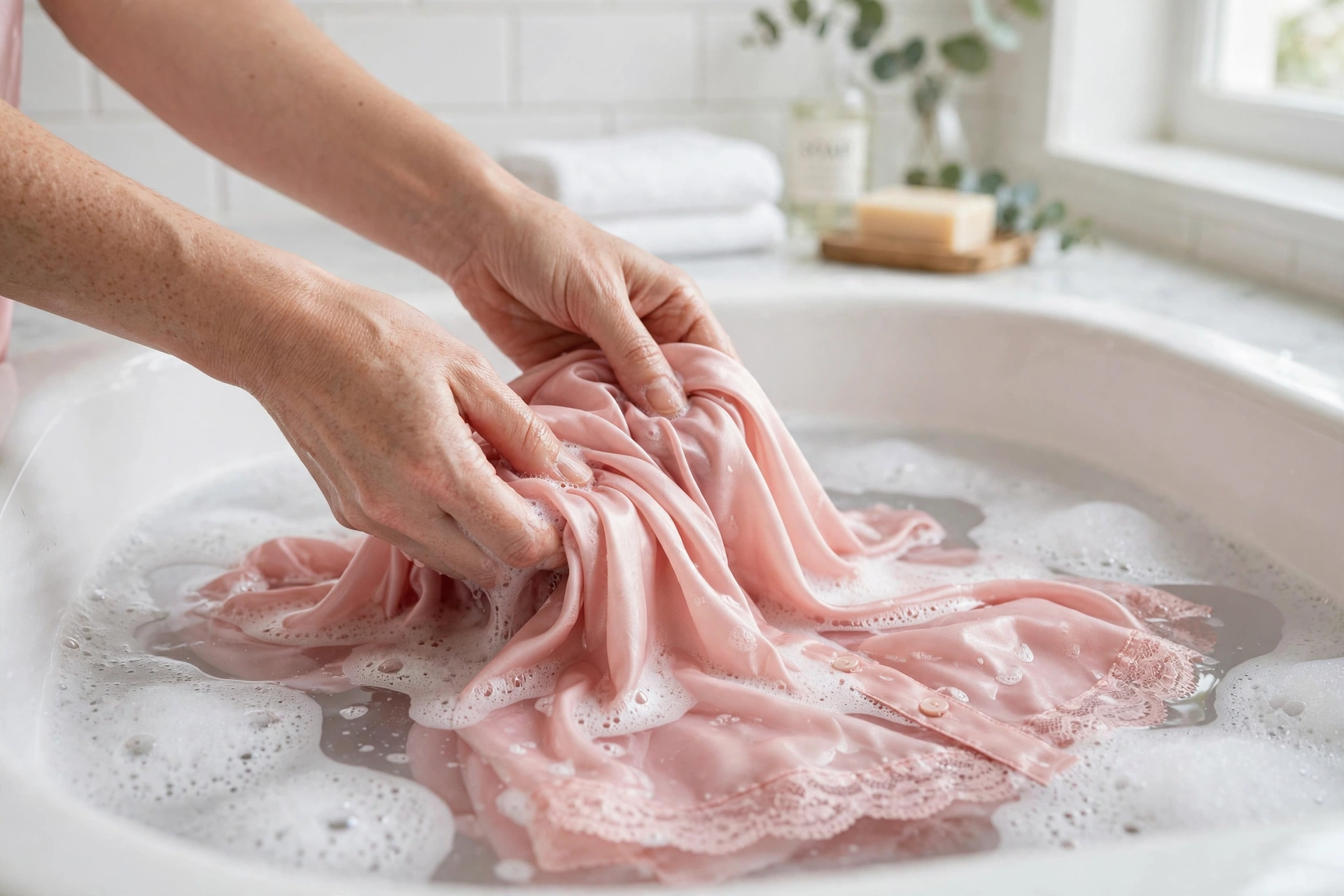
Wash silk satin by hand in cool water with a gentle detergent, never wring it, and roll it in a towel to remove water; wash polyester satin inside-out in a mesh bag on a cold delicate cycle. The enemy in both cases is friction and heat. Satin’s floating threads snag on anything rough, and heat sets wrinkles into polyester permanently while dulling silk’s sheen.
The mechanism is worth one paragraph because it explains every care rule. Satin gets its shine from long threads floating across the fabric face, uninterrupted. Anything that disturbs those floats, rough zippers in the same load, wringing, high dryer heat, dulls the shine in patches that never match again. Water itself can spot silk satin if it dries unevenly, which is why you submerge the whole garment rather than dabbing stains. Cold water, minimal agitation, no dryer: that’s the entire philosophy.
For drying, lay silk satin flat on a towel away from direct sun; hang polyester satin on a padded hanger. Never use chlorine bleach on either. If wrinkles appear, steam from the wrong side on low, or hang the garment in a steamy bathroom; pressing directly with an iron crushes the floats flat and kills the shine. Full per-fiber instructions live in our satin washing guide, and the same rules protect your sheets and pillowcases too.
One last thing: rotate. Satin sleepwear lasts noticeably longer when it rests a day between wears, because elastic, seams, and stress points get a break instead of being strained every single night. Two mid-range nightgowns outlast one expensive one worn every single night.
What does the satin weave actually do for sleepwear?
The satin weave puts the maximum amount of thread on the fabric’s face, which is why satin feels slick and slides against sheets instead of gripping them. That slipperiness is the whole point of satin sleepwear: less friction against skin and bedding, which means fewer tangles, less fabric bunching, and hair that doesn’t catch and frizz. If you want the weave science behind that sentence, our satin weave guide breaks down the float structure step by step.
FAQs
Is a satin nightgown good for hot sleepers? Silk satin is genuinely good for hot sleepers because silk fiber absorbs moisture and releases it, cooling the skin. Polyester satin is the opposite: it traps heat and moisture, so hot sleepers often wake up clammy. If you run hot, buy silk or a silk blend, and choose a chemise or short nightgown for maximum airflow.
What’s the difference between a satin chemise and a satin nightgown? Length and intent. A chemise is shorter (mid-thigh to knee) and body-skimming, built for warm nights and lounging. A nightgown runs midi to full length with more coverage, built for actual sleeping. Sellers mix up the names constantly, so check the listed length and waist shape instead of trusting the label.
Does a satin nightgown make you sweat? It depends entirely on the fiber. Silk satin wicks moisture and usually prevents that sweaty feeling. Polyester satin, which is what most under-$40 nightgowns are made of, doesn’t absorb moisture, so sweat sits on your skin and the fabric clings. If your nightgown makes you sweat, the fiber is the culprit, not the satin weave.
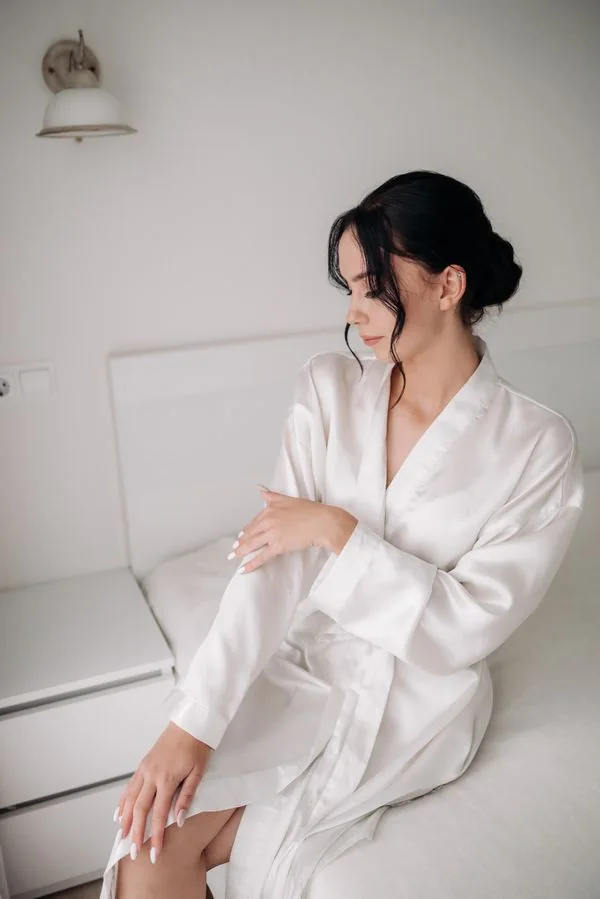
Can you wear a satin nightgown as a dress? A slip-style satin nightgown with a straight bias cut can double as a dress with a robe or jacket over it, especially in black or champagne. Babydolls and lace-heavy chemises read as lingerie and don’t translate. Check the hem finish and strap quality; nightgown straps are thinner than dress straps and show it in daylight.
How long does a satin nightgown last? A well-made silk satin nightgown lasts several years with hand washing; polyester satin lasts one to three years of regular wear before the shine dulls and pilling appears at friction points. Rotating between two garments, washing cold, and skipping the dryer are the three habits that extend lifespan the most.
Should I size up in a satin nightgown? Usually yes, by half a size or one full size if you’re between sizes. Satin has almost no stretch and no forgiveness, so a snug fit pulls at the bust and hips and shows every seam. The exception is babydolls, which are cut loose by design and can be taken in your true size.
Is silk satin or polyester satin better for sensitive skin? Silk satin, comfortably. Silk is a natural protein fiber that’s smooth at the microscopic level and doesn’t generate static, so it rarely irritates. Polyester satin can irritate sensitive skin two ways: static cling dragging across skin, and trapped heat causing rashes in warm sleepers. If your skin reacts to fabrics, silk is worth the premium.