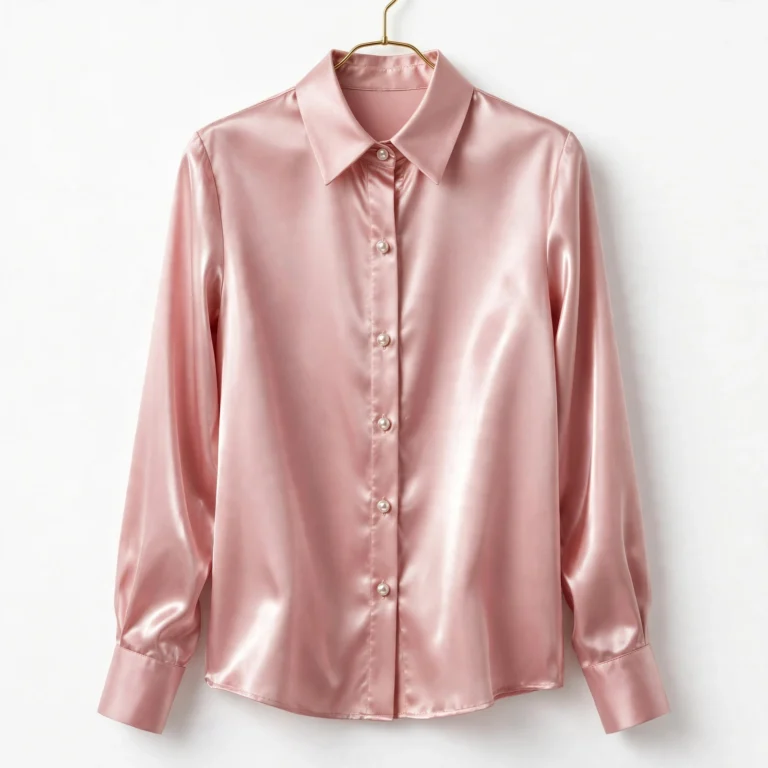
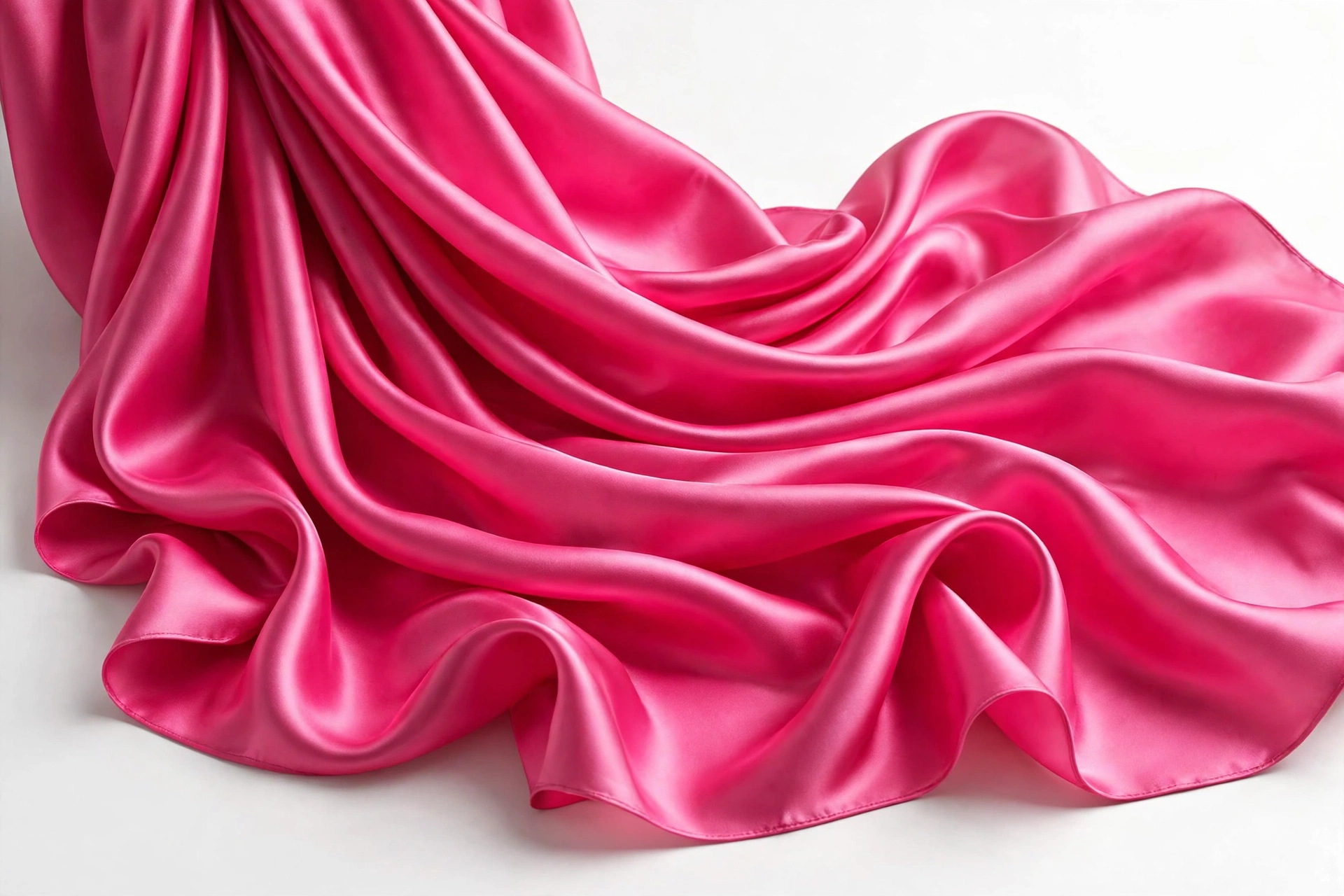
Satin Scarf: The Complete Guide
A satin scarf is a square or oblong of satin weave, worn at the neck, head, or waist. Because satin is a weave and not a fiber, “satin scarf” says nothing about what it is made of: most are polyester satin, the expensive ones are silk satin. That fiber difference drives shine, care, and price. For size, 90 cm square is the classic all-round format. Buy polyester for bold color cheap, silk for softness against skin and years of wear. Check the edge finish before you buy: a plump rolled hem signals real craft on silk, while machine hems are normal on polyester.
The 30-second verdict
Buy polyester satin if the look is the point: it holds color, costs little, and machine washes. Buy silk satin if the feel is the point: it drapes softer, breathes against skin, and ages better. Choose 90 cm square for all-round wear, a neckerchief for hair and handbags, oversized for head wraps and beach cover. Hand-rolled edges are worth paying for only on silk. And if your knots keep loosening, the fabric is not defective; the weave is just slick by design, and the fix is a double wrap or a scarf ring.
What is a satin scarf, exactly?
A satin scarf is a square or oblong of satin weave, finished at the edges, worn at the neck, in the hair, or on the head. The word that needs decoding is “satin.”
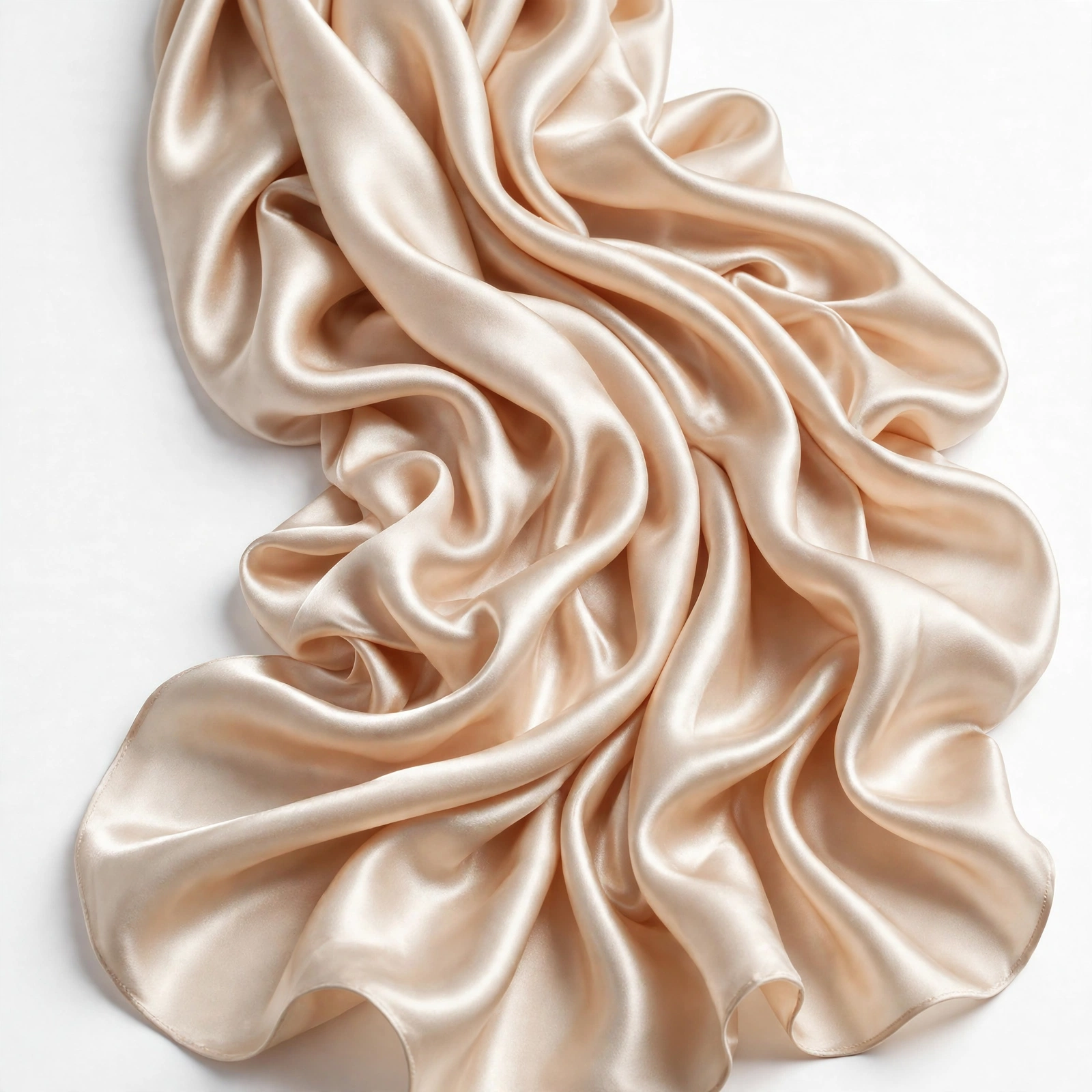
Satin is a weave structure, not a fiber. satin is a weave, not a fiber A weaver floats warp yarns over weft yarns with very few interlacing points, and those long uninterrupted floats are what catch the light. The fiber can be anything: silk, polyester, rayon, acetate. Each fiber gets woven into named satin types, and charmeuse is the classic scarf satin. A market-stall “satin scarf” and a luxury-house one share the weave and almost nothing else.
That weave is also why satin scarves slide: against your neck, against themselves in a knot, across a coat collar. Understand the weave and every buying decision below gets easier.
Silk vs polyester: which satin scarf should you buy?
This is the real question, and most product pages dodge it. Polyester satin is sharper, glossier, cheaper, and tougher. Silk satin is softer, quieter in shine, breathable, and far more expensive. Neither is better in the abstract. They suit different buyers.
| Silk satin scarf | Polyester satin scarf | |
|---|---|---|
| Shine | Soft, liquid luster; deepens with wear | Bright, mirror-like gloss; stays put |
| Hand feel | Fluid, molds to skin, light | Slightly crisp; can feel plasticky when cheap |
| Breathability | High; comfortable all day at the neck | Low; traps heat against skin |
| Color | Prints look rich but slightly muted | Dye-sublimated prints look electric |
| Durability | Snags more easily; fine fibers abrade | Resists abrasion; keeps its edge |
| Water | Water spots easily; never spot-clean | Shrugs off water and sweat |
| Care | Hand wash or dry clean | Machine washable on cool |
| Price | Several times the cost of polyester | Budget friendly |
| Best for | Everyday neck wear, sensitive skin, heirloom pieces | Bold prints, beach and travel, experimenting |
One sentence of strong opinion: if you wear scarves daily against your neck, buy silk once instead of polyester five times. The comfort difference is not subtle. If you wear them occasionally for a print or an outfit accent, polyester is the rational buy, and the color payoff is genuinely better.
Watch out for the “silk satin” label trick
Labels in the scarf world are slippery, and sellers know it. “Silk satin” should mean silk fiber in satin weave, but it gets printed on polyester scarves chasing the association. “Silky,” “silk-feel,” and “silk touch” are legal-speak for polyester. the silk vs satin distinction sellers blur
Two quick tests before you trust the label. First, the price test: a real silk 90 cm square cannot sell for the price of a sandwich. If it costs almost nothing and claims silk, it is polyester. Second, rub the fabric between your fingers. Silk warms up fast and feels almost alive; polyester stays cool and a little glassy.
What size satin scarf should you get?
Scarf sizing follows formats, not measurements you need to memorize. The industry settled on a handful of squares and rectangles, and each one does a different job.
- **Neckerchief (around 50 to 65 cm square):** the bandana format. For hair, ponytails, handbag handles, and small neck knots.
- **Classic square (around 90 cm square):** the workhorse. Folds into a triangle for the neck, rolls into a band for hair, works as a light head covering. If you buy one scarf, buy this size.
- **Oversized square (130 to 140 cm square):** for full head wraps, turban styles, beach cover-ups, and dramatic neck drapes. More fabric means more bulk at the knot, so expect it to loosen faster.
- **Oblong or stole (around 70 by 180 cm):** the shawl format. Wraps the neck and shoulders, doubles as an evening wrap. Satin this size reads formal, so save it for dressed-up occasions.
- **Skinny or twilly (about 5 cm wide, 86 cm long):** for handbag handles, wrist wraps, and threading through belt loops.
Silk handles the big formats better: a 90 cm silk square ties into a small knot and drapes flat, while the same size in stiff polyester bunches. So for oversized squares, silk is worth the premium; cheap polyester at 140 cm can look like a sail.
Are hand-rolled edges really better?
Yes on silk, mostly marketing on polyester. Here is what the terms mean and how to judge them by eye.
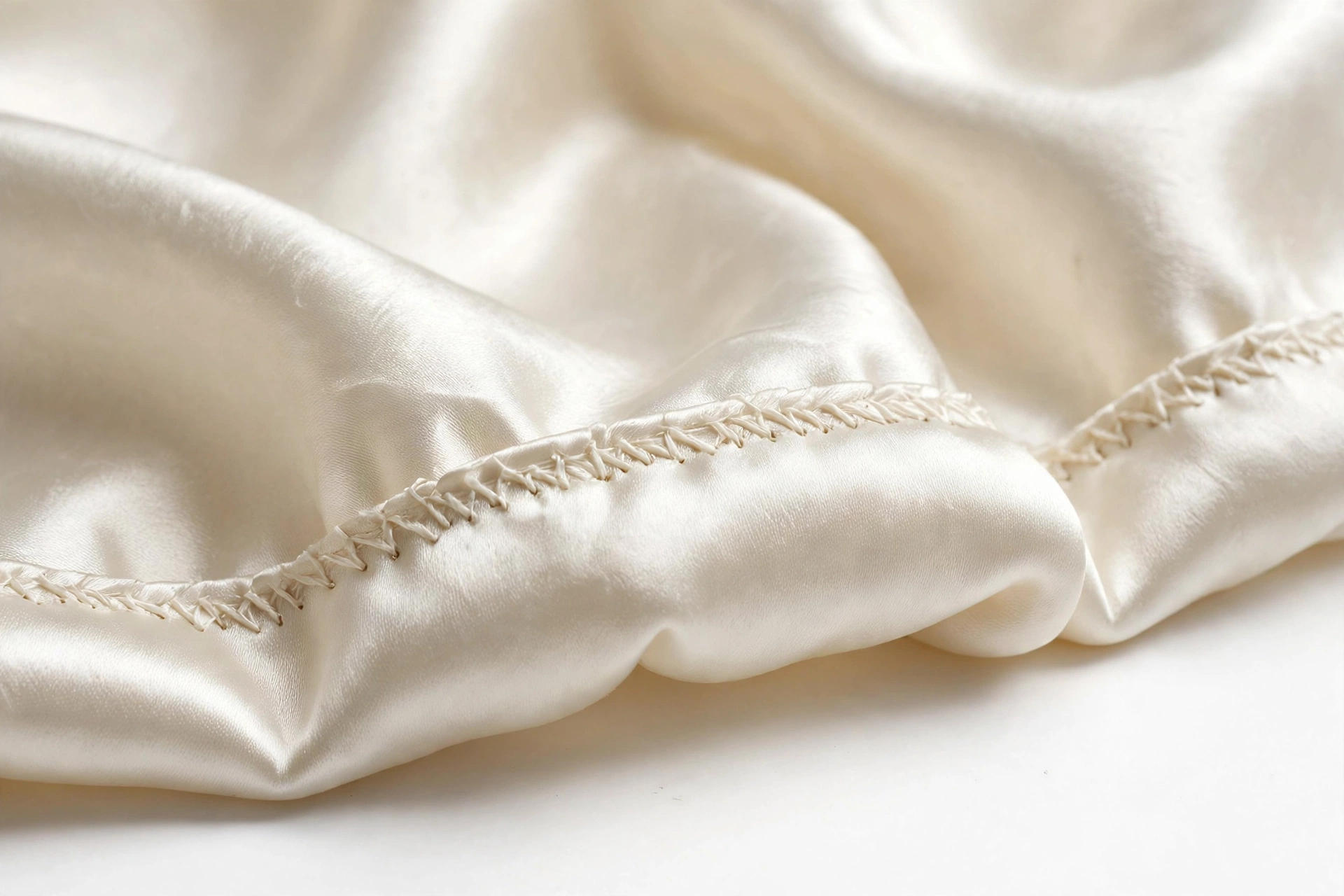
A hand-rolled edge is rolled by hand into a small plump tube and stitched with tiny, slightly irregular stitches. The edge has a soft rounded profile, and the stitching slants instead of running perfectly straight. It is slow work, which is why it signals quality, and the rolled edge adds a touch of weight that helps the scarf hold its shape when folded.
A machine hem is a narrow flat fold sewn by machine, often with a visible straight stitch. On polyester scarves it is completely normal and fine. The fabric is stiff enough that the hem does not need hand work, and the price would not support it anyway.
The trap is the polyester scarf advertising “hand-rolled edges.” At fast-fashion prices the edge is almost certainly machine-rolled, a label flourish rather than a craft claim. Judge the scarf by its fiber and print instead.
One more edge type worth knowing: woven selvedge, where premium scarves are woven to size with the edges finished on the loom itself. Clean, and it never unravels.
Why does a satin scarf slip and come undone?
Because the weave is working as designed. That smooth gleaming face comes from long warp floats with very few interlacing points, so there is almost no surface texture to grip. Every time you move, the knot’s loops creep against each other under the scarf’s own weight and work themselves loose. It is physics, not a defect. The same low friction that fights your knots is what makes a satin scarf feel wonderful against skin.
You cannot fix the slipping by changing the fabric. You fix it by changing the mechanics. Five approaches, ranked by how well they work:
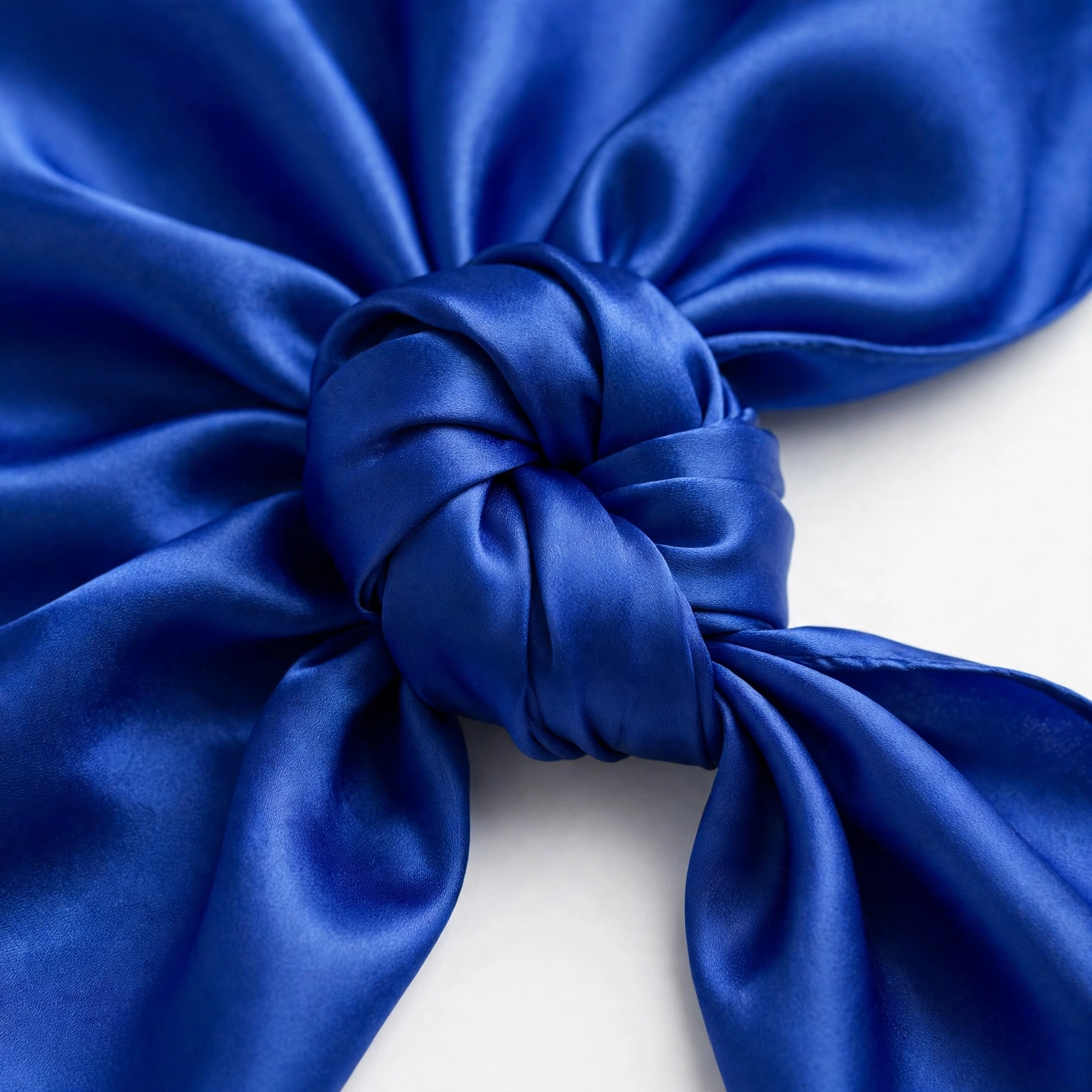
1. **Double wrap the knot.** Two loops mean roughly double the contact area, so friction doubles though the fabric is unchanged. A twice-wrapped neckerchief outlasts a single-wrap knot by hours. 2. **Tie a smaller, tighter knot.** A small snug knot presses the fabric layers harder than a big loose one. Pull it tight against the base of your neck. 3. **Twist the tail before knotting.** Twisting turns the smooth face into a rope-like texture, so the weave faces no longer lie flat against each other and the knot bites. This is the single best trick for silk scarves. 4. **Use a scarf ring or slide.** A ring pins the crossing point mechanically, so the knot no longer depends on friction at all. Brass and resin rings are cheap and look deliberate. 5. **Anchor under a collar or lapel.** Tucking the knot under a collar adds external pressure. This is why scarves behave better in cooler weather.
What does not work: tying the same loose knot tighter once, or spraying it with anything. Hairspray leaves a crust and attracts dust.
How do you wash and store a satin scarf?
Washing
Match the method to the fiber, not to the word “satin.” Silk and acetate scarves go in cool water with a gentle detergent, or to the dry cleaner. Polyester scarves handle a machine on cool inside a mesh bag. Cold water, always; heat is the enemy of every satin finish. per-fiber satin washing rules
The one rule silk owners must learn: never spot-clean a water mark. Silk satin water-spots because the wet area dries with a different mineral pattern than the rest, and dabbing at it draws a cleaner ring around the dirty one. Wet the entire scarf evenly and let it dry flat as one piece. The whole surface resets together and no ring forms.
Skip the dryer for every fiber. Dry flat or hang away from direct sun, which fades dyes and yellows nylon-based satins. A cool iron on the wrong side, through a press cloth, handles wrinkles.
Storage
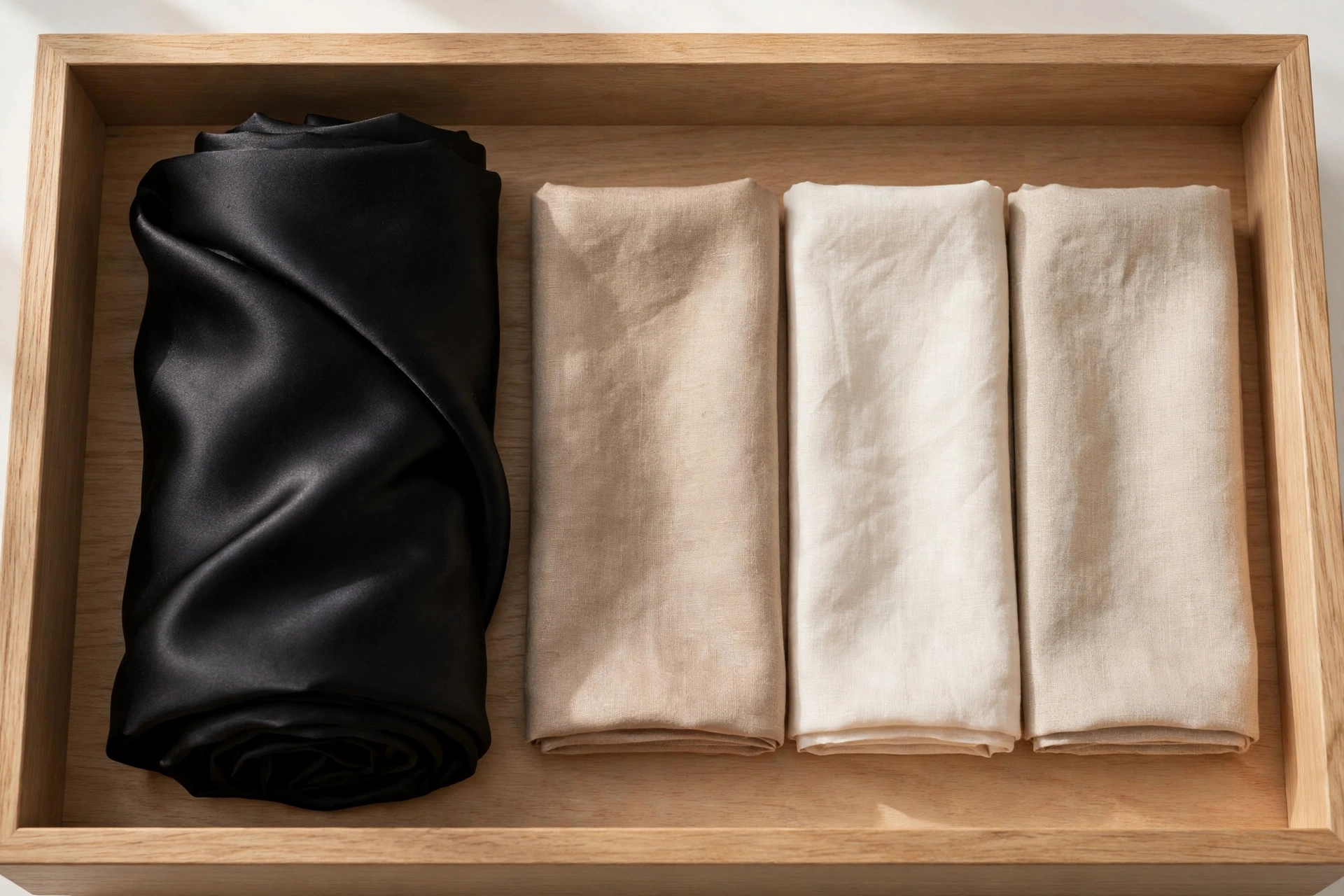
Roll, do not crumple. A loosely rolled scarf avoids hard crease lines that satin’s shine makes very visible. For silk squares, fold loosely along the natural fold lines with tissue between layers and store flat. Keep scarves away from jewelry and hooks: satin’s long floats snag on the tiniest burr, and a snag is permanent. Never hang a scarf by one corner; gravity pulls the weave along the bias and stretches it out of square.
How to wear it without looking overdressed
Satin carries formal energy because of the shine, so the styling rule is simple: pair it with something matte and keep it to one glossy piece per outfit. A neckerchief knotted at the side over a crew-neck tee reads effortless. For evening, an oblong scarf draped over one shoulder works over a satin shirt or a dark blazer. For hair and bags, use the neckerchief and skinny formats.
How to spot a good one when buying
Five checks. First, read the fiber content, not the front label: “silk satin” with no fiber line is a dodge. Second, hold it to the light; decent scarf satin stays opaque, thin cheap satin goes translucent. Third, check the edges: a plump rolled hem on silk is a good sign, a wavy overlocked edge is not. Fourth, look at the print: quality prints are sharp with color through to the back. Fifth, scrunch a corner for five seconds. Silk releases the wrinkles fast; cheap polyester holds them.
Price anchors help. A real silk 90 cm square from a decent maker costs real money. A polyester one at a tenth of that can still look excellent for occasional wear. Match the spend to how often it will touch your skin.
FAQs
Is a satin scarf real silk? Not necessarily. Satin is a weave, not a fiber, so a satin scarf can be silk, polyester, rayon, or acetate, and most affordable ones are polyester. Only scarves labeled with silk fiber content are real silk. “Silk satin,” “silky,” and “silk-feel” on cheap scarves usually mean polyester.
Why does my satin scarf keep coming undone? The satin weave has a smooth face with very few interlacing points, so friction between fabric layers is low and knots creep loose. Fix it mechanically: double wrap the knot, tie it smaller and tighter, twist the tail into a rope before knotting, or use a scarf ring that pins the crossing point.
What size satin scarf should I buy? For one all-round scarf, get the 90 cm classic square: it folds into a neck triangle, rolls into a hair band, and works as a light head covering. Choose a neckerchief (50 to 65 cm) for hair and bags, oversized (130 to 140 cm) for wraps and beach cover, and oblong (70 by 180 cm) for evening draping.
Can you machine wash a satin scarf? Polyester satin scarves can go in the machine on cool inside a mesh bag. Silk scarves need hand washing in cool water or dry cleaning. Skip the dryer for every fiber, dry flat or hang away from sun, and never spot-clean a water mark on silk: wet the whole scarf evenly instead.
Are hand-rolled edges better than machine hems? On silk scarves, yes. A hand-rolled edge adds slight weight and structure that helps the scarf hold its shape, and the tiny slanted stitches signal genuine craft. On polyester scarves, machine hems are normal and perfectly fine. Be skeptical of “hand-rolled” claims on very cheap polyester scarves.
Does satin crease, and how do you store scarves? Satin creases if folded hard or crumpled, and the shine makes crease lines very visible. Roll scarves loosely, or fold silk squares with tissue between layers, and store flat. Never hang a scarf by one corner: gravity stretches the weave out of square. Keep them away from jewelry, which snags the long floats.
Satin scarf vs silk scarf: what is the difference? A silk scarf is defined by fiber: it is made of silk. A satin scarf is defined by weave: it is made in satin weave from any fiber, often polyester. A silk satin scarf is both. If you want softness and breathability against skin, look for silk. If you want vivid prints at a low price, polyester satin does the job.
*Trust note: no brand partnerships and no silk sellers behind this guide. The fiber advice follows the weave science, and corrections are welcome.*