Satin Blouse: The Complete Guide
A good satin blouse is a fiber decision before it is a style decision. Polyester charmeuse gives you the shine and the washability at a low price, with static and button-gap as the trade. Silk satin drapes better and breathes, at several times the price and with hand-wash care. Match the satin type to the blouse style: fluid charmeuse for cowl and drape necklines, crepe-back satin for crisp button-ups. Check the inside seams before you buy. Satin’s long floats fray, and cheap finishing shows up at the collar points first. That is the thirty-second version. The rest is the detail.
Why do satin blouses misbehave?
Three weave facts explain nearly every complaint about satin blouses.
The button gap. Woven satin has almost no stretch on the straight grain. When a button-up pulls across the bust, the strain has nowhere to go, so the yarns between two buttons separate and a gap opens. Satin makes it worse than cotton for two reasons: the smooth face has nothing to grip itself with, and the shine spotlights the opening. A cotton poplin shirt gaps too, but its matte surface forgives it. On satin, every gap is a tiny mirror pointed at the problem. This is a physics issue, not a body issue. The fix is never “lose weight”; it is size, cut, or construction, covered below.
The migrating tuck. Satin faces are smooth yarn against smooth yarn, which means low friction: a French tuck slides out within an hour because nothing holds it. The same slipperiness that feels good against skin works against you at the waistband.
The elbow crease. Sit at a desk and your sleeves crease at the elbow: pressure plus body heat sets a fold, and the fold catches light differently than the flat fabric around it. That is why satin wrinkles read louder than cotton ones.
The satin weave guide explains the float structure behind all three behaviors if you want the full mechanism.
Which satin should your blouse be made from?
The type decides the blouse more than the brand does. A button-up needs structure. A cowl neck needs fluidity. Buy the wrong type and no amount of styling saves it.
| Satin type | Best blouse styles | Why it works | Watch out for |
|---|---|---|---|
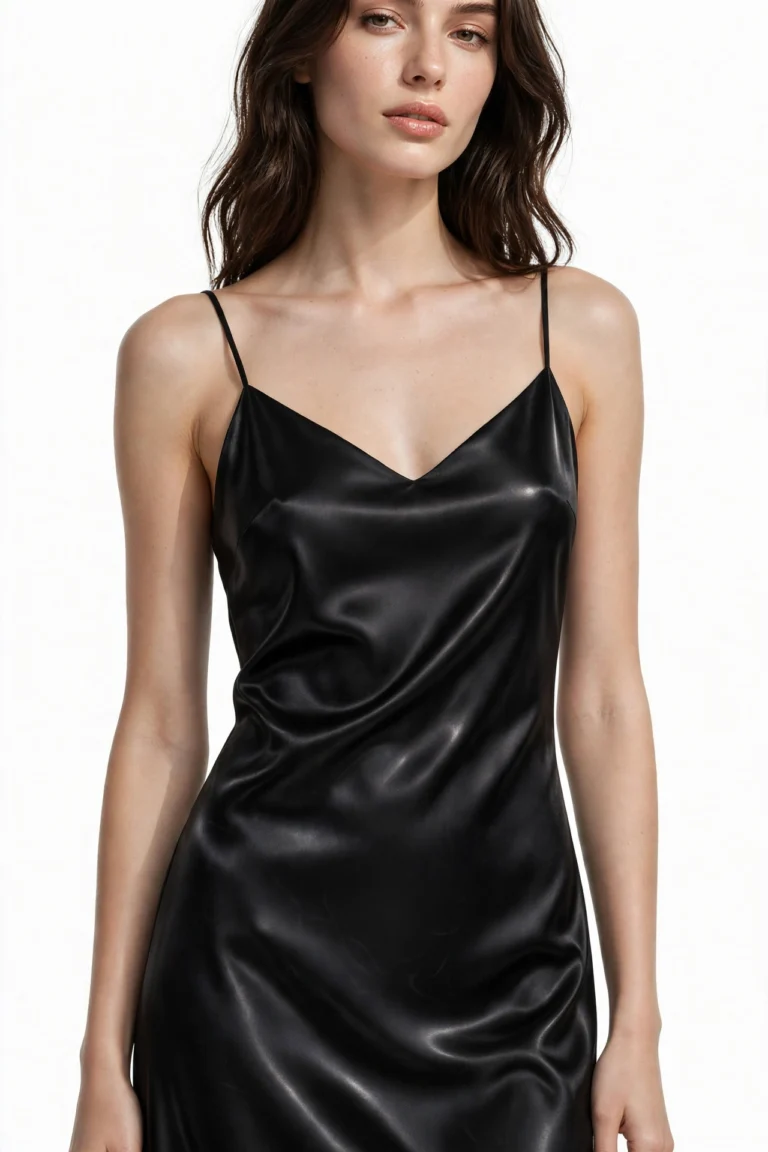
| Charmeuse | Cowl necks, drape-front, sleeveless shells | Fluid drape follows soft necklines instead of fighting them | Shows bra lines and every lump; snags on jewelry |
| Crepe-back satin | Classic button-ups, office blouses | The matte reverse calms the shine for daytime wear | Two faces to manage; the matte side needs careful pressing |
| Stretch satin | Fitted blouses, peplum shapes | Elastane’s give ends the button-gap problem | Shine plus cling reads loud; shows underwear lines |
| Duchess or heavy satin | Structured collars, statement sleeves | Holds a collar stand crisp all day | Too rigid for soft styles; heavy on the shoulders |
| Silk satin (any weave) | Any style, budget allowing | Breathes, takes dye richly, drapes with more life | Costs several times more; water spots show; hand wash |
A polyester charmeuse blouse and a silk charmeuse blouse share a weave and almost nothing else: one is cheap, washable, and static-prone; the other breathes, costs far more, and spots if rain hits it. Acetate satin shows up in vintage and occasion blouses and is the fragile one: it weakens when wet and hates heat. Decide the fiber first, then the type. Our types of satin guide maps every named satin with per-fiber notes.
Which blouse style suits you?
Five styles cover nearly everything sold as a satin blouse.
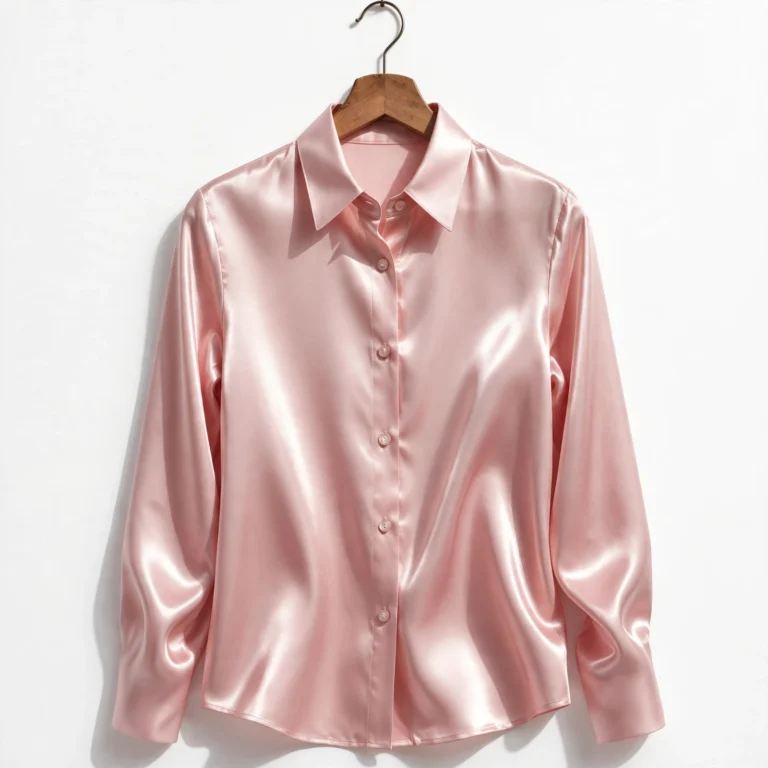
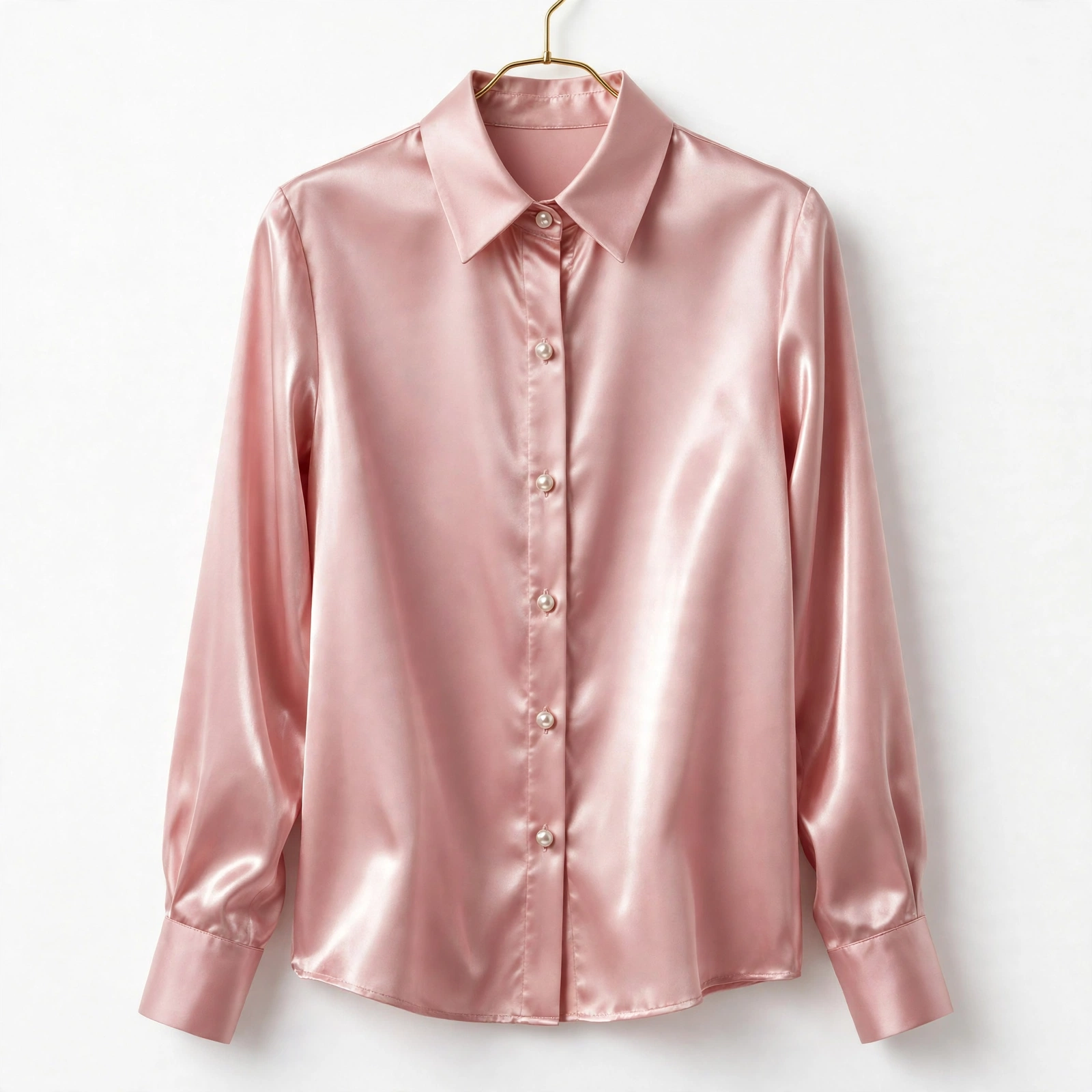
The classic button-up. The hardest working and the hardest to fit. It demands a stable satin (crepe-back or a mid-weight charmeuse) and enough ease across the bust. Done right, it is the sharpest shirt in the room; done wrong, it gaps and pulls.
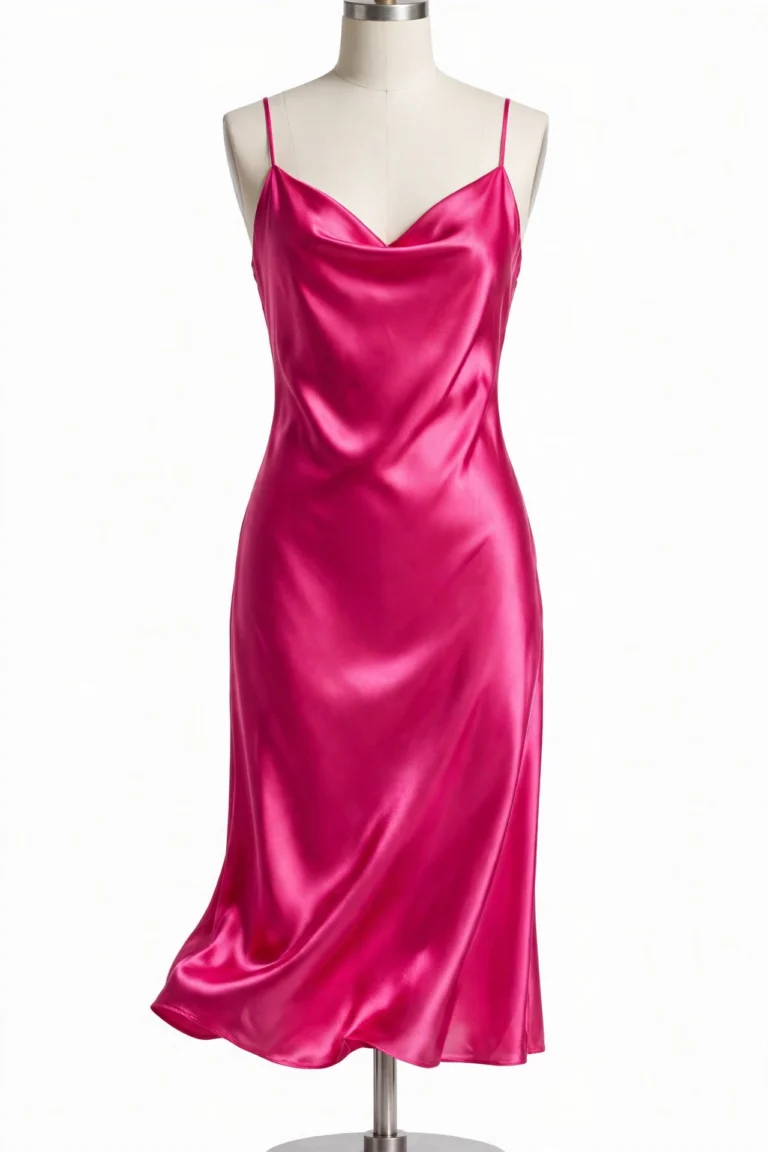
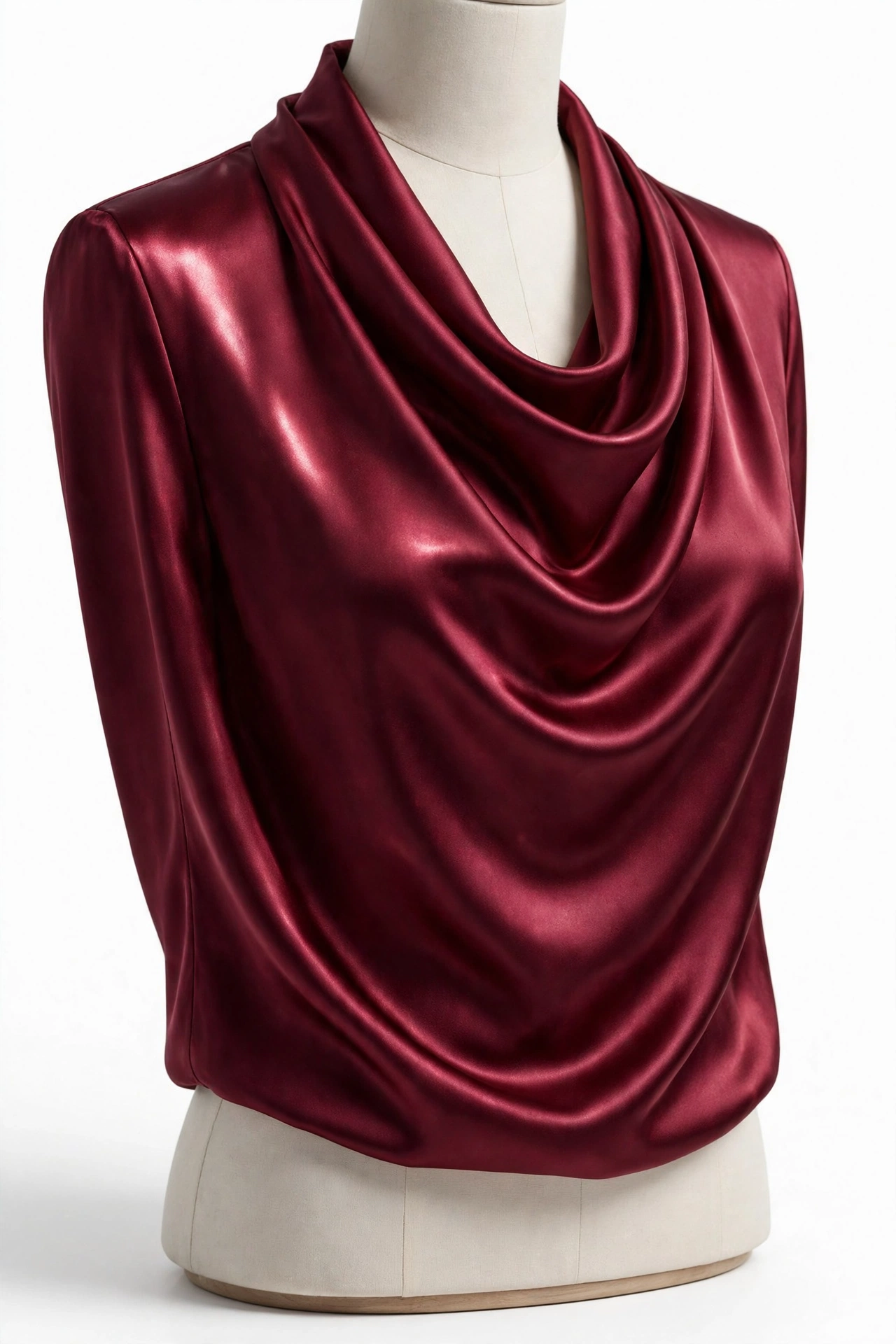
The cowl neck. Satin’s home territory. The fabric’s drape does the design work: the neckline falls in soft folds that a stiffer fabric could never manage. Charmeuse or silk satin only; structured satins ruin it. The trade is opacity. A cowl in light-colored satin needs a camisole underneath, because the draped fabric goes sheer where it stretches over the bust.
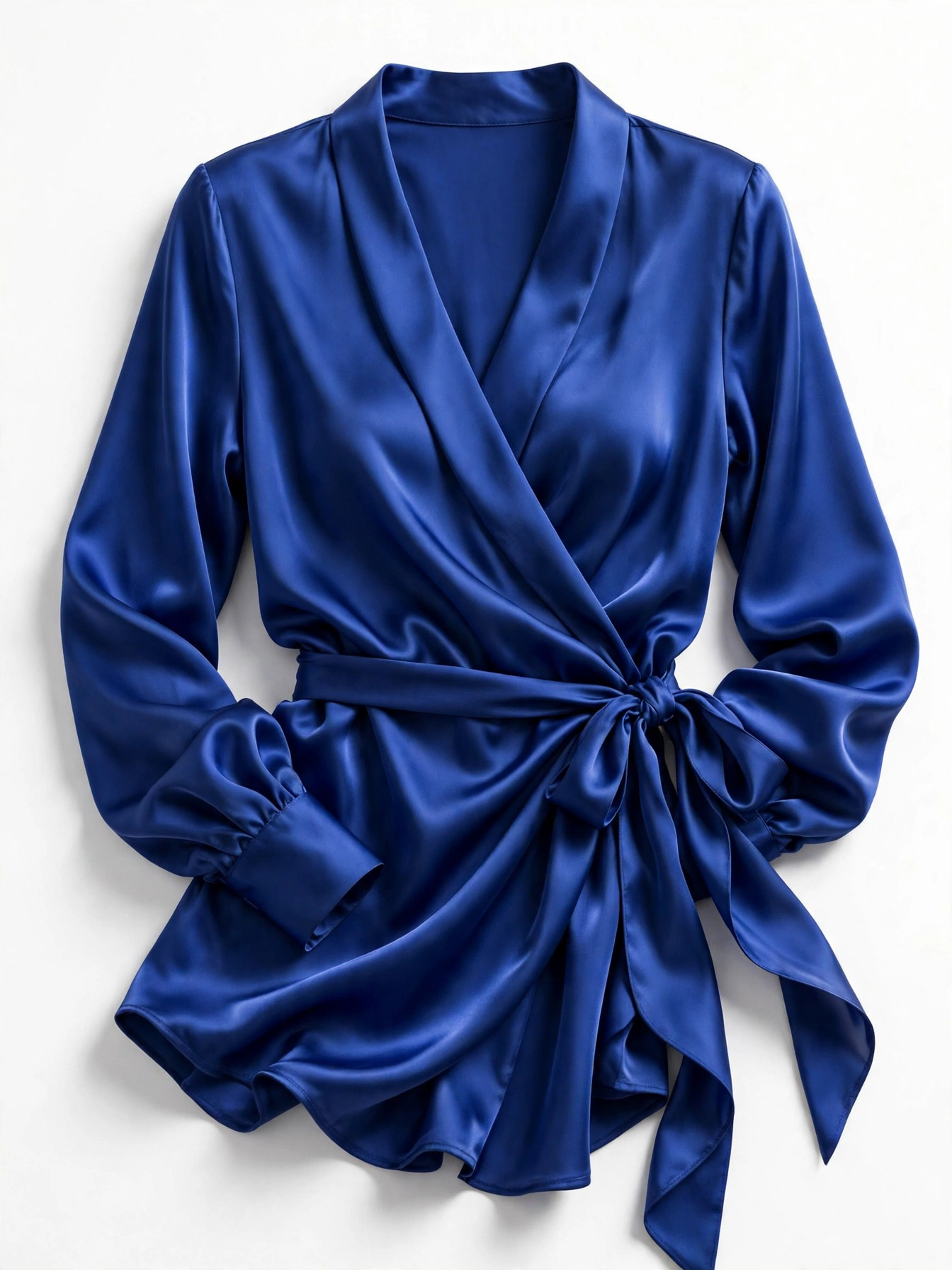
The wrap blouse. The V-neckline and defined waist do the shaping while the fabric supplies the drape, so wrap styles suit a wide range of shapes. Watch the tie: satin ties slip loose faster than matte fabrics, so double-knot it.
The sleeveless shell. The minimalist option and the least forgiving: with no sleeves or collar to distract, the fabric’s surface is the whole design, and any pulling at the armhole shows. Buy it fitted but not tight, in a satin with enough weight to hang straight.
The oversized boyfriend blouse. The easiest entry point: worn loose over trousers or half-tucked, it sidesteps every fit problem satin has. No strain, no gaping, and wrinkles read as intentional.
How do you fix the button gap?
Ranked best to most desperate. Every real fix either removes strain or locks the placket.
Buy for the bust, tailor the waist. Fit the widest point and take in the rest. A tailor narrowing a satin side seam costs little and transforms the blouse. This is the correct answer and the one people resist because the size tag feels personal. Ignore the tag.
Choose stretch satin for button-ups. A few percent elastane gives the placket the recovery that woven satin lacks. The gap never opens because the fabric yields and returns instead of separating. The price is cling, so this works best in darker colors.
Add a hidden snap. A small sew-on snap between the two buttons that take the most strain locks the placket invisibly. Two minutes with a needle, and it survives washing. Place it exactly where the gap opens, not at the button itself.
Sew the placket shut at the strain point. A few hand stitches between the problem buttons, done in matching thread on the inside. Invisible from outside, permanent, and free. If you sew, the satin sewing guide covers which needle and stitch keep satin from puckering.
The fitting-room pull test. Button the blouse and pull the placket gently outward at bust level. If you see skin between the buttons in the mirror, it will only get worse with wear and washing. Put it back.
What do you wear with a satin blouse?
One rule governs everything: one shine per outfit. A second shiny piece (a satin skirt, patent shoes, a metallic bag) doubles the glare and the outfit reads costume. Pair satin with matte textures: wool trousers, denim, cotton twill, suede, knitwear.
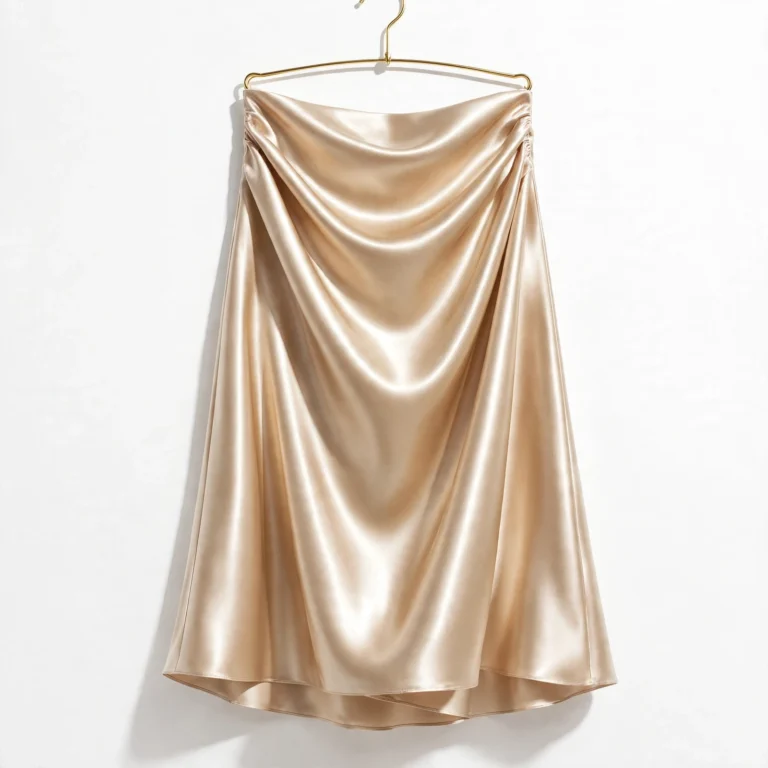
Tucking that stays tucked. The full tuck works better than the French tuck in satin, because more fabric in the waistband means more friction. High-waisted trousers with some grip in the waistband hold it. A thin belt over the tuck adds a friction lock at the exact line where satin wants to escape. Tucking into a skirt? Our satin skirt guide covers the reverse problem, and the honest advice is to think twice before doubling the shine.
Layering. A blazer over a satin blouse works mechanically: the lining presses the blouse flat and hides the tuck line entirely. Knit cardigans work too, but chunky knits can snag charmeuse, so keep the knit smooth and jewelry minimal when the two meet.
Sleeves. Push them up and they slide back down; satin does not hold a roll. Wear them full length, or choose a bracelet sleeve that is designed to sit short. A rolled satin cuff that unrolls mid-meeting is a small defeat you can plan around.
What does the label actually tell you?
Blouse labels lie by omission. Here is the decoder.
Fiber content is the whole game. Find the side seam tag. “100% polyester” is honest and common. “Silk” must name the fiber plainly. “Silky,” “silk-like,” “satin silk,” and “sateen finish” are marketing words, not fibers. A blouse labeled “silk satin” at a polyester price is polyester satin with a fancy name. Read the fiber line, not the hangtag poetry.
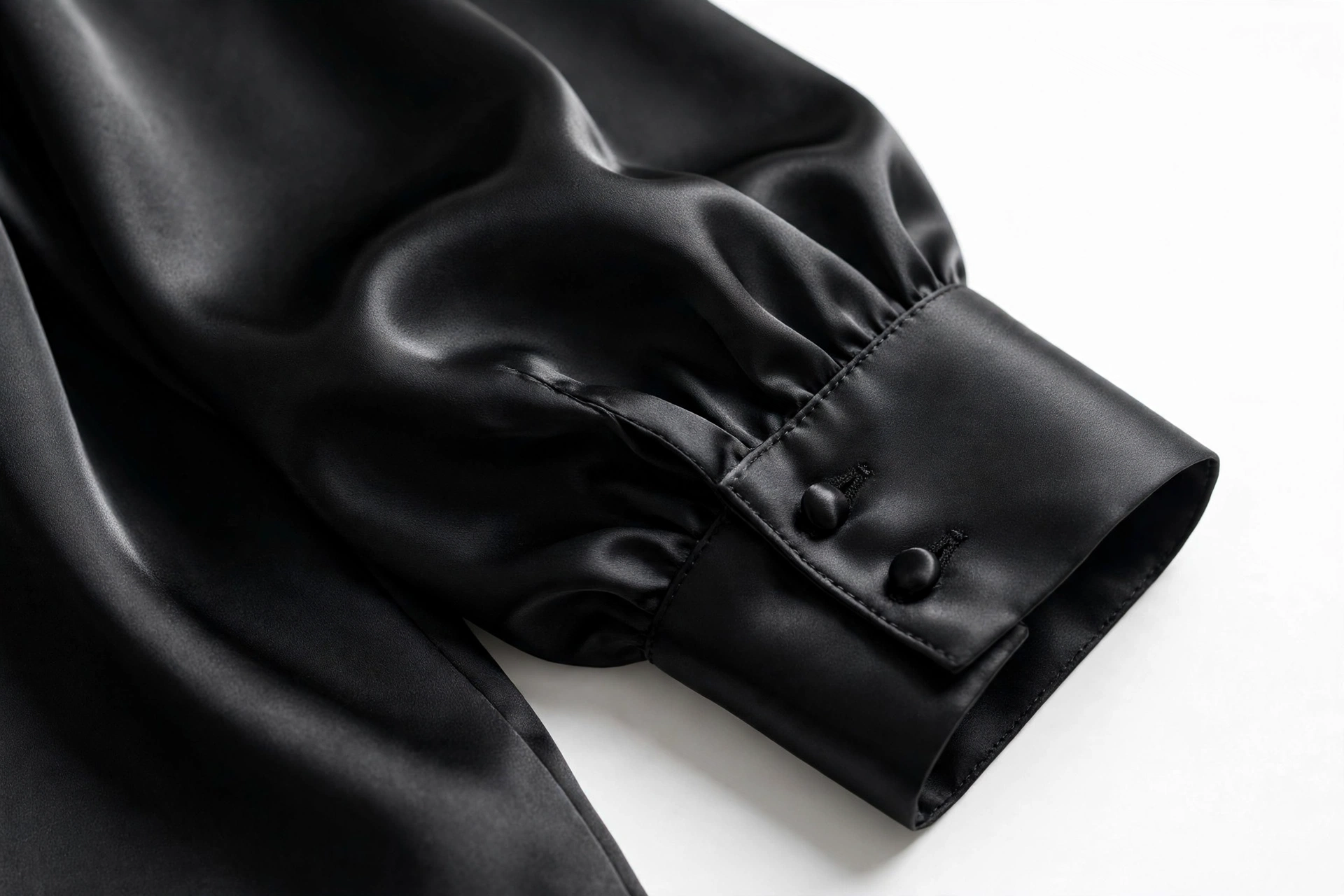
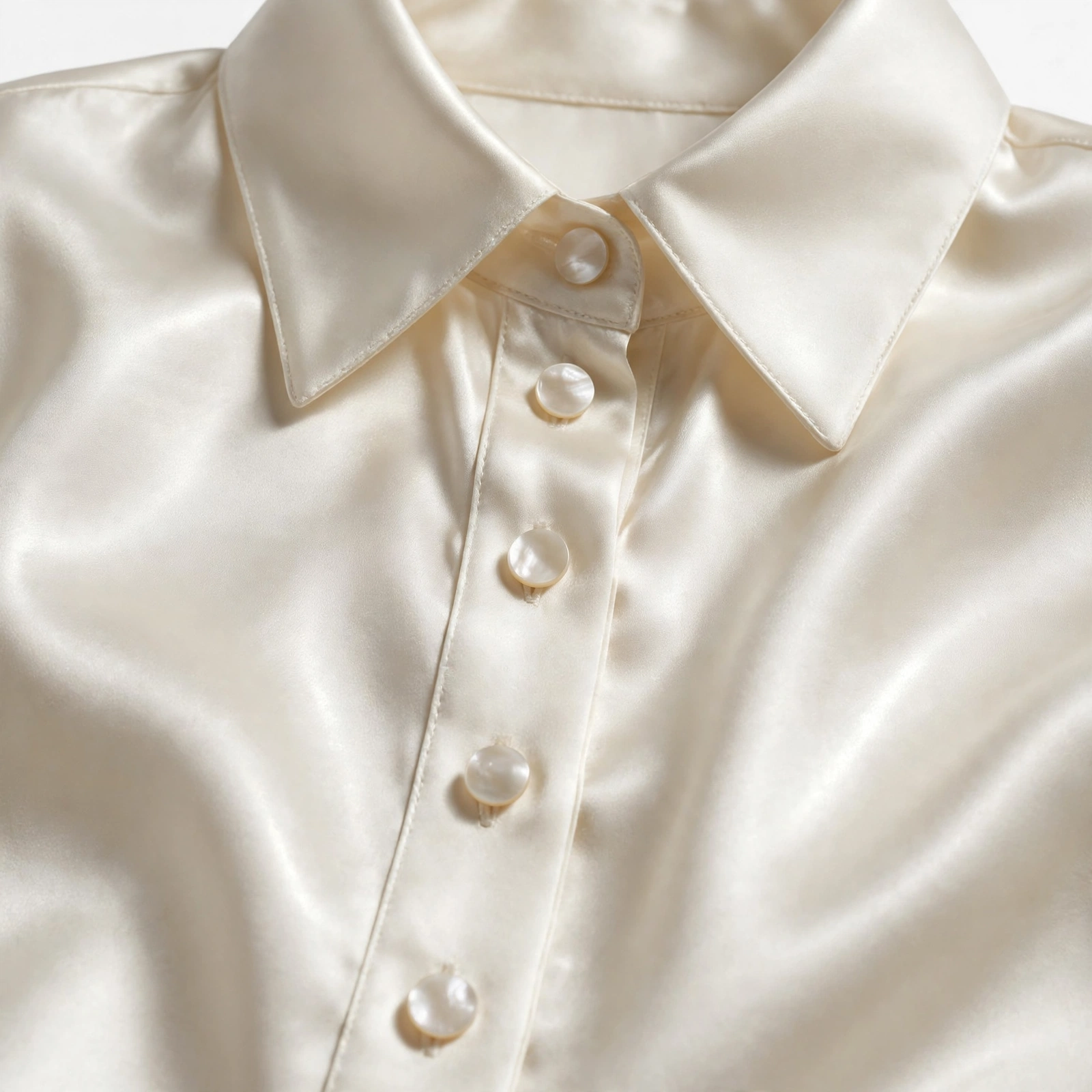
Check the inside before you buy. Turn the blouse inside out in the fitting room. Look at the collar points and cuff edges: fraying threads there mean the floats are already escaping and it will only get worse. Buttonholes should be clean and tight; loose, frayed buttonholes on satin fail fast because there is no texture to hold the stitching. Seams should be finished (French seams or overlocked), not raw pinked edges, because raw satin edges unravel in the wash.
The opacity test. Hold your hand behind the fabric under the shop lights. If you can read your knuckles through it, the blouse needs a camisole, and you should know that before the price convinces you otherwise. Pale satins are the worst offenders.
The yoke check. A back yoke (the double layer across the shoulders) or a back pleat gives the blouse movement room. Blouses without either pull when you reach forward. Reach forward in the fitting room. If the buttons strain, walk away.
How do you care for a satin blouse?
Fiber sets the rules. Polyester satin: machine wash cold on gentle, mild detergent, hang to dry. Silk satin: hand wash or delicate cycle in a mesh bag, pH-neutral detergent, never wring, dry away from sun. Acetate: follow the label exactly and treat it as fragile, because it is.
Deodorant and satin are enemies: the salts stain, and the marks show worst under the arms, exactly where blouses take the most sweat. Wash the blouse soon after wearing rather than letting it sit. Never spot-clean a water mark; wet the whole panel evenly and let it dry uniformly, because partial wetting is what makes the spot visible. Steam from a distance for wrinkles, keeping the steamer moving so moisture never sits in one spot. Never iron polyester satin hot: it glazes and shines permanently well below its melting point. The full per-fiber routines are in the satin washing guide.
FAQs
Why does my satin blouse gap at the buttons? Woven satin has almost no stretch on the straight grain, so strain across the bust pulls the yarns apart between buttons. The smooth, shiny face makes every gap more visible than on matte cotton. Fix it by sizing for the bust and tailoring the waist, choosing stretch satin, or adding a hidden snap at the strain point.
How do you keep a satin blouse tucked in? Satin’s smooth faces create very little friction, so tucks migrate. Use a full tuck into high-waisted trousers rather than a French tuck, and add a thin belt as a friction lock at the tuck line. A blazer over the top hides the tuck line entirely.
Can you wear a satin blouse to the office? Yes, with the right satin. Crepe-back satin and mid-weight charmeuse in dark or muted colors read professional; high-shine charmeuse in pale colors reads evening. Keep jewelry minimal and pair it with matte trousers or a blazer.
Is polyester or silk satin better for a blouse? Polyester is cheaper, machine washable, and resists wrinkles, but it builds static and can look flat. Silk drapes better, breathes, and takes color richly, but it costs several times more, spots with water, and needs hand washing. For frequent wear, polyester is the rational buy. For occasion blouses, silk earns its price.
How do you get wrinkles out of a satin blouse? Steam from a distance, keeping the steamer moving so moisture never sits in one spot. For silk satin, press on the wrong side through a press cloth on low heat. Never iron polyester satin hot, and never spot-wet a water mark; wet the whole panel evenly instead.
Why does my satin blouse show sweat? Satin’s smooth face shows moisture as dark patches, and the shine amplifies them. Silk satin shows it most, polyester least. An undershirt or dress shield in the underarm area is the practical fix; antiperspirant applied the night before works better than morning application.
What should you wear under a satin blouse? A smooth, skin-tone camisole or undershirt. It adds opacity under pale satins, absorbs underarm moisture before it reaches the blouse, and reduces cling from static. Avoid textured bras under charmeuse; the fabric maps every seam.
The trust note
No blouse brand paid for a word here, which is rare in fashion content: most satin blouse pages are affiliate listicles or retailer descriptions. The weave explanations come from textile science, the fit fixes from practitioner knowledge, and the buying checks from what actually fails in fitting rooms. Spot an error and it gets fixed with a dated correction.