


Men’s Satin Fashion: Suits, Shirts, Jackets, Ties and Sleepwear
What is men’s satin fashion?
Men’s satin fashion is menswear made from, trimmed with or lined in satin: shirts, suits and tuxedos, jackets, ties and bow ties, sleepwear and robes. Satin is a glossy weave, not a fibre, so it can be silk, polyester, rayon, acetate or nylon. In menswear it is used in two ways: as a quiet trim, such as the silk facing on a dinner jacket, and as a statement fabric, such as a satin shirt or a bomber jacket.
This guide is the overview. It explains how satin has appeared in men’s clothing over time, gives a map of the main garments with links to our detailed guides, and sets out a few simple rules for wearing something shiny without looking costumed. If you want the garment-by-garment detail, follow the links in each section, and for a fabric-first view see our guide to fashion by satin type.

Has satin always been part of men’s clothing?
Yes, in some periods more than others. Rich silks were part of men’s court dress long before satin became associated with women’s evening wear. FIT’s Fashion History Timeline describes the justaucorps as a long-sleeved, knee-length coat worn by men after 1666 and throughout the 18th century, with embroidered edging like the matching waistcoats, and says royal examples were generally made of luxurious fabrics such as silk velvet or brocade (FIT, Justaucorps). Satin turns up on the waistcoat. The Los Angeles County Museum of Art holds a French man’s waistcoat from about 1795 in silk satin with sequins and silk and metallic-thread embroidery (LACMA, Man’s waistcoat, c. 1795).
Then came a change. Wikipedia describes the Great Male Renunciation as a late 18th-century shift in which wealthy Western men stopped using bright colours and elaborate shapes, leaving them to women, and put the emphasis on cut and fabric quality, with silk breeches giving way to cheaper pantaloons (Wikipedia, Great Male Renunciation). The term comes from the psychologist John Flugel in 1930, and it is a broad interpretation, not a settled fact. It is useful as a rough marker for why satin retreated from everyday menswear.
Satin did not disappear. It moved into evening and informal clothing. The smoking jacket, designed in the 1850s and usually made of velvet and/or silk, led to the dinner jacket, which tradition dates to 1865 when the Prince of Wales ordered a blue silk smoking jacket from Henry Poole & Co. (Wikipedia, Smoking jacket). After the Second World War, satin returned in the embroidered souvenir jackets sold to American servicemen in Yokosuka, and the glossy bomber has been a menswear staple since. The timeline above shows the dates we could source. If this is your question, see our guide to the 2026 satin trend report. We cover this in depth in our guide to satin pants. For more detail, read our guide to the history of satin. We cover this in depth in our guide to satin suits. We cover this in depth in our guide to satin bow ties.
What are the main men’s satin garments?
There are seven main groups, from formal to casual. The table links each to our detailed guide.
| Garment | Where satin appears | Formality | Our guide |
|---|---|---|---|
| Satin shirt | The whole shirt, usually in a mid-weight satin | Casual to smart-casual | Satin shirts |
| Tuxedo or dinner jacket | Lapel facing, covered buttons, trouser braid, bow tie | Formal (black tie) | Suits and tuxedos |
| Satin suit | The whole suit | Fashion formal | Suits and tuxedos |
| Blazer, bomber or souvenir jacket | The shell, and often the lining | Smart-casual to casual | Blazers and jackets |
| Tie, bow tie and pocket square | The whole accessory | Smart to formal | Covered below |
| Pajamas and robe | The whole garment | Home | Satin pajamas |
| Durag and head wraps | The whole garment | Everyday hair care | Satin durags |

How do you wear a satin shirt?
A satin shirt works best when it fits cleanly and everything around it is matte. Wear it tucked or untucked with tailored trousers, dark denim or chinos, in a mid-weight fabric that does not cling. Choose dark, deep colours for versatility and keep the collar and cuffs crisp. See our satin shirt guide for fabric choices, fit and care in detail.
- Fit. A satin shirt shows tension across the chest and at the buttons, so choose a size that closes without pulling.
- Weight. A thin satin clings and shows sweat. A mid to heavy one hangs better.
- Colour. Black, navy, burgundy and deep green hide creases. Pastels are lighter and more casual.
- Pairings. Wool, denim, cotton and suede balance the shine.

Where does satin belong on a suit or jacket?
On a tuxedo, satin is a trim, and on a satin suit it is the whole fabric. The conventions for black tie are set out in Wikipedia’s article on the dress code: peaked or shawl lapels faced with silk in satin or grosgrain, a black silk bow tie that matches the facings, and a single silk or satin braid on the trouser seams (Wikipedia, Black tie). Our guide to satin suits and tuxedos covers where each piece goes and how satin and grosgrain facings compare.
For jackets, the choice is between a tailored satin blazer, a satin bomber and an embroidered souvenir jacket. The lining matters as much as the shell, so read our satin blazers and jackets guide before you buy.
What about satin ties, bow ties and pocket squares?
Satin accessories add shine in a small, controlled place, and they are the easiest way to try satin. Wikipedia’s charmeuse article lists ties and handkerchiefs among menswear uses of that lightweight satin, along with linings for jackets and slacks (Wikipedia, Charmeuse). Wikipedia’s bow tie article says bow ties are most often made from silk, polyester, cotton or a mixture, and that a ready-tied bow tie at a black or white tie event is usually considered a faux pas, though it may be common at events such as school proms (Wikipedia, Bow tie).
- Bow tie for black tie. Black silk, self-tied, matching the lapel facings.
- Fashion bow tie. Any colour, with satin giving a glossy contrast to a matte shirt.
- Satin tie. A satin tie is shinier than a woven one, so keep the shirt and jacket plain.
- Pocket square. A satin square adds a flash of shine to a wool jacket with little risk.
What sleepwear and robes does satin suit?
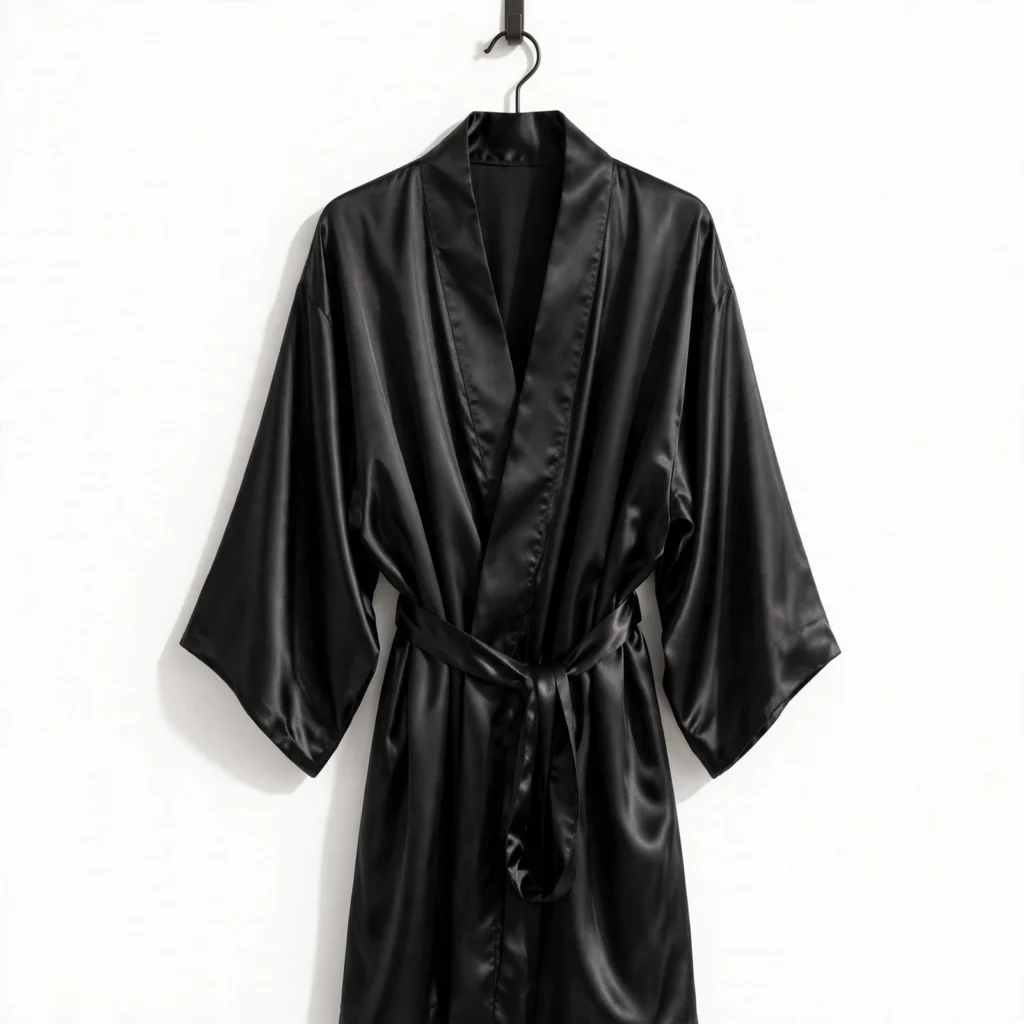
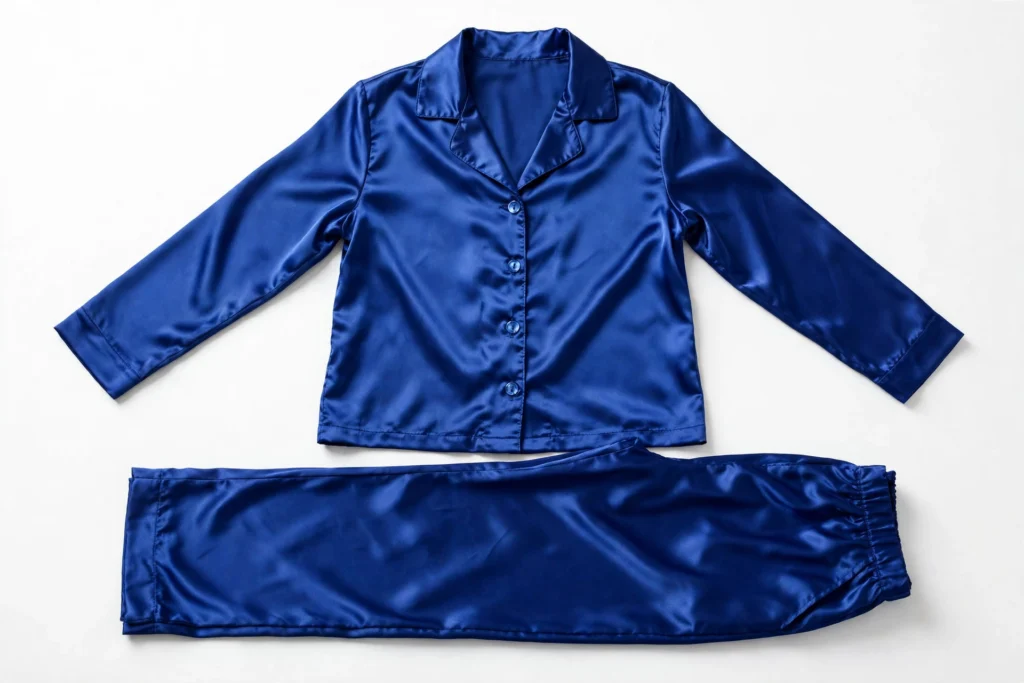
Satin sleepwear is the most common way men wear satin at home. A satin robe is easy to wear, and a pajama set in satin or silk satin is a comfortable alternative to cotton for some sleepers. The main decisions are fibre, weight and cut. Our satin pajamas guide and satin robe guide cover styles, and our satin vs silk pajamas comparison explains the fibre choice.
If you are buying for a boy or a teenager, remember that children’s sleepwear has federal flammability rules, and check the label and the recall list, as our pajamas comparison explains.
How do you wear satin without looking costumed?
Treat shine as a budget: spend it on one piece and keep the rest matte. A satin shirt with wool trousers and leather shoes looks considered. A satin shirt, satin trousers and patent shoes looks like a costume. The same logic applies to jackets, ties and suits. These rules work in most settings.
- One shiny piece per outfit. If the jacket is satin, the shirt and trousers should be matte.
- Match the shine to the time. Gloss looks natural in the evening, under lamps, and louder in daylight.
- Dark and deep first. Midnight blue, black, burgundy and green are the easiest colours.
- Fit beats everything. Satin shows every pull, so choose a clean fit.
- Mix textures. Wool, denim, cotton, suede and leather make satin look intentional.
- Keep accessories simple. One watch or one ring is enough.
Which satin types suit which menswear?
Choose a fabric with body for tailored pieces and a fluid one for shirts and linings. The short guide below summarises the main match-ups, and our fashion by satin type guide has the full garment-by-fabric grid.
| Garment | Good fabric choices | Why |
|---|---|---|
| Satin shirt | Charmeuse, crepe-back, stretch satin | Drape without clinging, and some give |
| Tailored jacket or blazer | Crepe-back, duchess, antique satin | Body to hold a line |
| Jacket lining | Charmeuse, cupro, acetate | Slippery and smooth |
| Tie or pocket square | Charmeuse and other light silk satins | Light, with a soft fold |
| Pajamas and robes | Charmeuse, crepe-back, cotton sateen | Soft hand, with durable options |
| Bomber or souvenir jacket | Rayon, acetate, silk or polyester satin | Glossy shell with body |
Which satin piece suits which occasion?
Match the amount of shine to the setting. The more formal the event, the more the satin should be a trim and not the whole outfit. This table is a practical guide, not a dress code, so always check what your host expects.
| Occasion | A good satin choice | How much shine |
|---|---|---|
| Black-tie event | Dark wool tuxedo with silk satin or grosgrain facings | Low to moderate, as trim only |
| Wedding guest | A dark satin tie, pocket square or a muted satin shirt under a jacket | Low |
| Party or evening out | A dark satin shirt, a satin blazer or a satin bomber | Moderate to high |
| Smart office | A mid-weight satin shirt in a muted colour, under a blazer | Low |
| Casual weekend | A satin bomber over a tee and jeans | Moderate |
| Home and travel | Satin pajamas, a robe or a durag | Any, comfort first |
Which colours work best in men’s satin?
Deep, saturated colours are the safest, because they make the sheen look rich and hide creases. Pale colours show more of the shine as brightness and less as contrast, so they read as lighter and more casual. Metallic and very bright shades are statement colours.
| Colour | Effect | Pairs well with | Good for |
|---|---|---|---|
| Black | Sharp and classic | Almost everything, especially white and grey | Evenings, tuxedo trims |
| Midnight and navy | Rich, a little softer than black | Grey, tan, white | Suits, shirts, bow ties |
| Burgundy | Warm and dressy | Charcoal, navy, cream | Shirts, jackets, accessories |
| Deep green | Distinctive and calm | Black, tan, ivory | Bombers, shirts, pocket squares |
| Champagne and ivory | Soft and light | Navy, brown, grey | Linings, summer evenings |
| Bright or metallic | Loud, high-shine | Plain black or white | Parties and stage wear |
If you want to see how a single colour behaves across fabrics, our guides to green satin and black satin cover shades, fastness and care.
How do you build a small satin wardrobe?
Start with one small piece, add one core piece, then one statement piece. This keeps the shine under control and tells you early whether satin suits you.
- Starter. A satin pocket square or bow tie. It costs little, and it is easy to wear with a plain jacket.
- Core. A dark satin shirt or a lined satin bomber in a muted colour, which you can wear several ways.
- Statement. A satin blazer or a suit, once you know your fit and your favourite colours.
- Home. A pajama set or robe, if you want satin for comfort rather than style.
What mistakes do men make with satin?
Most mistakes come from too much shine, the wrong fit or the wrong fabric weight. These five are the most common, and each is easy to avoid.
- Head-to-toe satin. Two shiny pieces compete, and three look like a costume. Keep one piece shiny.
- A thin fabric in a tight cut. Light satin that clings shows every seam and every line. Choose weight and room.
- Pale, high-shine colours in daylight. They look harsh outdoors. Save them for evenings.
- Ignoring the lining and the label. A jacket lining that traps heat, or a care label you do not follow, ruins a good garment.
- Buying only for the photo. Satin looks different in person, so check colour, shine and fit in daylight.
How do you care for men’s satin clothing?
Care depends on the garment, and the label comes first. Shirts and pajamas can often be washed gently, and tailored jackets and suits should be dry cleaned. In the United States clothing makers must provide care instructions under the FTC Care Labeling Rule. Steam creases, use low heat, and keep satin out of direct sun. Our how to wash satin guide covers the home-wash method by fibre.
What should you check before you buy men’s satin?
- The fibre content, because it decides comfort, care and price.
- The weight and body: a thin satin clings and shows every line.
- The fit across the shoulders, chest and waist, in daylight.
- The lining of jackets, which should be smooth and breathable.
- The shine, in the light where you will wear it.
- The care label, and whether it fits your routine.
- The return policy, since satin looks different at home.
Why should you trust this guide?
We do not sell menswear and earn nothing from any brand named here. The history comes from FIT, LACMA and Wikipedia’s articles, the black-tie conventions from Wikipedia’s black tie article, and the accessory details from Wikipedia’s charmeuse and bow tie articles. The Great Male Renunciation is a historians’ interpretation, not a fixed fact, and its dating is loose. We could not open every source behind these summaries, and the styling rules are our own reasoning. We did not test garments for this guide.
Frequently asked questions
Is satin suitable for men?
Yes. Satin has been part of men’s dress for centuries, from silk satin waistcoats in the 1790s to dinner jacket facings and modern satin shirts and bombers. It is a matter of fit, colour and how much shine you want.
What is the easiest way to start wearing satin?
Begin with a small piece: a satin pocket square, bow tie, or a dark satin shirt worn with matte trousers. A lined satin bomber in a dark colour is another easy first step.
Does satin look feminine on men?
Satin is a fabric, not a gender. How it looks depends on cut, colour and styling. Dark colours, clean tailoring and matte pairings read as classic menswear, and the history of men in silk shows it is long established.
What colour satin shirt is most versatile?
Black, navy and deep burgundy or green are the most versatile. They hide creases, work with most trousers and look good in evening light.
Is a satin tuxedo appropriate for black tie?
The classic black-tie tuxedo is dark wool with silk satin or grosgrain facings. An all-satin suit is a fashion choice and may not suit a strict dress code, so check the invitation.
Can you wear a satin shirt to work?
In an office with a smart-casual code, a mid-weight satin shirt in a dark, muted colour can work, especially under a jacket. Choose a lower-sheen fabric and a clean fit.
How do you stop a satin shirt from clinging?
Choose a mid or heavy weight, a lined or relaxed cut and a fibre that does not build static. A cotton undershirt helps, and an anti-static spray can help in dry air.
Where can I find sleepwear in satin for men?
Satin pajamas and robes are widely sold. Check the fibre content and the care label, and read our pajamas comparison before choosing between silk satin and polyester satin.
Final word
Men have worn satin for centuries, and the rules for wearing it today are simple: choose the right garment, keep one shiny piece, fit it well and care for it as the label says. Start with the guide that fits your wardrobe, whether that is a shirt, a tuxedo, a jacket or sleepwear.


